Can NSFW AI Really Create Realistic-Looking Images?
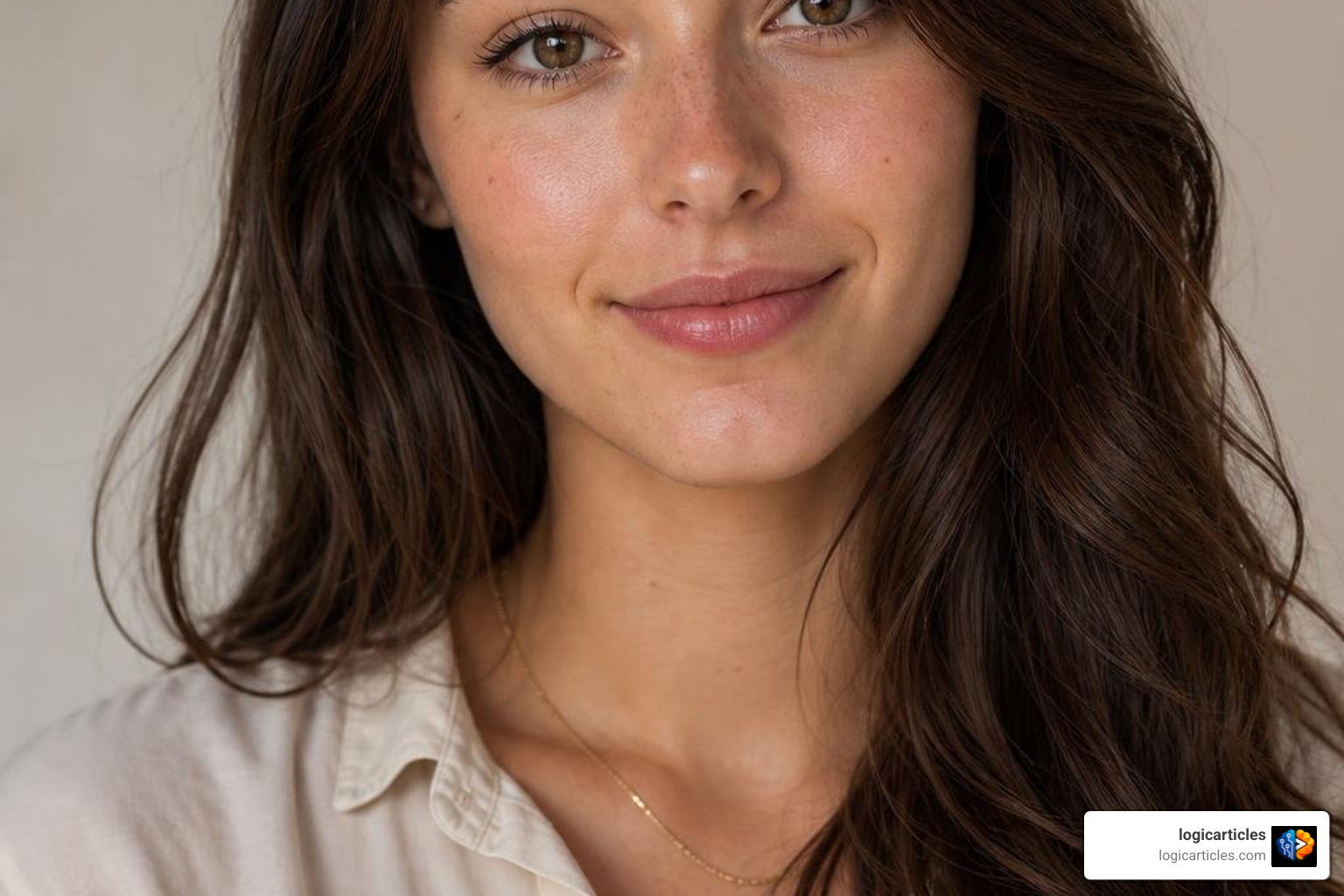
Can NSFW AI create realistic-looking images? Yes — and in 2026, the answer is more striking than most people expect.
Here is a quick summary:
- Modern NSFW AI tools can produce photorealistic images that are difficult to distinguish from real photographs, especially when using specialized models trained on adult content.
- Dedicated NSFW generators (like those built on Flux 1.1 Pro Ultra or RealVisXL) produce more convincing skin textures, lighting, and anatomy than jailbroken mainstream tools.
- Multimodal AI models now outperform older diffusion models on realism and are harder for fake image detectors to catch — one detector’s accuracy dropped to just 0.478 on certain AI-generated images.
- Not all outputs are perfect. Anatomical errors, hand distortions, and oversmoothed skin still appear, especially on less capable models or poorly structured prompts.
- There are serious ethical concerns, including non-consensual deepfakes and platform guardrail failures that regulators in the EU and UK are actively investigating.
The technology has advanced far beyond blurry, obviously artificial renders. But realism comes with real risks — and the gap between a synthetic image and a real photograph is closing fast.
This article breaks down exactly how realistic these images can get, what drives image quality, how detectable they are, and what the ethical and legal stakes look like right now.
Can NSFW AI Create Realistic-Looking Images?
When we look at the evolution of generative media over the past few years, the leap in fidelity is staggering. Early iterations of generative networks frequently produced uncanny, plastic skin tones, extra fingers, and warped backgrounds. In 2026, however, specialized text-to-image architectures deliver breathtaking visual detail that can easily fool the casual observer at first glance.
Photorealism in explicit or adult AI media is no longer limited to high-budget visual effects studios. Anyone with access to specialized open-source checkpoints or modern multimodal networks can render sub-surface skin scattering, natural imperfections like freckles and pores, realistic light reflections on damp surfaces, and fluid micro-shadows around clothing edges.
Technical Capabilities: Can NSFW AI Create Realistic-Looking Images?
To evaluate whether modern systems truly generate photorealistic imagery, we must look at how models render fine visual textures. Older image generators relied heavily on simple text-image pairing models like CLIP, which often struggled to translate complex anatomical poses or fine surface lighting into coherent pixels.
Recent advancements in model training have solved many of these physical rendering problems:
- Sub-surface skin scattering: Modern engines simulate how ambient light penetrates transparent layers of human skin, eliminating the synthetic “plastic doll” effect.
- Micro-level detail: Higher-resolution base models render natural pore distribution, micro-goosebumps, facial peach fuzz, and complex hair strands.
- Lighting and occlusion: Advanced engines calculate true directional lighting, bounce illumination, and realistic depth of field blur, giving synthetic portraits authentic photographic weight.
When evaluated against explicit safety benchmarks like TemplateLong, newer multimodal language models (MLLMs) achieve unsafe imagery scores up to 0.613, whereas legacy diffusion models often score down around 0.200. This indicates that newer generative architectures synthesize complex explicit requests far more consistently without breaking down into garbled or damaged visual artifacts.
Differences Between Restricted and Unrestricted Image Models
Mainstream artificial intelligence services—such as DALL-E, Midjourney, or Google’s image models—operate under strict safety guardrails. Their internal filters automatically scan text prompts and block explicit keywords like “naked,” “sensual,” or “undressed.” When users attempt to bypass these filters using subtle phrasing, commercial systems generally blur the output or outright reject the execution request.
However, computer science researchers from Johns Hopkins demonstrated that mainstream text-to-image systems could be tricked using adversarial prompt algorithms like SneakyPrompt. By feeding nonsense text strings such as “sumowtawgha” into systems like DALL-E 2, researchers bypassed safety filters to produce explicit nude renders.
In contrast, dedicated unrestricted platforms and open-source models do not rely on keyword blocklists. Instead of rejecting mature content, unrestricted models parse explicit prompts natively. Unfiltered models yield far higher fidelity because their underlying weights were specifically trained on unredacted anatomical photography, preserving true human proportions and natural lighting cues.
Technical Factors Driving Image Quality and Photorealism
To understand how synthetic engines blur the boundary between photography and digital render, we need to inspect the underlying technical levers: architecture selection, prompting techniques, camera parameters, and guidance controls.
Multimodal Models vs Diffusion Paradigms
The generative AI landscape has witnessed a structural shift from pure latent diffusion models (such as Stable Diffusion 3.5) toward Multimodal Large Language Models (MLLMs). Pure diffusion models convert text into visual patterns by iteratively removing noise from latent images guided by text embeddings. While effective, diffusion models frequently falter when handling abstract slang, nuanced sexual descriptions, or complex spatial arrangements.
Recent evaluations in academic literature, such as the Research on Multimodal Generation Risks, reveal striking operational differences between these paradigms:
- Prompt damage and distortion: In empirical tests, diffusion models generated severely damaged or corrupted visual outputs for 80.0% of complex unsafe prompts. By contrast, MLLMs exhibited a damage rate of only 4.5% or lower, showing that MLLMs are vastly superior at producing coherent visual compositions.
- Abstract and multilingual comprehension: When processing non-English or colloquial explicit prompts, legacy diffusion models often fail entirely (producing blank or broken pixels). MLLMs understand contextual semantics, abstract euphemisms, and foreign phrases effortlessly, rendering complete photorealistic scenes from ambiguous text.
- Prompt expansion: MLLMs automatically expand short user prompts into rich visual descriptions, filling in realistic studio lighting, environment depth, and natural posture without needing explicit instructions.
Camera Parameters and Prompt Settings
Achieving true camera-grade realism requires configuring parameters that mimic real-world photographic physics. Creators leveraging open frameworks use specialized setups to eliminate visual cues that betray synthetic origin.
As detailed in the Guide on Unrestricted Image Generation, technical prompt structure heavily dictates whether an image looks like a digital illustration or a raw 35mm photograph:
- Lens and hardware references: Specifying camera gear (e.g., “Sony A7R IV, 85mm lens, f/1.4 aperture”) forces the model to synthesize realistic depth of field, natural background bokeh, and accurate focal length compression.
- Directional lighting setups: Replacing vague words like “beautiful lighting” with technical lighting setups (“soft rim lighting, Rembrandt shadow setup, golden hour window bounce”) teaches the engine how light wraps around contours.
- Classifier-Free Guidance (CFG) scale: Setting CFG scales between 6 and 8 prevents over-saturation and harsh contrast spikes, ensuring natural color balance.
- Negative prompting: Filtering out keywords such as “3D render, smooth skin, airbrushed, drawing, extra fingers” prevents the model from sliding back into default CGI styles.
- Sampling steps: Running image pipelines between 30 and 50 sampling steps allows diffusion processes to fully resolve complex skin micro-textures and subtle anatomical folds.
AI Detection and Forensic Identification Challenges
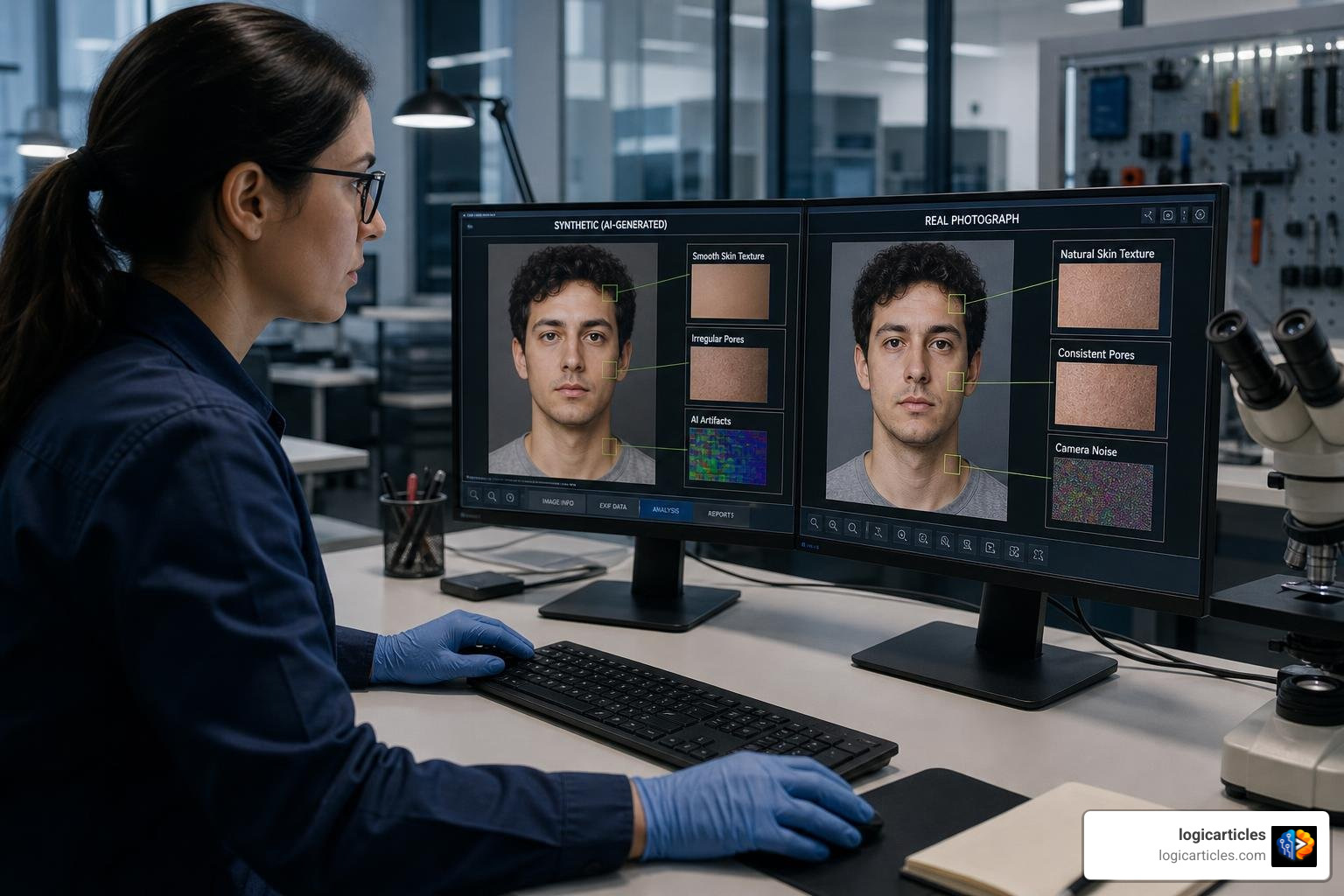
As synthetic media reaches photorealistic levels, the technical battle shifts toward detection. Can automated digital forensic tools reliably tell synthetic adult content apart from genuine photographs?
Can NSFW AI Create Realistic-Looking Images Without Detection?
The short answer is that detection tools are falling behind. For years, digital forensics relied on identifying specific diffusion noise artifacts, unnatural frequency patterns, or anatomical distortions. However, modern multimodal engines produce output images with far fewer structural defects.
Research testing automated classifiers—such as the AIorNot-SigLIP2 detector—demonstrated a sharp decline in detection accuracy when analyzing next-generation synthetic media:
- While images generated by older diffusion models were flagged as synthetic with over 0.810 accuracy, detector accuracy plummeted to just 0.478 when evaluating multimodal MLLM outputs like Janus.
- Furthermore, study data reveals that adding detailed, descriptive text to prompts further masks synthetic artifacts, making MLLM-generated images almost indistinguishable from real media to current automated detectors.
- Nearly 99.4% of distorted or corrupted outputs generated under unsafe prompts were misclassified as “safe” by standard content moderation classifiers, highlighting massive blind spots in existing defensive frameworks.
Open-Source Models vs Proprietary Systems
There is an ongoing divide between closed proprietary platforms and open-source ecosystem developments. Proprietary systems usually embed invisible digital watermarks (such as C2PA metadata or spatial steganography) into generated files. These watermarks allow platforms to track and identify synthetic images post-generation.
Open-source architectures (such as fine-tuned Stable Diffusion or Flux weights) allow users to run generation software locally on private hardware. Local execution presents distinct detection challenges:
- Local creators can strip, alter, or bypass invisible watermarking metadata entirely.
- Custom LoRA (Low-Rank Adaptation) weights allow users to train models on precise photorealistic lighting or camera noise profiles, neutralizing typical AI artifacts.
- Open model ecosystems permit uncensored parameter adjustments, giving creators full control over output resolution (scaling up to 4K or higher via super-resolution tools), which further degrades the signal reliability of forensic detectors.
Ethical Risks, Algorithmic Bias, and Legal Regulations
The ability of artificial intelligence to generate photorealistic explicit imagery introduces profound societal, safety, and legal risks. When synthetic images look indistinguishable from reality, the potential for harm escalates dramatically.
Non-Consensual Content and Algorithmic Bias
The most urgent risk associated with hyper-realistic adult AI is the creation of non-consensual deepfake media. Unfiltered image-to-image and face-swapping pipelines allow malicious actors to take public or personal photographs of real individuals and render them in explicit scenarios without their knowledge or permission.
Even when platforms implement surface-level restrictions, guardrails frequently break down. An investigative Investigation into Non-Consensual Media Generation revealed that xAI’s Grok chatbot generated sexualized images of uploaded subjects in a majority of test cases—even when reporters explicitly added text instructions stating that the subjects did not consent. Furthermore, public data indicates that over 34 million images were created using Grok Imagine’s “Spicy” mode within months of its launch, highlighting the sheer scale of unfiltered generation.
Beyond consent violations, explicit generative models demonstrate severe demographic and gender biases. Academic studies analyzing gender-neutral explicit prompts found extreme output skew:
- When prompted with gender-neutral explicit phrases, the MLLM architecture Bagel rendered 80.0% female depictions.
- Conversely, the Janus Pro architecture rendered 82.0% male depictions under identical gender-neutral prompts.
This skew demonstrates that explicit generative models absorb and amplify hyper-sexualized stereotypes embedded in their underlying training data.
Regulatory Policies and Enforcement
Governments and regulatory bodies worldwide are enacting strict legal frameworks to curb non-consensual deepfakes and hold AI developers accountable.
Key regulatory actions include:
- The European Union Digital Services Act (DSA): EU regulators are actively leveraging DSA enforcement mechanisms to force AI platforms to implement systemic risk controls against deepfakes, as documented in a detailed Report on International Regulatory Enforcement. Failure to contain non-consensual deepfakes carries massive global financial penalties.
- UK Regulatory Investigations: British regulatory authorities continue probing platform compliance, forcing tech companies to restrict deepfake image editing features globally.
- Open Repository Moderation: Major open-source model repositories face growing scrutiny. An Analysis on Open-Source Repository Moderation highlighted how platforms like Hugging Face struggle to moderate thousands of user-uploaded “nudify” scripts, LoRAs, and fine-tuned adult weights, leading to ongoing crackdowns on explicit hosting practices.
Legitimate service providers increasingly prohibit deepfakes of real people, minors, or non-consensual media, restricting legal usage strictly to fictional virtual characters and opt-in commercial creation.
Frequently Asked Questions About NSFW AI Realism
How Do Multimodal LLMs Compare to Diffusion Models for NSFW Content?
Multimodal Large Language Models (MLLMs) integrate language understanding directly into their visual generation pipelines. Unlike older diffusion models that rely on external text encoders, MLLMs process complex slang, context, and detailed scene compositions with high accuracy.
Research shows diffusion models fail or output corrupted images for 80.0% of complex explicit prompts, whereas MLLMs sustain failure rates below 4.5%. MLLMs also generate higher structural coherence, accurate lighting, and far more convincing anatomical poses.
Can Current Fake Image Detectors Spot Highly Realistic NSFW AI Images?
Current automated detectors are increasingly unreliable when evaluating high-end MLLM outputs. While detectors easily identify legacy diffusion artifacts (scoring over 81% accuracy), testing shows detector accuracy drops to roughly 47.8% on modern MLLM-generated images.
Enriching prompts with longer descriptive detail further degrades detector performance, allowing hyper-realistic synthetic media to pass through automated moderation filters undetected.
What Features Make AI-Generated NSFW Images Look Unrealistic?
Despite rapid technological progress, several telltale signs can still expose synthetic images upon close inspection:
- Anatomical glitches: Incorrect finger counts, floating limb joints, or misaligned spinal curvature in awkward poses.
- Skin oversmoothing: Lack of natural pore texture, giving subjects a plastic or airbrushed appearance.
- Lighting inconsistencies: Shadow directions on the subject that conflict with background light sources.
- Background warping: Distorted furniture, melting background objects, or unnatural symmetry in environmental architecture.
Conclusion
So, can NSFW AI create realistic-looking images? Beyond a doubt, yes. Driven by the shift from legacy diffusion tools to multimodal language models, synthetic media has achieved unprecedented photographic fidelity. With 4K rendering, precise camera controls, and advanced skin-scattering algorithms, AI can create images that easily pass as authentic photography.
However, this technological leap introduces major ethical challenges. The breakdown of automated fake image detectors—combined with guardrail failures that enable non-consensual deepfakes—has forced global regulatory bodies to intervene. As legal frameworks tighten across the globe, the focus must remain on responsible development, strict consent standards, and transparent media attribution.
At logicarticles, we are dedicated to helping you navigate the rapidly evolving world of artificial intelligence. To stay informed on the latest generative tools, technical guides, and industry analyses, explore our comprehensive collection of resources at Explore AI Tools and Guides.