What Is the Tool for Rewording Sentences?

What is the tool for rewording sentences? It is an AI-powered sentence rewriter, also called a rewording, rephrasing, or paraphrasing tool. You paste in a sentence, and the tool suggests a clearer or differently worded version while aiming to keep the original meaning.
These tools can help you:
- Replace repetitive or awkward wording
- Adjust tone for an email, essay, post, or report
- Simplify complex language
- Improve flow and readability
- Generate ideas when a sentence does not sound quite right
The best result is rarely a one-click fix. Think of a rewording tool as a fast writing assistant, not a substitute for your judgment. You still need to check facts, protect the intended meaning, and cite sources when you are working from someone else’s ideas.
In this guide, we compare beginner-friendly sentence rewording tools and explain what separates a useful writing aid from a tool that merely swaps a few words.
What Is the Tool for Rewording Sentences and How Does It Work?
When asking “what is the tool for rewording sentences?” the answer lies in natural language processing (NLP) and modern machine learning models. A sentence rewording tool analyzes input text to understand its underlying context, grammatical structure, and semantic meaning. Rather than relying on simple dictionary substitutions, advanced software parses full sentences to adjust syntax, restructure phrases, and optimize vocabulary while maintaining context preservation.
The core technology processes your input text by evaluating how words relate to each other. For example, if you input a dense, jargon-heavy sentence, the algorithm identifies the main subject, verb, and object, then reorganizes the clause hierarchy. Modern tools trained on millions of high-quality writing samples evaluate thousands of linguistic possibilities per second. They can shift active voice to passive voice (or vice versa), remove redundant filler, and present cleaner alternatives instantly.
What Is the Tool for Rewording Sentences Used for in Writing?
Sentence rewriters enhance writing efficiency across virtually every industry. Whether you are crafting a quick update or writing a lengthy document, these platforms allow you to express ideas more clearly without spending hours staring at a blank page.
Different writers rely on sentence rewording tools for unique purposes:
- Students: Use tools like the AI Rewording Tool – Scribbr to adjust academic phrasing, break down complex source material into simpler concepts, and ensure assignments flow logically.
- Content Marketers & Digital Authors: Utilize platforms like the Free AI Sentence Rewriter Tool – No Login Required | Semrush to draft multiple variations of social media captions, headlines, or ad copy targeting diverse audience demographics.
- Business Professionals: Rely on assistants like the Free AI Sentence Rewriter | No Sign-up Required to shift internal emails from informal tones to polished, corporate-ready communication.
- Language Learners: Benefit from contextual suggestions that teach fluent English phrasing, helping overcome vocabulary limitations and subtle idiom mistakes.
- Researchers & Journalists: Apply rewriters to simplify technical findings for general audiences or eliminate awkward phrasing in long-form reports.
Key Features: What Is the Tool for Rewording Sentences Capable Of?
Modern online paraphrasing tools offer far more than simple word replacement. Today’s software packages provide robust settings designed to customize every output:
- Diverse Rewording Modes: Users can select specific modes such as Standard, Fluency, Formal, Casual, Expand, or Shorten to align with writing goals.
- Interactive Thesaurus Capabilities: Interactive features allow you to click on individual words within the output to explore context-appropriate synonyms, giving you full control over final vocabulary choices.
- Tone Adjustment: AI models evaluate intent, letting you shift text seamlessly between authoritative, casual, persuasive, or creative tones.
- Fluency Enhancement: Algorithms detect grammatical errors, incorrect prepositions, and awkward sentence structures, simultaneously polishing syntax while changing phrasing.
- Multi-Format Uploads: Many platforms allow direct input of documents, including Word files, PDFs, and text documents, streamlining workflow for full-length projects.
How Rewording Differs From Paraphrasing, Rephrasing, and Rewriting
While terms like rewording, paraphrasing, rephrasing, and rewriting are often used interchangeably, they represent distinct writing actions with varying degrees of syntactic and semantic changes.
- Rewording: Focuses primarily on word choice and vocabulary substitution. You keep the original sentence structure largely intact while replacing specific words with accurate synonyms to refresh the text or improve vocabulary.
- Paraphrasing: Focuses on concept simplification. Paraphrasing takes complex ideas, heavy technical terms, or lengthy passages from another source and restructures them entirely into your own voice while preserving the original core message.
- Rephrasing: Focuses on sentence flow, impact, and structural clarity. Rephrasing shifts the syntax, clause order, or active/passive construction to eliminate ambiguity, fix awkward phrasing, or adjust tone without changing the underlying meaning.
- Rewriting: Involves extensive content revision. Rewriting may involve altering the narrative structure, introducing new perspectives, expanding or condensing content, or completely overhauling paragraphs to serve a new target audience.
Understanding these distinctions helps you select the right feature when using tools like the AI Paraphrasing Tool & Sentence Rewriter – Linguix.com.
| Feature / Action | Primary Goal | Structural Change Level | Semantic (Meaning) Shift | Typical Use Case |
|---|---|---|---|---|
| Rewording | Update word choice & synonyms | Minimal | None | Eliminating repetitive words |
| Rephrasing | Improve clarity & sentence flow | Moderate | None | Fixing awkward or unclear sentences |
| Paraphrasing | Simplify concepts in your own voice | High | None | Integrating research into an essay |
| Rewriting | Transform tone, perspective, or focus | Very High | Minor to Moderate | Adapting a technical piece for a blog |
Academic Integrity, Plagiarism, and Best Practices
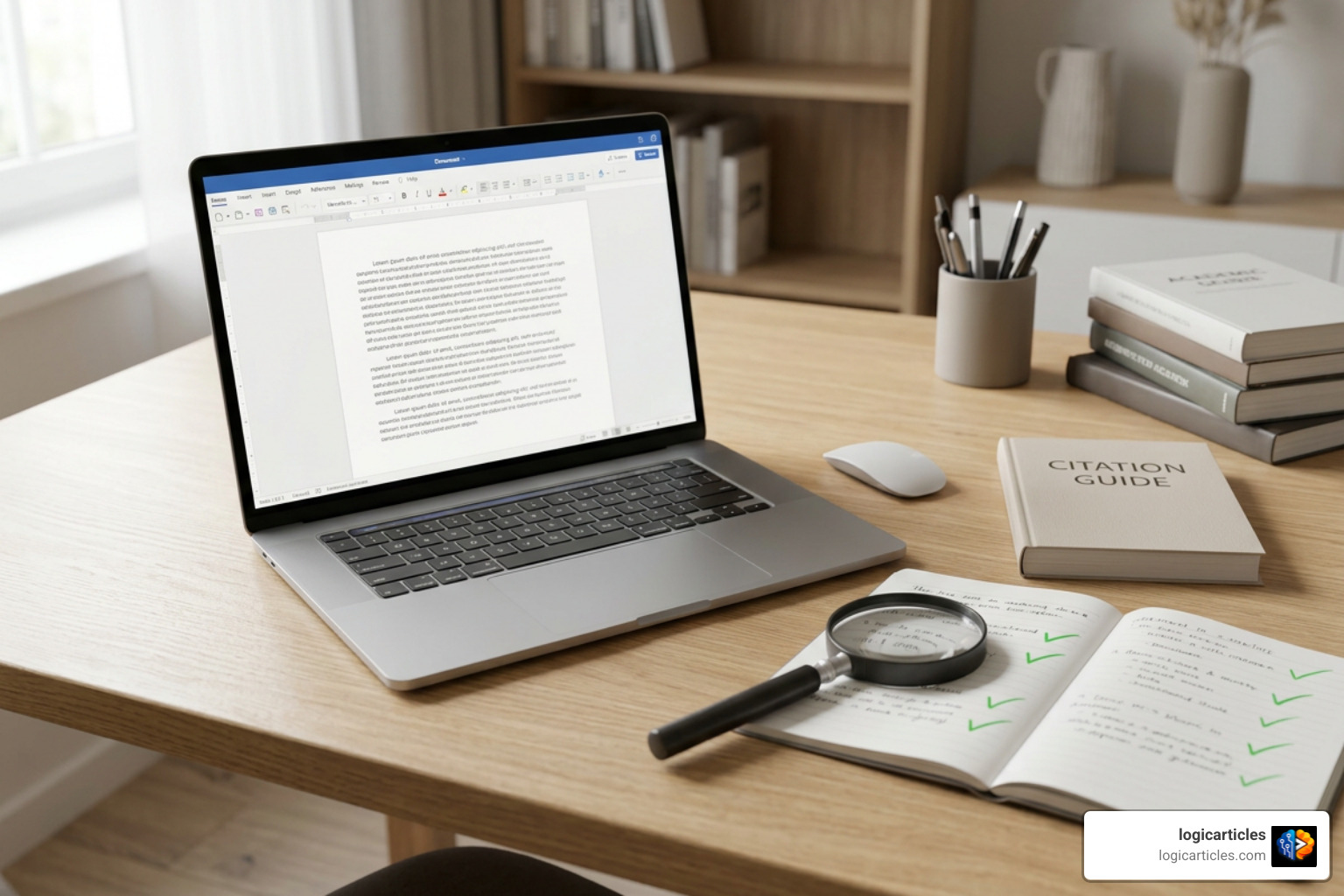
A common concern among beginners is whether using an AI sentence rewriter violates ethics or causes academic dishonesty. The short answer is: using a rewording tool is not inherently cheating or plagiarizing, provided you use it as an editing aid rather than a way to avoid doing original work.
Plagiarism occurs when you present someone else’s ideas, concepts, or structural language as your own without giving proper credit. Merely running another author’s paragraph through an automated rewriter to bypass plagiarism detectors without citing the original source remains unethical and can still trigger sophisticated similarity scanners like Turnitin, which evaluate linguistic patterns.
Tools like the Free AI Sentence Rewriter Tool | ProWritingAid are best utilized to refine your own original drafts, overcome writer’s block, or adapt tone.
To ensure your writing remains ethical, follow these best practices for effective sentence rewording:
- Understand the Source First: Read the original content completely to grasp its true intent before attempting any rewording or paraphrasing.
- Always Cite Original Sources: If the core idea belongs to another author, include proper citations (APA, MLA, Chicago, etc.) regardless of how much you reworded the sentence.
- Engage in Post-Editing: Never rely on automated output without reviewing it. Tweak generated suggestions to reflect your authentic personal voice and check for contextual accuracy.
- Check Institutional Policies: Academic institutions and corporate employers often have specific guidelines regarding AI assistance. Always check local rules regarding AI tool disclosures.
- Combine Automated Tools with Manual Fine-Tuning: Use interactive synonym features or manual edits to blend AI suggestions with your own vocabulary choices.
- Run Final Originality Scans: Verify your finished draft using dedicated plagiarism detection software to ensure accidental structural overlap is fully eliminated.
Comparing Free vs. Paid Options for Beginners
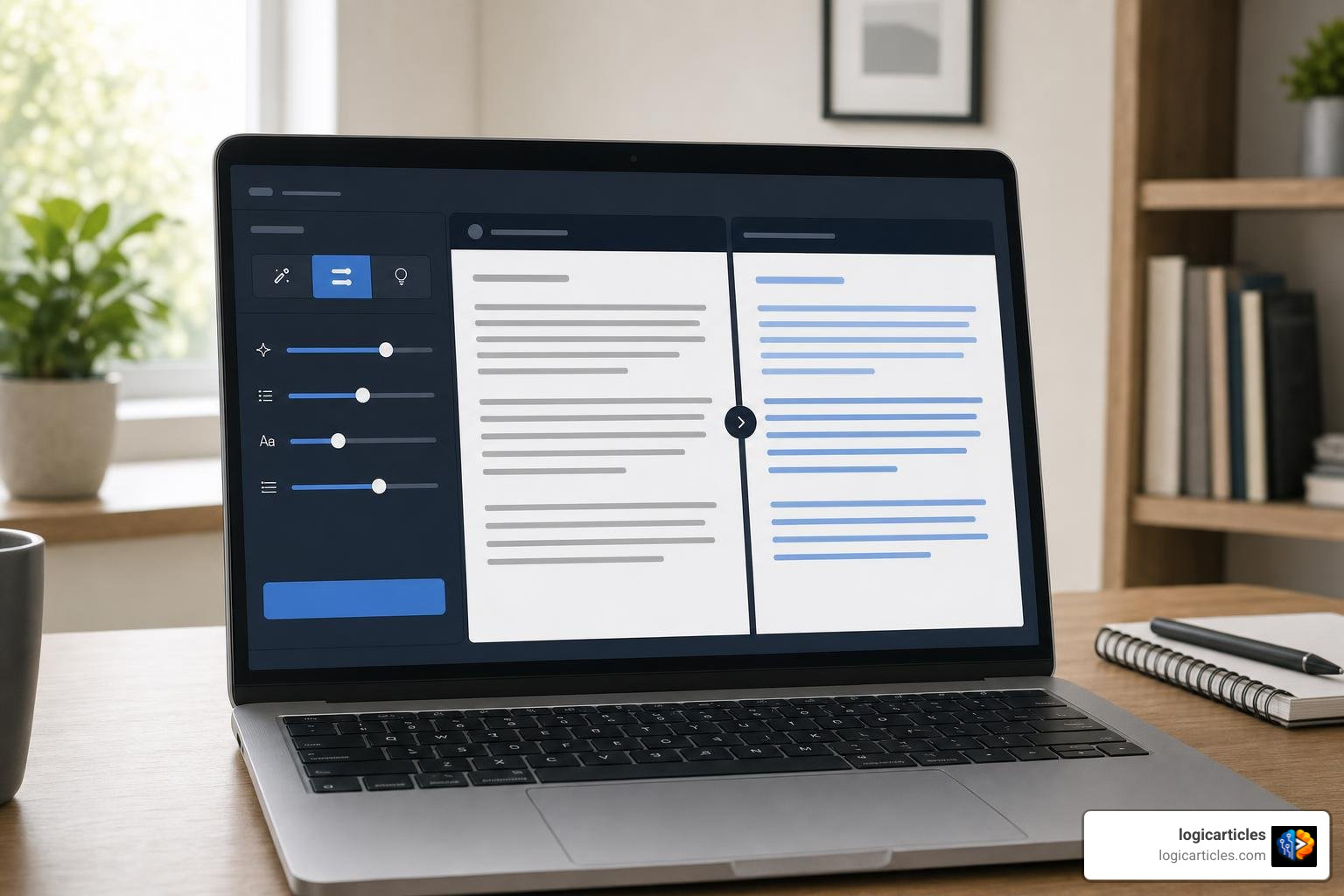
When selecting the ideal tool for your writing needs, evaluating the trade-offs between free tiers and premium subscriptions is essential.
Free AI sentence rewriters—such as the Article Rewriter – Fast Free & Accurate Rewriter Tool—provide immediate access without login requirements, making them ideal for quick edits or light sentence polishing. However, free tools often come with noticeable constraints, such as lower character limits per input (typically ranging from 125 to 200 words per run), basic rewriting modes, and occasional ad displays.
Paid options unlock advanced feature sets, including unlimited word processing, sophisticated neural AI models, custom tone configurations, sensory description options, and browser extensions that work directly inside Gmail, Google Docs, and Microsoft Word.
Here is a quick overview of what to expect when comparing tool tiers:
- Free Options: Excellent for occasional sentence fixes, single-paragraph rewrites, or testing basic fluency modes. They provide great value for students or casual bloggers on tight budgets.
- Paid Upgrades: Essential for heavy content production, research paper rewrites, or marketing teams. Paid accounts remove word caps, offer faster processing speeds, integrate directly into desktop applications, and guarantee higher data privacy (ensuring your inputs are not used to train public AI models).
Frequently Asked Questions About Sentence Rewording
Is using an AI tool for rewording sentences considered cheating?
No, using an AI tool to reword sentences is generally not considered cheating when used as a writing assistant, grammar polisher, or brainstorming partner. It becomes unethical when students or writers use automated software to present someone else’s intellectual work as their own without proper attribution. Always adhere to your school or workplace policies and include appropriate citations whenever referencing external ideas.
Can sentence rewording tools help prevent accidental plagiarism?
Yes, sentence rewording tools can help prevent accidental plagiarism by offering alternate syntactic structures and fresh synonyms for your original thoughts. However, relying solely on an automated rewriter does not replace standard academic citation rules. To fully protect against duplicate content flags, pair sentence rewriters with manual post-editing and an automated plagiarism checker.
Do free rewording tools limit daily usage or features?
Most free sentence rewording tools impose daily usage caps or feature limitations. Free versions typically restrict the number of input words per submission (e.g., 100 to 200 words at a time) or grant a fixed number of daily rewrites (such as 10 free uses per day). Advanced options like custom tone controls, expanded vocabulary settings, and full-document uploads are usually reserved for premium subscription tiers.
Conclusion
Understanding what is the tool for rewording sentences opens up powerful possibilities for writers across every domain. Whether you are a student striving to make academic concepts clear, a content marketer scaling social media campaigns, or a professional refining daily business emails, sentence rewriters offer invaluable support for improving clarity, tone, and flow.
While AI software offers remarkable speed and flexibility, the highest quality writing always incorporates human oversight. Use automated rewriters as creative brainstorming partners, but take time to manually review, edit, and cite your work. By combining smart writing assistants with your unique personal voice, you can elevate your writing efficiency and communicate with total confidence.
Want to discover more guides, writing strategies, and software insights? Explore AI writing tools and guides to keep upgrading your content workflow today!