Why Choosing the Right Nonprofit Financial Management Software in 2026 Matters

The best nonprofit financial management software 2026 options available right now can make the difference between a finance team that’s drowning in spreadsheets and one that closes its books in days — not weeks.
Here’s a quick look at the top picks to match your organization’s size and needs:
| Software | Best For | Starting Price |
|---|---|---|
| Aplos | Small to mid-size nonprofits, non-accountants | ~$79/month |
| Blackbaud Financial Edge NXT | Large nonprofits, AI-powered compliance | Custom pricing |
| Sage Intacct | Mid to large, multi-entity reporting | Custom pricing |
| MIP Fund Accounting | Federated associations, complex grants | Custom pricing |
| QuickBooks Nonprofit | Budget-conscious teams, simple needs | TechSoup discounts available |
Managing nonprofit finances is genuinely hard. Unlike a regular business, your organization tracks restricted funds, grants, donor intent, and compliance requirements — all at the same time.
Generic tools like spreadsheets or off-the-shelf accounting software weren’t built for this. They create gaps: misallocated funds, audit panic, and hours of manual reconciliation that your lean team can’t afford.
In 2026, the stakes are even higher. Donors and funders expect real-time transparency. Regulators expect clean audit trails. And with 70% of CFOs planning significant AI investments in financial tools, the software landscape is evolving fast.
This guide cuts through the noise and helps you find the right fit — fast.
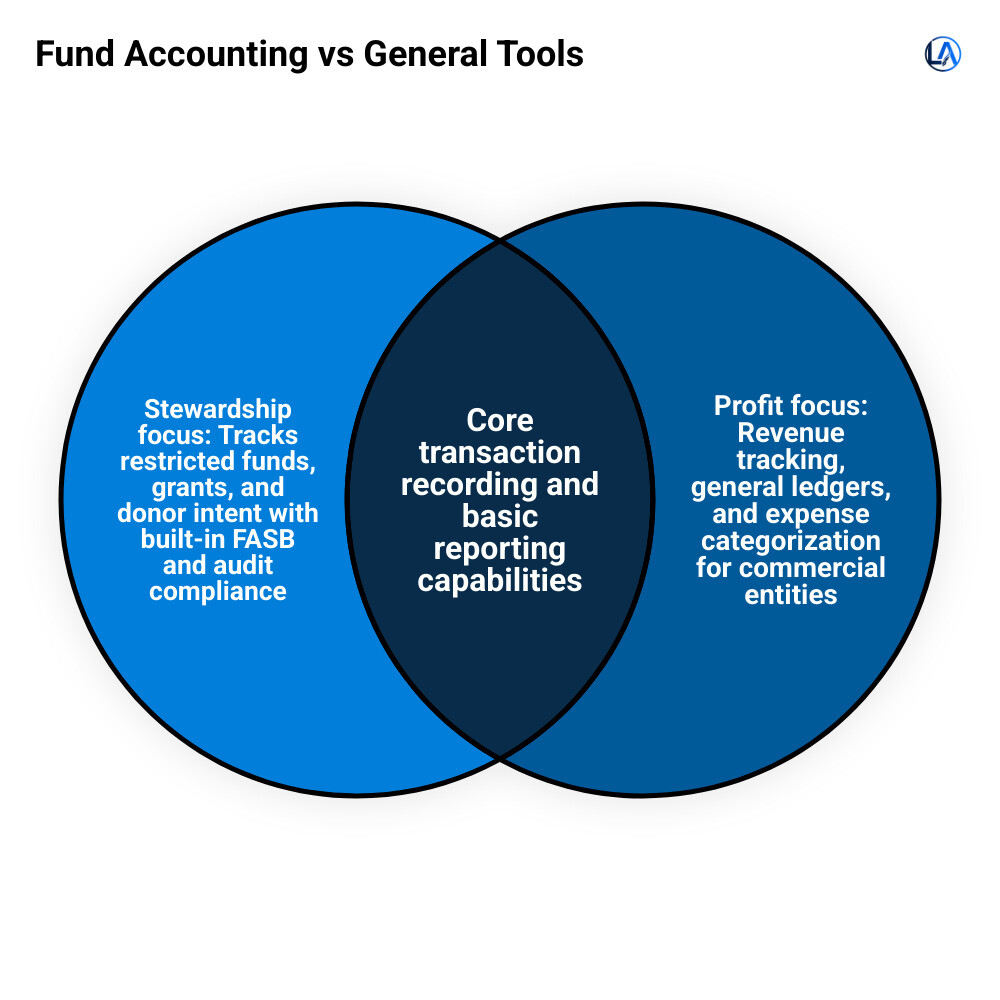
Fund Accounting vs. General Tools: The 2026 Landscape
When we talk about the best nonprofit financial management software 2026, we have to address the “elephant in the room”: why can’t you just use a regular business tool? Using a generic accounting tool for a nonprofit is often compared to using a fork to eat soup—it’s technically a utensil, but it’s the wrong one for the job.
The Core Difference: Stewardship Over Profit
In the commercial world, accounting is designed to track profit and loss for owners or shareholders. The focus is on stewardship. We need to prove to donors, grantors, and the IRS that every dollar was spent exactly how it was intended. This is where Nonprofit Fund Accounting, Built For Your Mission becomes essential.
True fund accounting allows you to:
- Track Restricted Funds: Automatically segregate money tied to specific projects or timeframes without manual “workarounds” in Excel.
- Maintain FASB Compliance: Modern software ensures your reporting aligns with standards for net assets with and without donor restrictions.
- Automate Net Asset Tracking: Instead of manual journal entries at year-end, the system updates your fund balances in real-time.
Cash-Basis vs. Accrual-Basis
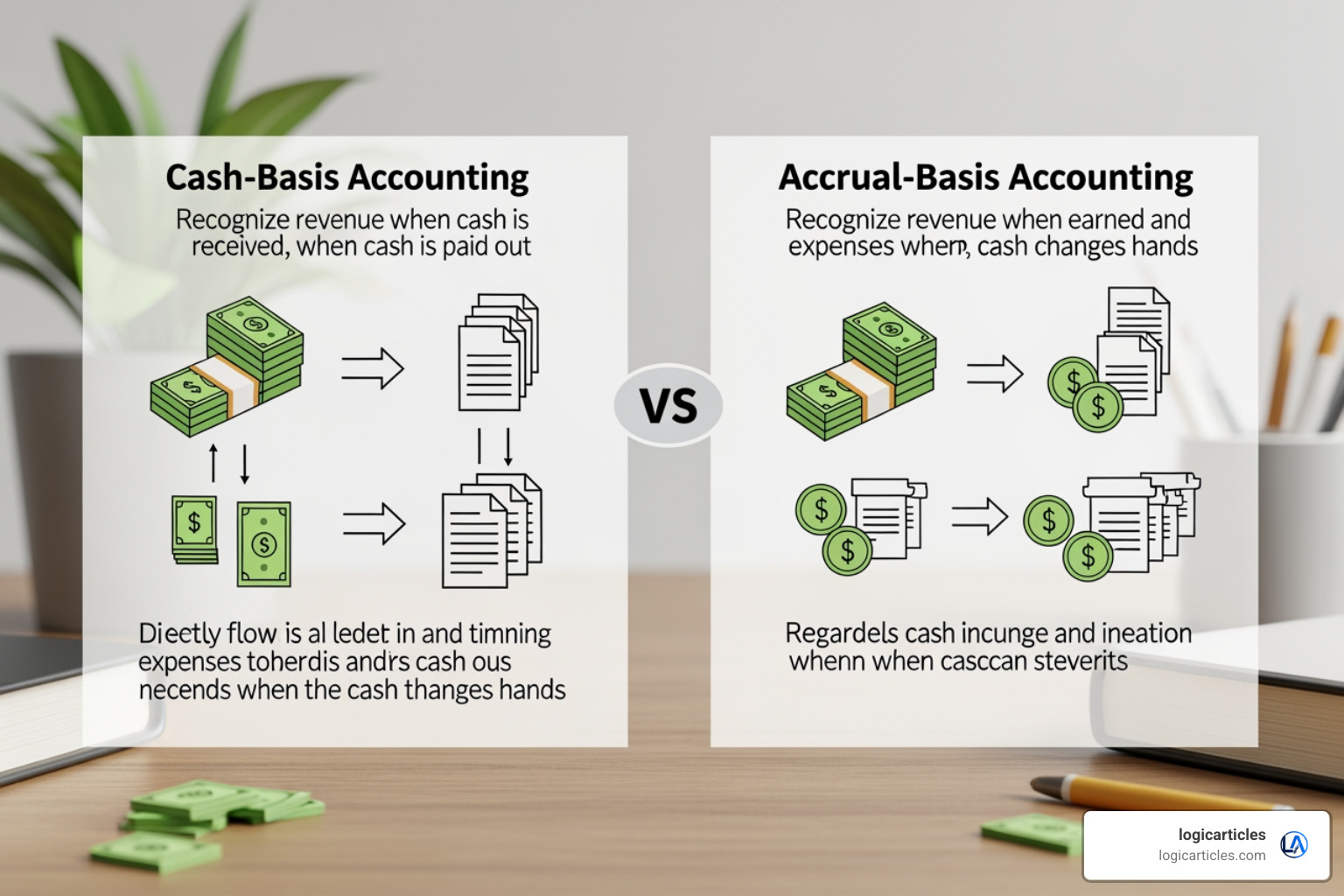
Many small nonprofits start with cash-basis accounting because it’s simple—you record money when it hits the bank. However, as organizations grow, receive multi-year grants, or face audits, they typically transition to accrual-basis accounting. The best nonprofit financial management software 2026 should support both, allowing you to scale as your complexity increases.
For those looking to improve overall organizational efficiency beyond just the finance department, exploring more info about productivity tools can help streamline the workflows that feed into your accounting system.
Key Features of the Best Nonprofit Financial Management Software 2026
By 2026, the “standard” feature set has evolved. It’s no longer just about a general ledger; it’s about intelligent automation and deep visibility.
AI and Automation: The New Standard
As mentioned, 70% of CFOs plan significant AI investments in their financial tools. In the nonprofit sector, this doesn’t mean the software is “doing the mission” for you. Instead, it’s about:
- Anomaly Detection: AI can flag a transaction that looks out of place, potentially preventing fraud or simple coding errors before they hit the reports.
- Automated Bank Reconciliation: Connecting your bank feeds so the software suggests matches, reducing manual data entry.
- Predictive Budgeting: Using historical data to forecast future cash flows, which is vital for organizations relying on fluctuating donor cycles.
Audit Readiness and Grant Tracking
If your organization manages government contracts or private foundation grants, you need a system that treats each grant as a mini-business. Blackbaud Financial Edge NXT | World-Class Fund Accounting Platform is a prime example of a tool that excels here, offering subfund accounting that tracks qualitative data (like grant deadlines and spending guidelines) alongside the numbers.
| Feature | General Accounting | Nonprofit-Specific (2026) |
|---|---|---|
| Primary Goal | Profit/Loss for owners | Accountability to donors/grantors |
| Chart of Accounts | Linear, simple | Segmented or multi-dimensional |
| Restricted Funds | Requires manual tagging/Excel | Native fund-based architecture |
| Reporting | Balance Sheet, P&L | Statement of Functional Expenses, Form 990 Mapping |
| Compliance | GAAP | FASB / IRS Form 990 / Audit Trails |
Multi-Entity Oversight
For larger organizations, the ability to manage multiple locations or legal entities from a single login is a game-changer. This ensures that while local chapters have the autonomy they need, the national office has the “single source of truth” required for consolidated reporting.
Strategic Benefits for Multi-Chapter Associations
Managing a national association or a federated nonprofit is a different beast entirely. You aren’t just managing one set of books; you’re often overseeing dozens of chapters, each with their own EINs, yet needing a unified financial voice.
Governance as Infrastructure
The best nonprofit financial management software 2026 acts as governance infrastructure. It allows national leadership to:
- Standardize Workflows: Ensure every chapter follows the same approval processes and uses the same chart of accounts.
- Automate Consolidations: Instead of spending weeks chasing chapter leaders for spreadsheets, the software rolls up the data automatically.
- Prevent Fraud: Role-based permissions and automated audit trails ensure that volunteer-led chapters have the right “guardrails” in place.
Preserving Chapter Autonomy
A common fear in associations is that centralized software means “taking over.” However, modern platforms allow for a balance. Chapters can manage their day-to-day operations—like event registrations and local dues—while the system handles the heavy lifting of inter-entity transactions and compliance.
Choosing the best software for this specific use case requires looking for “association-ready” features like centralized dues processing and automated inter-chapter transfers. This setup transforms the finance department from a “policing” unit into a strategic partner that provides real-time insights to local leaders.
Implementation Roadmap and Selection Criteria
Choosing the software is only half the battle; the other half is getting your team to actually use it. Implementation is where most projects succeed or fail.
Overcoming Common Challenges
- Data Migration: Don’t just move “garbage” from your old system to the new one. Use this as a chance to clean up your chart of accounts.
- Change Resistance: Finance teams are often protective of their spreadsheets. Show them how the new system saves them time (e.g., “This report that used to take three days now takes three clicks”).
- Staff Training: Expect to spend 40-60 hours on training for complex systems. It’s an investment in your organization’s future.
Internal Controls and Security
In 2026, security is non-negotiable. Ensure your chosen platform offers multi-factor authentication (MFA) and detailed audit logs. This is especially important for organizations that handle sensitive donor data or high-volume transactions. If you are managing complex wealth or endowment structures, you might even consider how your nonprofit tool overlaps with the best family office accounting software in terms of privacy and reporting depth.
Evaluating the Best Nonprofit Financial Management Software 2026 for Your Mission
When you sit down to evaluate your options, use a structured checklist to ensure you aren’t swayed by “shiny object syndrome.”

- Scalability: Will this software still work if your budget doubles in three years?
- Budget Sustainability: Look beyond the monthly subscription. Factor in implementation fees, training, and ongoing support.
- Integrations: Does it talk to your CRM? Your payroll provider? Your online giving platform?
- User Experience: If your volunteer treasurer finds the software impossible to navigate, they won’t use it.
For a deeper dive into specific product rankings, the 15 Best Nonprofit Accounting Software Options (2026) provides a comprehensive breakdown of the current market leaders and how they stack up against each other.
Conclusion
At logicarticles, we believe that technology should be a force multiplier for your mission. The best nonprofit financial management software 2026 isn’t just about balancing the checkbook—it’s about building donor trust, ensuring long-term sustainability, and giving your leadership the real-time insights they need to make brave decisions.
By moving away from fragmented spreadsheets and generic tools, you reclaim the time your team needs to focus on what actually matters: your impact. Whether you are a small startup nonprofit or a massive multi-national association, the right financial foundation is the key to your next chapter of growth.
Ready to dive deeper into the tools that power successful organizations? Explore more software categories on our platform to stay ahead of the curve.
Frequently Asked Questions about Best Nonprofit Financial Management Software 2026
How does nonprofit accounting differ from business accounting? Business accounting focuses on profitability and owner equity. Nonprofit accounting focuses on stewardship and accountability, using fund accounting to track restricted and unrestricted assets to ensure donor intent is honored.
Is AI really necessary for my nonprofit’s finance department in 2026? While you don’t need “generative AI” to write your checks, the automation features powered by AI—like anomaly detection and automated reconciliations—are becoming essential for lean teams to stay compliant and efficient.
What are the best options for small nonprofits on a tight budget? Platforms like Aplos offer a great balance of fund accounting features at an accessible price point. Additionally, many vendors offer significant discounts through TechSoup for organizations with budgets under a certain threshold.
Does this software help with IRS Form 990? Yes. Most specialized nonprofit tools include “Form 990 mapping,” which categorizes your expenses throughout the year so that generating the data for your annual tax filing takes hours instead of weeks.
Can I integrate my financial software with my donor CRM? Absolutely. In 2026, integration is a top priority. Most leading platforms integrate directly with CRMs like Salesforce, Bloomerang, or Keela, ensuring that your donation data flows seamlessly into your accounting records without manual entry.