Why Knowing How to Uninstall ShotScribus Software in Mac Matters

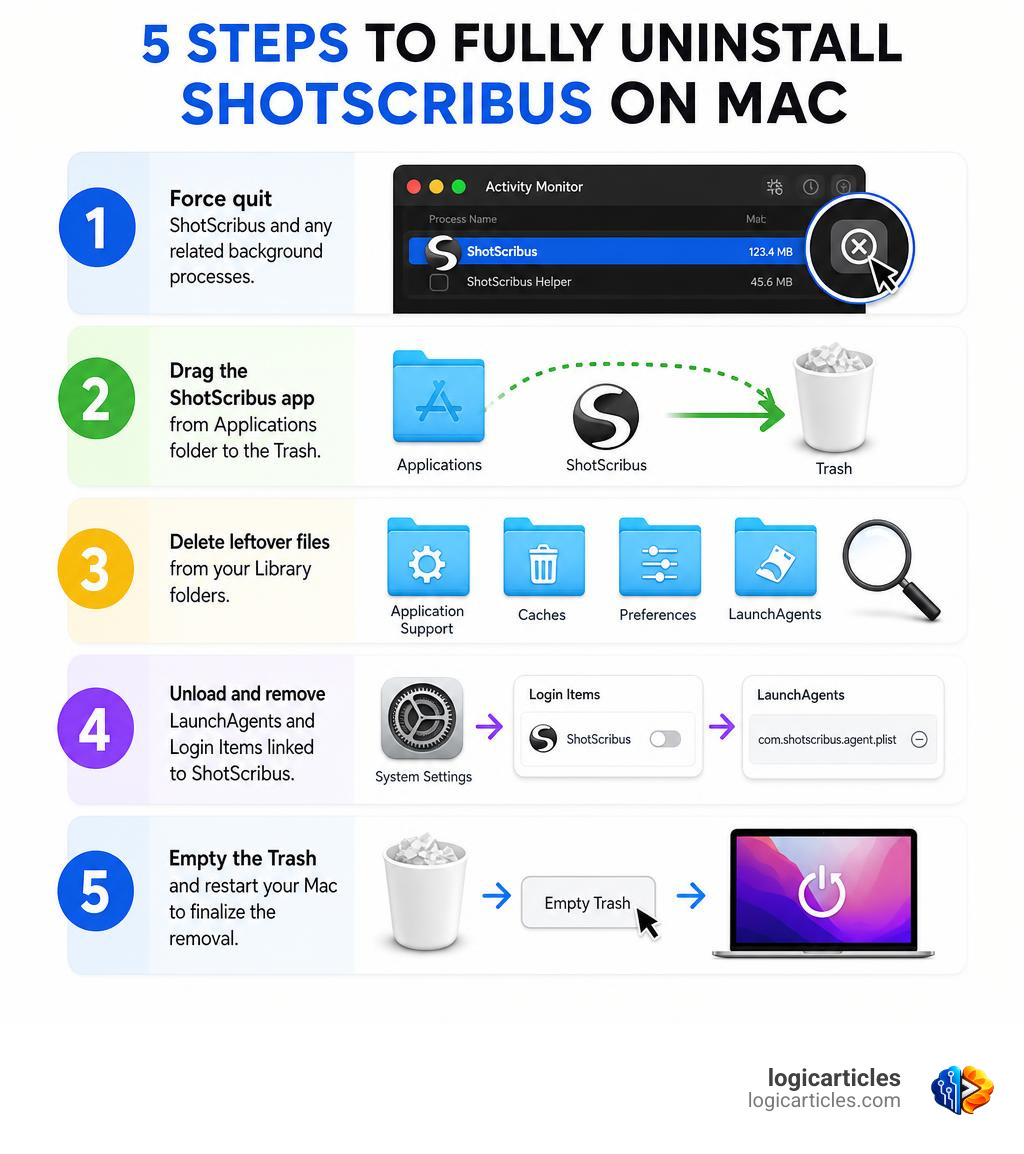
If you need to how to uninstall ShotScribus software in Mac, here are the 5 steps:
- Force quit ShotScribus and any related background processes via Activity Monitor
- Drag the ShotScribus app from your Applications folder to the Trash
- Delete leftover files from your Library folders (Application Support, Caches, Preferences, LaunchAgents)
- Unload and remove LaunchAgents and Login Items linked to ShotScribus
- Empty the Trash and restart your Mac to finalize the removal
You dragged ShotScribus to the Trash. You restarted your Mac. And it was still running in Activity Monitor.
That’s not a glitch — that’s by design.
ShotScribus is not a standard app you can remove with a simple drag-and-drop. It combines the names of two legitimate open-source tools — Shotcut and Scribus — to trick users into downloading it. Once installed, it can leave behind hidden files, background processes, and launch agents that keep it alive even after you think it’s gone.
The result? A slower Mac, unexpected pop-ups, and potential privacy risks.
The good news: you can fully remove it — if you know where to look.
What is ShotScribus and Why is it Unsafe?
To understand how to get rid of ShotScribus, we first need to understand what it actually is.
In the open-source software community, two highly respected programs exist: Shotcut (a free, open-source video editor) and Scribus (a free, open-source desktop publishing application). Both are completely safe and widely used by creative professionals.
However, bad actors often exploit the popularity of these trusted tools. They created ShotScribus—a clever mash-up name designed to trick users into thinking they are downloading a legitimate, all-in-one creative suite.
In reality, ShotScribus behaves like adware or potentially unwanted programs (PUPs). It often bypasses macOS’s built-in Gatekeeper security checks because users are socially engineered into manually overriding system warnings. Once inside your system, ShotScribus installs persistence mechanisms—like LaunchAgents and hidden daemons—that run silently in the background.
For a deeper dive into the security implications of this software, you can read the ShotScribus Safety Guide.
Why You Need to Know How Uninstall Shotscribus Software in Mac
Leaving ShotScribus on your system is a gamble you shouldn’t take. If you don’t know how uninstall shotscribus software in mac completely, your computer faces several ongoing risks:
- Severe System Performance Degradation: Because ShotScribus runs persistent background processes, it continuously hogs CPU and RAM, causing your Mac’s fans to spin loudly and battery life to plummet.
- Data Privacy Vulnerabilities: Adware-style programs often track browsing habits, search history, and system configurations, sending this telemetry data back to third-party servers.
- Adware & Pop-Ups: You may begin seeing unexpected banner ads, browser redirects, or fake system alerts prompting you to install even more malicious tools.
- Software Conflicts: Leftover files and corrupted caches can conflict with legitimate applications, causing other software on your Mac to crash or behave erratically.
How Uninstall Shotscribus Software in Mac: The Complete Guide
Whether you are running macOS Ventura, Sonoma, or an older version of macOS, the built-in uninstallation process requires a methodical approach. Dragging the application to the Trash only deletes the main executable binary; it does absolutely nothing to the dozens of support files scattered throughout your system’s hidden directories.
To ensure your system is completely clean, we will walk you through the ultimate manual removal process. If you want to review Apple’s general app deletion guidelines first, check out the official Apple Support Guide.
Step 1: Force Quit ShotScribus and Related Processes
Before you can delete any app, you must stop it from running. If a ShotScribus process is active in the background, macOS will throw an error saying, “The item can’t be moved to the Trash because it’s open.”
Here is how to kill the process completely:
- Press Command + Space to open Spotlight, type Activity Monitor, and press Enter.
- In the search bar at the top-right corner of Activity Monitor, type
shotscribus. - Select any running processes associated with the name (e.g.,
ShotScribus,ShotScribusDaemon, or related helper tasks). - Click the “X” button in the top-left toolbar.
- Select Force Quit when prompted.
The Pro Terminal Method (Optional)
If the processes refuse to close or instantly restart, open your Terminal app and run the following command to see what is running:
ps aux | grep -i shotscribus
If you see active processes, force kill them by running:
killall -9 ShotScribus
Step 2: Move the ShotScribus Application to the Trash
Once the background processes are dead, you can proceed to delete the main application bundle.
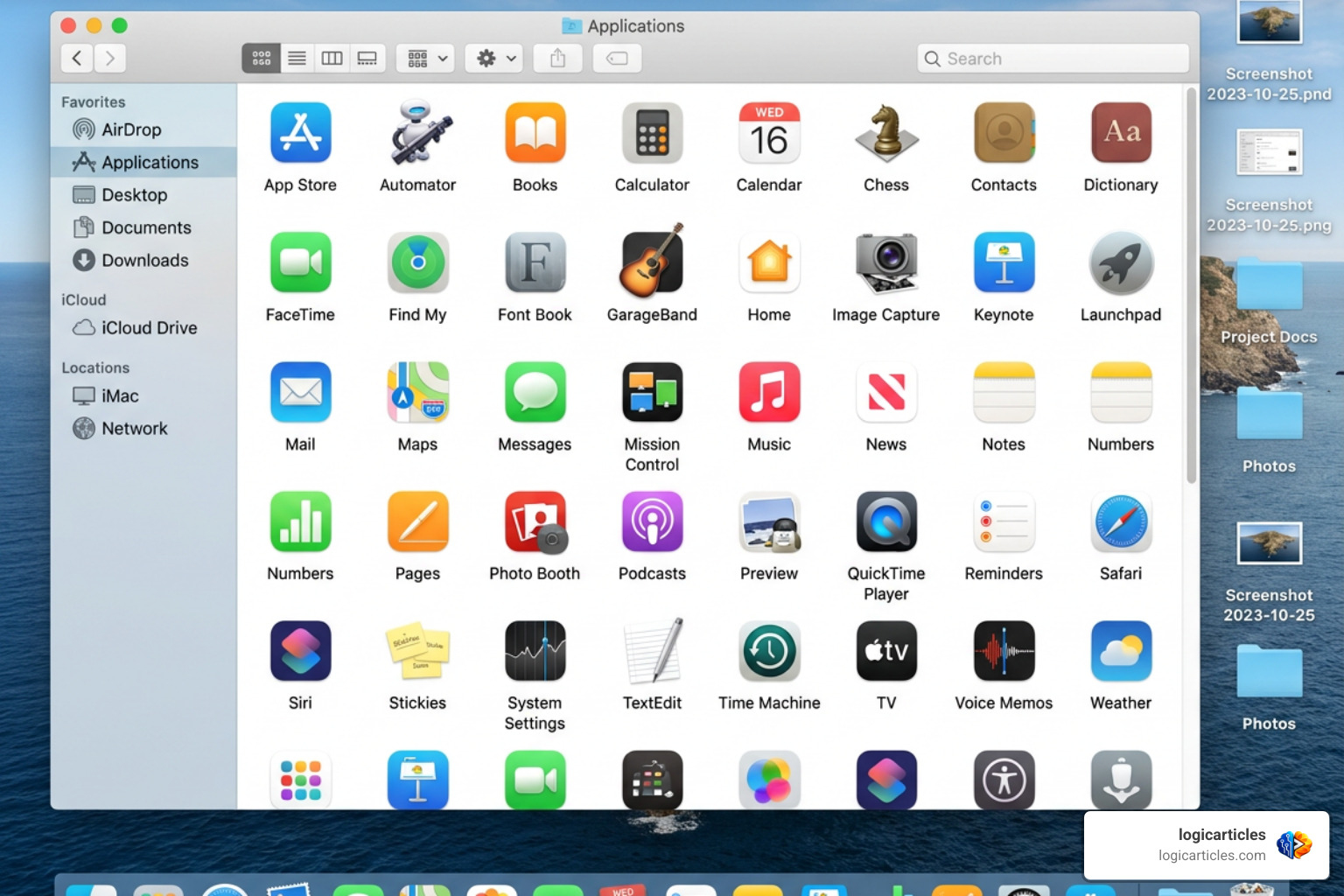
- Open Finder and navigate to your Applications folder.
- Scroll down until you find ShotScribus.
- Right-click (or Control-click) the app icon and select Move to Trash. Alternatively, drag the icon directly to your Trash Can on the Dock.
- If prompted, enter your macOS administrator password to authorize the deletion.
For a quick visual demonstration of how to delete apps on macOS, you can watch this Apple Support Video.
Step 3: Remove Leftover Files from Library Folders
This is the most critical step. To completely clean your system, you must hunt down the configuration files, caches, and preferences that ShotScribus leaves behind.
To access your hidden user Library:
- Open Finder.
- Click Go in the top menu bar, then select Go to Folder… (or press Shift + Command + G).
- Type or paste the following path into the box and press Enter:
~/Library
Now, search for folders or files containing ShotScribus or Scribus (be careful not to delete legitimate Scribus files if you use the actual layout program!) in the following directories:
~/Library/Application Support/~/Library/Caches/~/Library/Preferences/~/Library/Containers/~/Library/Cookies/~/Library/Logs/~/Library/Saved Application State/
System-Wide Library Check
After checking your user Library (~/Library), you must check the system-wide Library. Repeat the Go to Folder process, but this time type: /Library (without the ~ symbol).
Check the same sub-folders here, especially /Library/Application Support/ and /Library/Preferences/. If you find any files with shotscribus in their name, drag them to the Trash.
Step 4: Unload and Delete LaunchAgents and Login Items
ShotScribus uses LaunchAgents to automatically start up every time you log into your Mac. If you don’t delete these, the app’s background services will try to run even after the main application is gone.
1. Cleaning the Launch Folders
Using Go to Folder (Shift + Command + G), navigate to each of these three directories:
~/Library/LaunchAgents/Library/LaunchAgents/Library/LaunchDaemons
Look for .plist files that contain the word shotscribus (for example, com.shotscribus.agent.plist).
Crucial Step: Before throwing a plist file into the Trash, you should unload it so macOS stops tracking it. Open Terminal and type:
launchctl unload -w ~/Library/LaunchAgents/com.shotscribus.agent.plist
(Replace the file path with the exact name of the plist file you found). Once unloaded, drag the .plist file to the Trash.
2. Removing Login Items via System Settings
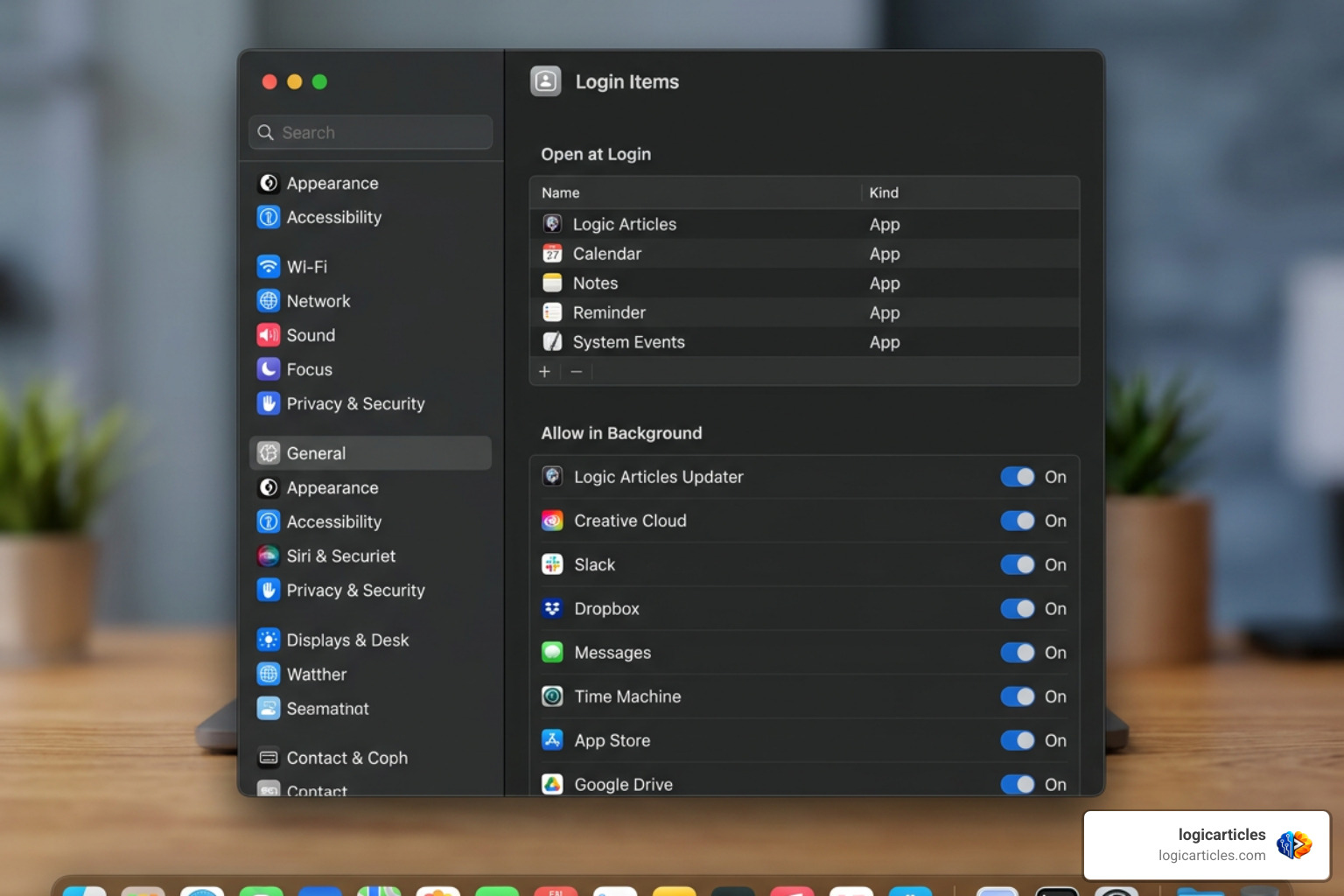
- Open the Apple Menu and select System Settings.
- Navigate to General > Login Items & Extensions.
- Under the Open at Login and Allow in the Background lists, look for anything matching
ShotScribusor unknown/suspicious developers. - Select the item and click the “-” (minus) button to remove it.
Step 5: Empty the Trash and Restart Your Mac
Now that you have gathered all the components of the software in the Trash, it is time to permanently delete them.
- Right-click the Trash icon in your Dock.
- Select Empty Trash and confirm.
- Restart your Mac (Apple Menu > Restart).
A full system reboot is essential. It clears out cached system memory and ensures that macOS completely stops looking for the background launch agents you just deleted.
Verifying Complete Removal and Preventing Future Infections
Once your Mac restarts, you should verify that your cleanup was 100% successful.
Open Terminal one more time and run the mdfind command, which searches your entire system index for any remaining traces:
mdfind 'shotscribus'
If this command returns no output, congratulations—your system is completely clean! If any file paths appear, navigate to those specific folders and delete the listed files.
Manual vs. Automatic Removal: A Quick Comparison
While manual removal gives you complete control and visibility over your system, some users prefer utilizing specialized uninstaller utilities. Here is a breakdown of the two approaches:
| Feature | Manual Removal (Our 5-Step Guide) | Automatic Uninstaller Tools |
|---|---|---|
| Cost | Completely Free | Often requires a paid subscription |
| Control | You see exactly what you are deleting | Automated; black-box process |
| Risk of Leftovers | Very low (if all paths are checked) | Low (depends on the tool’s database) |
| Time Required | 10 to 15 minutes | 2 minutes |
| Technical Skill | Intermediate | Beginner-friendly |
How to Prevent Fake Installers in the Future
To keep your Mac safe and clutter-free moving forward, we highly recommend practicing excellent digital hygiene:
- Avoid Third-Party Download Portals: Never download software from sketchy mirrors, torrent sites, or bundled installer packages.
- Verify the Official Source: If you want the legitimate desktop publishing software, download it directly from the official Scribus community page. If you want to learn more about downloading software securely, read our guide on How To Download Shotscribus Software For Computer.
- Pay Attention to macOS Gatekeeper Prompts: If macOS warns you that an installer is from an unsigned developer, don’t just blindly bypass it by right-clicking and selecting “Open.” Double-check where you got the file.
Troubleshooting: What to Do If You Can’t How Uninstall Shotscribus Software in Mac
If you encounter issues while trying to how uninstall shotscribus software in mac, don’t panic. Here are solutions to common roadblocks:
1. “The file is locked or you don’t have permission”
If macOS blocks you from deleting a file, right-click it, select Get Info, and check the Sharing & Permissions section at the bottom. Ensure your user account has Read & Write privileges. If that fails, force delete it via Terminal:
sudo rm -rf /path/to/stubborn/file
(Warning: Use sudo rm -rf with extreme caution, as it permanently deletes files without confirmation).
2. The processes keep restarting instantly
This means a hidden daemon is actively monitoring the process. Boot your Mac into Safe Mode (hold the Power button on Apple Silicon Macs during startup, or hold the Shift key on Intel Macs). Safe Mode prevents non-essential startup daemons from launching, allowing you to delete the files without interference.
Frequently Asked Questions about ShotScribus Removal
Is ShotScribus the same as the legitimate Scribus software?
No. Scribus is an excellent, safe, open-source desktop publishing tool. ShotScribus is a deceptive program that unauthorized third parties created by combining the names of Shotcut and Scribus to distribute adware. If you accidentally installed the fake bundle, you can find a guide to uninstalling it on the How to uninstall Shotscribus on Mac resource page. If you are looking to remove the real Scribus app instead, refer to this Remove Scribus instruction page.
Why does ShotScribus keep reappearing after I delete it?
This happens because of active LaunchAgents or Login Items that remain on your system. If you only drag the app icon to the Trash, these background configuration files (.plist files) remain active and will automatically download or rebuild the app components upon rebooting. Follow Steps 3 and 4 of our guide to eliminate these persistent agents.
Will uninstalling ShotScribus delete my personal project files?
No. Deleting the ShotScribus application and its system library files will not affect your personal documents, videos, or creative projects stored in your Documents, Downloads, or Desktop folders. However, if you created files using a compromised installer, we highly recommend running a thorough system malware scan to ensure those files do not contain nested scripts.
Conclusion
Keeping your Mac optimized and secure requires a proactive approach to digital hygiene. Deceptive programs like ShotScribus rely on complex persistence mechanisms to stay on your system, but by following our logical, step-by-step manual removal guide, you can successfully reclaim your Mac’s performance and privacy.
At logicarticles, we believe in empowering users with practical, logic-driven insights to manage their tech and digital tools effectively. If you want to keep your system clean and discover the absolute best tools for your creative workflows, check out our curated Best Software Guides.