Why Child Care Software Management Programs Are Worth Your Attention

Child care software management programs have become essential tools for anyone running a daycare, preschool, or after-school program — whether you’re managing 10 kids from home or overseeing multiple center locations.
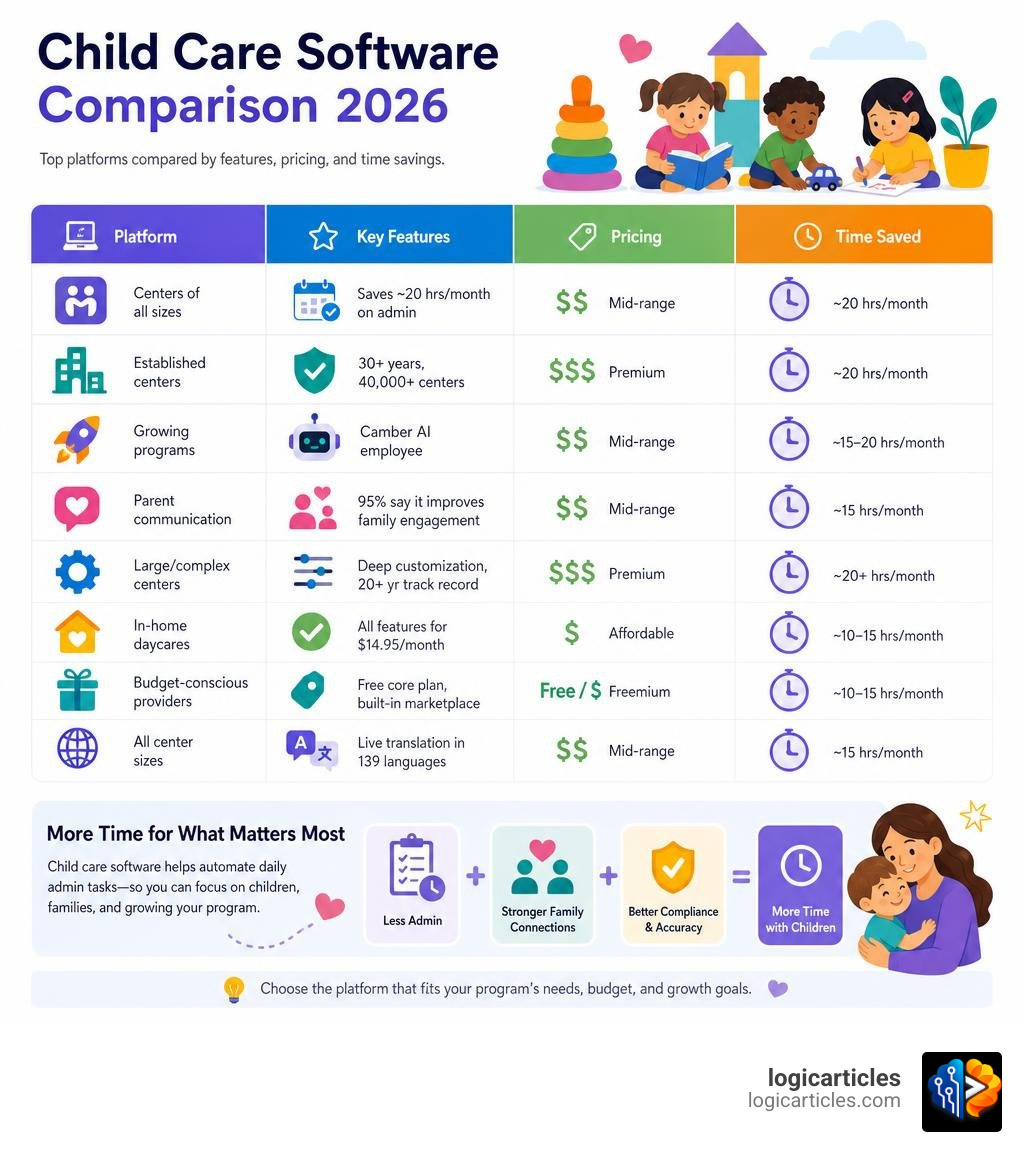
Here’s a quick look at the top options to help you compare:
| Platform | Best For | Standout Feature | Capterra Rating |
|---|---|---|---|
| brightwheel | Centers of all sizes | Saves ~20 hrs/month on admin | 4.7 (3,254 reviews) |
| Procare Solutions | Established centers | 30+ years, 40,000+ centers | 4.6 (2,749 reviews) |
| Playground | Growing programs | Camber AI employee | 4.8 (193 reviews) |
| Lillio | Parent communication | 95% say it improves family engagement | 4.6 (3,623 reviews) |
| iCare Software | Large/complex centers | Deep customization, 20+ yr track record | N/A |
| KidKeeper | In-home daycares | All features for $14.95/month | 4.8 rating |
| TrustedCare | Budget-conscious providers | Free core plan, built-in marketplace | 5.0 (700+ reviews) |
| Famly | All center sizes | Live translation in 139 languages | N/A |
Running a child care center without dedicated software means juggling paper sign-in sheets, manual billing, scattered family files, and compliance tracking — all at once. That’s a lot of time not spent with children.
The good news: modern platforms automate most of that. The challenge is figuring out which one actually fits your program.
This guide breaks down the leading platforms side by side so you can make a clear, informed choice.
Core Features of Child Care Software Management Programs
At their core, child care software management programs are designed to centralize the daily chaos of running an early childhood education (ECE) program. Instead of stitching together five different systems—one for billing, one for messaging, one for attendance, and separate spreadsheets for licensing—directors can run their entire operations from a single dashboard.
The primary capabilities of these platforms focus on saving time, reducing administrative errors, and keeping families connected. To understand the immediate impact of adopting these tools, it helps to look at how daily administrative tasks change when transitioning from manual systems to automated software:
| Task | Manual Method | Automated Method | Time Saved / Impact |
|---|---|---|---|
| Attendance & Ratios | Paper clipboards, manual count, manual ratio checks | Digital check-in kiosks, live ratio tracking alerts | 1–1.25 minutes per child, per direction daily; instant compliance |
| Tuition & Billing | Writing paper invoices, tracking checks, chasing late fees | Auto-pay, recurring digital invoices, automated SMS reminders | Up to 15–20 hours per month; 93% reduction in delinquent payments |
| Parent Communications | Paper daily sheets, phone calls, printed newsletters | Real-time photo sharing, in-app chat, instant emergency alerts | 95% of parents report better communication and trust |
| Licensing & Compliance | Manual immunization audits, paper incident logs | Automated vaccine tracking, digital signature collection | Audit-ready in minutes; 100% compliance tracking |
By centralizing these daily operational tasks, centers can eliminate the friction that leads to staff burnout and administrative backlogs.
Streamlining Enrollment and Attendance Tracking with Child Care Software Management Programs
Managing enrollment and daily attendance is a constant balancing act. If you overbook a classroom, you risk licensing violations; if you underbook, you lose critical revenue. Modern child care software management programs solve this by replacing paper sign-in sheets with secure digital check-in kiosks. Parents and staff can check in using unique PINs, QR codes, or contactless GPS-enabled mobile apps.
When children check in, the software automatically calculates staff-to-child ratios in real time. If a classroom approaches its state licensing limit, administrators receive instant alerts. This live tracking is incredibly valuable during audits or when generating state-mandated reports.
For centers looking to digitize their entire student pipeline, platforms like the Childcare Management Software for Daycare & Preschool Centers provide integrated online enrollment portals. Parents can submit registration forms, upload immunization records, and sign consent forms digitally. This ensures that a child’s electronic file is 100% complete before their first day, eliminating the tedious task of manual data entry for administrative staff.
Automated Billing and Financial Management
Chasing late tuition payments is one of the most frustrating parts of running a child care business. Fortunately, automated billing is a standard feature in leading child care platforms. Instead of manually calculating tuition, software allows you to set up recurring billing profiles. The system automatically drafts invoices, applies sibling discounts, processes credit cards or ACH payments, and sends automatic late-payment reminders.
For example, platforms like Playground help centers achieve up to a 93% reduction in delinquent payments simply by making automatic payments a requirement during enrollment. Many programs also support subsidy tracking and split-billing, allowing centers to invoice state agencies and families separately for the same child.
Additionally, keeping your childcare’s finances organized is crucial for long-term sustainability. If you are looking to optimize your broader business financials, you might also want to explore our review of the Best CFO Software Tools For Small Business to manage high-level budgeting, or check out the Best Nonprofit Financial Management Software if your child care center operates as a registered 501(c)(3) organization.
Advanced Automation and AI in Modern Child Care
As we move through 2026, the childcare sector is seeing an exciting shift toward artificial intelligence (AI) and advanced automation. These tools are no longer just futuristic concepts—they are actively helping directors solve staffing shortages, automate parent inquiries, and optimize classroom space.

Instead of spending hours trying to forecast capacity or draft responses to parent emails, directors can now rely on built-in AI assistants to do the heavy lifting in seconds.
AI-Driven Enrollment Planning and Staff Support
Two standout examples of AI innovation in child care are Procare’s RoomRunner and Playground’s Camber.
- RoomRunner (Procare): This AI-assisted enrollment planning tool helps centers optimize classroom capacity. It analyzes your current waitlist, historical trends, and upcoming age transitions to predict exactly when and where openings will occur. Instead of guessing when a spot will open up in the toddler room, RoomRunner matches waitlisted families to future seats before the openings even happen, maximizing your enrollment and revenue.
- Camber (Playground): Billed as the first “AI employee” built specifically for child care, Camber acts as a virtual assistant. It can answer incoming phone inquiries, respond to parent emails, schedule tours, and support educators with administrative tasks.
By automating these front-of-house tasks, AI reduces the burden on directors, allowing them to focus on staff retention and curriculum quality. When it comes to managing your team, integrating these tools with the Best HR Software For Small Businesses can help you coordinate staff credentials, track shift preferences, and manage payroll seamlessly.
Enhancing Parent Engagement and Communication
Modern parents expect real-time visibility into their child’s day. They don’t want a crumpled paper daily sheet at 5:00 PM; they want to see photos, meal logs, and nap updates as they happen.
Platforms like Lillio (formerly HiMama) have revolutionized this space, having shared over 2.1 billion “moments” with families worldwide. In fact, 95% of Lillio users report that the platform fosters significantly better communication with parents. Similarly, using Customizable childcare software | Famly allows centers to build a highly interactive, private social feed for families. Famly even includes an AI writing assistant and live translation for 139 languages, ensuring that teachers can communicate clearly with families from all linguistic backgrounds.
Selecting the Right Platform for Your Center Size
Not all child care software management programs are built the same. A platform that works beautifully for a multi-site franchise might overwhelm an in-home daycare provider.
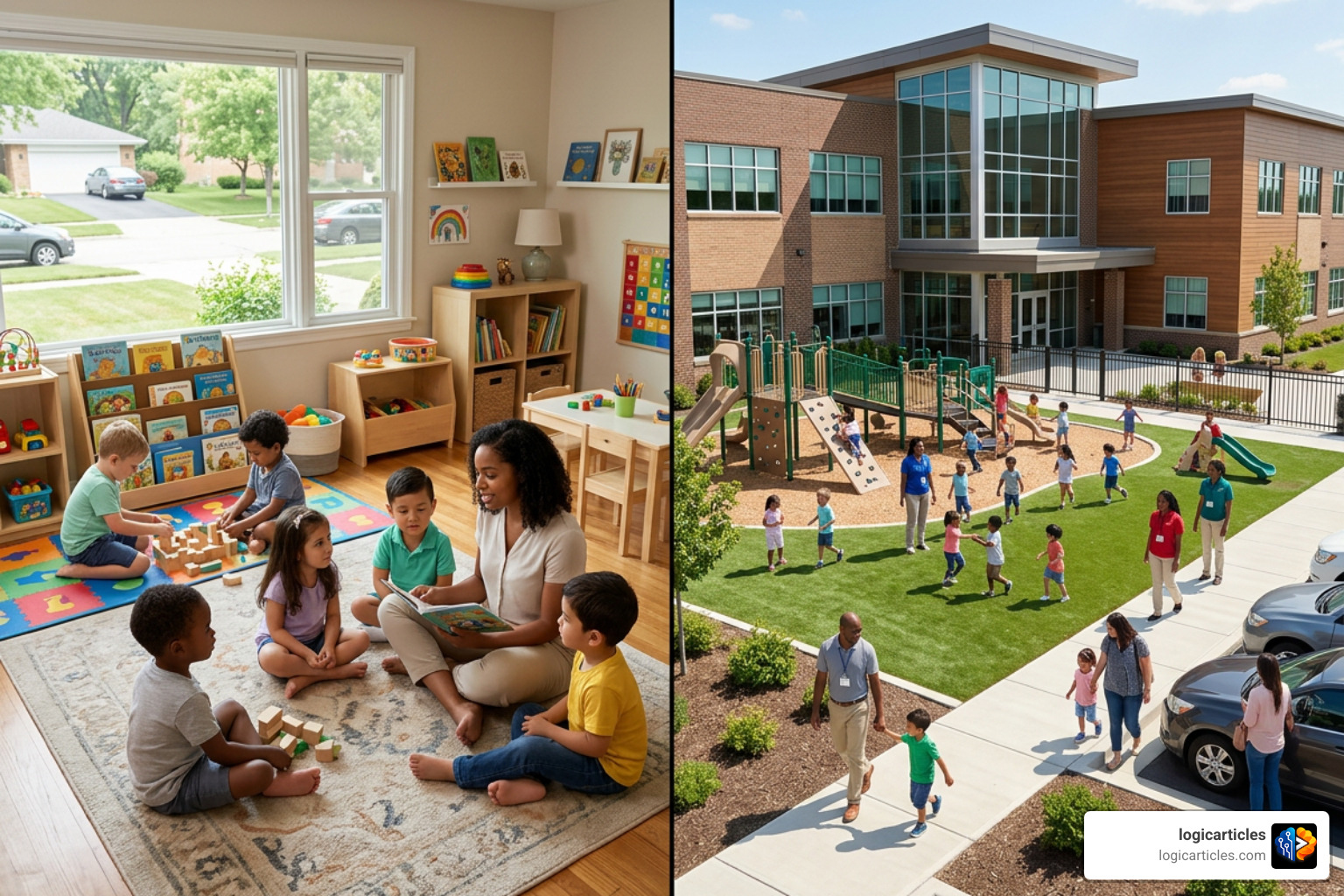
When shopping for a solution, it is important to match the software’s complexity and price tag with your specific operational scale.
Tailoring Child Care Software Management Programs to Your Business Model
Here is how different platforms cater to various business models:
- In-Home Daycares: If you run a small program out of your home, you need something affordable and straightforward. Platforms like KidKeeper — Childcare Management Software for Providers offer child files, immunization tracking, meal logging, and invoicing for a flat rate of just $14.95 per month.
- Mid-Sized and Growing Centers: If you are actively trying to fill seats and build your brand, tools like the #1 FREE Childcare Management Software – TrustedCare are excellent. TrustedCare offers free core management features while providing a built-in marketplace that connects your business with local parents searching for care, helping you boost enrollment by up to 25%.
- Enterprise and Multi-Site Franchises: Large operations require robust security and centralized governance. Enterprise solutions, such as Illumine Enterprise Childcare Management Software, are built with SOC 2 compliance, GDPR standards, matrix permissions, and approval workflows. This allows corporate headquarters to monitor compliance, track revenue across dozens of locations, and manage multi-stream billing (private pay, corporate contracts, and state subsidies) from a single master dashboard.
Overcoming Implementation and Onboarding Challenges
Switching to a new software platform can feel daunting. Directors often worry about losing historical data, facing resistance from staff, or spending weeks trying to learn a complicated system.
To ensure a smooth transition, look for software providers that offer dedicated onboarding support. For example, brightwheel guarantees data migration in under 24 hours and provides 1:1 onboarding sessions. To keep your team on track during the rollout, utilizing the Best Task Management Software In 2026 Tested can help you assign training modules, track data-entry deadlines, and manage the transition phase with zero downtime.
Frequently Asked Questions about Child Care Software
How much time can child care centers save by using management software?
On average, child care centers save about 20 hours per month on administrative tasks after switching to a digital platform. These savings are achieved by automating recurring tuition invoices, eliminating manual paper check-ins, and streamlining parent communications. For directors, this translates to nearly five hours saved every single week—time that can be redirected toward mentoring teachers and improving curriculum quality.
How do these programs support regulatory compliance and licensing?
Child care software helps centers stay audit-ready by digitizing and tracking critical compliance records. The software automatically monitors staff-to-child ratios, tracks staff certifications, logs incident reports, and flags upcoming expiration dates for child immunization records.
Additionally, platforms like Kinderly Manage — Childcare Center Management Software (CCMS) feature built-in integrations with state systems like KinderConnect. This allows centers to automatically submit attendance data to state agencies for subsidy reimbursements, ensuring 100% compliance with local funding guidelines without the need for manual paperwork.
Can small or in-home daycares benefit from these platforms?
Yes, absolutely! Even small, in-home daycares benefit significantly from using software. It professionalizes your business, ensures you get paid on time via automated invoicing, and keeps parents engaged. Many platforms offer highly affordable or even free tiers designed specifically for smaller operations, meaning you don’t have to pay for enterprise-level features you won’t use.
Conclusion
Embracing child care software management programs is one of the most impactful decisions you can make for your early childhood program. By automating tedious administrative tasks, optimizing your enrollment pipeline, and building stronger relationships with families, these platforms allow you to focus on what matters most: providing high-quality care and education to children.
If you are ready to modernize other areas of your business operations, explore our curated list of Productivity Solutions to find tools that will help you save time, reduce stress, and grow your business. You can also review our guide on the Best Content Software to streamline your marketing and parent newsletters.