The Best Content Software in 2026: What You Need to Know Fast

Finding the best content software for your team doesn’t have to be overwhelming — here’s a quick answer before we dive deep.
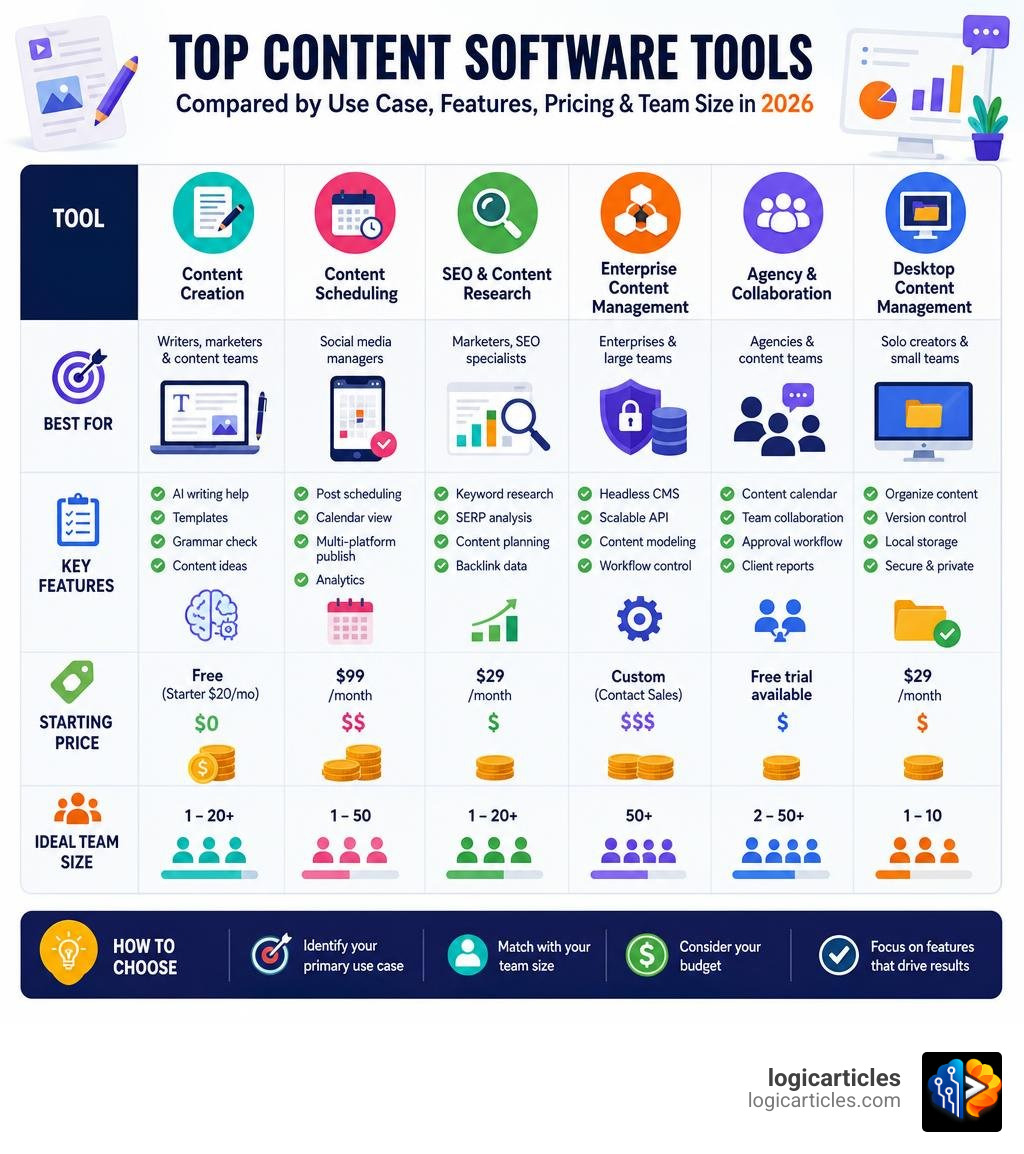
Top content software picks at a glance:
| Tool | Best For | Starting Price |
|---|---|---|
| HubSpot Content Hub | All-in-one content + CRM | Free (Starter $20/mo) |
| Hootsuite | Social media management | $99/month |
| Jasper | AI writing assistance | $49/month |
| Ahrefs | SEO + content research | $29/month |
| Contentstack | Enterprise headless CMS | Custom |
| ContentStudio | Agencies + scheduling | Free trial available |
| ContentMK | Desktop content management | $29/month |
Content marketing isn’t optional anymore. 91% of B2B marketers use it as part of their strategy — and it generates 3x more leads than traditional marketing at 62% less cost.
But here’s the problem: the software landscape is massive and confusing.
There are tools for writing, tools for scheduling, tools for SEO, tools for analytics — and dozens of options in each category. Picking the wrong one wastes time, money, and momentum.
This guide cuts through the noise. We’ve reviewed the top content software tools available right now, organized by use case, so you can find the right fit for your team size, budget, and goals — whether you’re a solo creator or an enterprise marketing team.
Key Features to Look For in the BEST content software
Selecting the best content software for your business requires looking past shiny interfaces and focusing on features that solve real workflow bottlenecks. When evaluating platforms, we recommend focusing on four foundational pillars: AI writing assistance, a centralized editorial calendar, multi-channel distribution, and robust analytics.
- AI Writing and Optimization: Today’s content platforms must do more than host text; they need to help you write, optimize, and repurpose it. Look for tools that offer brand-voice training, automated readability scoring, and on-page SEO recommendations.
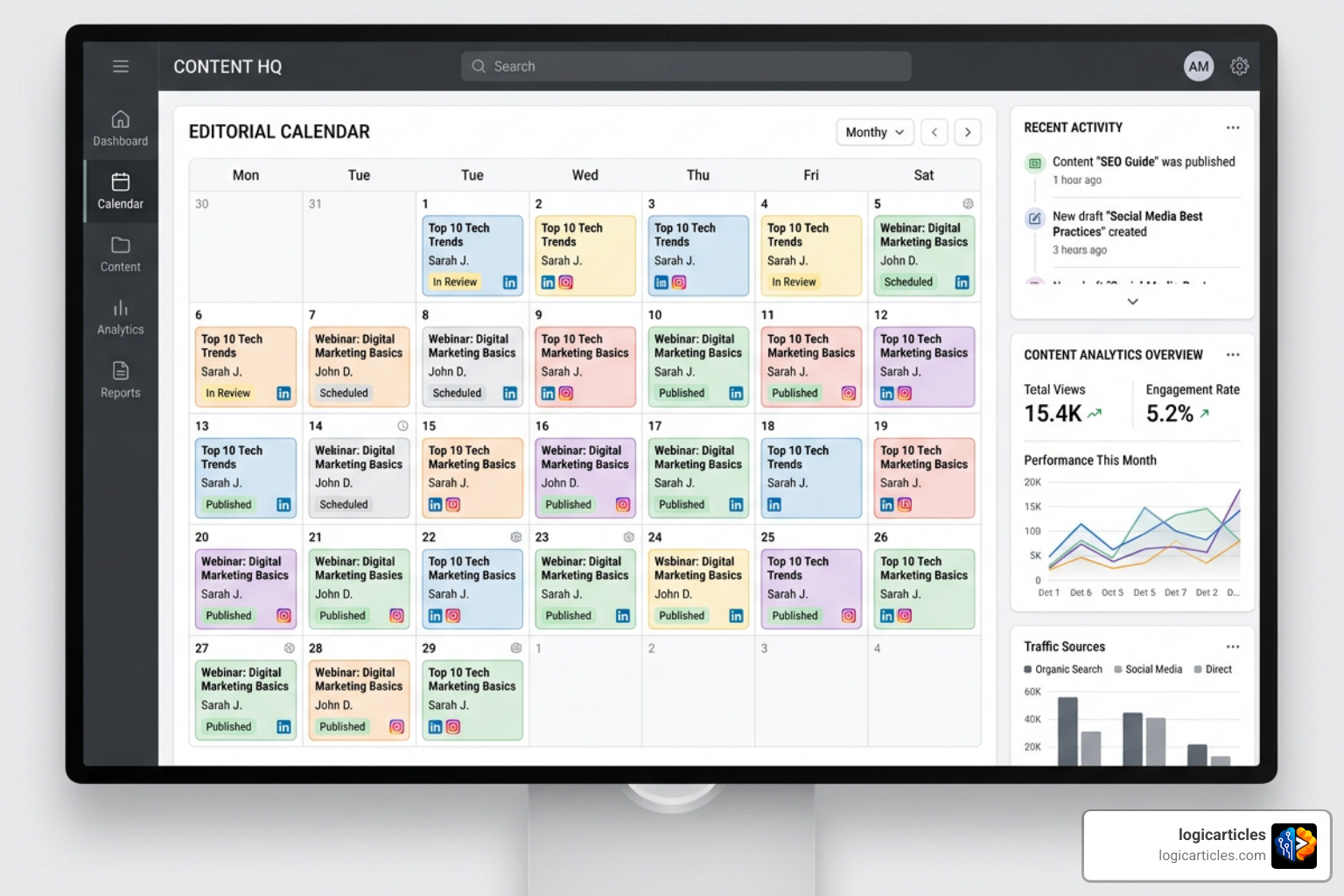
- Centralized Editorial Calendar: Spreadsheets quickly become chaotic when managing multiple campaigns. A visual, drag-and-drop editorial calendar allows your team to see exactly what is in production, what is scheduled, and who is responsible for each asset.
- Multi-Channel Distribution: Your content needs to live where your audience does. The ideal software allows you to publish directly to your website, share across social media platforms, and format newsletters without jumping between tabs.
- Actionable Analytics: You cannot improve what you do not measure. The software you choose should track engagement, conversion rates, and competitor performance to prove your return on investment.
For a deeper dive into how these features interact across different marketing setups, check out our comprehensive guide on the Best Content Marketing Software.
Content Creation and AI Integration
AI has shifted from a futuristic novelty to an essential daily partner. The best content software leverages generative AI to help teams overcome writer’s block, draft initial outlines, and adapt tone to fit unique brand identities.
However, not all AI features are created equal. Enterprise-grade tools now allow you to upload style guides, customer personas, and product documentation into a private knowledge base. This ensures that the generated copy sounds like your brand rather than generic web text.
For teams looking for dedicated writing assistants, platforms like the AI Content Generation Platform — Thundercontent offer multi-language support across dozens of languages, allowing creators to produce blogs and marketing copy rapidly. When building your digital footprint from scratch, integrating these tools with the Best Ai Website Builders can help you launch fully optimized, content-rich websites in a fraction of the time.
If you are expanding your content mix into visual media, exploring the Best Free Drawing Software In 2026 7 Top Tools Artists Love or browsing the Best Graphic Design Inspiration Sites To Bookmark In 2026 can provide your team with the creative resources needed to match your written words with striking visuals.
Scheduling and Multi-Channel Distribution
Once your content is created, the next hurdle is getting it in front of your audience. Managing separate logins for LinkedIn, Instagram, X, and your blog is a recipe for manual errors and missed deadlines.
Modern distribution engines solve this by automating the scheduling process. By using a unified social media management tool like ContentStudio: Unified Social Media Management Tool, marketing teams and agencies can manage client approvals, run evergreen recycling campaigns, and schedule months of social media posts simultaneously. These platforms dramatically reduce manual coordination, saving teams hours of administrative work each week.
Top Categories of Content Software for 2026
The content software ecosystem is diverse, catering to different operational scales, technical preferences, and privacy requirements. Understanding these categories helps you avoid paying for features you do not need—or outgrowing your tool too quickly.
| Category | Primary Focus | Best Suited For | Key Advantage |
|---|---|---|---|
| Enterprise Platforms | Governance, scale, and AI-driven automation | Global brands and highly regulated industries | Unmatched security, deep compliance, and massive data handling |
| Headless CMS | API-first multi-channel publishing | Tech-savvy teams and omnichannel publishers | Complete design freedom and seamless deployment across devices |
| Desktop / Local-First | Privacy, speed, and offline organization | Solo publishers, SEO professionals, and small teams | Zero cloud dependencies, lightning-fast search, and local data ownership |
| Social Suites | Scheduling, listening, and community engagement | Social-first brands and marketing agencies | Unified inbox, trend tracking, and client approval workflows |
Enterprise-Grade Platforms as the BEST content software
For global corporations, content operations involve complex compliance rules, multi-language localization, and strict security standards. In these environments, simple blogging tools fall short. Enterprise content software must provide bulletproof governance while enabling rapid scaling.
A prime example of this evolution is the IBM Content Cortex | Intelligent Content Platform. It serves as an agentic content services platform designed to centralize, govern, and activate enterprise documents. By utilizing Model Context Protocol (MCP) integrations, it connects AI models directly to secure databases without risking data leakage, helping organizations automate compliance and documentation cycles safely.
Similarly, the Contentstack Content Cloud addresses the challenges of modern content operations. While traditional headless CMS solutions solved architectural problems, they often left marketing teams struggling with complex developer workflows. Contentstack bridges this gap by offering visual editing tools alongside an API-first headless foundation, enabling safe AI agent collaboration and faster publishing speeds.
Desktop and Local-First BEST content software Solutions
While cloud-based platforms dominate the market, an increasing number of content creators and SEO specialists are embracing local-first desktop software. Working entirely in browser tabs can lead to slow performance, scattered files, and privacy concerns.
For those who prefer a clean, distraction-free environment, ContentMK – The desktop content management platform offers a powerful alternative to messy spreadsheets. Operating as a local-first application powered by an offline SQLite database, it syncs directly with WordPress, tracks content health scores, and integrates with SEO tools like Ahrefs and SEMrush. This setup ensures your data remains private and accessible, even without an active internet connection.
If you are a Mac user building out a local-first creative suite, pairing your content manager with the Best Free Image Editing Software For Mac In 2026 allows you to crop, polish, and optimize your article assets locally before uploading them to your CMS.
How to Choose and Integrate Your Content Stack
No content tool is an island. The true value of your software emerges when it communicates seamlessly with your existing marketing stack, particularly your Customer Relationship Management (CRM) system and email platforms.
When choosing your software, prioritize platforms that offer native integrations or robust API connectivity. This prevents “data silos,” where your content team has no idea which blog posts or social updates are actually driving sales and customer signups.
For a highly integrated approach, Content Marketing Software for Businesses of Every Size | HubSpot provides an excellent blueprint. By connecting content creation directly to their industry-leading CRM, businesses can track the exact customer journey from the first blog click to the final purchase. This integration also allows you to seamlessly feed your newly generated content into the Best Email Marketing Campaigns, creating automated lead-nurturing sequences that feel highly personalized.
Frequently Asked Questions About Content Software
How do AI features impact content quality?
AI features dramatically increase production speed, but they should never replace human oversight. The best approach is to treat AI as a highly capable writing assistant—ideal for research, drafting outlines, and brainstorming headlines. A human editor must always review the output to ensure factual accuracy, inject unique brand personality, and verify that the content truly answers the searcher’s intent.
What is the difference between headless CMS and traditional CMS?
A traditional CMS (like standard WordPress) links the backend content database directly to the frontend design template. A headless CMS separates these two layers entirely. It stores your content as raw data and delivers it via APIs to any device—be it a website, a mobile app, a smartwatch, or an in-store digital display. This API-first approach offers developers complete design freedom and ensures your content is future-proof.
How do you measure the ROI of content software?
To measure the ROI of your software investment, track metrics that align with your business goals:
- Traffic and Engagement: Monitor organic search traffic growth, time spent on page, and social shares.
- Lead Generation: Track how many newsletter signups, demo requests, or resource downloads originate from your content.
- Operational Efficiency: Calculate the time saved by your team on administrative tasks, scheduling, and approvals after adopting the software.
Conclusion
Finding the best content software is about aligning your platform choices with your team’s specific workflow, technical capabilities, and business goals. Whether you need the deep security of an enterprise-grade system, the speed of a local-first desktop application, or the seamless integration of an all-in-one CRM and content hub, the right tools will eliminate administrative bottlenecks and allow your team to focus on what matters most: telling compelling stories that convert.
Ready to optimize the rest of your business toolkit? Explore More Software Guides on logicarticles to find the perfect platforms to fuel your strategic growth.