What “Software Programs That Crawl the Web to Analyze Web Pages” Really Means (And the Crossclimb Connection)

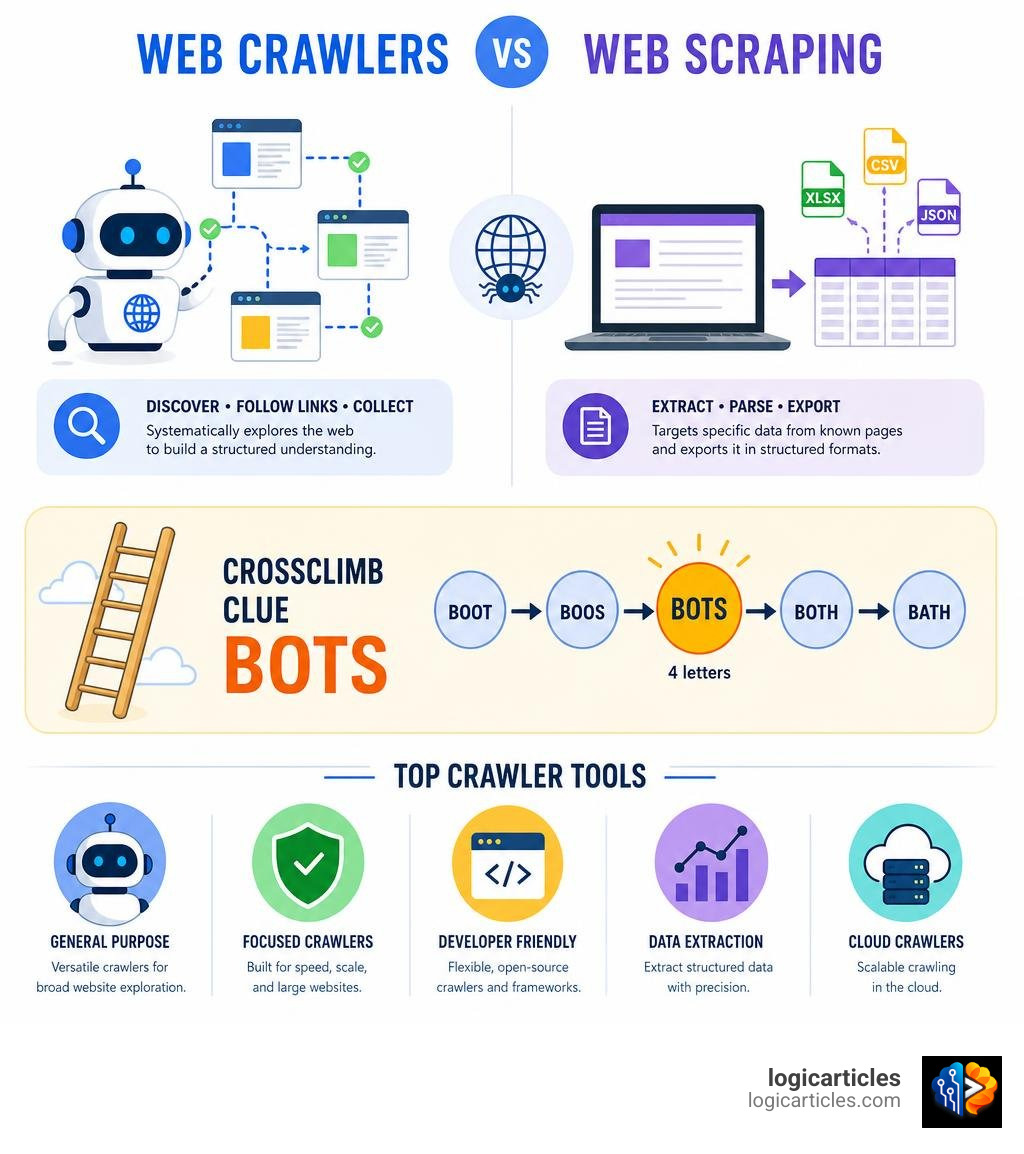
If you landed here after seeing software programs that crawl the web to analyze web pages crossclimb as a clue, the short answer is: the word is BOTS.
That clue appeared in LinkedIn’s daily Crossclimb word ladder puzzle (#820, July 29, 2026). But bots — short for robots — are also a genuinely important piece of how the modern internet works.
Here’s the quick breakdown:
| Term | What It Means |
|---|---|
| Bots / Web crawlers | Automated programs that visit web pages, follow links, and collect data |
| Web spiders | Another name for crawlers — they “crawl” the web like a spider on a web |
| Crossclimb clue answer | BOTS (4 letters, fits the word ladder: BOOT to BOOS to BOTS to BOTH to BATH) |
| Common examples | Googlebot, Bingbot, and developer tools like Webclaw, Kreuzcrawl, and XCrawl |
So whether you’re here for the puzzle answer or want to actually understand what these programs do — you’re in the right place.
Web crawlers are the silent engines behind search engines, AI training datasets, price trackers, and even citizen-led efforts to preserve government websites before they disappear. In a small server room in San Francisco, rows of computers once whirred around the clock doing exactly this — harvesting and archiving government web pages during a transition of power, as part of a project called the End of Term Web Archive.
That’s the scale and stakes of what bots can do.
Below, we break down how modern web crawlers work, compare the top tools available in July 2026, and explain why this technology is becoming essential for AI workflows.
What Are Software Programs That Crawl the Web to Analyze Web Pages Crossclimb?
To understand software programs that crawl the web to analyze web pages crossclimb, we have to look past the gaming word ladder and explore the underlying technology. At their core, these programs—commonly called web crawlers, spiders, or bots—are automated scripts designed to systematically browse the World Wide Web.
While the term “bot” might conjure up images of spam comments or ticket scalping, helpful crawlers are the backbone of search engines. Without them, Google wouldn’t know your website exists, and AI models wouldn’t have datasets to learn from.
But there is a major difference between web crawling and web scraping:
- Web Crawling (The Explorer): This is about discovery. A crawler starts with a list of URLs (called seeds), visits them, identifies all the hyperlinks on those pages, and adds those new links to its queue. It maps out entire domains or the broader web.
- Web Scraping (The Harvester): This is about extraction. Once a crawler finds a page, a scraper steps in to pull specific data points—like prices, product descriptions, or article text—and saves them in a structured format.
Modern tools combine both techniques into unified web extraction engines. If you want to dive into how these systems are built from scratch, you can check out the developer docs for Webclaw, which offer a great technical starting point.

The Anatomy of Modern Software Programs That Crawl the Web to Analyze Web Pages Crossclimb
Building a high-performance crawler is a bit like building a digital spaceship. It has to navigate a vast, unpredictable environment while keeping its cargo safe and clean. The core architectural components of a modern web crawling engine include:
- The HTTP Client: The engine’s thrusters. It sends requests to web servers and downloads the raw response. Modern clients must use TLS fingerprinting to impersonate real web browsers, otherwise, security systems will instantly block them.
- The HTML Parser: The translation deck. It converts raw, messy HTML code into a structured Document Object Model (DOM) tree that the program can read.
- The Content Extraction Engine: The sorting hat. This component uses algorithms to strip away the “noise” of a web page—like navigation bars, footers, ads, and cookie banners—leaving behind only the core article text or product data.
- The Browser Fallback Layer: The heavy machinery. If a page relies on heavy client-side JavaScript, a simple HTTP request will only return a blank screen. The crawler must fall back to a headless browser (like Chromium) to let the page render fully before extracting data.
To make these engines incredibly fast, developers are increasingly building them in languages like Rust. By separating the core parsing logic from the network layer, these engines can achieve WebAssembly (WASM) compatibility. This means they can run directly inside serverless edge environments (like Cloudflare Workers) with zero network overhead.
Ethical Crawling and Bot Management in Software Programs That Crawl the Web to Analyze Web Pages Crossclimb
Just because we can crawl any page doesn’t mean we should do it aggressively. Responsible crawling is crucial to avoid crashing servers or getting legally blocked. Ethical crawlers adhere to several strict rules:
- Robots.txt Compliance: Before touching a site, a crawler reads its robots.txt file, which outlines which parts of the site are off-limits to bots.
- Rate Limiting: We must space out requests. Flooding a server with thousands of requests per second is essentially a Distributed Denial of Service (DDoS) attack.
- Proxy Rotation: To prevent a single IP address from being blocked, crawlers route their requests through a proxy pool. This pool rotates between different IP addresses, often utilizing residential proxies (IPs assigned to real homes) to mimic organic human traffic.
- CAPTCHA and Bot Protection Bypass: Advanced security walls like Cloudflare or Akamai use behavioral analysis to block bots. Crawlers must rotate their browser fingerprints (user-agent strings, screen resolutions, and header configurations) to blend in with normal traffic.
Architectural Deep Dive: How Modern Crawlers Handle SPAs and Bot Protection
The web has changed. In the early days of the internet, websites were simple, static HTML files. Today, we live in the era of Single Page Applications (SPAs) built on frameworks like React, Angular, and Vue. When you visit an SPA, the initial server response is often a tiny, empty HTML shell. The actual content is loaded dynamically via JavaScript.
This presents a massive challenge for traditional crawlers. If a bot does not execute JavaScript, it reads an empty page.

To solve this, modern crawling engines use headless browser rendering pipelines. Tools like Chromiumoxide allow the crawler to spin up a background instance of Chrome, load the page, wait for the JavaScript to execute, and then extract the fully rendered DOM.
However, running a headless browser is incredibly expensive in terms of CPU and memory. To keep performance high, advanced crawlers use a tiered escalation strategy:
- Tier 1: High-Speed HTTP. The crawler attempts to fetch the page using a lightweight HTTP client. It uses TLS fingerprint impersonation to bypass basic Web Application Firewalls (WAFs) without the overhead of a browser.
- Tier 2: WAF Escalation. If the server returns a block signal (like a 403 Forbidden or a CAPTCHA page), the engine automatically escalates the request to a headless browser backend.
- Tier 3: Browser Interaction. If the content is buried behind a button or infinite scroll, the browser executes pre-configured actions (like clicking “Read More” or scrolling down) before capturing the page.
AI Integration: MCP, Markdown, and RAG Pipelines
The rise of Large Language Models (LLMs) has completely transformed the web crawling landscape. AI models do not think or read like humans, and they certainly do not need raw HTML. If you feed an LLM a raw web page, it gets distracted by thousands of lines of JavaScript, CSS, navigation links, and tracking pixels.
This noise does more than just confuse the AI—it wastes precious tokens.
That is why modern crawlers are designed to output clean, token-optimized Markdown. By stripping out the boilerplate, tools like the open-source project crossi-dev/webclaw can reduce token usage by around 90% compared to raw HTML. This makes it incredibly cost-effective to feed fresh web data into Retrieval-Augmented Generation (RAG) pipelines, which allow LLMs to answer user questions using up-to-the-minute web information.
Additionally, we are seeing the rapid adoption of the Model Context Protocol (MCP). MCP is an open standard that allows developers to build secure, direct connections between AI models (like Claude) and external data sources.
By running an MCP server alongside a web crawler, an AI agent can autonomously decide to crawl the web, map a domain, or extract structured JSON data on demand. It turns the AI from a passive reader into an active web researcher.
Comparing the Top Web Crawling Tools: Webclaw vs. Kreuzcrawl vs. XCrawl
If you are looking to integrate web crawling into your own development stack or AI workflows, three tools stand out in July 2026: Webclaw, Kreuzcrawl, and XCrawl.
Here is a quick comparison of how they stack up:
| Feature | Webclaw | Kreuzcrawl | XCrawl |
|---|---|---|---|
| Primary Focus | LLM-ready token optimization | Multi-language native bindings | Enterprise-scale anti-bot bypass |
| Core Language | Rust | Rust | TypeScript/Go |
| Language Support | Rust, Python, Go, TypeScript | 10+ languages (via native bindings) | Node.js, Python |
| Output Formats | Markdown, JSON, raw HTML, Text | Markdown, Metadata, JSON-LD | JSON, Markdown, Screenshots |
| Anti-Bot Evasion | TLS fingerprinting, proxy pool | WAF escalation, browser fallback | Rotating residential proxies, fingerprinting |
| Pricing/Free Tier | Free local CLI; Hosted from $19/mo | Fully open-source & self-hosted | 1,000 free credits; Pay-as-you-go |
Webclaw: The Rust-Powered, Token-Optimized Extractor
Webclaw is a local-first web extraction toolkit built in Rust. It has gained massive popularity in the developer community, racking up over 2,084 GitHub stars.
What makes Webclaw unique is its focus on speed and AI readiness. It is designed to return static pages in an astonishing 118ms on average, bypassing headless browser overhead entirely by using advanced TLS fingerprint impersonation.
Webclaw’s local CLI is completely free to run on your own machine. For developers who need cloud-scale scaling, JavaScript rendering, and managed proxy rotation, their hosted API starts at $19/mo for 10,000 credits, with a free tier of 3 runs per day. You can learn more on the official https://webclaw.io/ website.
Kreuzcrawl: The Polyglot Crawler with 10 Language Bindings
If you work in a multi-language development environment, Kreuzcrawl is an absolute dream. It features a high-performance core engine written in Rust, but it supports native bindings for 10 programming languages. Whether you write in Rust, Python, Node.js, Ruby, Go, Java, C#, PHP, Elixir, or WebAssembly, you can run the exact same compiled engine with identical results.
Kreuzcrawl excels at complex site mapping. It supports Breadth-First Search (BFS), Depth-First Search (DFS), Best-First, and Adaptive traversal strategies with concurrent fetching.
For developers looking to integrate this polyglot powerhouse, check out the GitHub – kreuzberg-dev/kreuzcrawl repository or read through the official documentation at Kreuzcrawl – Kreuzcrawl.
XCrawl: Enterprise-Scale Scraping with 99%+ Success Rate
XCrawl is built for developers who need to extract data from the most heavily protected websites on the internet. If you are regularly hitting CAPTCHAs, IP blocks, or complex login walls, XCrawl is designed to solve those issues out of the box.
XCrawl boasts a 99%+ data extraction success rate. It achieves this by combining advanced browser fingerprinting with a massive network of rotating residential proxies. It also features built-in integrations for AI agents, including an MCP server and n8n/Zapier integrations for no-code automation.
XCrawl offers a generous starting point for new developers, providing 1,000 free credits upon sign-up with no credit card required. You can try it out directly at XCrawl – AI Web Scraping API & Intelligent Scraper Tool.
Real-World Use Cases: From Brand Intelligence to Archiving Government History
Web crawling is not just a developer’s toy—it is a vital tool for business intelligence, academic research, and historical preservation.
- Competitor Monitoring: Businesses use crawlers to automatically scan competitor websites, tracking changes in product pricing, software release changelogs, and marketing messaging.
- Lead Enrichment: Sales teams crawl company directories and LinkedIn profiles to extract clean contact information, funding data, and tech stack details.
- Brand Intelligence: Marketing teams crawl the web to find where their logos, brand colors, and assets are being used, ensuring brand consistency across partner sites.
But perhaps the most dramatic real-world use case for web crawling is digital preservation.
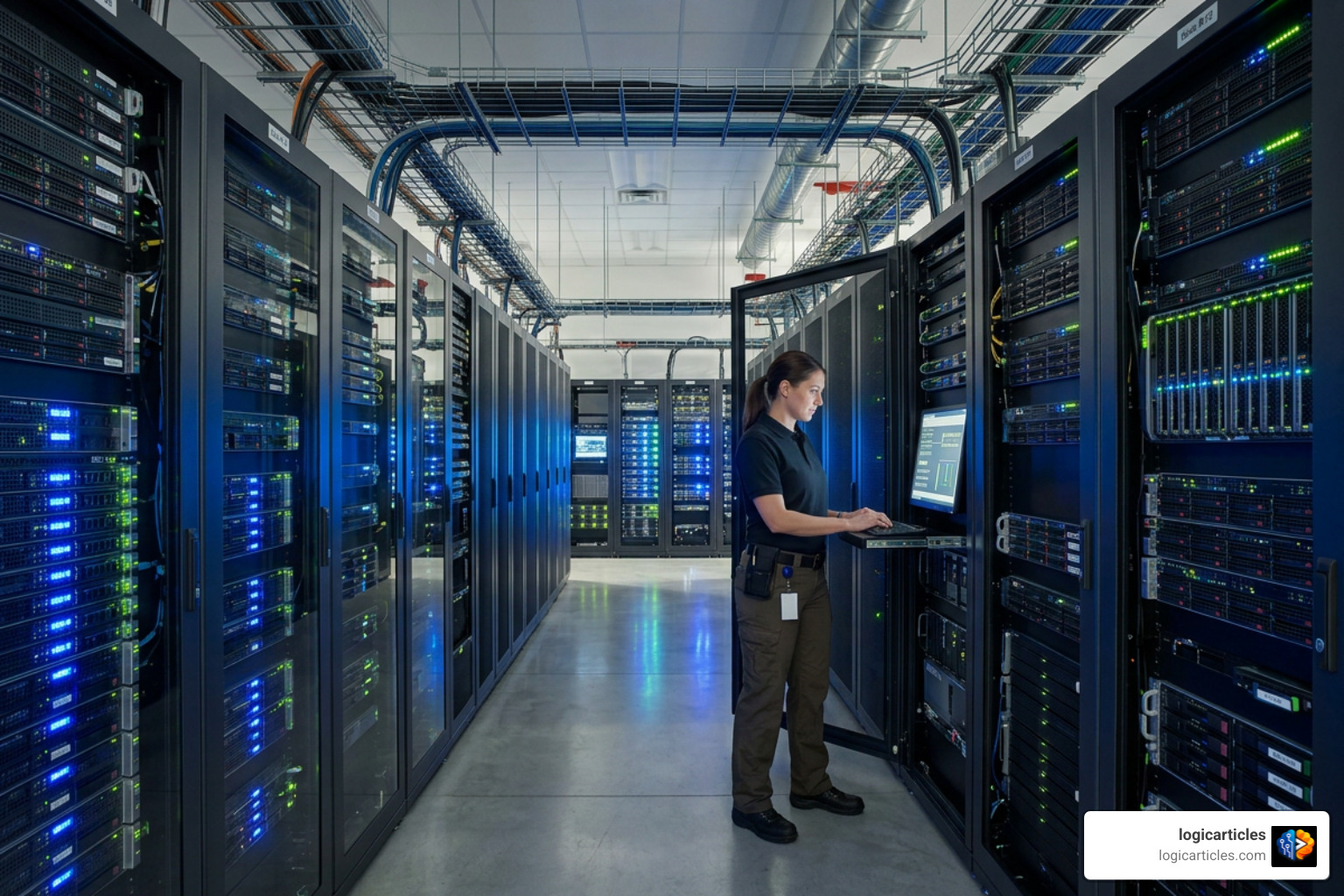
Every four years, during transitions of power in the United States government, a collaborative effort called the End of Term Web Archive springs into action. Government websites are public property, but when a new administration takes office, backend servers are updated, pages are deleted, and valuable public data can vanish overnight.
Using automated web crawlers, a dedicated group of librarians, researchers, and everyday citizens race against the clock to capture comprehensive snapshots of the entire federal web presence. They harvest terabytes of data, preserving historical public messaging, scientific databases, and policy documents before they are altered or deleted forever.
It is a high-stakes race against time, proving that web crawling is not just about data extraction—it is about preserving our collective digital history.
Frequently Asked Questions about Web Crawling Software
What is the difference between web crawling and web scraping?
Web crawling is the process of discovering and mapping URLs across the web by systematically following hyperlinks (exploring the web). Web scraping is the targeted action of extracting specific data points (like text, images, or prices) from those discovered pages. Crawlers find the pages; scrapers extract the value.
How do web crawlers bypass advanced bot protection?
Modern crawlers bypass bot walls by using rotating residential proxy networks (which route requests through real household internet connections), mimicking organic human browser fingerprints (matching screen resolutions, user-agents, and headers), and using TLS fingerprint impersonation to look like legitimate browsers at the network layer.
Why is Markdown preferred over HTML for AI and RAG pipelines?
Raw HTML is packed with “noise” like scripts, styling, and navigation menus. Converting HTML to clean Markdown strips away this boilerplate, reducing token consumption by up to 90%. This saves money on LLM API costs, fits more relevant content into the AI’s context window, and prevents the model from getting distracted by useless web code.
Conclusion
Whether you are trying to solve a daily puzzle, build an automated price tracker, feed clean data into an AI agent, or save historical data from vanishing, software programs that crawl the web to analyze web pages crossclimb are the unsung heroes of the modern web.
As AI agents become more autonomous, the demand for fast, token-efficient, and ethical web crawlers will only continue to explode. Tools like Webclaw, Kreuzcrawl, and XCrawl are leading the charge, making it easier than ever to turn the chaotic wilderness of the internet into structured, actionable knowledge.
Ready to explore how AI and automation are changing the way we interact with data? Head over to our dedicated hub to Explore AI Tools and stay ahead of the curve!