When the Software Ralbel28.2.5 Issue Stops You Cold

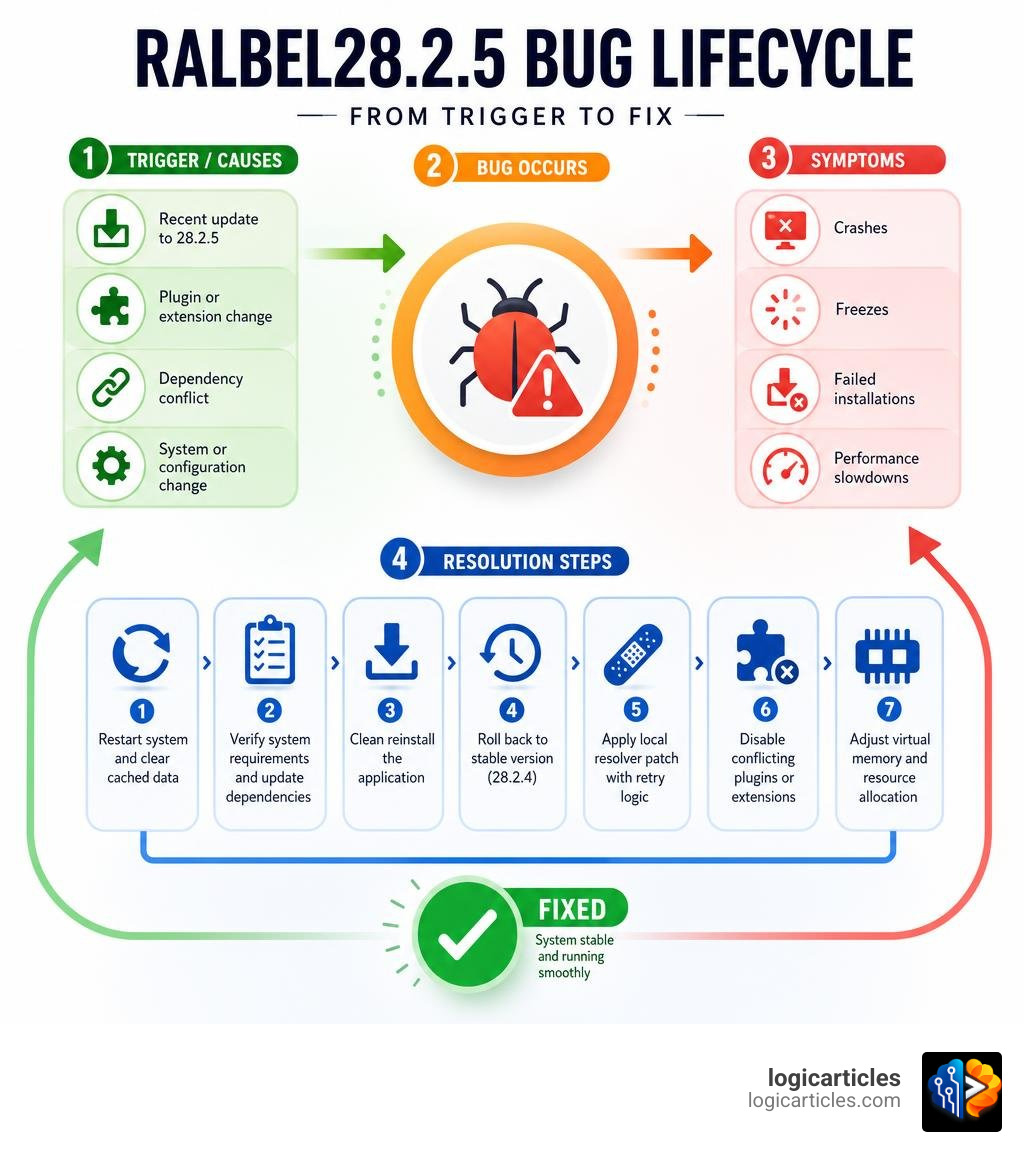
The software ralbel28.2.5 issue is a software bug that causes crashes, freezes, failed installations, and performance slowdowns — most commonly triggered after an update, plugin change, or dependency conflict.
Quick answer — how to fix it:
- Restart the system and clear cached data
- Verify system requirements and update dependencies
- Do a clean reinstall of the application
- Roll back to a stable earlier version (28.2.4 works for most users)
- Apply a local resolver patch with retry logic
- Disable conflicting plugins or extensions
- Adjust virtual memory and resource allocation
You’re in the middle of something important. Then your app crashes. You see an error tied to Ralbel28.2.5 and have no idea where to start.
You’re not alone. Developers and everyday users across the US, UK, Canada, and Australia have all reported this exact problem — especially after updating to version 28.2.5. One developer reportedly spent three full days debugging an initialization failure that turned out to be a timing issue introduced in this version.
The frustrating part? The error itself doesn’t always tell you what went wrong.
This guide breaks down exactly what causes the Ralbel28.2.5 bug, what it looks like on your system, and seven practical fixes — ordered from the simplest to the most advanced — so you can get back to work fast.
Understanding the Software Ralbel28.2.5 Issue: Symptoms and Causes
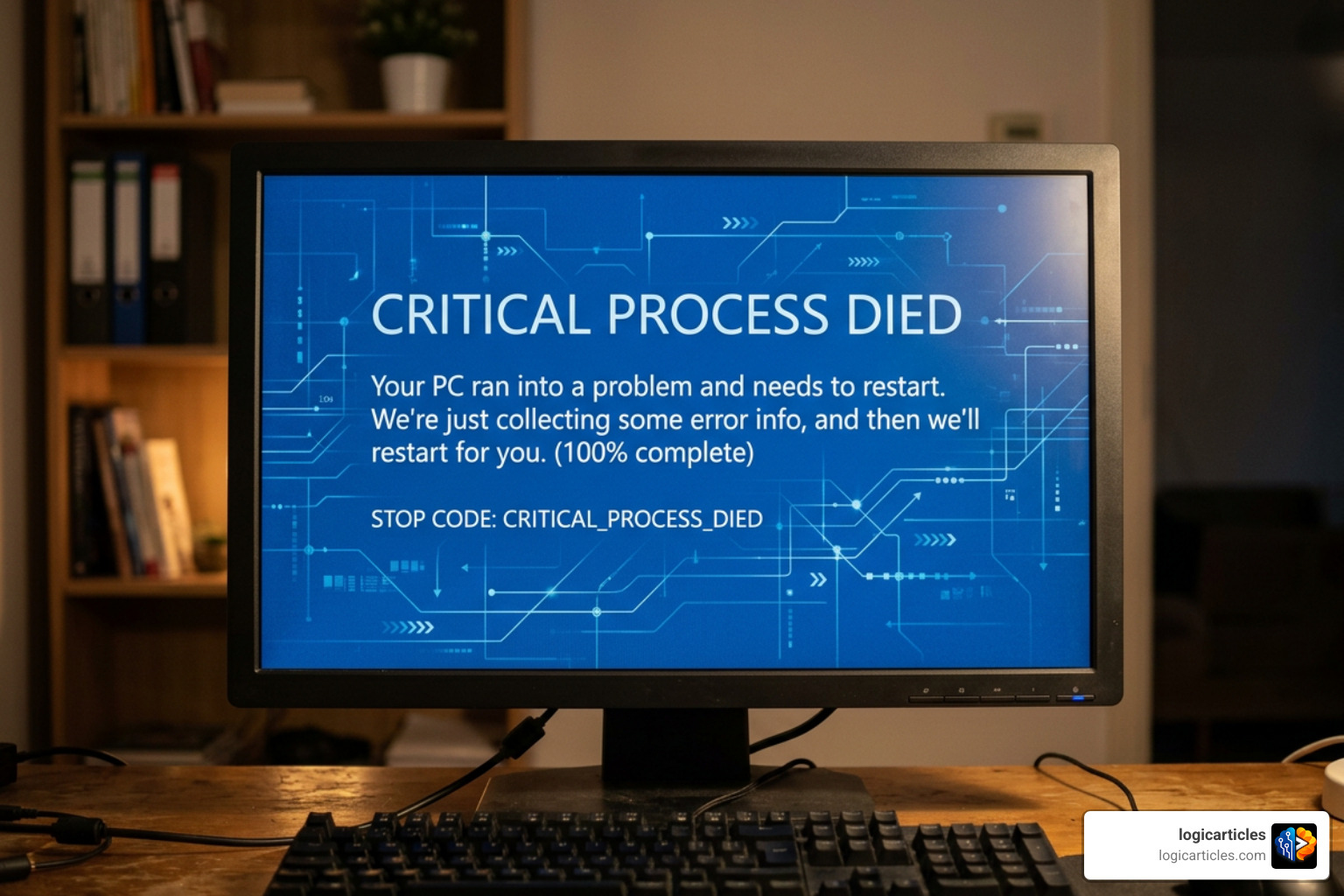
To solve any software glitch, we must first understand what we are fighting. The software ralbel28.2.5 issue is not just a random error; it is a highly specific system malfunction that occurs when core components fail to communicate properly.
In the wider tech landscape, software bugs are incredibly costly. In fact, poor software quality cost the US economy an estimated $2.08 trillion in 2020, and global software defects continue to cause massive disruptions. When version 28.2.5 was released, it introduced deep, system-level changes to core files, driver handling, and resource management. Unfortunately, these changes also introduced a few critical vulnerabilities.
What is the Software Ralbel28.2.5 Issue?
At its core, Ralbel28.2.5 serves as a middleware layer designed to coordinate modular communication between legacy applications and modern cloud-based interfaces. Because it operates as a bridge, it relies heavily on asynchronous data calls to keep information flowing smoothly.
The primary technical trigger behind this bug is a non-deterministic race condition in the dynamic module resolver. When the application boots or triggers an API integration, it registers modules dynamically across parallel contexts using a shared promise pool. If one module (like an authentication or cryptographic provider) loads even a few milliseconds late, the resolver fails silently.
This silent promise rejection leads to undefined values, triggering errors like Cannot read property toString of undefined or throwing UnhandledPromiseRejectionWarning alerts in your system logs.
Additionally, version 28.2.5 struggles with legacy dependencies and configuration drift. When we look at What is Productivity Software, we see that modern tools require seamless background synchronization. When Ralbel28.2.5 fails to handle concurrency, the entire application pipeline halts.
Common triggers for this error include:
- Incomplete or Corrupted Updates: Unstable internet connections or sudden system shutdowns during the update process can leave core files fragmented.
- Dependency Conflicts: The application attempts to load outdated external libraries that are incompatible with the strict asynchronous handling of version 28.2.5.
- Configuration Drift: Leftover settings from previous versions clash with the new resource-management parameters.
- Plugin Overload: Third-party extensions trying to hook into the same shared promise pool, causing resource blockages.
Common Symptoms and Affected Environments
This bug does not discriminate, but it does have preferred targets. It is most commonly found in:
- Chrome-based environments and web wrappers
- Lightweight operating systems
- Low-memory or resource-constrained devices
When the bug strikes, it leaves a trail of recognizable symptoms. Users often experience sudden segmentation faults, massive CPU spikes (where the application hogs up to 100% of available cores), and silent plugin failures.
To help you identify if your system is suffering from this specific issue, we have put together a comparison table of symptoms and their typical impacts:
| Symptom | Direct System Impact | Common Error Codes / Logs |
|---|---|---|
| Startup Crash / Hang | The application freezes on the splash screen and refuses to initialize. | RBL-1024, UnhandledPromiseRejection |
| Sudden CPU Spikes | System fans spin rapidly; Task Manager shows 90%+ CPU usage from a single process. | Segmentation Fault, core dump generated |
| Broken API / Plugin Loading | Third-party integrations stop working; custom dashboards fail to load data. | RBL-5120, Timeout waiting for module |
| Memory Leaks | RAM usage slowly climbs over hours of runtime until the OS forces a shutdown. | Out of Memory (OOM), Heap allocation failed |
If you are seeing these signs, you are dealing with the software ralbel28.2.5 issue. Let’s dive into the practical ways to resolve it.
7 Practical Ways to Fix the Ralbel28.2.5 Bug

Fixing this bug doesn’t have to be a nightmare. We have organized these seven troubleshooting methods progressively. We highly recommend starting with the quick, non-invasive fixes before moving on to advanced system modifications.
For more deep-dive technical discussions on this bug, you can also explore community guides like the How to Fix Bug Ralbel28.2.5: Step-by-Step Guide for Quick Recovery – StepTechGlobal or check out the How to Fix the ralbel28.2.5 Bug: Complete Troubleshooting Guide – Ikra Paris for additional perspective.
1. Restart the System and Clear Cached Data
It sounds simple, but restarting is the golden rule of troubleshooting for a reason. Because the Ralbel28.2.5 bug is heavily tied to temporary race conditions and memory allocation errors, a clean slate can resolve up to 50% of minor occurrences.
- Close the Application: Ensure the program is completely shut down. Check your system’s Task Manager (Windows) or Activity Monitor (macOS) to make sure no background processes are still running.
- Clear Temporary Cache Files:
- Windows: Press
Win + R, type%temp%, and delete all files in the folder. Specifically, look for any folder named/ralbel/temp/and clear its contents. - macOS/Linux: Open your terminal and clear the application’s local cache directory (usually located in
~/Library/Caches/or~/.cache/).
- Windows: Press
- Reboot Your Device: Restart your computer to clear out the system’s physical RAM and reset the shared promise pool.
Once your system boots back up, open the application and see if the error persists. If you want a casual, highly relatable take on how clearing cache saves your sanity here, check out the tips in Fix Bug ralbel28.2.5 Without Losing Your Mind – Tech k Times.
2. Verify System Requirements and Dependencies
Over 60% of software failures in production are linked to dependency conflicts or configuration mismatches. If your environment is missing critical supporting frameworks, Ralbel28.2.5 will fail to initialize.
- Check Core Requirements: Ensure your machine has at least a 64-bit processor, 8GB of RAM (16GB is highly recommended for database-heavy environments), and at least 20GB of free storage space.
- Update Runtime Libraries: Version 28.2.5 requires modern runtime environments to handle its asynchronous processes. Ensure you have updated modules such as
.NET Framework 4.8(on Windows) orJava 11 / Node.js LTS(depending on your software’s environment). - Run a Dependency Audit: If you are a developer, run a package verification command like
npm auditorpip checkto find mismatched library versions.
Keeping a clear record of these requirements in your team’s internal documentation is vital. If you are looking to upgrade your internal documentation systems, take a look at our guide on the Best Knowledge Base Software in 2026.
3. Clean Reinstall the Application
If files were corrupted during an update, simply installing the update again over the broken files rarely works. Leftover registry entries and configuration files will continue to trigger the bug. A clean reinstall is the most effective way to guarantee file integrity.
sudo apt-get purge ralbel-core
rm -rf ~/.ralbel/
rm -rf /etc/ralbel/
To perform a clean reinstall on Windows or macOS:
- Uninstall the Program: Use the standard system settings to remove the application.
- Delete Leftover Folders: Manually navigate to your system’s
AppDataorApplication Supportfolder and delete any remaining directory associated with the software. - Clean the Registry (Windows): Use a trusted registry cleaner or manually verify that old PATH variables pointing to the old installation are removed.
- Download and Install Fresh: Go directly to the official developer portal and download the latest verified installer. Do not use unverified third-party mirrors.
4. Roll Back to a Stable Version
If you are running a live production environment, stability matters far more than new features. If version 28.2.5 is causing continuous downtime (which can cost large enterprises upwards of $5,600 per minute), the fastest business decision is to roll back to the previous stable release: version 28.2.4.
To do this via package managers:
- NPM: Run
npm install ralbel-core@28.2.4 - Yarn: Run
yarn add ralbel-core@28.2.4 - Python (Pip): Run
pip install ralbel-core==28.2.4
For non-developers, download the installer for version 28.2.4 from the official release archive. Make sure to disable automatic updates temporarily so your system does not immediately reinstall the buggy 28.2.5 version overnight. For a complete walkthrough of rollback safety, see the Fix Bug Ralbel28.2.5 Guide 2026 | Full Error Fix.
5. Apply a Local Resolver Patch
For developers who cannot roll back because their codebase relies on other 28.2.5 features, you can bypass the race condition by applying a local resolver patch. This involves overriding the internal module resolution method with custom retry logic and exponential backoff.
Here is an example of how you can structure a local patch wrapper in your initialization file:
// Local patch to override the unstable dynamic resolver
const originalResolver = ralbel._resolveModule;

ralbel._resolveModule = async function (moduleName, retries = 3, delay = 50) {
  try {
 return await originalResolver(moduleName);
  } catch (error) {
 if (retries === 0) {
 console.error(`Ralbel Resolver Patch: Failed to resolve ${moduleName}`);
 throw error;
 }
 // Exponential backoff to allow parallel contexts to settle
 await new Promise(resolve => setTimeout(resolve, delay));
 return ralbel._resolveModule(moduleName, retries - 1, delay * 2);
  }
};
Applying this retry mechanism ensures that if a cryptographic or database module loads a few milliseconds late, the system pauses and tries again rather than throwing an unhandled promise rejection and crashing.
6. Disable Conflicting Plugins and Extensions
Many times, the software ralbel28.2.5 issue is triggered by third-party extensions that hook into the core middleware. If an extension is outdated, it will block the shared promise pool.
- Launch in Safe Mode: Most enterprise tools allow you to launch with plugins disabled.
- Isolate the Conflict: Disable all plugins, then enable them one by one. Restart the application after each activation.
- Identify the Culprit: When the crash recurs, you have found the conflicting plugin. Keep it disabled until the plugin creator releases an update compatible with version 28.2.5.
Managing these troubleshooting workflows across a team can get chaotic. If you need a way to track these issues systematically, check out our review of the Best Task Management Software in 2026 Tested.
7. Adjust Virtual Memory and Resource Allocation
Because version 28.2.5 has known memory management issues under heavy parallel execution, low-memory devices are highly susceptible to sudden crashes. Adjusting your operating system’s virtual memory (paging file) can provide the necessary buffer to prevent heap allocation failures.
- On Windows: Go to System Properties > Advanced > Performance Settings > Advanced > Virtual Memory. Manually set the custom size to at least 1.5 times your physical RAM.
- On Database Servers: If you are running Ralbel28.2.5 alongside a database, allocate at least 16GB of RAM and set your temporary directory on a separate high-speed SSD partition. Limit transaction batches to 5,000 records to avoid overloading the memory pool.
Optimizing these resources is critical to keeping operational costs low. To learn more about managing infrastructure expenses, read our guide on the Best Cloud Cost Optimization Tools for 2026 Cut Cloud Bills Fast.
For alternative step-by-step methods tailored to different operating systems, you can also check out How to Fix Bug ralbel28.2.5: A Friendly, Step-by-Step Guide for Everyone – usetime.co.uk.
Proactive Strategies for Long-Term System Stability
Fixing a bug once is great, but preventing it from ever coming back is even better. In system administration, proactive maintenance saves hundreds of hours of emergency troubleshooting.
Best Practices to Prevent the Software Ralbel28.2.5 Issue
To keep your systems running smoothly in the future, we recommend adopting these habits:
- Declare Dependencies Explicitly: Avoid using implicit or dynamic resolution helpers in your code. Use static registration wherever possible.
- Control Module Loading Order: If dynamic imports are absolutely necessary, control the sequence explicitly rather than letting them load in parallel context loops.
- Monitor System Logs: Use diagnostic tools like Windows Event Viewer, Task Manager, or third-party log aggregators to catch early signs of memory leaks or CPU spikes.
- Implement Robust Asset Management: Keep track of all software versions, licenses, and patches across your organization. For businesses managing complex physical and digital infrastructure, using the Best CMMS Software for 2026 can streamline your maintenance schedules and prevent outdated software from slipping through the cracks.
Utilizing Staging Environments for Updates
Never deploy major software updates directly to production. This is a lesson many teams learn the hard way.
Always test updates in a staging environment that mirrors your live production setup. Run automated testing loops under high-parallel stress conditions. Because race conditions are non-deterministic, standard unit tests rarely catch them. Running stress loops for 24 to 48 hours in staging is the best way to expose bugs like Ralbel28.2.5 before they reach your customers.
To understand the deeper architectural challenges developers face with this version, read the detailed analysis in Understanding the Software ralbel28.2.5 Issue: Root Causes, – Buzz Blog.
Frequently Asked Questions about Ralbel28.2.5
Can the Ralbel28.2.5 bug happen again after fixing it?
Yes. Because this bug is closely tied to configuration drift and dependency updates, it can return. If another application updates a shared library or if your system settings reset, the race condition might be triggered again. Ongoing system monitoring and strict dependency pinning are your best defenses.
Is it safe to roll back the Ralbel update?
Absolutely. Rolling back to version 28.2.4 is completely safe and is often the fastest way to restore stability to a broken system. Just make sure to perform a full backup of your local database and configuration files before performing the rollback, just in case of file format mismatches between versions.
Do I need advanced technical skills to resolve this error?
No. Basic steps like restarting your system, clearing cache, disabling plugins, and performing a clean reinstall require only basic computer skills. However, advanced solutions like applying a local resolver patch or adjusting database transaction limits are best left to IT professionals or developers.
Conclusion
The software ralbel28.2.5 issue can certainly throw a wrench in your workflow, but it is entirely manageable when approached with a calm, methodical plan. By starting with simple steps like clearing your cache and verifying system requirements, and moving up to advanced steps like local patching or rolling back to version 28.2.4, you can reclaim your system stability in no time.
Here at logicarticles, we are dedicated to helping you optimize your digital workflows and eliminate technical headaches. If you are looking to upgrade your digital toolkit or find the absolute best programs for your business this year, head over to our comprehensive Best Software Category page to explore our latest tested reviews and recommendations!