Why Choosing the Best CRM for Property Management in 2026 Matters

The best CRM for property management in 2026 isn’t a luxury — it’s the difference between a full building and a leaky pipeline.
Here’s a quick answer if you’re in a hurry:
Top Property Management CRMs in 2026 at a Glance
| CRM | Best For | Starting Price |
|---|---|---|
| Aptly | AI-native multifamily operators | ~$40/month |
| Knock (RealPage) | Leasing teams at scale | Quote-based |
| Funnel Leasing | Centralized leasing operations | Quote-based |
| EliseAI | Large multifamily, high volume | Quote-based |
| ResMan | Multifamily lead-to-lease automation | Quote-based |
| Pilera | Resident engagement and retention | Quote-based |
| Buildium | Small to mid-size portfolios | ~$58/month |
| Deelo | All-in-one with field service | $19/seat/month |
| monday CRM | Flexible general-purpose option | $12/seat/month |
A 200-unit apartment community can receive hundreds of inbound inquiries every single month. Without a system built to handle that volume, leads fall through the cracks — and missed leads mean missed rent.
The challenge isn’t generating demand. Most operators have enough inquiries. The real problem is managing that demand consistently, across every property, without burning out your team.
Think of it like running a leasing office without a phone. Follow-ups get missed. Tours don’t get booked. Prospects move on to the next community on their list — because they will.
Modern property management CRMs solve this by centralizing communication, automating follow-up, and giving leasing teams clear visibility into their pipeline. The best ones in 2026 go even further, using AI to respond to leads instantly, qualify prospects automatically, and route the right inquiry to the right person — 24/7.
This guide compares the top options so you can find the right fit for your portfolio size, team structure, and budget.
Property Management CRM vs. Generic Sales Software
Many property managers start out trying to use a generic sales CRM. They think, “A lead is a lead, right?”
Well, not quite. While general sales CRMs like Pipedrive (starting at $14/seat/month), Zoho CRM ($14/user/month), or Freshsales ($9/user/month) are fantastic for traditional business-to-business sales, they quickly fall short when managing a residential portfolio.
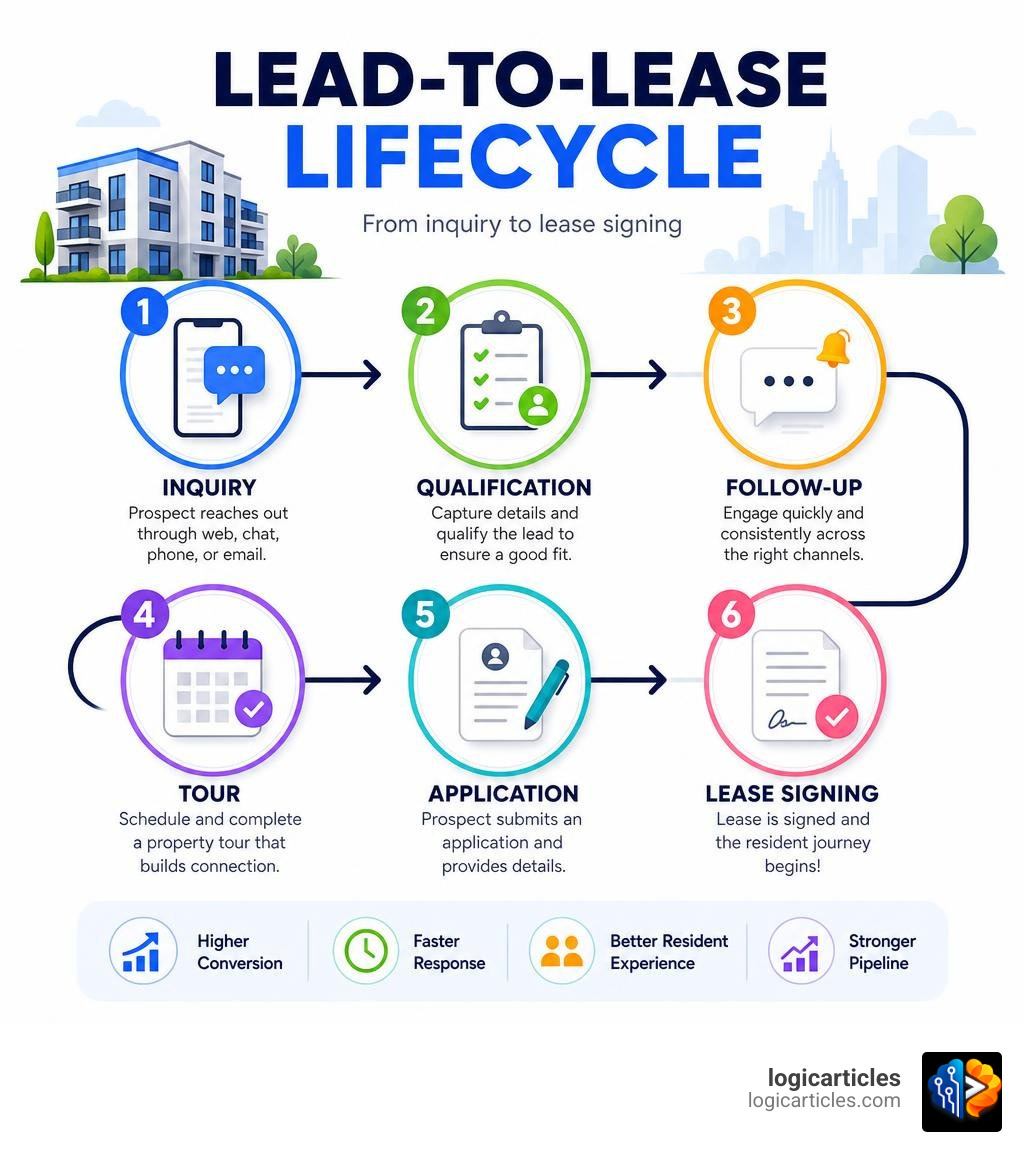
The biggest difference lies in the resident lifecycle. In traditional sales, the journey usually ends when a deal is marked “closed-won.” In property management, the lease signing is just the beginning. A specialized property management CRM handles the entire arc: from the initial web inquiry to the tour, the tenant screening, the lease execution, and eventually to maintenance requests, rent collection, and lease renewals.
Furthermore, property management workflows are highly time-sensitive. In multifamily leasing, prospects are often looking at multiple properties simultaneously. If your team takes 24 hours to respond, that prospect has likely already booked a tour elsewhere.
Specialized CRMs are built to support both on-site teams and modern centralized leasing offices. While on-site teams need quick access to daily tasks, tour schedules, and guest cards, centralized leasing teams require a unified view of prospect activity across an entire portfolio to cross-market sister properties.
When operators move from manual tracking or generic tools to a purpose-built property management CRM, the operational impact is massive. Industry data shows there is roughly a 70% increase in efficiency regarding the administrative tasks that are removed and automated. This allows your team to spend less time chasing data and more time building relationships.
If you are still evaluating your broader tech stack, you may also want to check out our guides on the Best Rental Property Software and the Best Apartment Management Software to see how your front-end CRM connects with back-end operations.
Key Features of the Best CRM for Property Management in 2026
If you are shopping for a CRM in July 2026, you shouldn’t settle for a glorified digital rolodex. The baseline expectations for property technology have shifted. Here are the core features you should demand:
- Omnichannel Engagement: Prospects don’t just email anymore. They text, call, DM on social media, message via listing portals, and use WhatsApp. The best CRMs unify all of these channels into a single, cohesive timeline for each prospect.
- Leasing Workflow Automation: The system should automatically route leads based on custom rules, trigger personalized follow-up sequences, and assign tasks to leasing agents. If a prospect views a 2-bedroom floor plan online, the CRM should automatically send them a video tour of that exact layout.
- Predictive Analytics and Reporting Dashboards: You need real-time visibility into your pipeline. A modern CRM will show you lead-to-tour conversion rates, source attribution (so you know which marketing channels actually drive leases), and even predictive insights like which residents are at high risk of churning.
- Mobile Access: Your leasing agents are rarely sitting at a desk; they are out showing units and walking the property. A robust mobile app with full CRM functionality is non-negotiable.
To keep your team organized behind the scenes, integrating your CRM with the Best Task Management Software In 2026 Tested can help ensure that physical property prep and administrative follow-ups move in perfect lockstep.
AI-Powered Capabilities in the Best CRM for Property Management in 2026
AI has moved past the experimental phase and is now a core operational layer in 2026. Modern AI agents don’t just send canned auto-responders; they act as virtual leasing assistants that handle the heavy lifting.
With 24/7 availability, AI can instantly answer detailed questions about pet policies, parking fees, and utility setups at 2:00 AM. It can qualify prospects based on their budget and move-in timeline, and then directly schedule a tour on your leasing team’s calendar.
This drastically slashes lead response times from hours to seconds. For outstanding examples of this technology in action, platforms like Vindey – Industry Leading AI-Powered CRM for Property Management & Sales show how AI can automate up to 80% of routine tenant inquiries while simultaneously boosting property viewings.
Integration Ecosystems for Modern Property Operations
A CRM is only as good as the data flowing into it. If your CRM doesn’t talk to your core Property Management System (PMS) — like Yardi, AppFolio, RealPage, Buildium, or Entrata — your team will end up trapped in double-data-entry purgatory.
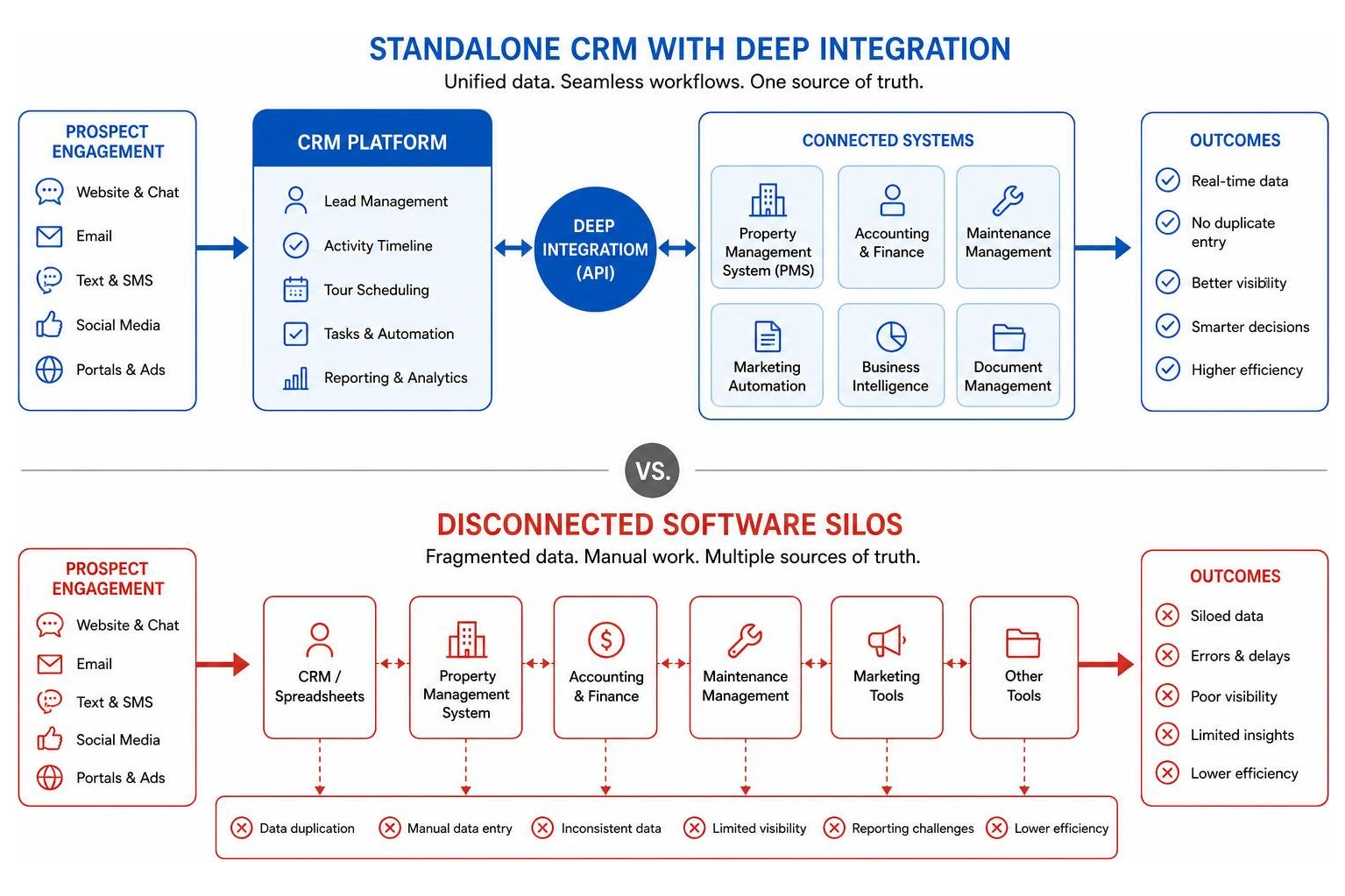
When evaluating a platform, look for deep API access. A true integration means that when a prospect applies through the CRM, their data seamlessly transitions into a resident profile in your accounting software. Standardizing this data across your portfolio is key to maintaining clean, actionable reports.
To see how these integrations fit into your broader financial and asset strategy, refer to our analysis of the Best Real Estate Portfolio Management Software In 2026.
Top Property Management CRM Software Solutions Reviewed
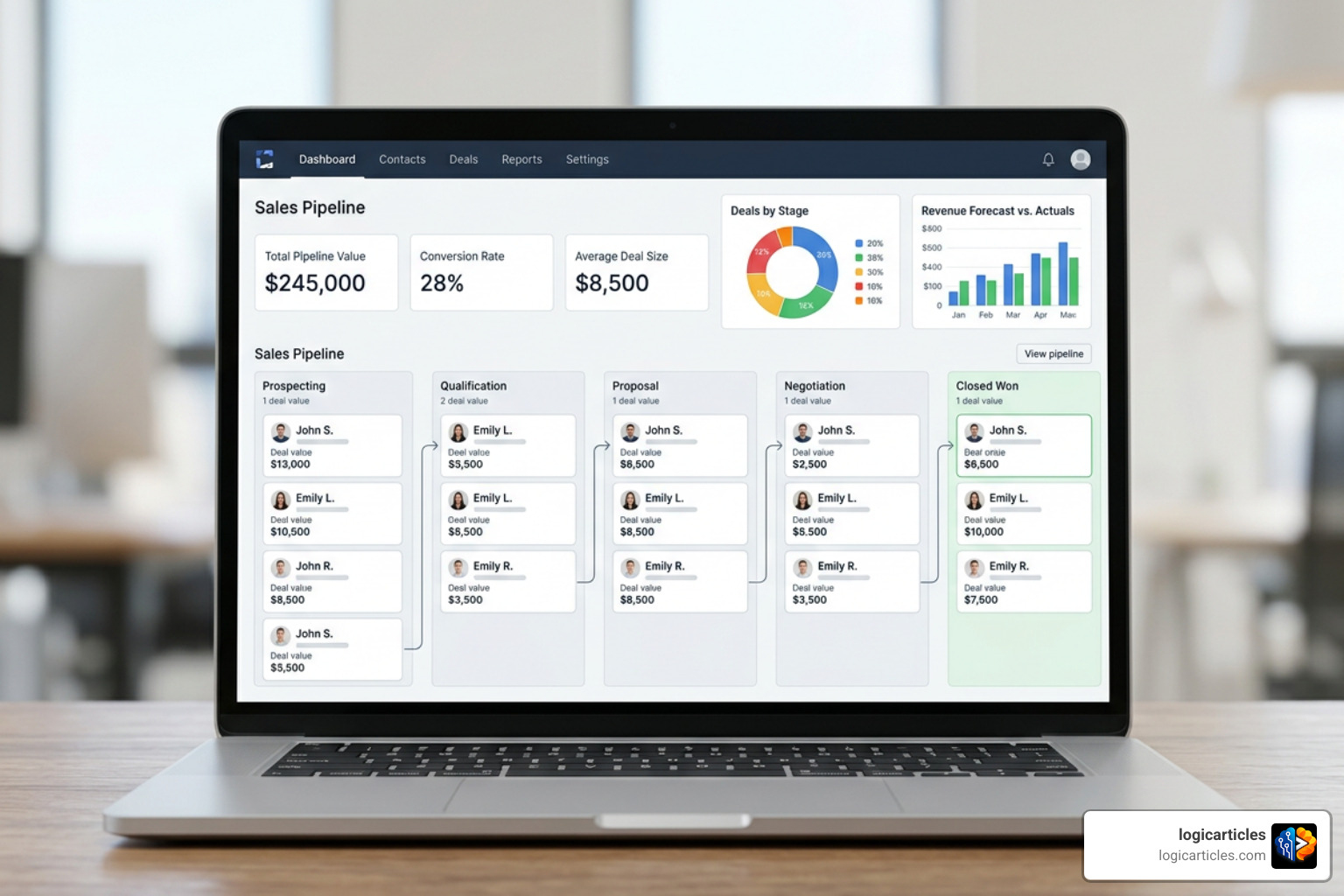
Choosing the best CRM for property management in 2026 requires matching the software to your specific business model. Let’s break down the top solutions across different categories.
Selecting the Best CRM for Property Management in 2026 Based on Portfolio Size
Your portfolio size and team structure dictate what kind of CRM you need. A 50-unit operator has vastly different requirements than a REIT managing 10,000 units.
- Small Portfolios (1 to 150 units): You are likely best served by a lightweight, built-in CRM module within an all-in-one platform like Buildium or DoorLoop. These keep your overhead low and your workflows simple.
- Mid-Size Portfolios (150 to 1,000 units): At this stage, you need dedicated leasing workflows. Platforms like Knock or ResMan help you scale without losing the personal touch. If you manage specialized properties, check out our guides on the Best Condo Management Software and the Best Commercial Property Management Software.
- Large Enterprise Portfolios (1,000+ units): You need deep automation, centralized leasing capabilities, open APIs, and robust AI assistants. Funnel Leasing, Aptly, and EliseAI dominate this space.
AI-Native and Enterprise Solutions
For large-scale operators looking to rebuild their workflows around modern artificial intelligence, these platforms represent the cutting edge:
- Codeison: If you need a highly tailored, enterprise-grade solution, Codeison offers an ERP-level platform. They specialize in rapid prototyping (often delivering a working prototype within 2 days of a demo) and provide custom modules for smart inventory, billing, and vendor management. Learn more at AI-Powered Property Management Software | Smart ERP for P… | Codeison.
- HqO: Built specifically for commercial real estate and experiential landlords, HqO goes beyond traditional leasing. It utilizes their proprietary REX Methodology to align tenant outcomes, orchestrate omnichannel experiences, and measure asset performance. Explore their offerings at HqO’s CRM for CRE.
Resident-Centric and Multifamily Platforms
If your primary focus is keeping your buildings full, your residents happy, and your leasing workflows structured, these industry-specific tools are excellent choices:
- Pilera Software: A people-focused CRM designed to build strong resident communities. It boasts a 68% resident satisfaction rate and allows managers to reach residents 30x faster during emergencies through built-in fault protection. It also features robust tools for work orders and compliance. Discover their platform at Property management CRM – Pilera Software.
- ResMan CRM: A prospect-centric solution built to accelerate the lead-to-lease process. It provides automated playbooks, real-time marketing analytics, and a unified dashboard that acts as a command center for on-site teams. It seamlessly supports both conventional multifamily and affordable housing compliance (HUD, Tax Credit, etc.). See details at Multifamily CRM Software | ResMan.
All-in-One Business and Field Service Toolkits
For operators who want to manage their entire business — including field service, invoicing, and back-office tasks — in one place, a unified platform is the way to go.
- Deelo: Deelo offers an incredibly comprehensive “all-in-one” business toolkit. Starting at a very competitive $19/seat/month, it includes over 40 integrated business apps. You get a visual sales CRM, field service dispatching (with before/after photo capture), automated invoicing with Stripe integration, legally binding e-signatures (compliant with the ESIGN Act and eIDAS), and AI-powered helpdesk ticketing. It is a fantastic value for property managers who also handle in-house maintenance and contracting. Learn more at Deelo for Property Management — All-in-One AI Business Platform.
Buyer’s Guide: Total Cost of Ownership and FAQs
When choosing the best CRM for property management in 2026, the sticker price is only one part of the equation. You must calculate the Total Cost of Ownership (TCO).
TCO includes:
- Implementation and Migration Fees: Cleaning and standardizing your existing lead data, floor plans, and resident history before moving it to a new system can take weeks and often requires a one-time setup fee.
- Onboarding and Training: Your team must be trained on real-world leasing scenarios, not just software screens. Budget for the temporary dip in productivity during the transition.
- Integrations and Add-ons: Some CRMs charge extra for API access, custom integrations, or AI usage credits.
- Contract Terms: Be aware of whether you are locked into a 12-month contract or if you have the flexibility of month-to-month billing.
If you are also involved in the construction or development side of your assets, you might want to look into how these costs align with your Real Estate Development Software budget.
Do property managers need a separate CRM from their accounting software?
For small portfolios, the built-in communication tools in your accounting software are usually sufficient. However, as you scale, those basic tools struggle to handle high inquiry volumes. A dedicated, standalone CRM provides the advanced automation, omnichannel tracking, and AI capabilities needed to keep occupancy high without overloading your administrative staff.
How does AI improve lead response times in property management?
AI agents respond to inbound inquiries instantly, 24/7. They analyze the prospect’s questions, draft highly accurate answers using natural language processing, qualify the lead’s budget and timeline, and automatically book property tours. This keeps prospects engaged immediately, before they have a chance to contact your competitors.
Can these CRM platforms integrate with existing property management systems?
Yes. Most leading property management CRMs offer integrations with major property management systems like Yardi, RealPage, Entrata, and AppFolio. However, the depth of the integration varies. Always ask vendors for a detailed demonstration of exactly how data flows from an initial CRM inquiry all the way through to a signed lease in your primary accounting system.
Conclusion
Finding the best CRM for property management in 2026 comes down to understanding your specific operational bottlenecks. Whether you need the flexible, customizable structure of a general tool, the cutting-edge AI features of an enterprise platform, or the comprehensive field-service capabilities of an all-in-one toolkit, the right software will future-proof your business and keep your properties thriving.
Ready to explore more software reviews and deep dives? Visit our curated resource hub at logicarticles Best Software Category to find the perfect tools to power your real estate operations.