Why Maritime Software Solutions Are Transforming the Shipping Industry
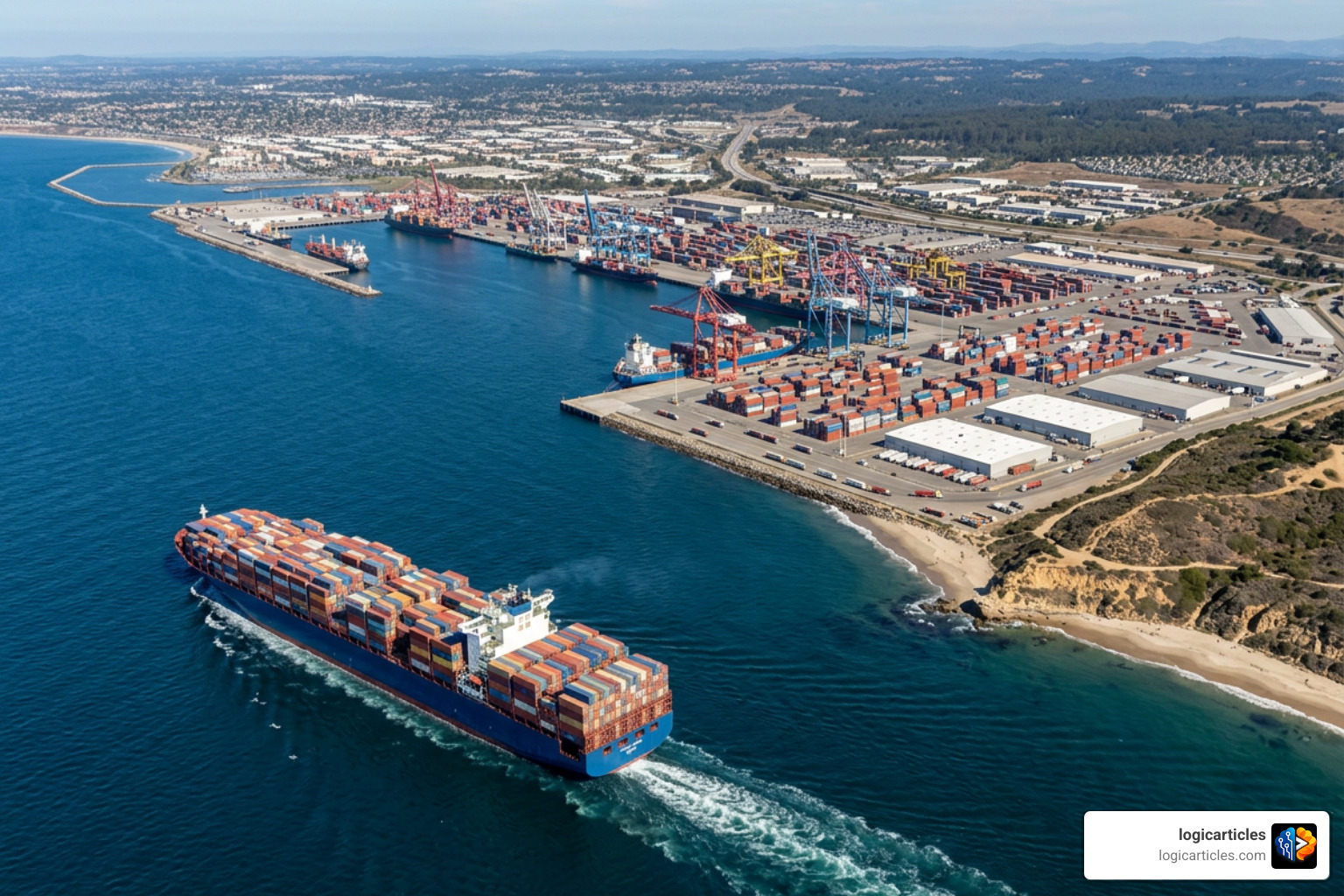
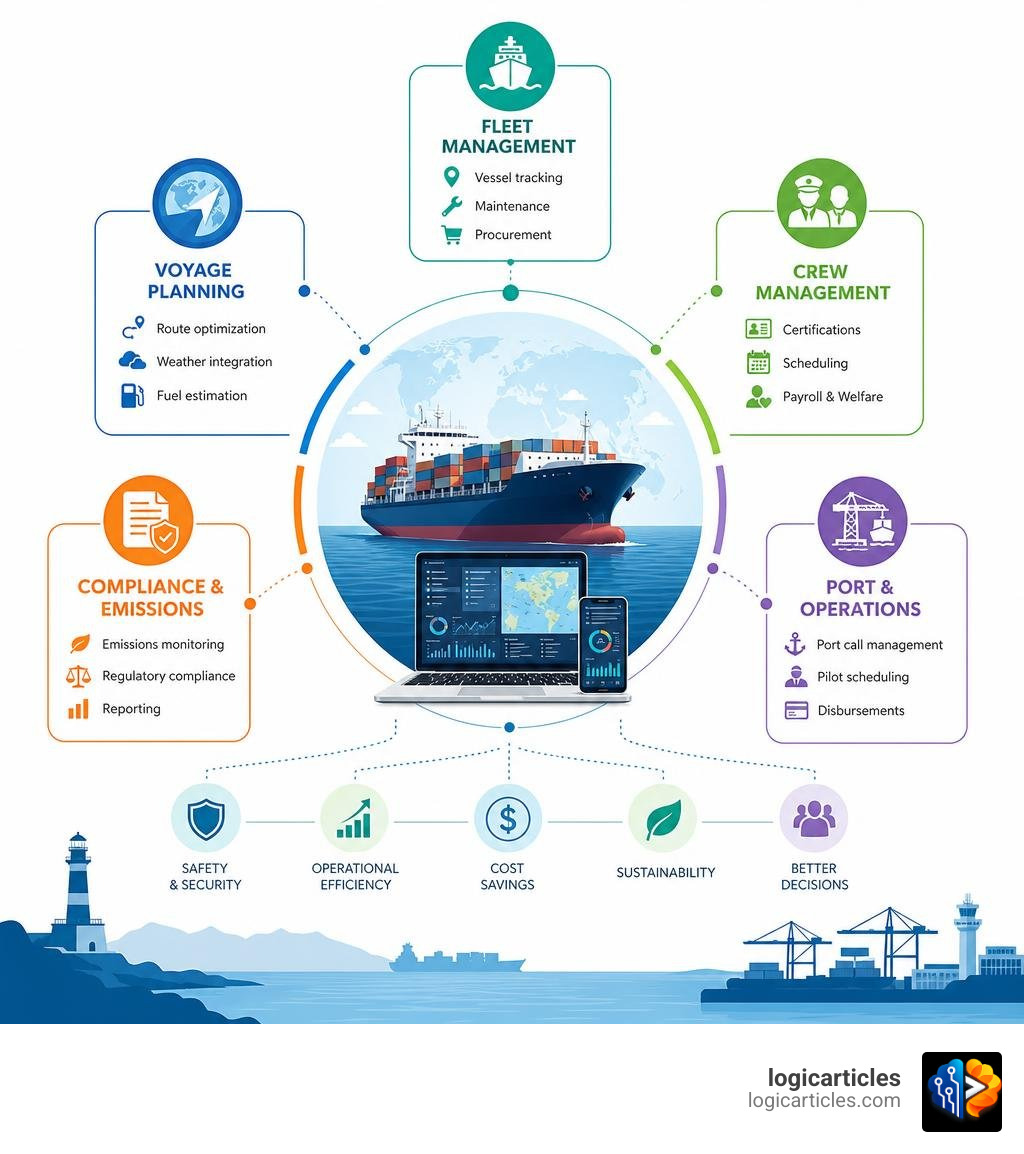
Maritime software solutions are digital platforms that help shipping companies manage vessel operations, voyage planning, crew scheduling, regulatory compliance, and fleet performance — all in one place.
Here’s a quick overview of the main types:
| Software Type | What It Does |
|---|---|
| Fleet Management | Tracks vessels, schedules maintenance, manages procurement |
| Voyage Planning | Optimizes routes, integrates weather data, estimates fuel use |
| Crew Management | Handles certifications, payroll, scheduling, MLC compliance |
| Emissions & Compliance | Monitors CO2, supports EU ETS, CII, and IMO regulations |
| Port & Dispatch | Manages pilot scheduling, port calls, and disbursement accounts |
| Chartering & Risk | Handles freight contracts, voyage estimation, and risk modeling |
Not long ago, shipping companies ran their operations on paper logs, faxes, and phone calls. Today, that approach simply can’t keep up.
Global trade volumes have exploded. Regulations have multiplied. And the cost of getting things wrong — a delayed vessel, a missed compliance deadline, a cyber breach — has never been higher.
The numbers tell the story clearly. By 2024, over 70% of global shipping companies relied on advanced maritime software to manage daily operations, up from just 40% in 2020. Maritime cyber incidents surged 103% in 2025 alone. And companies that adopted maritime software reported operational cost reductions of up to 20% within the first year.
The global maritime software market is growing at an 8.5% CAGR and is projected to reach $5 billion by the end of 2025 — a clear signal that digital tools are no longer optional for competitive shipping operations.
This guide breaks down every major category of maritime software, what to look for when choosing a platform, and how to navigate the real challenges of implementation.
Understanding Modern Maritime Software Solutions
To navigate the complex blue economy, modern shipowners, charterers, and operators need more than just GPS and basic spreadsheets. The modern maritime software ecosystem is a web of interconnected tools that share data in real-time to streamline workflow productivity, enhance safety, and protect profit margins.
At its core, maritime software refers to any digital platform or tool specifically engineered to support global shipping operations. This includes everything from the software running on a vessel’s bridge to the enterprise resource planning (ERP) systems used by superintendents in the head office. By replacing fragmented manual processes with unified digital workflows, these systems provide a single source of truth for the entire organization.
How Maritime Software Solutions Support Modern Shipping
Modern shipping operations are highly dynamic. A single voyage requires coordination between the master onboard, the port agent at the destination, the chartering team negotiating the contract, and the technical superintendents monitoring the engine’s health.
When these teams work in silos, critical details slip through the cracks. For example, a delay in updating a vessel’s estimated time of arrival (ETA) can lead to missed port windows, costing operators upwards of $150,000 per day in idle time.
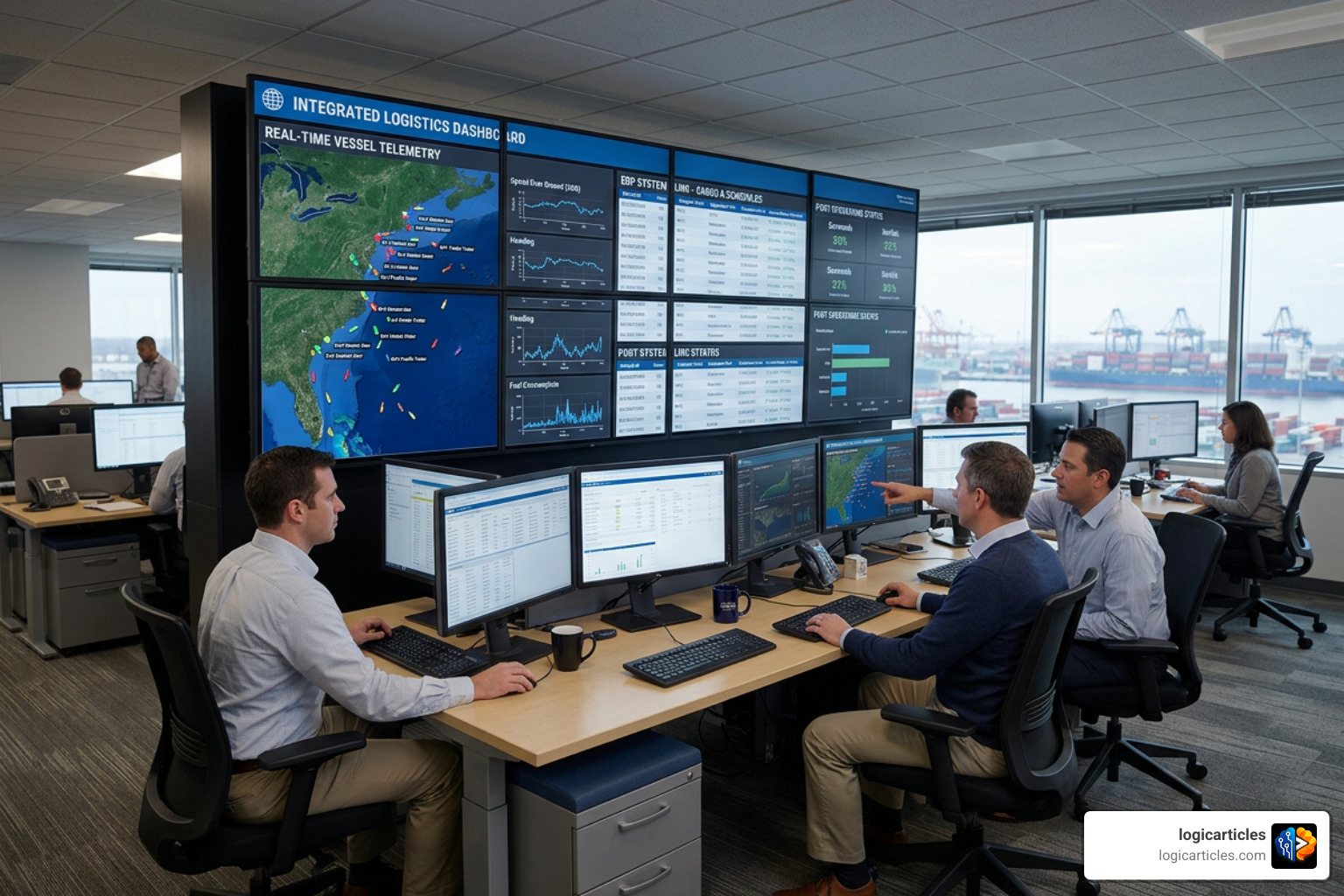
By utilizing comprehensive Cloud Ship Management Software, companies can connect their shipboard operations directly with shore-side offices. Instead of relying on daily manual noon reports sent via email, modern systems automatically sync consumption, waste, and maintenance data. This allows technical teams to spot engine anomalies before they cause a breakdown, procurement managers to approve spare parts requisitions instantly, and chartering teams to provide clients with precise, real-time updates.
Key Drivers of Digitalization in 2026
Several powerful forces have accelerated the adoption of maritime software over the last few years:
- High-Speed Maritime Connectivity: The rapid rollout of low-Earth orbit (LEO) satellite networks, such as Starlink, which is now active on roughly 150,000 vessels, has fundamentally changed what is possible at sea. Ships are no longer offline islands that sync data once a day; they are now fully connected nodes in an enterprise network.
- Rising Cybersecurity Threats: With greater connectivity comes greater risk. Maritime cyber incidents surged 103% in 2025. This dramatic spike has forced companies to move away from vulnerable, self-developed legacy systems and adopt secure, modern software platforms with enterprise-grade protection.
- Strict Environmental Regulations: Regulatory bodies like the International Maritime Organization (IMO) and the European Union have introduced aggressive decarbonization frameworks. Tracking carbon emissions is no longer an annual administrative task; it is an active financial exposure that must be managed voyage by voyage.
- The Cost of Human Error: Studies show that roughly 75% of maritime insurance claims are caused by human error, resulting in over $1.6 billion in losses annually. Standardizing operations through digital checklists, automated validation rules, and real-time alerts drastically reduces these costly mistakes.
Core Types of Maritime Software Solutions
No single software product does absolutely everything for every maritime business. Instead, the market is divided into several specialized categories that target different aspects of the shipping lifecycle.
To help you understand how these systems differ, let’s first look at how modern cloud-native systems stack up against traditional on-premise setups:
| Capability | Cloud-Native Platforms | Traditional On-Premise Systems |
|---|---|---|
| Data Synchronization | Real-time, continuous sync via web APIs | Batch transfers, often relying on daily emails |
| Onboard Hardware | None; runs in any modern web browser | Dedicated onboard servers and local databases |
| Maintenance & Updates | Automatic, instant updates managed by the vendor | Manual software installations on every ship |
| Offline Performance | Offline-first local storage that auto-syncs when online | Local-only access; risks data conflicts during sync |
| Cybersecurity | Centralized, ISO 27001 certified cloud security | Dependent on individual vessel network security |
Fleet and Vessel Management Systems
These systems are the workhorses of technical ship management. They focus on keeping vessels seaworthy, efficient, and compliant with international maritime safety codes.
Key features include:
- Planned Maintenance Systems (PMS): Tracks the running hours of machinery, schedules routine service intervals, and manages job cards for the crew.
- Procurement and Inventory Control: Automatically links maintenance requirements with spare parts inventory. When a part is used, the system flags it and can generate a purchase requisition for approval.
- HSEQ and Safety Management: Centralizes safety meetings, drills, risk assessments, and non-conformity reports.
For companies looking to manage these technical workflows efficiently, platforms like SDSD Maritime Fleet Management Software provide integrated modules that streamline technical management, safety tracking, and procurement across diverse fleets.
Voyage Planning and Weather Routing
Every extra day spent at sea or ton of fuel wasted directly impacts a company’s bottom line. Voyage planning and weather routing software helps operators find the most efficient path from port A to port B.
By integrating real-time weather forecasts, ocean currents, and vessel performance models, these tools allow shore teams to simulate different route options. The software calculates the optimal speed and path to minimize fuel consumption while ensuring the vessel avoids dangerous weather systems.
For commodity shipping and bulk operations, utilizing dedicated Shipping Management Software allows teams to unify voyage estimation, chartering, laytime calculations, and freight risk management in a single platform, translating operational risks into profitable opportunities.
Crew Management and Safety Compliance
A ship is only as good as the crew operating it. Crew management software handles the complex logistics of managing seafarers across global fleets.
These platforms track the entire crew lifecycle, including recruitment, rotation planning, payroll, and travel coordination. Crucially, they monitor compliance with international standards such as the International Convention on Standards of Training, Certification and Watchkeeping for Seafarers (STCW) and the Maritime Labour Convention (MLC 2006). The software flags when a crew member’s safety certificates are nearing expiration or when a planned rotation would violate maximum rest-hour regulations, preventing costly port-state control detentions.
Additionally, compliance modules built directly into these platforms ensure that mandatory International Safety Management (ISM) and International Ship and Port Facility Security (ISPS) procedures are followed, documented, and ready for auditors.
Port and Vessel Dispatch Platforms
The transition from the open ocean to a busy port is one of the most high-risk and logistically complex parts of any voyage. Port and vessel dispatch platforms coordinate the movements of marine pilots, tugs, and port authorities to ensure safe, timely arrivals.
These specialized systems manage:
- Pilot Dispatch and Scheduling: Assigns qualified marine pilots to incoming vessels based on pilot licensing, rest hours, and vessel specifications.
- Master-Pilot Exchange (MPX): Digitizes safety checklists and passage plans so they can be reviewed and signed electronically on the bridge.
- Vessel Traffic Services (VTS): Monitors coastal waters and port approaches to coordinate maritime traffic.
Using a dedicated Pilot Dispatch, MPX & Navigation Platform helps port operators eliminate communication gaps and capture timestamped decisions for audit compliance. On a larger scale, integrating these workflows into a broader system like the Maritime Service Suite provides port authorities and national ecosystems with an open, sensor-independent foundation for managing entire coastal regions.
Selecting and Integrating Maritime Software
Selecting the right software is a major strategic decision. Because shipping operations are highly interconnected, introducing a new software tool requires careful planning to ensure it fits into your existing technology stack.
Selecting the Right Maritime Software Solutions for Your Fleet
When evaluating different maritime software solutions, it is easy to get distracted by flashy feature lists. However, the most successful implementations prioritize practical usability and integration.
When researching vendors, keep these key criteria in mind:
- Open API Architecture: Ensure the platform can easily connect with your existing accounting software, corporate ERP, or third-party vessel tracking systems.
- User-Friendliness: If the software is too complex, crews onboard will find workarounds or enter poor-quality data. Look for clean, intuitive interfaces that require minimal training.
- Scalability: Choose a platform that can grow with your business, whether you are managing a fleet of five vessels or fifty.
- Cybersecurity: Verify that the vendor follows modern security frameworks, holds relevant certifications (such as ISO 27001), and offers robust user permission controls.
For shipowners, shipyards, and marine surveyors looking for an all-in-one corporate solution, a comprehensive ERP like WHIZMarine ERP can tie together traditionally fragmented workflows — from dry-dock scheduling and shipyard project costing to port agency disbursement accounts and technical ship management.
Overcoming Implementation Challenges
Moving from legacy spreadsheets or outdated software to a modern platform is rarely a seamless process. However, understanding the common roadblocks can help you plan for a successful transition:
- Data Migration: Cleaning up decades of messy, inconsistent data (such as duplicate spare parts names or incomplete crew histories) is often the most time-consuming part of a rollout. Dedicate a specific team to audit and clean your data before importing it into the new system.
- Crew Training and Adoption: Seafarers already face heavy administrative workloads. To encourage adoption, involve crew members early in the selection process, run hands-on training sessions, and emphasize how the software will save them time by eliminating redundant paper logs.
- Change Management: Resistance to change is natural. Clearly communicate the “why” behind the digital transformation to both shore staff and vessel crews, showing how real-time data access makes their jobs safer and easier.
- ROI Tracking: Establish clear key performance indicators (KPIs) before launching the software. Track metrics like average time spent on procurement cycles, fuel savings from optimized routing, and reduction in administrative errors to measure your return on investment.
Frequently Asked Questions about Maritime Software
What is the difference between cloud-based and on-premise maritime software?
On-premise maritime software requires dedicated servers installed both at the head office and onboard each vessel. Data is typically synchronized between ship and shore via scheduled batch transfers (like daily data compressed into emails). This can lead to data conflicts and means shore teams are always working with lagging information.
Cloud-based maritime software runs entirely in secure cloud environments. Updates are automatic, and data is synchronized in real-time. Onboard crews access the platform via web browsers, removing the need to maintain expensive physical servers on the ship. Modern cloud platforms also feature “offline-first” designs, meaning crew members can continue working and entering data even when the ship temporarily loses satellite connectivity; the software automatically syncs the changes once connection is restored.
How does maritime software help with emissions compliance?
International environmental regulations have made emissions tracking highly complex. Maritime software supports compliance by:
- Automating Carbon Calculations: Built-in carbon calculators automatically estimate emissions based on fuel type, consumption rates, and distance traveled.
- Supporting EU ETS Compliance: Tracks carbon cost exposure for voyages entering or leaving European waters, allowing operators to budget for and purchase the required carbon allowances.
- Monitoring FuelEU Maritime & CII: Calculates the vessel’s Carbon Intensity Indicator (CII) rating in real-time and models future performance to avoid regulatory penalties.
Can small fleets benefit from maritime ERP systems?
Absolutely. While large fleets have more complex logistics, small fleets are often run by leaner teams where administrative overhead takes up a disproportionate amount of time. Modern Software-as-a-Service (SaaS) pricing models make advanced maritime software highly accessible for small operators, as pricing is typically scaled per vessel, per month. By automating routine workflows like certificate tracking and procurement, small fleets can operate with the same efficiency and regulatory confidence as major global lines.
Conclusion
The digital transformation of the shipping industry is no longer a trend for the future — it is the reality of operating in 2026. From keeping up with strict environmental mandates to protecting your fleet from rising cybersecurity threats, having the right digital infrastructure in place is critical to staying competitive.
By replacing disconnected legacy tools with unified, real-time maritime software, you can eliminate data silos, reduce operational costs by up to 20%, and give your team the clarity they need to make smart, data-driven decisions.
Ready to explore the best digital tools to upgrade your business operations? Explore the Best Software Categories today to find the perfect solutions for your fleet.