The Best Property Management Software in 2026: A Complete Comparison
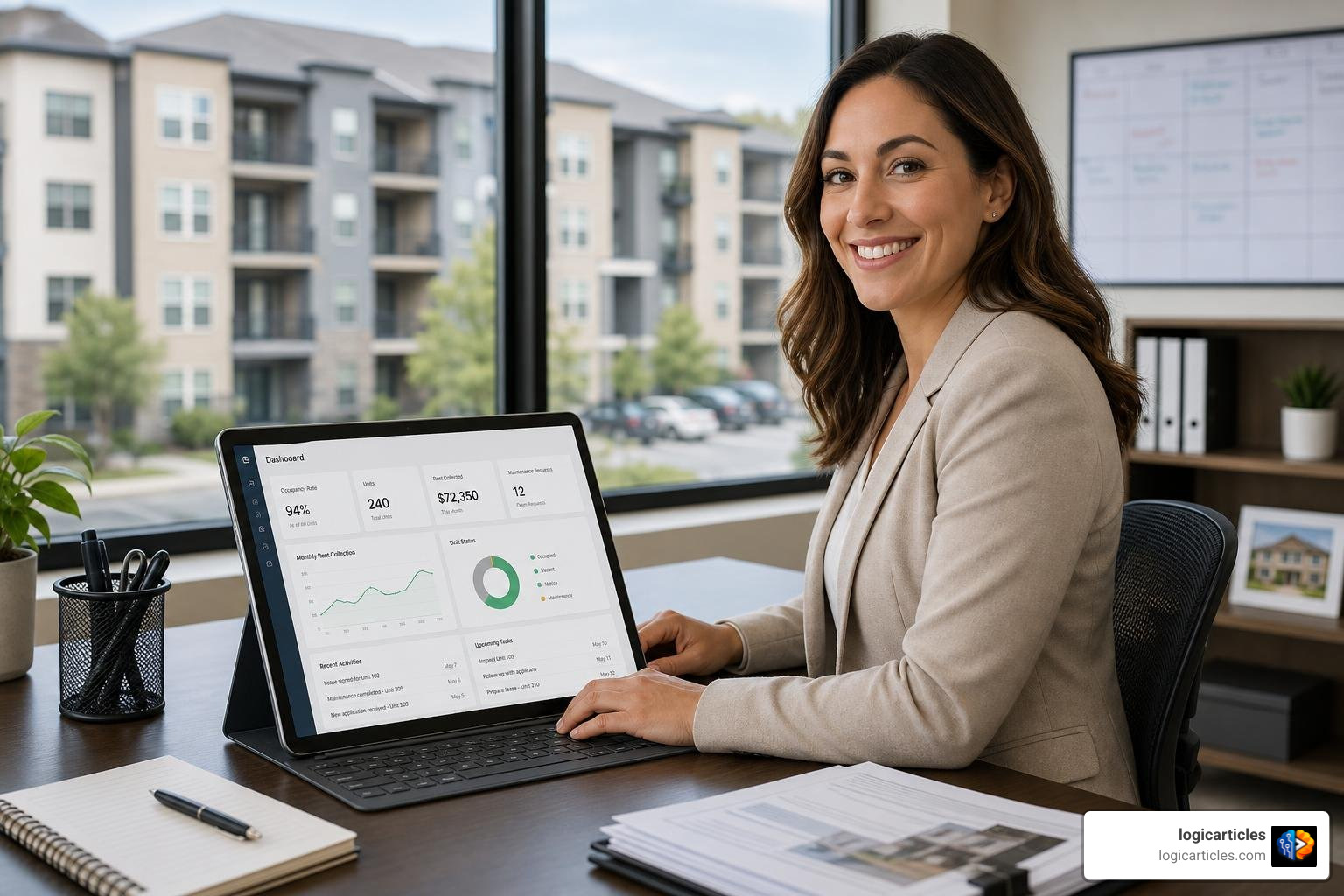
Finding the best property management software for your portfolio can save you hundreds of hours a year — and thousands of dollars in management fees.
Here’s a quick look at the top options to help you decide fast:
| Software | Best For | Starting Price |
|---|---|---|
| Buildium | Small to mid-sized portfolios | $62/month |
| AppFolio | Large and scaling portfolios | $1.49/unit/month |
| Yardi Breeze | Simple cloud-based management | Contact for pricing |
| DoorLoop | Growing all-in-one portfolios | $59/month |
| Innago | Small landlords on a budget | Free |
| TenantCloud | Budget-conscious beginners | Free (up to 75 units) |
It’s 2 a.m. on a Sunday. You’re staring at a spreadsheet trying to remember if that $450 withdrawal was for the hot water heater at your rental property or a personal car repair. Sound familiar?
This is the breaking point where most landlords realize that manual tracking has failed them.
The property management software market was worth $26.55 billion in 2025 and is projected to nearly double to $52.21 billion by 2032 — growing at 10.1% per year. That kind of growth doesn’t happen by accident. It happens because the tools are genuinely solving real problems for landlords and property managers.
Cloud-based solutions now make up 62.6% of the market, meaning most modern platforms work on any device, from anywhere — no software installation required.
Whether you manage 2 units or 2,000, the right software can automate rent collection, track maintenance, screen tenants, and handle your accounting — all in one place.
This guide breaks down exactly what to look for, how pricing works, and which platform fits your situation.
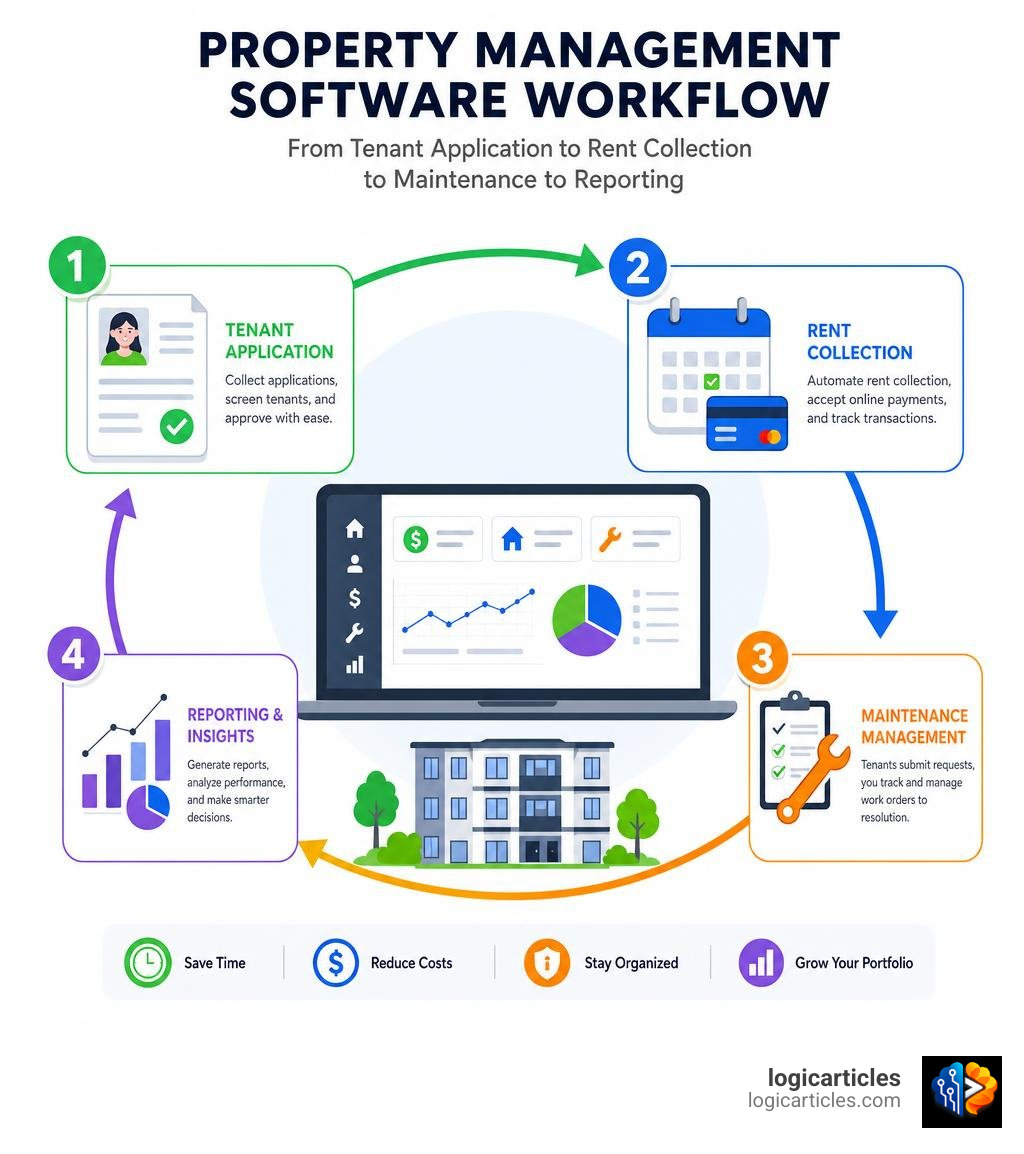
Key Features to Look For in the Best Property Management Software
When searching for the best property management software, it is easy to get distracted by flashy marketing terms and advanced AI promises. However, the foundation of any great software tool lies in how well it handles your daily, repetitive tasks.
If a platform takes ten clicks to perform a simple task like logging an expense, it will eventually sit unused, and you will find yourself back in spreadsheet jail.
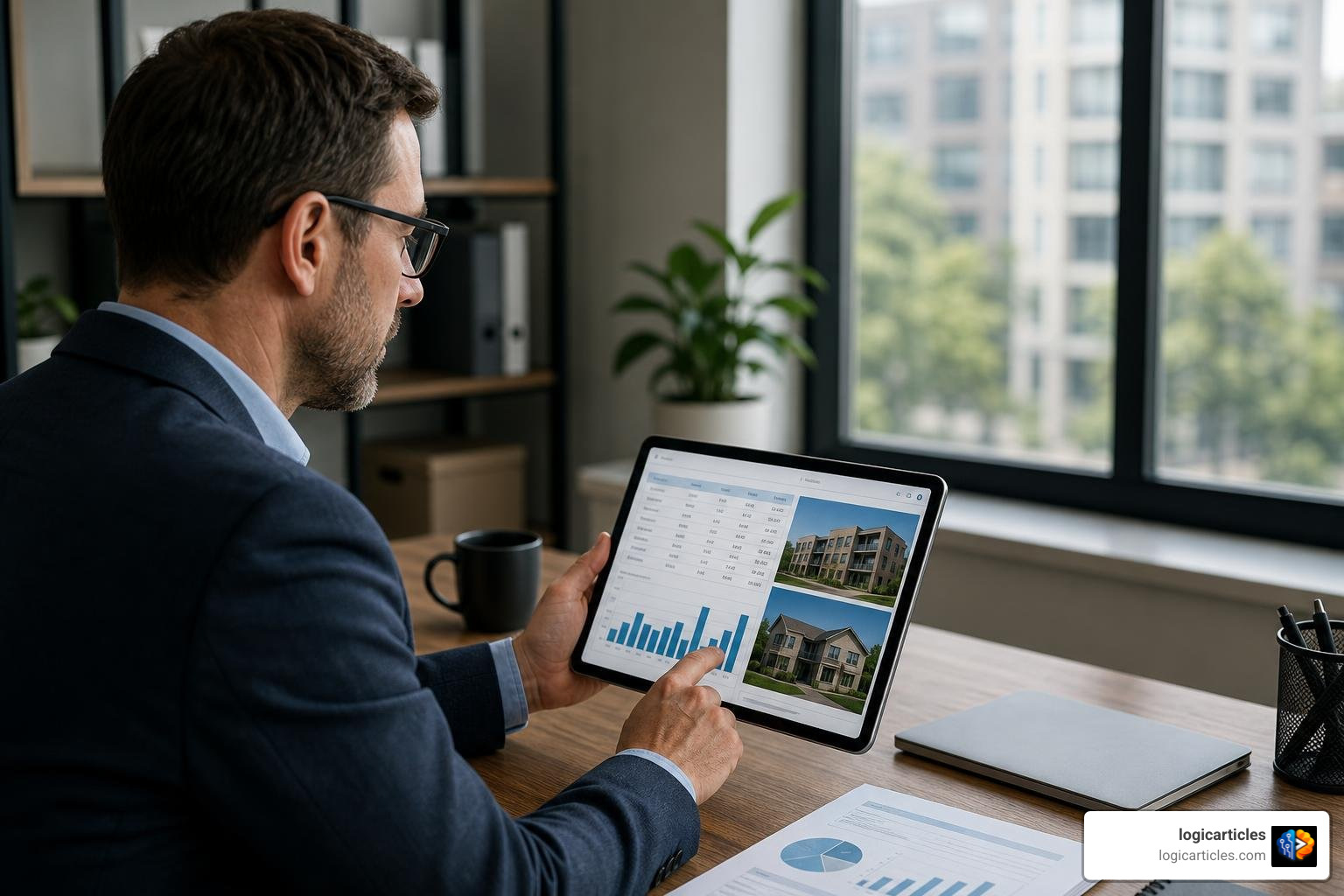
A truly effective solution acts as a single connected system. Instead of using five different programs to run your business, you want a single database where a tenant’s lease, payment history, maintenance requests, and communication logs live together.
This approach minimizes data entry errors, simplifies your IT footprint, and reduces the time you spend on administrative work. When evaluating your options, we recommend starting with a focus on core features, utilizing tools like Best Tenant Management Software and Best Maintenance Management Software to streamline your search.
Online Rent Collection and Financial Accounting
Automating rent collection is the fastest way to improve your cash flow and reclaim your weekends. The best platforms offer tenant portals where residents can pay via ACH, debit cards, or credit cards. Some systems even set up automated late fee calculations and recurring rent reminders, meaning you no longer have to send awkward text messages asking for rent.
However, collecting rent is only half the battle. Your platform must feature robust financial accounting. Look for systems that utilize double-entry accounting ledgers rather than simple cash-in, cash-out logs. Your software should support automated bank reconciliation, allowing you to match incoming rent directly to your bank statement with a few clicks.
Additionally, look for platforms that automatically categorize your expenses by Schedule E tax categories. This single feature transforms tax season from a week-long nightmare into a quick export. For specialized accounting needs, we suggest looking into the Best Real Estate Investment Accounting Software to ensure your books remain completely audit-proof.
Tenant Screening and Lease Management
A great tenant-landlord relationship starts with choosing the right tenant. Modern property management tools integrate tenant screening directly into the application process.
When a prospective tenant applies through your listing, the software can automatically pull credit reports, criminal backgrounds, and eviction histories. You can set custom pre-screening criteria per property to weed out unqualified applicants before they even apply.
Once you find the right resident, you should be able to generate lease agreements and collect digital signatures without leaving the platform. Searching through physical filing cabinets for signed leases is a problem that simply shouldn’t exist in 2026.
Look for software that stores your leases securely in the cloud and sends automated alerts when a lease is approaching its expiration date. If you want to explore dedicated options for this stage of the lifecycle, check out our guide on the Best Rental Property Software.
Maintenance Tracking and Vendor Coordination
Maintenance is often the most stressful part of managing real estate. When a pipe bursts, you need a system that acts fast. The best property management software provides a dedicated portal for tenants to submit maintenance requests, upload photos of the issue, and track progress.
Once a request is submitted, you can convert it into a work order and dispatch it to your preferred contractor. Some advanced systems provide dedicated vendor portals where contractors can accept jobs, submit invoices, and receive digital payments.
Maintaining a digital paper trail of all repairs, invoices, and communication protects your assets and provides essential documentation if a legal dispute ever arises. For complex portfolios requiring heavy vendor oversight, utilizing specialized tools like the Best Contractor Management Software can keep your operations running smoothly.
Selecting the Right Platform for Your Real Estate Portfolio
Not all property management software is created equal. A platform that works perfectly for a DIY landlord with three single-family homes will likely fail a professional agency managing a mixed portfolio of commercial retail spaces and high-rise apartments.
Choosing the right software requires a clear understanding of your portfolio size, property types, and growth plans.
To help you visualize how different systems fit different business models, we have categorized the primary software types below:
| Software Category | Target Portfolio Size | Key Strengths | Ideal Property Types |
|---|---|---|---|
| Entry-Level / Free | 1 to 50 units | Cost-effective, fast setup, basic accounting | Single-Family, Duplexes |
| Mid-Market All-in-One | 50 to 500 units | Robust trust accounting, marketing, open APIs | Multifamily, Mixed-Use |
| Enterprise / Single-Stack | 500+ units | Custom workflows, compliance, deep reporting | Commercial, Student Housing, HOA |
How to Choose the Best Property Management Software for Your Portfolio Size
Your unit count is the most practical starting point when selecting software. If you are managing a small but growing portfolio, you need a platform that scales with you without demanding massive upfront setup fees.
For mid-sized and rapidly scaling portfolios, platforms like Buildium and DoorLoop offer the perfect balance of advanced trust accounting, leasing tools, and custom integrations.
Once you cross the 500-unit threshold, your needs shift toward enterprise-grade operations. At this level, you need deep business intelligence, custom reporting, and highly structured workflows.
Enterprise platforms allow you to manage multiple entities, handle complex partner distributions, and oversee massive teams. If you are operating at this scale, we recommend reading our breakdown of the Best Real Estate Portfolio Management Software in 2026 or exploring the industry-standard solutions offered by Yardi: Real Estate Software Energized For Tomorrow, Today.
Why Small Landlords Need the Best Property Management Software
Many independent landlords assume that property management software is only for large companies. They continue to collect paper checks, track expenses on paper receipts, and communicate via scattered text messages. This manual approach is not only exhausting, but it also exposes you to significant financial and legal risks.
Using a dedicated platform allows small landlords to self-manage their properties professionally, saving thousands of dollars in property management fees.
Even a free or low-cost system can automate your rent collection, provide professional tenant screening, and keep your financial records organized for tax season. It allows you to present a professional image to your tenants, which builds trust and encourages on-time payments. To find a tool tailored specifically to your needs, explore our list of the Best Software for Landlords.
Understanding Pricing Models and Hidden Fees
Software pricing can be deceptive. While some platforms advertise low monthly rates, the actual cost of ownership can skyrocket once you account for transaction fees, screening fees, and setup costs. Generally, property management software pricing falls into three categories:
- Flat Monthly Fees: You pay a fixed monthly price regardless of how many units you manage (usually up to a certain limit).
- Per-Unit Pricing: You pay a small fee per unit per month (e.g., $1.49 per unit), often accompanied by a monthly minimum floor (such as AppFolio’s $298 monthly minimum).
- Free (Tenant-Paid): Platforms like Innago do not charge the landlord a monthly subscription fee. Instead, they monetize by charging tenants transaction fees for ACH payments (typically around $2) or credit card processing (around 2.99%).
Before committing to a platform, always check the fine print for hidden fees. Some systems charge extra for e-signatures, bank account setups, tenant screening, or premium customer support.
For an example of a platform that balances transparent pricing with a robust feature set, you can review the options at Property Management Software | DoorLoop.
Property Type Specialization: Residential vs. Commercial
A lease is not just a lease. A residential lease focuses on tenant rights, local housing codes, and security deposit regulations. A commercial lease, on the other hand, involves complex triple-net (NNN) calculations, common area maintenance (CAM) reconciliations, and multi-year escalation clauses.
If your portfolio includes commercial properties, retail spaces, or mixed-use buildings, you cannot rely on standard residential software. You need a system built to handle commercial accounting and lease structures.
Similarly, managing community associations or condominiums requires specialized tools for voting, violation tracking, and board communications. To make sure you get the right tool for your specific asset class, we have put together detailed guides for each sector:
- Best Apartment Management Software
- Best Commercial Property Management Software
- Best Condo Management Software
- Best HOA Management Software
- HOA Management Software Reviews
- Commercial Lease Management Software 2026
Data Security, Privacy, and Fair Housing Compliance
Property managers handle some of the most sensitive personal data imaginable, including social security numbers, bank routing details, employment histories, and credit reports. A data breach can ruin your reputation and expose you to severe legal liabilities.
The 2024 Real Estate Wealth Network data breach, which exposed 1.5 billion personal records, serves as a stark reminder of how vulnerable real estate data can be.
When choosing a platform, ensure it utilizes industry-standard security measures. Look for features like Single Sign-On (SSO), two-factor authentication (2FA), role-based access control, and end-to-end data encryption both in transit and at rest.
Additionally, your software should help you remain compliant with Fair Housing laws by providing standardized, objective tenant screening templates that eliminate human bias. If you are managing commercial leases and need to comply with strict ASC 842 financial regulations, we recommend checking out the Best Lease Accounting Software Solutions.
Implementation and Data Migration Timelines
One of the biggest hurdles to adopting new software is the fear of a messy transition. Landlords worry about losing historical financial data, disrupting tenant payments, or spending weeks training staff on a complicated new interface.
The key to a successful implementation is planning. For small portfolios, self-service onboarding can take as little as a few days. You simply import your tenant contact information, set up your bank accounts, and invite your residents to the new portal.
For larger, enterprise-level portfolios, the transition can take anywhere from 30 to 90 days. We highly recommend choosing a software provider that offers guided onboarding and dedicated data migration specialists to handle the heavy lifting of moving your historical ledgers over to the new platform.
Common Mistakes to Avoid During Selection
We have seen many property managers regret their software choices because they rushed the selection process. To ensure you choose a platform you will love for years, avoid these common pitfalls:
- Overcomplicating Your Workflows: Do not buy a highly complex enterprise platform if you only manage 15 single-family homes. You will end up paying for features you do not need and struggling with a steep learning curve.
- Ignoring Mobile Usability: Property management does not happen behind a desk. If the software does not have a fast, responsive mobile app for both you and your tenants, keep looking.
- Failing to Test with Real Workflows: Do not just watch a sales demo. Sign up for a free trial, use pre-loaded sample data, and measure exactly how many clicks it takes to perform routine tasks like creating a lease or generating an owner statement.
Industry Trends: AI, IoT, and the Future of Property Management
The property management industry is undergoing a massive technological shift. The days of simple digital record-keeping are gone. Today, the industry is moving toward highly connected, predictive, and automated ecosystems that actively manage properties for you.
Two of the most exciting advancements driving this change are Agentic AI and the Internet of Things (IoT).
Instead of waiting for a tenant to report a problem or manually drafting every single email, modern platforms use intelligent systems to predict issues and execute tasks automatically. To see how these cutting-edge technologies are being applied today, you can explore platforms like Tivio — AI Property Management Software and The Best Property Management Software and Tenant App – Bidrento.
The Rise of Agentic AI and Automation
We are moving past simple chatbots that copy and paste generic answers. The future of real estate technology lies in Agentic AI — systems that can execute complex, multi-step decision trees without needing constant human intervention.
For example, when a tenant sends an email complaining about a leaky faucet, an AI-powered inbox can read the message, understand the context, suggest troubleshooting steps to the tenant, and automatically draft a work order for your preferred plumber if troubleshooting fails.
These systems can analyze live market rent data to suggest optimal lease renewal rates, draft localized property listings, and even predict which tenants are at risk of falling behind on rent based on historical payment patterns. If you want to see what an AI-first property management system looks like, check out Dynamvs Property Management for Real Estate Professionals.
IoT Integration and Smart Building Technology
The Internet of Things (IoT) is turning traditional buildings into smart, connected assets. By integrating smart devices directly with your property management software, you can protect your properties and reduce utility expenses automatically.
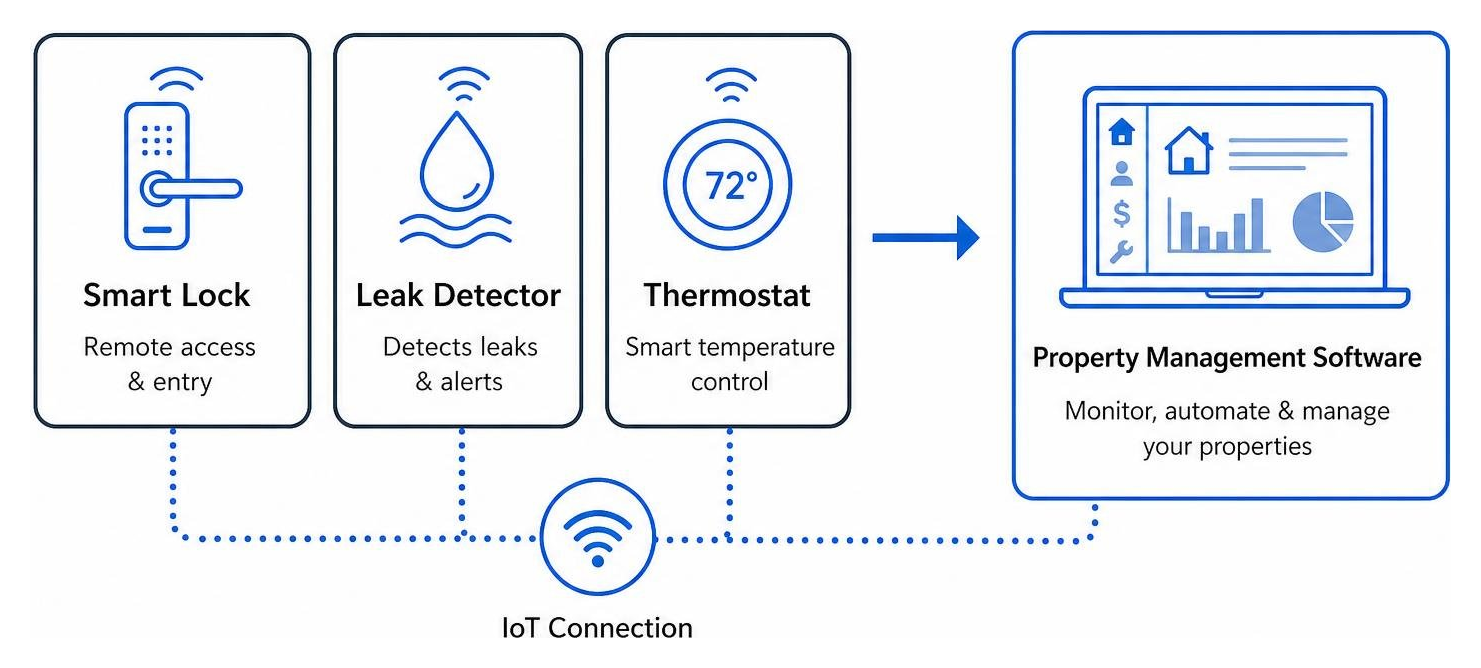
Consider these real-world integrations:
- Smart Locks: Automatically generate temporary digital keys for self-guided showings, new tenants, or maintenance technicians, eliminating the hassle of physical key handovers.
- Leak Detection Sensors: Install wireless sensors under sinks and near water heaters. If a leak is detected, the sensor alerts your software, which can automatically dispatch an emergency plumber before major water damage occurs.
- Smart Thermostats: Automatically adjust temperatures in vacant units to save on heating and cooling costs while ensuring the property remains comfortable for scheduled showings.
To explore how these smart building integrations can be managed alongside your core leasing and accounting workflows, take a look at the tools available through Property Management Software | Buildium.
Frequently Asked Questions about Property Management Systems
What is the foundation of a great tenant-landlord relationship?
The foundation of any great tenant-landlord relationship is built on clear, prompt, and transparent communication.
Providing tenants with a self-service mobile portal where they can easily pay rent, submit maintenance requests, and access their lease documents reduces friction and builds long-term trust. When tenants feel heard and can easily communicate with property managers, they are more likely to take care of the property and pay rent on time.
How can landlords save money on property management?
Landlords can save money by using modern property management software to self-manage their portfolios instead of hiring a traditional third-party property manager (who typically charges 8% to 12% of monthly rent).
By automating repetitive tasks like rent collection, late fee calculations, and tenant screening, software allows independent landlords to manage dozens of units in just a few hours a week, keeping more rental income in their pockets.
How often should you evaluate new property management software?
We recommend reassessing your property management software every few years to see what new technologies have entered the market.
As your portfolio grows, your administrative needs change, and a platform that worked for you in the past might hold you back today. Staying up to date with modern trends like AI automation, smart lock integrations, and advanced mobile portals ensures your business remains highly competitive and operationally efficient.
Conclusion
The search for the best property management software is ultimately about reclaiming your time, protecting your real estate investments, and scaling your business without adding unnecessary stress or headcount.
Whether you opt for a completely free platform like Innago to manage a handful of single-family rentals, or a robust, enterprise-grade system like Yardi to oversee a massive commercial portfolio, the key is to choose a tool that matches your current scale while supporting your future growth.
By automating your rent collection, streamlining maintenance, and keeping your financial records completely organized in the cloud, you can transition from a reactive, stressed property manager into a proactive, strategic real estate investor.
Ready to find the perfect software stack for your business? Explore our comprehensive software guides today to compare the top tools across every major industry.