What Is the Sitemap Generator by Spellmistake?

The sitemap generator by Spellmistake is a free, web-based tool that automatically crawls your website and produces an XML sitemap file you can submit directly to search engines like Google and Bing — no registration, no plugins, no technical setup required.
Quick answer for those in a hurry:
| Question | Answer |
|---|---|
| What does it do? | Crawls your site and generates an XML sitemap file |
| Is it free? | Yes, free with no registration needed |
| Who is it for? | Beginners, bloggers, small businesses, developers |
| Where do I start? | Visit spellmistake.com, enter your URL, click generate |
| What do I do with the file? | Upload to your root directory and submit to Google Search Console |
If your pages aren’t showing up in Google, the problem often isn’t your content. It’s that search engines simply haven’t found those pages yet.
A sitemap solves that. It acts as a direct communication layer between your website and search engine crawlers — telling them exactly which pages exist, how important they are, and when they were last updated.
The research is clear: websites using properly structured XML sitemaps see an average 35–50% improvement in page indexing speed. That’s a meaningful edge, especially for new or growing sites.
With over 51 million sitemaps generated and more than 5 billion pages indexed, Spellmistake’s tool has become a go-to option for website owners who want fast, reliable sitemap creation without the complexity of enterprise crawlers.
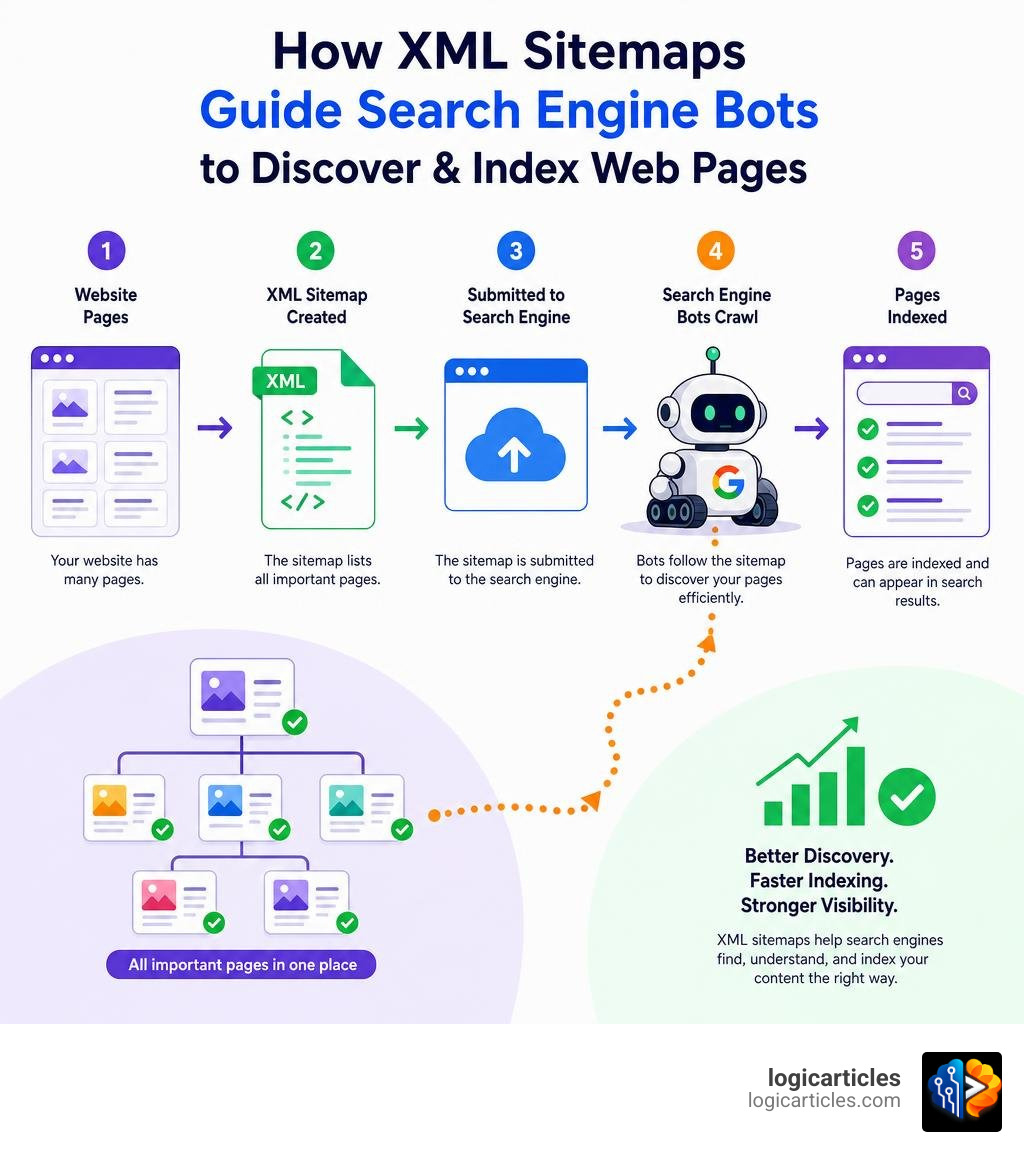
Why You Need a Sitemap Generator by Spellmistake for Modern SEO
To understand why a tool like the sitemap generator by Spellmistake is so valuable, we must first look at how search engines work in 2026. Search engine crawlers (like Googlebot) have a finite amount of time and energy to spend on your website. In the industry, we call this your “crawl budget.”
If your website has messy internal linking, orphan pages (pages with no links pointing to them), or a deep, confusing folder structure, search bots might exhaust their crawl budget before they ever find your most important content.
An XML sitemap acts as a clear roadmap. Instead of blindly clicking links to see where they go, search engines read your sitemap to immediately understand:
- The complete list of crawlable URLs: Ensuring no page is left behind.
- Last modification metadata: Telling the crawler exactly when a page was updated so it doesn’t waste time crawling unchanged content.
- Relative priority and change frequency: Helping the bots allocate their crawling efforts logically.
Without an optimized sitemap, search engines rely purely on standard crawling behavior. For dynamic sites, e-commerce stores, or blogs publishing multiple times a week, this inefficiency can delay organic traffic by weeks or even months.
As explored in Sitemap Generator by Spellmistake: A Smarter Way to Structure Your Website – freezemagazine.blog , having an organized, error-free directory of your URLs is a fundamental technical SEO requirement that algorithms prioritize. Using a dedicated tool to build this structure ensures that your crawl budget is spent on indexing your high-value pages rather than getting lost in technical dead ends.
Furthermore, as detailed in the comprehensive review on Sitemap Generator by Spellmistake: Complete Guide for Better Indexing – Rank Visely , a clean sitemap helps bridge the gap between content creation and search engine discovery, turning manual crawling bottlenecks into streamlined indexing workflows.

Core Features of the Sitemap Generator by Spellmistake
The beauty of the sitemap generator by Spellmistake lies in its combination of simplicity and technical utility. It isn’t just a basic URL scraper; it is designed to build search-engine-ready files in seconds.
Here are the core features you can access directly through the Sitemap generator tool by SpellMistake | Generate in seconds | Spell Mistake :
- Automated Crawling and URL Discovery: Once you enter your homepage URL, the tool behaves like a search engine spider. It navigates through your internal links, discovering and cataloging every public page.
- Duplicate Filtering: One of the quickest ways to confuse Google is by submitting multiple versions of the same page (e.g., with and without trailing slashes, or with tracking parameters). The Spellmistake tool automatically filters out duplicate parameters to keep your sitemap clean.
- Priority Settings Customization: You can assign relative priority values (ranging from 0.0 to 1.0) to your URLs. For example, your homepage should typically sit at 1.0, main category pages at 0.8, and individual blog posts or product pages at 0.5 or 0.6.
- Change Frequency Tagging: You can define how often your pages are likely to change (hourly, daily, weekly, monthly, or yearly). This gives search bots a hint about how frequently they should return to recrawl your content.
- Platform Independence: Because it runs entirely in your web browser, it works seamlessly regardless of whether your site is built on WordPress, Shopify, Webflow, Wix, or custom HTML.
Comparing Browser-Based Tools with Plugins and Desktop Crawlers
When deciding how to build your sitemap, you generally have three options: browser-based generators, CMS-specific plugins, or advanced desktop crawlers. Each has its place in an SEO workflow, but they serve very different needs.
| Feature / Capability | Browser-Based (Spellmistake) | CMS Plugins (e.g., WordPress Plugins) | Desktop Crawlers (e.g., Screaming Frog) |
|---|---|---|---|
| Setup Complexity | Extremely Low (No install/login) | Low to Medium (Requires plugin install) | High (Requires software installation) |
| Platform Compatibility | Universal (Works on any website) | Restricted to specific CMS | Universal (Runs locally on PC/Mac) |
| Automation | Manual (Must regenerate manually) | Fully Automated (Updates on publish) | Manual / Scheduled |
| Learning Curve | None (Paste URL & click go) | Low (Set and forget) | Steep (Requires technical SEO knowledge) |
| Cost | 100% Free | Free to Paid Premium | Free limit / Paid annual license |
| Best For | Small-to-mid sites, static sites, non-WP | Standard WordPress or Shopify sites | Enterprise sites, deep technical audits |
While CMS plugins are excellent for automatic, hands-off updates, they can bloat your server if you install too many. On the flip side, heavy desktop crawlers offer immense depth but are often overkill for simple business websites, portfolios, or landing pages.
The sitemap generator by Spellmistake fits perfectly in the sweet spot: it is lightweight, platform-independent, and requires zero technical background to operate.
Technical Error Prevention and Common Sitemap Issues
Creating a sitemap is only half the battle; the real challenge is keeping it free of technical errors. A broken or poorly configured sitemap sends conflicting signals to search engine crawlers.
For instance, if you tell Google that a page is highly important by including it in your sitemap, but your server returns a 404 Not Found error or redirects the crawler elsewhere, you waste your valuable crawl budget.
Common issues that plague self-built or poorly generated sitemaps include:
- Broken Links and 404 Errors: Including dead URLs that no longer exist.
- Redirect Chains: Listing an old URL that redirects to a new one, forcing the crawler to make multiple requests.
- Duplicate and Non-Canonical URLs: Listing multiple variations of a single page instead of pointing exclusively to the single canonical version.
- Noindex Pages: Accidentally including pages containing a
noindextag, which tells search engines “please crawl this” and “please do not index this” at the exact same time.
To avoid these headaches, utilizing a suite of reliable tools like Spellmistake SEO Tools | Free Article Rewriter tools allows you to keep your technical SEO foundation clean. By auditing your pages and validating your output, you ensure that search engines only see the cleanest possible version of your site’s structure.
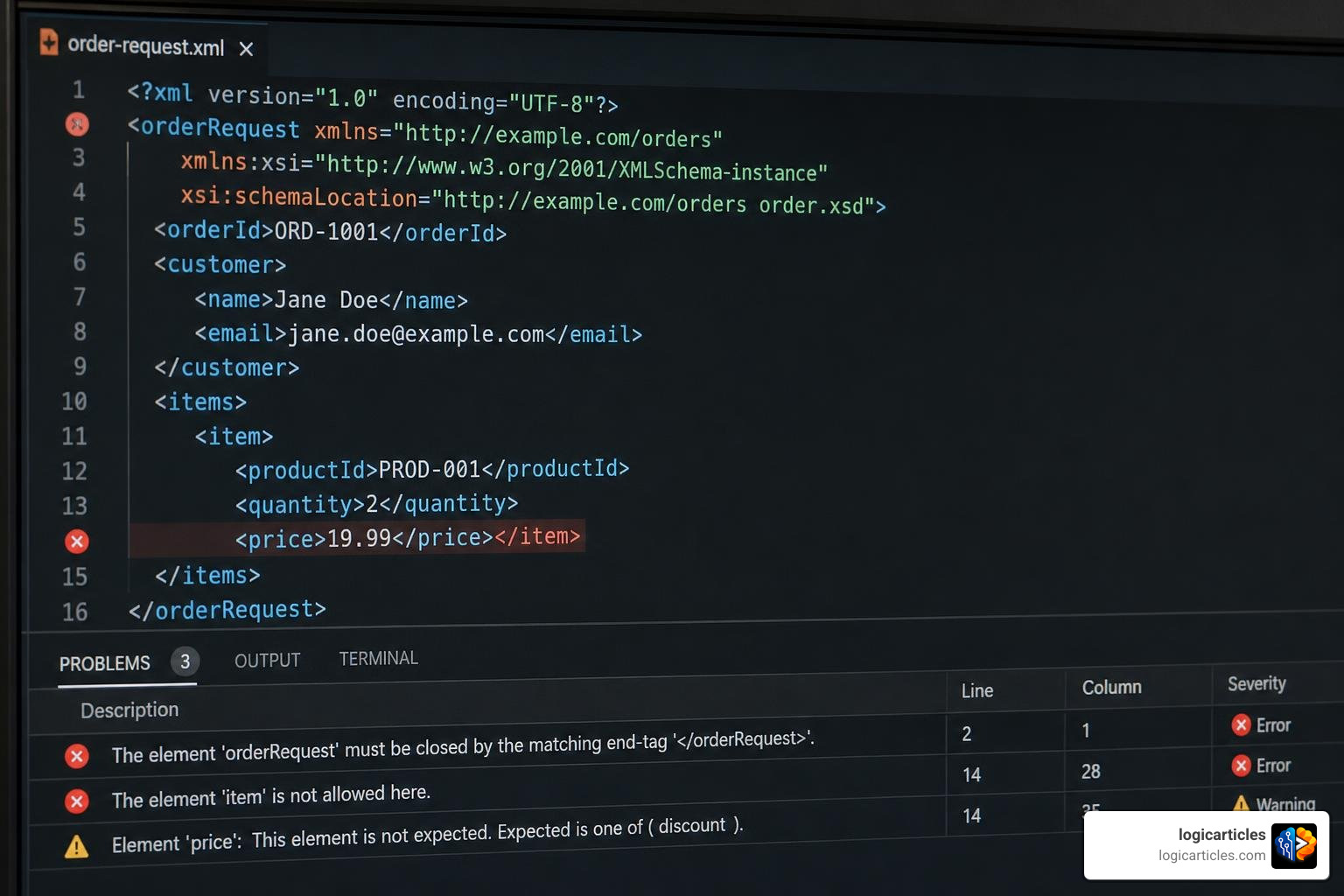
How to Prevent Common Sitemap Errors
Preventing sitemap errors requires a mix of automated tools and manual quality checks. If you want to keep your search visibility flawless, follow these core rules:
- Enforce a Single Protocol (HTTPS): Make sure every single URL in your sitemap uses the secure
https://protocol (assuming your site has an SSL certificate, which it absolutely should in 2026). Mixing HTTP and HTTPS URLs in a sitemap is a major red flag for search crawlers. - Maintain Consistent Lowercase URLs: Search engines treat
yourdomain.com/Pageandyourdomain.com/pageas two different URLs. Ensure all links inside your XML file are strictly lowercase. - Resolve Trailing Slash Inconsistencies: Pick a format (either ending with a
/or not) and stick to it site-wide. - Perform Syntax Validation: Before uploading your sitemap, run it through an XML validator to ensure there are no broken tags or missing brackets. A single misplaced symbol can render the entire file unreadable to search engines.
- Audit Your Metadata: Ensure your meta titles and descriptions match the content of the pages listed in your sitemap. You can use the SpellMistake: Free meta tag generator and spell checker | Spell Mistake to align your on-page elements with your overall crawl strategy.
Handling Advanced Formats and Large Websites
As your website grows, standard sitemap structures may no longer be enough. Search engines enforce strict limitations on single sitemap files: a maximum of 50,000 URLs or 50MB in uncompressed file size.
If your website exceeds these limits, you must implement a Sitemap Index File. This is essentially a master sitemap that points to multiple smaller sitemaps (e.g., sitemap-posts.xml, sitemap-products.xml, sitemap-images.xml).
Additionally, modern SEO often requires specialized sitemaps depending on your content mix:
- Image Sitemaps: Crucial for portfolios, e-commerce, and photography sites to help your images appear in Google Image search results.
- Video Sitemaps: Helps search engines understand where video content is hosted on your pages, including runtimes, thumbnails, and descriptions.
- News Sitemaps: Essential for publishers and news outlets to get their articles indexed in Google News within minutes of publication.
For very large or enterprise-scale sites, browser-based tools can sometimes hit crawl memory limits. In those cases, splitting your site into logical directories and generating separate sitemaps for each section is the smartest way to keep your files organized and readable.
How to Build and Deploy Your XML Sitemap
Once you have successfully generated your XML sitemap, the next step is deployment. Having a perfect XML file sitting on your computer does nothing for your SEO; you must place it where search engines can easily find it.
To do this, you will need to upload the sitemap.xml file to your website’s root directory (usually the main folder where your website’s files are hosted, accessible via FTP or your hosting control panel). Once uploaded, your sitemap should be publicly viewable at:
After confirming the file is live, you must register it with search engines. This is done by submitting the URL to Google Search Console and Bing Webmaster Tools.
Additionally, you should add a reference to your sitemap at the very bottom of your robots.txt file, like this:
Sitemap: https://yourdomain.com/sitemap.xml
This ensures that any search engine crawler visiting your site immediately knows where to find your map. If you are launching a new online venture or scaling a digital platform, integrating this deployment step into your launch checklist is highly recommended. For more insights on building a robust digital presence, check out our guide on Startup Tools To Scale Fast In 2026.
Step-by-Step Guide to Generating Your Sitemap
Ready to build yours? Here is exactly how to use the sitemap generator by Spellmistake to create and launch your sitemap in under five minutes:
- Navigate to the Tool: Open your browser and go to the Spellmistake XML Sitemap Generator.
- Input Your Domain: Paste your full website URL into the input field. Make sure to include the correct protocol (e.g.,
https://yourdomain.com). - Configure Your Settings: If the tool provides advanced options, set your preferred update frequency (e.g., weekly for blogs, daily for e-commerce) and default priority settings.
- Initiate the Crawl: Click the “Generate Sitemap” button. The tool will begin scanning your site, listing the discovered URLs in real-time.
- Review the Discovered URLs: Once the crawl is complete, quickly scan the list. If you see login pages, admin directories, or duplicate parameter URLs, filter them out.
- Download the XML File: Click the download button to save the
sitemap.xmlfile directly to your computer. - Upload and Submit: Upload the file to your website’s root directory and submit the link to Google Search Console.
Using straightforward tools like this is a great way to handle technical optimizations efficiently. For a broader look at the top utilities available to help grow your brand this year, take a look at our review of the Best Startup Growth Tools For 2026.
Limitations of the Sitemap Generator by Spellmistake
While the Spellmistake tool is incredibly convenient, it is important to be realistic about its limitations. No single tool is a silver bullet for every website.
- Manual Updates Required: Unlike dynamic CMS plugins that automatically append a new URL to your sitemap the second you hit “Publish,” the Spellmistake generator is a static crawler. This means whenever you make major structural changes or add dozens of new pages, you will need to manually regenerate, download, and re-upload your sitemap.
- JavaScript Rendering Limitations: If your website relies heavily on client-side JavaScript rendering (like some complex React or Angular applications), lightweight browser crawlers might struggle to discover links that aren’t hardcoded in the HTML.
- Crawl Limits: For massive websites (such as enterprise e-commerce platforms with tens of thousands of product pages), browser-based crawlers may run out of memory or halt before completing a full crawl.
If you run a highly dynamic, JavaScript-heavy application, you may need to look into advanced server-side setups or AI-driven indexing tools. To stay ahead of the curve on these technologies, explore the latest Ai Tools You Should Know In 2026.
Frequently Asked Questions about XML Sitemaps
How often should I regenerate and submit my sitemap?
You should regenerate your sitemap whenever you make significant structural changes to your website, such as launching a new product category, publishing a batch of blog posts, or deleting old pages. For small websites or portfolios that rarely change, updating your sitemap once every few months is perfectly fine.
However, if you run an active blog or e-commerce store, a weekly or bi-weekly manual refresh is ideal if you aren’t using an automated plugin. Keeping track of these recurring optimization tasks is easy when you utilize proper organization systems. You can find our top recommendations in our guide on the Best Task Management Software In 2026 Tested.
Do sitemap spelling errors affect search engine rankings?
Yes, they absolutely can. While a spelling mistake inside a blog post might just annoy a reader, a “spellmistake” inside your sitemap file (such as a misspelled URL or a broken XML tag) can cause search engines to reject the entire file. If a URL listed in your sitemap returns a 404 error because of a typo, you waste your crawl budget on a broken link.
This signals to search engines that your site is poorly maintained, which can indirectly hurt your indexing speed and search visibility. To keep your overall workflows running smoothly and error-free, leveraging automation can be incredibly helpful. Read more about streamlining your processes with Droven Io Ai Automation Tools.
Is the Spellmistake sitemap generator completely free to use?
Yes! The basic version of the tool is 100% free to use, requires no registration, and does not force you to sign up for a subscription to download your completed XML file. It is a fantastic, lightweight utility for webmasters who need a fast solution without the paywalls.
If you want to explore their wider suite of over 50 free web utilities, check out SpellMistake.com – 100% Free and Fast SEO Tools Online .
Conclusion
An optimized XML sitemap is one of the most critical, yet frequently overlooked, pillars of technical SEO. Without a clear map, search engines are left to wander aimlessly through your site, wasting crawl budget and delaying the indexing of your hard-earned content.
By using the sitemap generator by Spellmistake, you can remove the friction of manual coding or complex server configurations. In just a few clicks, you get a clean, search-engine-ready file that paves the way for faster crawling, better indexation, and improved search visibility.
As we navigate the competitive digital landscape of 2026, keeping your site’s technical foundation clean and error-free is non-negotiable. Take five minutes today to generate your sitemap, upload it to your root directory, and submit it to Google Search Console.
Looking to streamline the rest of your digital workflow? Boost your productivity with the best tools of 2026 and build a faster, smarter web presence with us!