What is PushWiki.com and What Content Does It Host?

Is PushWiki.com legit? It’s a fair question — and the short answer is: it’s complicated.
PushWiki.com is a real, browsable website. It’s not a confirmed scam. But it’s also not a transparent, well-verified source you can fully trust. Here’s the quick breakdown:
| Question | Quick Answer |
|---|---|
| Is PushWiki.com a real site? | Yes, it exists and is accessible |
| Is it safe to browse? | Generally yes, but with caution |
| Is it a legitimate wiki? | No — it’s a standard blog, not a collaborative wiki |
| Who runs it? | Unclear — author credentials are unverifiable |
| Can you trust its content? | Only as a starting point — always verify elsewhere |
| Should you enter personal data? | No — not recommended |
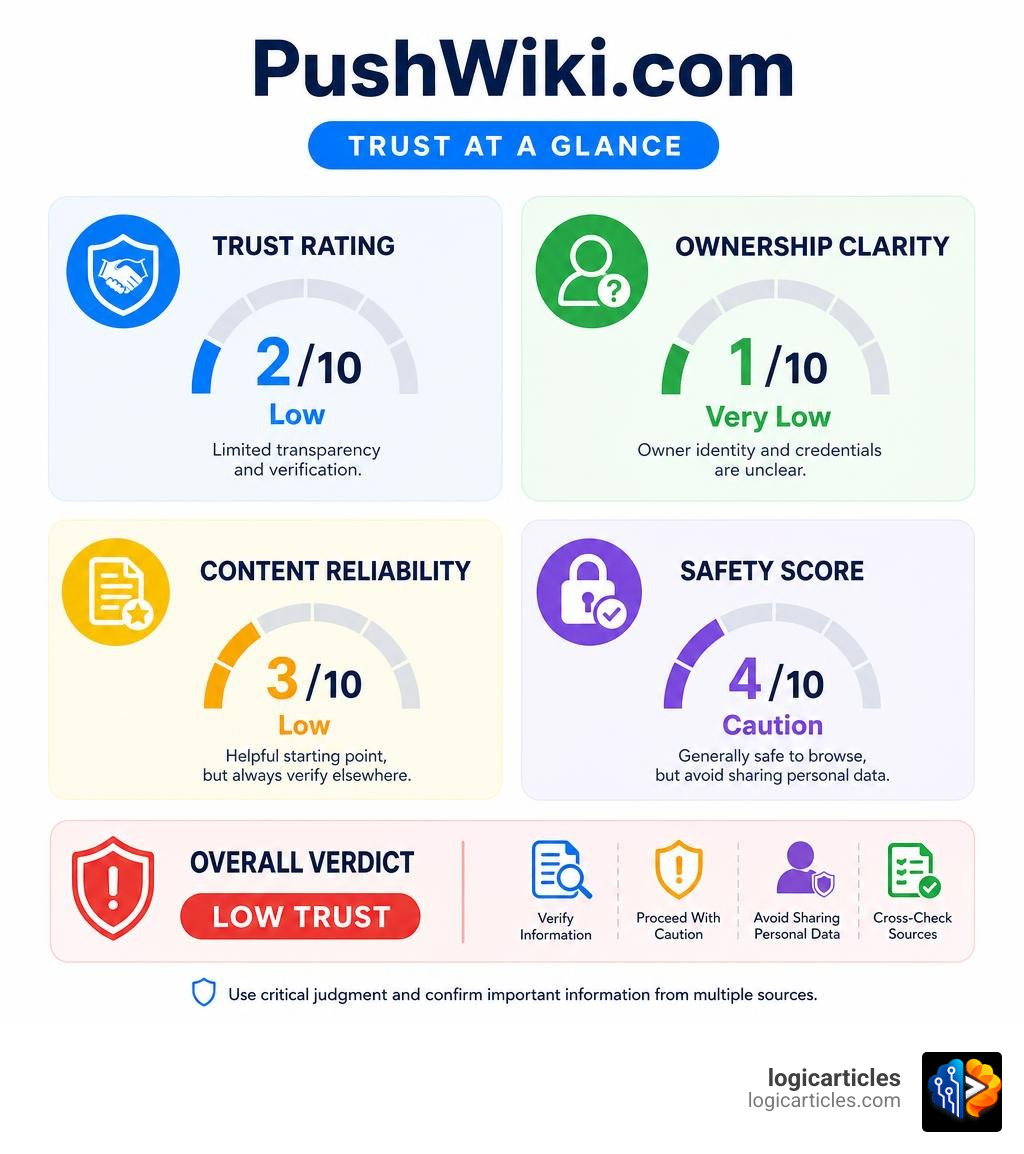
| Overall trust rating | Low (2/10 transparency, 1/10 ownership clarity) |
Here’s what makes this site tricky: depending on where you look online, PushWiki.com gets described in completely different ways. Some sources call it a tech and AI blog. Others call it a digital marketing knowledge hub. A few describe it as a collaborative wiki platform with team editing features. These descriptions don’t match each other — and most don’t match the actual live site.
That kind of inconsistency is a red flag on its own.
If you’ve landed on PushWiki.com through a redirect, a pop-up ad, or a Google search and you’re not sure whether to trust it — you’re right to pause. This guide breaks down exactly what the site is, who runs it, how safe it is, and when (if ever) it’s worth using.

At first glance, the domain name “PushWiki.com” suggests a public repository of knowledge, perhaps a specialized cousin of Wikipedia or a technical documentation portal. However, when we look under the hood, we find a standard WordPress-based website rather than an open-source, community-driven database.
The actual live platform hosted at Pushwiki com | Expert Tech Guides, AI Reviews & Trends is fundamentally a tech-and-AI blog. It publishes content centered around:
- Tech News Coverage: Speculative features on upcoming releases, such as Windows 13, and the global rollout of 6G networks.
- AI Tool Reviews: Unbiased overviews of generative art platforms, writing tools, and business automation software.
- How-to Guides: Step-by-step instructions for troubleshooting common technical issues or setting up software.
- Product Reviews: Basic analysis of physical consumer electronics and software services.
Despite the “Wiki” branding, the site functions like a standard, single-author blog. It is designed to capture organic search traffic through highly search-engine-optimized (SEO) articles. While the layout is clean and relatively easy to navigate, the depth of the content is often shallow, focusing more on high-intent search keywords than on rigorous, expert-level analysis.
The Discrepancy: Why Sources Describe PushWiki.com Differently
If you perform a quick search on the legitimacy of this platform, you will encounter a bizarre phenomenon: different review sites describe PushWiki.com in entirely contradictory ways.
For instance, some online summaries published in 2026 claim that PushWiki is a “multi-niche knowledge hub” designed specifically for digital marketing, blogging, and SEO. Other reviews, such as the Pushwiki com Review 2026: Features, Pricing and Benefits, describe it as a collaborative SaaS tool with tiered pricing models, real-time commenting, and integration with Slack and Trello — putting it in direct competition with platforms like Notion or Confluence.
Why is there such a massive gap between what these reviews describe and what actually exists on the live site?
The answer lies in the automated, often lazy nature of modern online content creation. Many low-tier review sites rely on templated, AI-generated content. When tasked with writing a review for “PushWiki.com,” these AI engines scrape generic definitions of “wikis” or copy-paste outdated information from entirely different software platforms. This creates a self-reinforcing echo chamber where multiple websites publish near-identical, inaccurate summaries without ever visiting the live URL.
When evaluating whether Is PushWiki.com Legit, we must ignore these templated reviews and focus strictly on the live site’s actual behavior.
PushWiki.com vs. Wikipedia and Established Tech Platforms
To understand where PushWiki.com fits in the broader digital landscape, it helps to compare it to established, high-trust platforms:
| Feature | Wikipedia | Tech Outlets (e.g., The Verge) | PushWiki.com |
|---|---|---|---|
| Editing Model | Public, collaborative | Professional editorial team | Closed (Centralized team/owner) |
| Primary Goal | Neutral, non-profit encyclopedia | Tech news, expert reviews, journalism | SEO traffic, affiliate marketing, link testing |
| Author Transparency | Public edit history & citations | Verified journalists with portfolios | Unverified pseudonyms (e.g., “Martin”) |
| Primary Revenue | Public donations | Display ads, sponsored content, affiliates | Display ads, affiliate links, guest posts |
As shown, PushWiki.com lacks the collaborative open-editing model of Wikipedia, the journalistic weight of established tech sites, and the certified learning paths of platforms like Coursera. It sits squarely in the category of a niche, independent content blog.
This model isn’t inherently malicious, but it lacks the built-in checks and balances of larger platforms. In that sense, navigating PushWiki requires the same skepticism one would use when evaluating business directories or local marketing hubs. For a deeper look at how to distinguish legitimate informational platforms from lower-tier directories, you can read our analysis of Zaubee vs Legitimate Business Directories.
Is PushWiki.com Legit? Evaluating Ownership and Author Credentials

When we evaluate the legitimacy of any online platform, the first things we look for are transparency and accountability. Who owns the domain? Who writes the content? Are there clear editorial guidelines?
Unfortunately, PushWiki.com scores exceptionally low in these areas. Third-party domain analysis tools award the site a trust rating of 2/10 for transparency and a 1/10 for ownership clarity. The domain’s WHOIS registration data is entirely shielded by privacy services, leaving no public record of the individual or organization operating the site.
This lack of transparency places PushWiki in a “gray zone.” It is similar to other unverified web platforms that pop up overnight to capture viral search traffic. To learn more about how we dissect these mysterious, low-transparency sites, check out our guide on Is FindRemind Legit or a Scam.
Who Runs PushWiki.com? Verifying ‘Martin’ and ‘Selah’
On its “About” page, PushWiki.com claims to be founded and operated by a tech enthusiast named “Martin,” who is described as having “over 4 years of hands-on experience in the digital and software industry.” The site positions Martin as an expert who personally tests every AI tool and gadget reviewed on the platform.
However, a thorough investigation reveals several inconsistencies:
- No External Footprint: There are no external professional profiles, LinkedIn accounts, or portfolios linking “Martin” to PushWiki.com. His credentials are entirely self-proclaimed and unverifiable.
- Conflicting Author Profiles: On other variations of the site, or in different articles, the content is credited to an author named “Selah.” Much like Martin, Selah has no verifiable background, bio, or social links.
- E-E-A-T Optimization: The site’s About page explicitly references Google’s E-E-A-T (Experience, Expertise, Authoritativeness, Trustworthiness) guidelines. This suggests that the persona of “Martin” may have been engineered primarily as an SEO strategy to signal authority to search engine algorithms, rather than to represent a real, accountable editor.
Is PushWiki.com Legit or Just an SEO Experiment?
Given the unverified authors and the low transparency, why does PushWiki.com even exist?
The evidence points to PushWiki.com being an SEO testing ground or a link-building domain rather than a genuine consumer resource. Many digital marketers register “wiki” style domains to run traffic experiments, test search engine algorithms, or build backlink networks.
In fact, empirical case studies highlight this exact use case. In one 30-day experiment documented at I Tested Pushwiki Com for 30 Days – Here’s What Happened, an SEO specialist published six high-quality articles on the platform to monitor how quickly search engines indexed the pages and passed backlink authority. The experiment revealed that:
- Articles indexed relatively quickly (within 3 to 5 days).
- The site successfully generated do-follow backlinks that registered in monitoring tools.
- Googlebot occasionally deprioritized pages when they contained heavy affiliate-style links, but indexed them smoothly once the links were stripped down to natural, contextual placements.
This indicates that while PushWiki.com is not a malicious scam, it functions largely as a tool in the SEO ecosystem. It is designed to capture search impressions and pass link value, which is a common tactic in search engine marketing. For those interested in how these search tactics function on a local scale, our breakdown of Zaubee Local SEO offers valuable context on how businesses build online authority.
Safety and Reliability: Is PushWiki.com Safe to Browse?
If you decide to visit PushWiki.com, are you putting your device or your personal data at risk?
From a purely technical standpoint, yes, PushWiki.com is safe to browse. The site runs on standard WordPress infrastructure and features an active SSL certificate (HTTPS), which encrypts the connection between your browser and the server. Technical audits show no unusual redirect loops, drive-by downloads, or malicious scripts embedded in the site’s code.
However, technical safety does not equal informational safety. While your computer won’t get infected with malware just by loading the homepage, relying on the site’s advice could lead to poor decisions, particularly on highly sensitive topics. For instance, the site occasionally covers “Your Money or Your Life” (YMYL) topics, such as zero-balance banking in the UAE or cannabis products, without any expert oversight.
When evaluating financial or legal advice online, a lack of transparency is a massive risk factor. This is a common issue with unverified financial portals, as we discussed in our comprehensive review of Bear Loan Reviews 2026 – Is It Legit or a Costly Mistake.
Is PushWiki.com Legit and Safe to Browse?
To summarize the safety profile of PushWiki.com:
- Malware/Viruses: Safe. No malicious software or forced downloads have been observed.
- Data Privacy: Low risk, provided you do not enter personal information, sign up for an account, or input credit card details.
- Content Reliability: Low. The articles are largely surface-level, SEO-focused, and written by unverified authors. They should be treated as casual reading rather than professional advice.
Red Flags and Trust Signals to Watch For
When browsing PushWiki.com or any similar unfamiliar website, we recommend keeping a close eye on these key indicators:
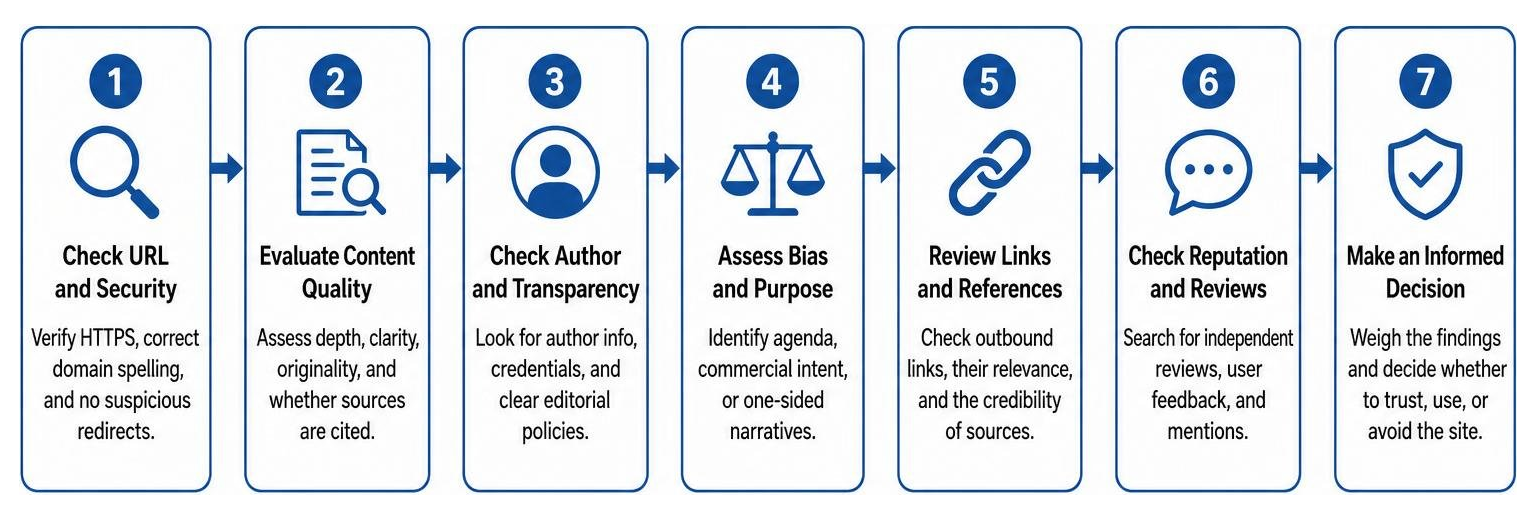
- Red Flag 1: Multi-Niche Overload. The site publishes articles on wildly unrelated topics — from software reviews to custom keychain design mistakes. High-trust sites usually focus on a specific niche to build genuine topical authority.
- Red Flag 2: No Editorial or Fact-Checking Policy. There is no visible editorial board, peer-review process, or comment section where readers can point out factual errors.
- Red Flag 3: Missing Disclosures. While the site features product reviews, it lacks clear, legally compliant affiliate disclosures explaining how it monetizes those recommendations.
For a broader look at how to identify these red flags across various online platforms, you can read our detailed guide on Zaubee Legit.
Frequently Asked Questions about PushWiki.com
Is PushWiki.com free to use?
Yes, accessing and reading the content on the actual live blog is completely free.
While some third-party review sites, such as pushwiki com, claim that PushWiki.com has standard and business pricing plans ranging from $5 to $10 per month, these claims are inaccurate. They are referring to a fictional SaaS collaboration tool described by automated AI reviews, rather than the actual free-to-read blog that exists online.
Is PushWiki.com safe for SEO backlink building?
Yes, but only in a supporting, low-risk capacity.
As shown in the 30-day case study published on I Tested Pushwiki Com for 30 Days – Here’s What Happened, the platform can be used to build do-follow link diversity. Because the site indexes relatively quickly, it can pass basic authority to newer domains.
However, we advise against using it as your primary link-building strategy. Over-linking or publishing thin, promotional content on low-authority blogs can trigger search engine spam filters. If you are looking to build a clean, sustainable online presence, it is much safer to focus on verified local directories or authoritative business listings. For more on this, see our guides on Zaubee.com Clear Skin and Zaubee Add Business in 2026.
Is PushWiki.com a collaborative wiki?
No. Despite having “Wiki” in its domain name, PushWiki.com is a standard, closed blog. It does not allow public registrations, community editing, or open contributions.
If you are looking for a genuine, community-run wiki dedicated to a specific topic — such as the 2009 sci-fi movie Push starring Chris Evans — you are likely looking for the official fan-run database hosted on Fandom (push.fandom.com), which is entirely unrelated to the blog domain PushWiki.com.
For platforms where you actually can claim and manage your own information, a much better comparison would be verified directory listings. Learn more about managing your public business data in our guide on how to Claim Your Zaubee Listing.
Conclusion
At the end of the day, Is PushWiki.com Legit?
If you define “legit” as a safe, malware-free website that you can browse without compromising your computer, then yes, PushWiki.com is legit. It is a functional tech-and-AI blog that offers basic, easy-to-read overviews of various software tools and gadgets.
However, if you define “legit” as an authoritative, expert-led, and transparent source of truth, then PushWiki.com falls short. The site features unverifiable author profiles, a lack of clear ownership, and a content strategy driven entirely by SEO keyword targeting rather than deep editorial standards.
Our Final Verdict: Treat PushWiki.com as an informational curiosity. It is perfectly fine for a quick, casual read on a new AI tool or a tech trend, but it should never be your final source of truth. Always cross-reference its claims, reviews, and guides with established, high-transparency platforms before making any purchasing, financial, or technical decisions.
If you are eager to learn more about verified, cutting-edge software and how to safely navigate the rapidly changing world of artificial intelligence, Explore our AI Tutorials and Tools for expert-backed, transparent guides you can actually trust!