Why Finding the Best Software for Landlords in 2026 Is More Important Than Ever

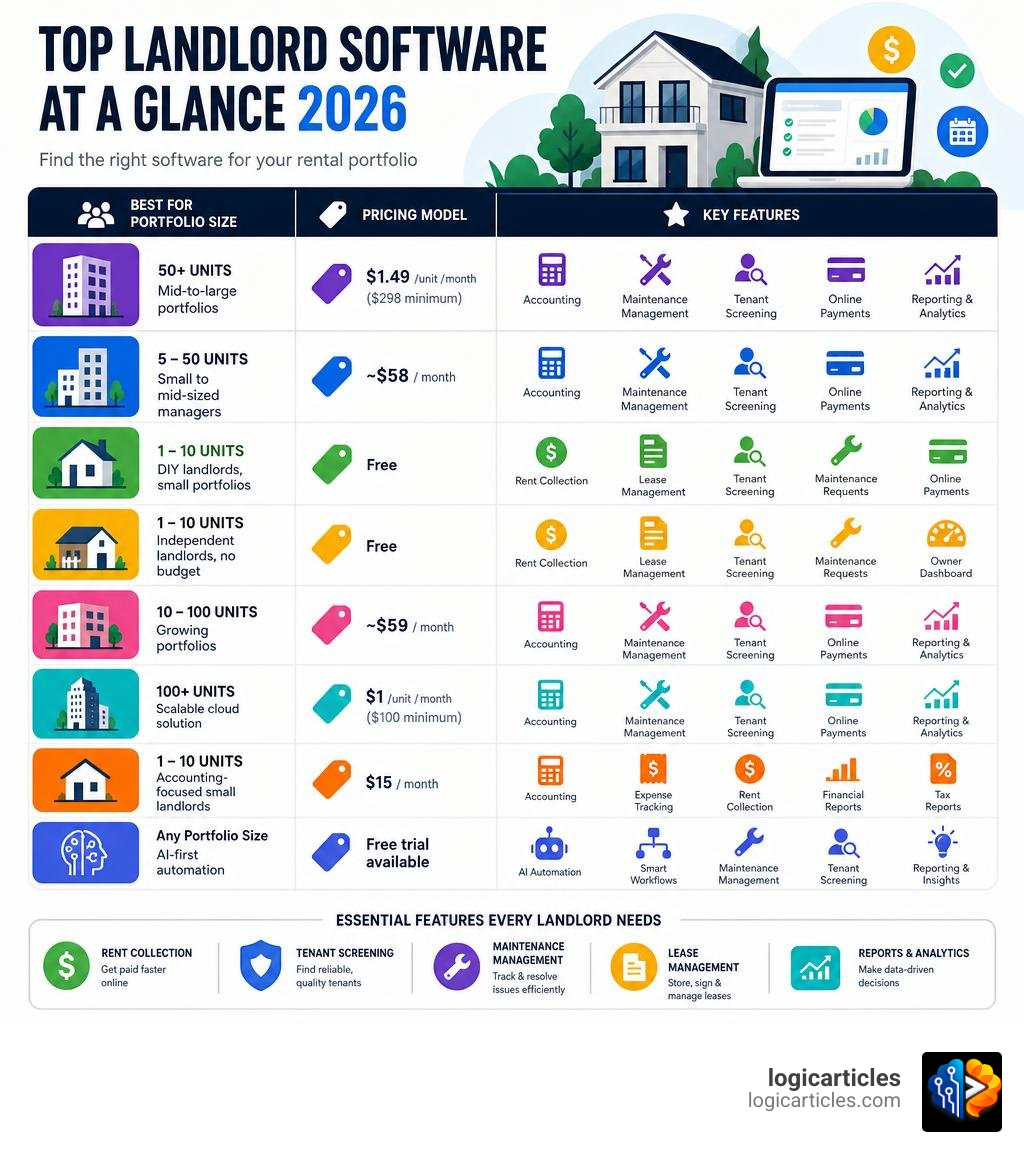
The best software for landlords in 2026 comes down to a handful of standout platforms, each suited to different portfolio sizes and budgets. Here’s a quick overview to match you with the right fit:
| Platform | Best For | Starting Price |
|---|---|---|
| AppFolio | Mid-to-large portfolios (50+ units) | $1.49/unit/month ($298 min) |
| Buildium | Small to mid-sized managers | ~$58/month |
| TurboTenant | DIY landlords, small portfolios | Free |
| Innago | Independent landlords, no budget | Free |
| DoorLoop | Growing portfolios | ~$59/month |
| Yardi Breeze | Scalable cloud solution | $1/unit/month ($100 min) |
| Landlord Studio | Accounting-focused small landlords | $15/month |
| Rentora | AI-first automation | Free trial available |
Managing rental properties has never been simple. Tenant screening, lease tracking, maintenance coordination, rent collection, tax reporting — the list of tasks never ends.
But the stakes in 2026 are higher than ever. The global property management software market hit $26.55 billion in 2025 and is on track to nearly double to $52.21 billion by 2032. That kind of growth signals one thing: landlords everywhere are replacing spreadsheets and paper trails with purpose-built software — fast.
And it’s not just about convenience. A single data breach can expose millions of records. Security, compliance, and smart automation are no longer optional features. They’re table stakes.
Whether you’re managing 2 units or 2,000, there’s now a platform built specifically for your situation — many of them free to start, several powered by AI that can save you 10+ hours per week.
This guide cuts through the noise. You’ll get a clear breakdown of the top platforms, what they actually cost, and how to pick the right one for your portfolio.
Key Features to Look for in the best software for landlords IN 2026
Evaluating property management platforms can feel overwhelming. With so many systems claiming to do it all, we recommend focusing on the core operational pillars that keep your business running smoothly. The best software for landlords IN 2026 must excel in these five areas:
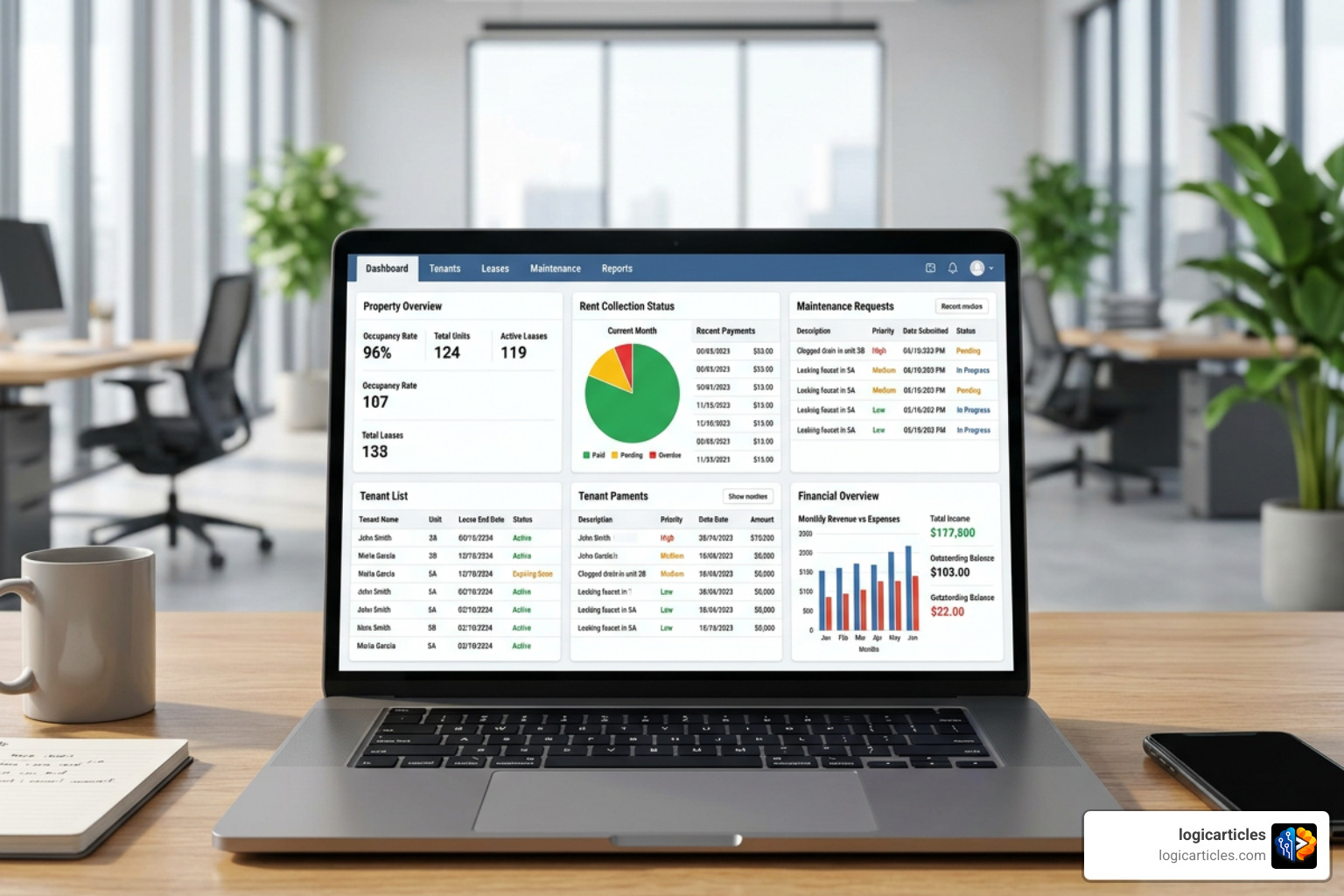
- Automated Rent Collection: Paper checks are quickly becoming ancient history. Look for platforms that support ACH, credit cards, and alternative payment options like Zelle or Venmo. The system should automatically calculate and apply late fees, send automated tenant reminders, and deposit funds directly into your bank accounts.
- Comprehensive Tenant Screening: Your software should integrate directly with major credit bureaus (like TransUnion) to pull tenant background checks, eviction histories, credit scores, and employment verifications within minutes.
- Lease Management & E-Signatures: Generating legally binding, state-specific lease agreements and getting them signed digitally is crucial. The platform should store these documents securely and alert you when renewals are approaching.
- Maintenance Coordination: Tenants should have a dedicated portal to submit maintenance requests, upload photos, and track repair status. On your end, you need a system to dispatch work orders to contractors and keep a clear paper trail for liability purposes. For more advanced task management, check out our review of the Best Task Management Software In 2026 Tested.
- Robust Accounting: Landlord-specific accounting is vastly different from general business bookkeeping. Your platform needs to track security deposits separately, categorize income and expenses for Schedule E tax forms, and generate real-time financial statements. For a deeper dive into general rental software features, check out our guide on the Best Rental Property Software.
Why AI and Automation Define the best software for landlords IN 2026
If 2024 was the year of AI experimentation, 2026 is the year of full AI integration. We are seeing artificial intelligence move from a flashy “add-on” to the absolute core of property management operations.
In fact, a survey of 343 AppFolio customers revealed that over 96% have increased operational efficiency by utilizing integrated AI solutions. Early users of advanced AI assistants are saving an average of 10.3 hours per week on routine to-do lists and 11.9 hours per week on communication-related tasks.
Imagine an AI phone agent that answers tenant calls 24/7, answers lease questions, and automatically schedules a plumber at 11:00 PM for an emergency leak without you ever having to wake up. That is exactly what platforms like Rentora – Property Management Platform are doing today.
Furthermore, systems like RenPro – Property Management Software That Does the Work offer over 25 built-in automations that run daily at 6:00 AM. These automations handle everything from sending out delinquency notices to flagging stale work orders and coordinating lease renewals 45 days in advance.
Robust Accounting and Financial Reporting Capabilities
You cannot run a profitable real estate business without clear, tax-ready financials. While general business software like QuickBooks is popular, it often falls short because it isn’t designed to handle property-specific nuances like tenant security deposits, unit-by-unit tracking, and Schedule E tax categorization.
The best software for landlords IN 2026 bridges this gap by offering built-in bank feeds that pull your transactions automatically, allowing you to reconcile accounts in seconds.
For example, Landlord Studio: Free All-In-One Landlord Software allows landlords to snap photos of receipts on their phones, automatically extract the data using smart scanning, and generate over 15 custom financial reports—including Profit & Loss statements and Schedule E summaries—making tax time a breeze.

If you are looking for specialized financial tools to manage your rental investments, make sure to explore our dedicated resource on Real Estate Investment Accounting Software.
Categorizing Landlord Software by Portfolio Type
Your software needs depend heavily on the type of properties you manage. A landlord with a portfolio of single-family homes has vastly different needs than an association manager or a commercial property investor.
- Single-Family Rentals: The focus here is on easy marketing syndication, simple tenant communication, and automated rent collection.
- Multifamily & Apartments: These properties require robust tenant portals, package tracking, community messaging, and utility billing integrations. To find the top tools in this space, see our guide on the Best Apartment Management Software.
- Condos and HOAs: Managing community associations requires specialized tools for tracking architectural requests, board approvals, and common area maintenance. Learn more in our review of the Best Condo Management Software.
- Commercial Real Estate: Commercial leases are highly complex, often involving triple-net (NNN) calculations, escalations, and complex CAM reconciliations. If you manage retail, office, or industrial spaces, read our breakdown of the Best Commercial Property Management Software.
How to Choose the best software for landlords IN 2026 Based on Portfolio Size
Portfolio size is the ultimate filter when selecting software. If you buy a system that is too complex, you’ll end up paying for features you don’t use and drowning in clunky menus. If you buy a system that is too simple, you’ll quickly outgrow it.
Small Portfolios (1 to 15 Units)
For independent, DIY landlords, simplicity and cost are key. You do not need enterprise-grade databases. You need a clean dashboard to track who has paid rent, who has an open maintenance request, and where your receipts are stored.
Platforms like LandlordPro – Property Management Software Built by a Landlord, for Landlords are designed specifically for this demographic. Built by an active landlord who got tired of spreadsheet chaos, it focuses on the essentials: rent tracking, AI receipt scanning, property cards, and simple tenant messaging without the enterprise price tag.
Mid-Sized & Growing Portfolios (15 to 100 Units)
As you scale, manual tracking becomes impossible. You need automated workflows, lease templates, syndication to major listing sites, and professional tenant screening. Platforms like Buildium, DoorLoop, and Rentec Direct shine here. They offer robust features to help you scale without requiring dedicated IT staff to set up. To find the right fit for your growing business, explore the Best Real Estate Portfolio Management Software In 2026.
Large & Enterprise Portfolios (100+ Units)
For massive operations, scalability, custom integrations, and deep data analytics are non-negotiable. Enterprise powerhouses like AppFolio, Yardi, and Entrata allow you to manage thousands of units across multiple regions, handle complex corporate accounting, and leverage advanced AI to optimize leasing and operations.
Mobile-First Platforms vs. Desktop-Heavy Systems
In 2026, property management doesn’t happen behind a desk. You are constantly on the go—inspecting units, meeting contractors, and showing properties.
If your software requires you to sit down at a desktop computer to approve a work order or view a financial statement, it’s costing you time. This is why mobile-first platforms are taking over.
A standout in this space is Rentalize 360 | Mobile-First Platform for Landlords , which provides full desktop parity on mobile devices. This allows landlords to manage their entire portfolio, chat with tenants, approve repair quotes, and check real-time financial dashboards directly from their smartphones while out in the field.
Evaluating Pricing Models and Software ROI
How much should you actually pay for property management software? The market in 2026 utilizes three primary pricing models:
| Pricing Model | Average Cost | Best For | Pros | Cons |
|---|---|---|---|---|
| Flat Monthly Fee | $50 – $250+/month | Growing portfolios | Predictable expenses | Can be expensive for very small portfolios |
| Per-Unit Pricing | $1.00 – $2.50/unit/month | Mid-to-large portfolios | Scales with your business | Often comes with high monthly minimums |
| Free (Tenant-Paid) | $0/month for landlord | DIY & small landlords | No overhead costs | Limited advanced features; tenants pay processing/screening fees |
When calculating your Return on Investment (ROI), look beyond the monthly software bill. Consider the time saved on manual data entry, the reduction in late payments due to automated reminders, and the vacancy days saved by using instant listing syndication. If a $60/month software saves you just 3 hours of manual work, it has already paid for itself.
Free and Low-Cost Options for Independent Landlords
If you only manage a few units, you might not want to add another monthly subscription to your ledger. Fortunately, the “free” software model has matured significantly.
Platforms like TurboTenant: Property Management Software offer robust, free-to-use software for landlords. They make their money by charging tenants for screening applications or processing fees on credit card rent payments.
With these free tiers, DIY landlords can syndicate listings to dozens of sites, run comprehensive background checks, create state-specific leases, and collect rent online without spending a dime of their own cash.
Hidden Costs and Long-Term Scalability Considerations
While a software’s sticker price might look appealing, always read the fine print. Many platforms charge additional fees that can sneak up on your balance sheet:
- Setup & Onboarding Fees: Some enterprise platforms charge thousands of dollars just to get your account set up and migrate your data.
- ACH & Credit Card Transaction Fees: Check whether the platform charges you or the tenant for processing payments.
- E-Signature Fees: Some lower-tier plans charge per e-signature or require a paid add-on.
- Data Migration Costs: Moving your data from your old system to a new one can sometimes carry hidden administrative costs.
Additionally, as your business grows, you may need to hire employees or virtual assistants. Ensuring your software supports team roles, permissions, and basic task delegation is critical. For managing team growth and HR compliance, you may also want to look into the Best Hr Software For Small Businesses.
Frequently Asked Questions about Landlord Software
What is the difference between dedicated accounting software and property management platforms?
Dedicated accounting software (like QuickBooks or Xero) is designed for general business bookkeeping. While powerful, it does not understand property-specific needs.
Property management platforms, on the other hand, combine operational tools (tenant communication, maintenance, leasing) with specialized trust accounting designed to keep your security deposits separate, track rent ledgers automatically, and easily generate Schedule E reports for tax season.
How long does it take to transition to a new landlord software platform?
For small portfolios (under 15 units), you can often get set up and migrate your data in a single afternoon. For mid-sized portfolios, onboarding typically takes 60 to 90 days.
Most modern platforms now offer dedicated migration specialists who will take your existing spreadsheets, tenant ledgers, and lease details and import them into the new system for you, minimizing operational downtime.
Is free property management software secure for tenant data?
Yes, provided you choose reputable platforms. Leading free and paid platforms partner with secure, industry-standard payment processors like Stripe and background screening giants like TransUnion.
They utilize bank-level 256-bit encryption to protect sensitive tenant data (like Social Security numbers and bank routing details), ensuring your business stays compliant with modern data security standards.
Conclusion
Choosing the best software for landlords in 2026 isn’t about finding the platform with the most features. It’s about finding the software that matches your portfolio size, budget, and management style.
Whether you opt for a free, tenant-supported platform like TurboTenant, an AI-driven powerhouse like Rentora, or a mobile-first solution like Rentalize 360, the right software will save you hours of manual work, keep your finances organized, and protect your tenant relationships.
Take the time to list your must-have features, test out a few free trials, and select a platform that can scale with your real estate goals. For more software reviews and expert guides to help run your business, explore our latest recommendations in the logicarticles software directory.
Sponsored by MCMPDL
Click and wait 10 seconds