Why Keyword Counting Matters for SEO Content

The Zuhio Keyword Count Checker is a free, browser-based tool that scans your text and instantly shows how often a keyword appears and what percentage of your total word count it represents — no sign-up, no setup required.
Quick answer for searchers:
- What it does: Counts how many times a keyword appears in your text (raw frequency) and calculates its density as a percentage of total words
- How to use it: Paste your content, enter your target keyword, and run the analysis
- Best time to use it: During the editing stage, after your draft is complete
- Who it’s for: Bloggers, freelancers, small business owners, copywriters, and anyone editing SEO content
- What it doesn’t do: It cannot crawl live URLs, analyze backlinks, check meta tags, or replace a full SEO platform
Writing content without checking keyword usage is like cooking without tasting. You might get it right — but you probably won’t.
In 2026, search engines are smarter than ever at reading context. But keyword frequency still acts as a signal that tells Google what your page is about. Use it too little and your page looks off-topic. Use it too much and you risk keyword stuffing penalties.
The good news? Checking keyword count doesn’t have to cost anything.
Why Keyword Frequency and Density Matter in 2026
As we navigate the SEO landscape of June 2026, many search engine algorithms have shifted their focus toward deep user intent and semantic relevance. However, this evolution does not mean keyword counting is obsolete. Instead, keyword density has transformed from a rigid ranking formula into a vital diagnostic signal for readability and topical balance.
If we over-optimize our content by packing it with the exact same search term over and over, search engines will quickly flag it as low-quality or manipulative. Conversely, if we under-optimize, search engines might fail to understand the primary focus of our page. Striking that perfect balance is where lightweight, free tools become highly valuable.

Modern semantic SEO requires us to focus on how naturally our terms are integrated. When search engines crawl our pages, they look for a cohesive network of primary keywords and their semantic variations. If we write a 1,200-word article and repeat our primary target keyword 40 times, the reading experience becomes incredibly repetitive. Human readers will bounce within ten seconds, sending a negative signal to search engines.
Using a tool like the SEO Word Counter – Keyword Count Tool | ZeroUtil helps us keep our raw text metrics in check. It computes word counts, paragraph distribution, and reading levels right inside our browser without sending data to external servers.
For teams managing massive content libraries, keeping track of these metrics across thousands of pages requires structured data strategies. If you are analyzing keyword data on a massive scale, you might want to look at our breakdown of the Best Big Data Analytics Tools In 2026 Ranked By Performance to see how enterprise systems handle large-scale content audits. For most of our daily writing tasks, however, a simple, free browser tool is more than enough to keep our drafts clean and balanced.
Optimizing Content with the Zuhio Keyword Count Checker
When we want a fast, friction-free way to evaluate our keyword frequency without paying for expensive SEO suites, the Zuhio platform offers an elegant, zero-cost solution.
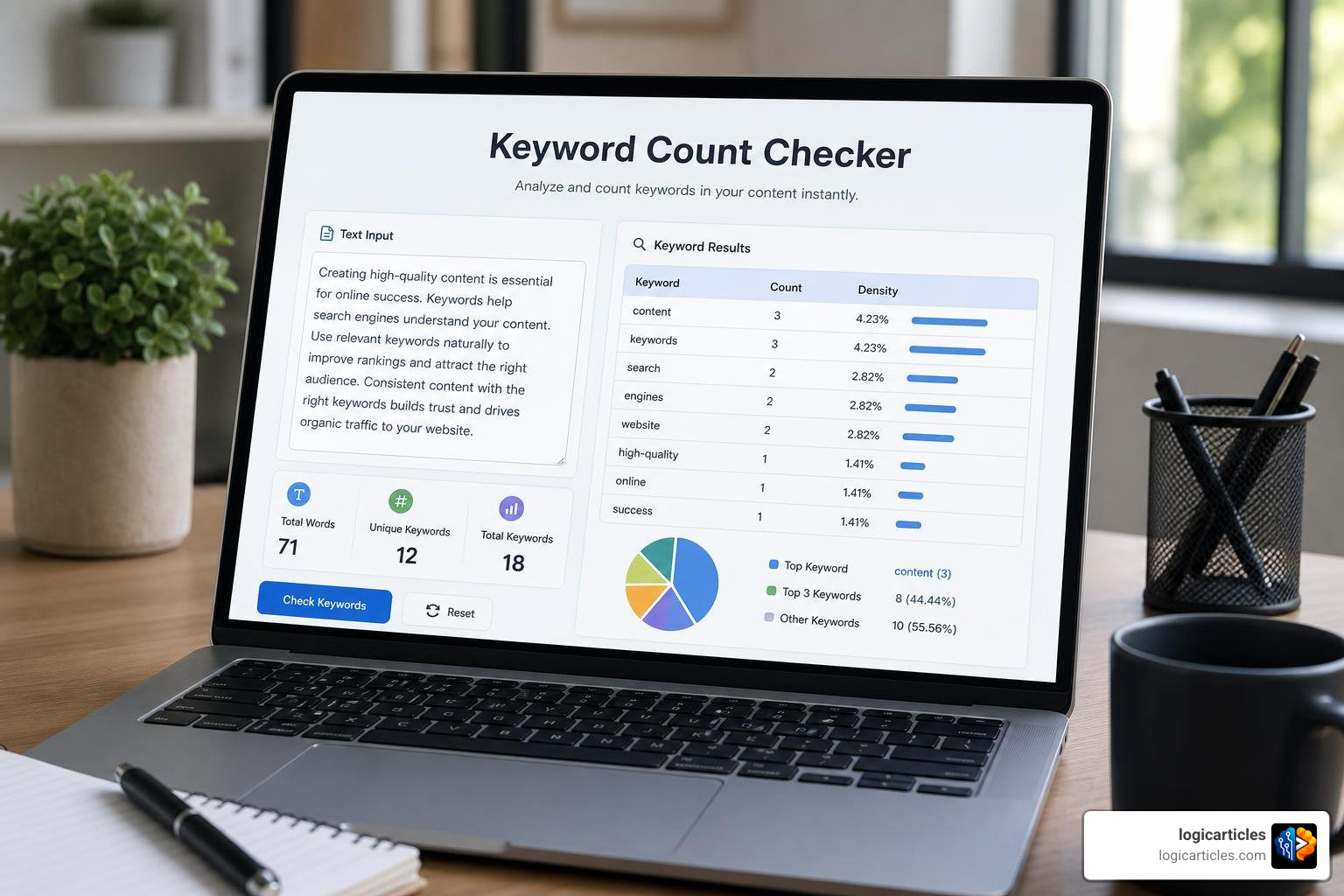
The tool performs two primary calculations:
- Raw Keyword Frequency Count: The exact number of times your specified keyword or phrase appears in the text.
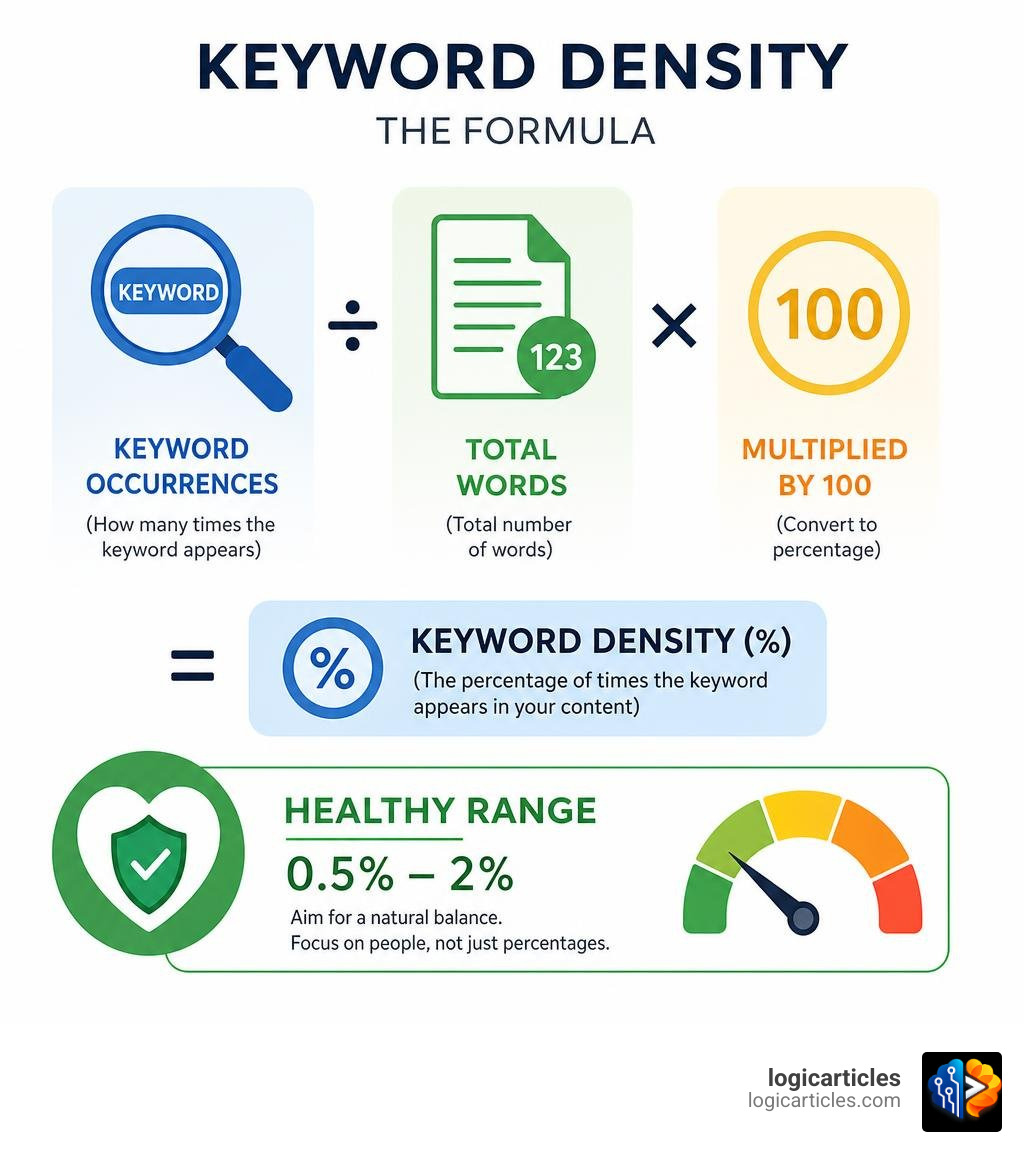
- Keyword Density Percentage: The mathematical proportion of your keyword relative to the total word count. For example, if your target phrase appears 15 times in a 1,000-word draft, your keyword density is exactly 1.5%.
What is the Zuhio Keyword Count Checker?
The Zuhio Keyword Count Checker is a lightweight, browser-based tool designed to help writers audit their content during the revision stage. Unlike heavy SEO platforms that require a monthly subscription, Zuhio runs its analysis client-side. This means your text is processed instantly within your browser, ensuring your drafts remain private and secure.
According to the comprehensive guide on How to Use Zuhio Keyword Count Checker: A Simple Guide for Better SEO Content – urbans.blog, the tool is best utilized during the editing phase. Rather than letting a tool dictate your initial writing flow, we recommend writing naturally first to satisfy user search intent, then using Zuhio to polish and refine your keyword distribution.
Step-by-Step Guide to Using the Zuhio Keyword Count Checker
Using the tool is incredibly straightforward. Here is our recommended step-by-step workflow to get the most out of your analysis:
- Complete Your Draft First: Write your content naturally. Do not try to force keywords into your first draft, as this often leads to awkward phrasing and stiff sentences.
- Copy Your Content: Select your completed text (excluding raw HTML or markdown formatting if you want the most accurate word count) and copy it to your clipboard.
- Open the Tool: Navigate to the Zuhio Keyword Count Checker interface.
- Paste Your Text: Paste your draft directly into the main text input area.
- Enter Your Target Keyword: Type your primary target keyword or phrase into the designated keyword input field. It is best to check one target phrase at a time to get clear, focused results.
- Run the Analysis: Click the analyze button to process your text instantly.
- Review the Frequency and Density: Check the raw count and the calculated density percentage. If your density is above 2.5%, look for areas where you can replace the exact-match keyword with natural synonyms or semantic variations. If it is below 0.5%, look for high-impact locations—such as subheadings or the introductory paragraph—to naturally integrate the term.
Practical Use Cases and Limitations of Keyword Counters
To help you decide when to use a simple tool like Zuhio and when you might need something more robust, we have put together a quick comparison table:
| Feature / Use Case | Manual Counting | Zuhio Keyword Count Checker | Enterprise SEO Suites |
|---|---|---|---|
| Cost | Free (but costs your time) | Free | Very Expensive ($99+/month) |
| Setup Required | None | None | Account creation & onboarding |
| Analysis Speed | Extremely slow | Instant | Fast |
| Best For | Ultra-short social posts | Blog drafts & AI content editing | Enterprise strategy & rank tracking |
| Live URL Crawling | No | No | Yes |
| Backlink Analysis | No | No | Yes |
Real-World Use Cases
- Polishing AI-Generated Drafts: AI writing tools are notorious for repeating phrases and keywords excessively. We can paste AI drafts into Zuhio to quickly spot and remove repetitive sentences, making the text sound much more human and natural.
- Freelance Writing Submissions: Freelancers often have strict editorial guidelines regarding keyword usage. Running a quick check before submitting a piece ensures compliance without wasting valuable time.
- Identifying Thin Content: If we are reviewing older blog posts, we can paste them into a word counter to check if they meet modern length and depth standards.
- Optimizing Product Descriptions: E-commerce writers can verify that short product copy contains the target search term without sounding spammy or repetitive.
Managing these editorial tasks across a team of writers can get chaotic. If you are looking to streamline your content production workflows, check out our guide on the Best Task Management Software In 2026 Tested to keep your publishing schedule on track.
Limitations to Keep in Mind
While lightweight tools are excellent for quick edits, they do have clear limitations. The Zuhio tool cannot crawl a live website, check your meta descriptions, analyze your competitors’ backlink profiles, or suggest related LSI (Latent Semantic Indexing) terms.
For a deeper look at how simple counters stack up against full-featured alternatives, you can read the comparison on Zuhio Keyword Count Checker vs Tools: SEO Guide 2026 or explore the insights on the Zuhio keyword count checker overview page.
Additionally, if you are a developer looking to build custom SEO tools or gather keyword search data directly from major search platforms, you might want to look into specialized APIs. For example, the Zhihu Keyword Search API (V1) | Just One API Docs provides structured JSON data for platform-specific search results, which is incredibly useful for localized market research but serves a completely different purpose than a basic draft counter.
If your business has outgrown simple free tools and you need to monitor search performance across thousands of landing pages, you will eventually want to invest in specialized rank tracking. We have reviewed the Best Enterprise Rank Tracking Software In 2026 to help you monitor your search positions at scale. Similarly, if you run an e-commerce platform and need to manage product pricing alongside your search visibility, utilizing the Best Price Optimization Software can help maximize your revenue. To keep all your internal SEO guidelines and standard operating procedures organized for your writing team, we also recommend setting up a system using the Best Knowledge Base Software In 2026.
Frequently Asked Questions about Keyword Counting
What is a healthy keyword density range in 2026?
As a general rule of thumb, we recommend keeping your keyword density between 0.5% and 2%. This range ensures your content is clearly focused on the target topic without crossing into the “keyword stuffing” zone. If you go above 3%, you risk triggering quality classifiers that could negatively impact your search rankings. Always prioritize natural readability over hitting an exact percentage.
Can keyword count tools analyze live URLs or backlinks?
No. Simple, free keyword count checkers like Zuhio only analyze the plain text that you copy and paste into the tool. They do not have web crawlers, meaning they cannot analyze live website URLs, look at your internal linking structures, or track your backlink profile. For those advanced tasks, you will need a dedicated SEO platform or enterprise rank tracker.
Does keyword frequency directly affect Google rankings?
Keyword frequency is a basic signal that helps search engines identify the topic of your page, but it is not a direct ranking factor on its own. Modern search engines prioritize comprehensive topical coverage, search intent alignment, and overall user experience. Using your target keyword naturally in high-impact areas—such as your title tag, H1 heading, introductory paragraph, and conclusion—is far more effective than simply repeating it throughout the body text.
Conclusion
Checking your keyword count doesn’t require a massive budget or a complex suite of enterprise software. By utilizing free, browser-based tools like the Zuhio Keyword Count Checker, we can easily keep our content balanced, readable, and perfectly optimized for search engines in 2026.
If you want to keep your marketing costs low while maintaining high content standards, use these lightweight tools as a final diagnostic check during your editing process. Write for your audience first, refine your keyword density second, and watch your search performance climb.
Ready to take your digital marketing and content creation workflow to the next level? Explore more AI tools in our dedicated resource section to find the best software for your growing business!