Why 70% of Software Projects Fail — and How Software Development Consulting Changes the Odds

Software development consulting helps businesses make smarter technology decisions, avoid costly mistakes, and deliver software that actually works.
Here’s a quick breakdown of what it means and who it’s for:
| Question | Quick Answer |
|---|---|
| What is it? | Expert guidance on technology selection, architecture, project management, and software delivery |
| Who needs it? | Companies building, modernizing, or scaling software — especially without deep in-house expertise |
| How is it different from development? | Consultants focus on strategy and decisions, not just writing code |
| What does it cost? | Varies by model: time & materials, fixed price, or commitment-based pricing |
| When does it pay off? | When internal teams lack expertise, projects are high-risk, or tech decisions have long-term consequences |
Seven out of ten software projects still fail. Not because of bad technology — but because of poor decisions, misaligned teams, and unclear goals.
That’s the uncomfortable truth behind one of the industry’s most stubborn statistics.
Software consulting exists precisely to close that gap. A skilled consultant doesn’t just write code. They help your organization pick the right tools, design the right architecture, and set up the right processes — before a single line of code is written.
Think of it like hiring an experienced architect before you start building a house. You could skip that step. But the cost of fixing a bad foundation later is almost always higher than getting it right the first time.
This guide is for anyone evaluating whether to hire a software development consulting firm, what to look for, and how to avoid the most common pitfalls.
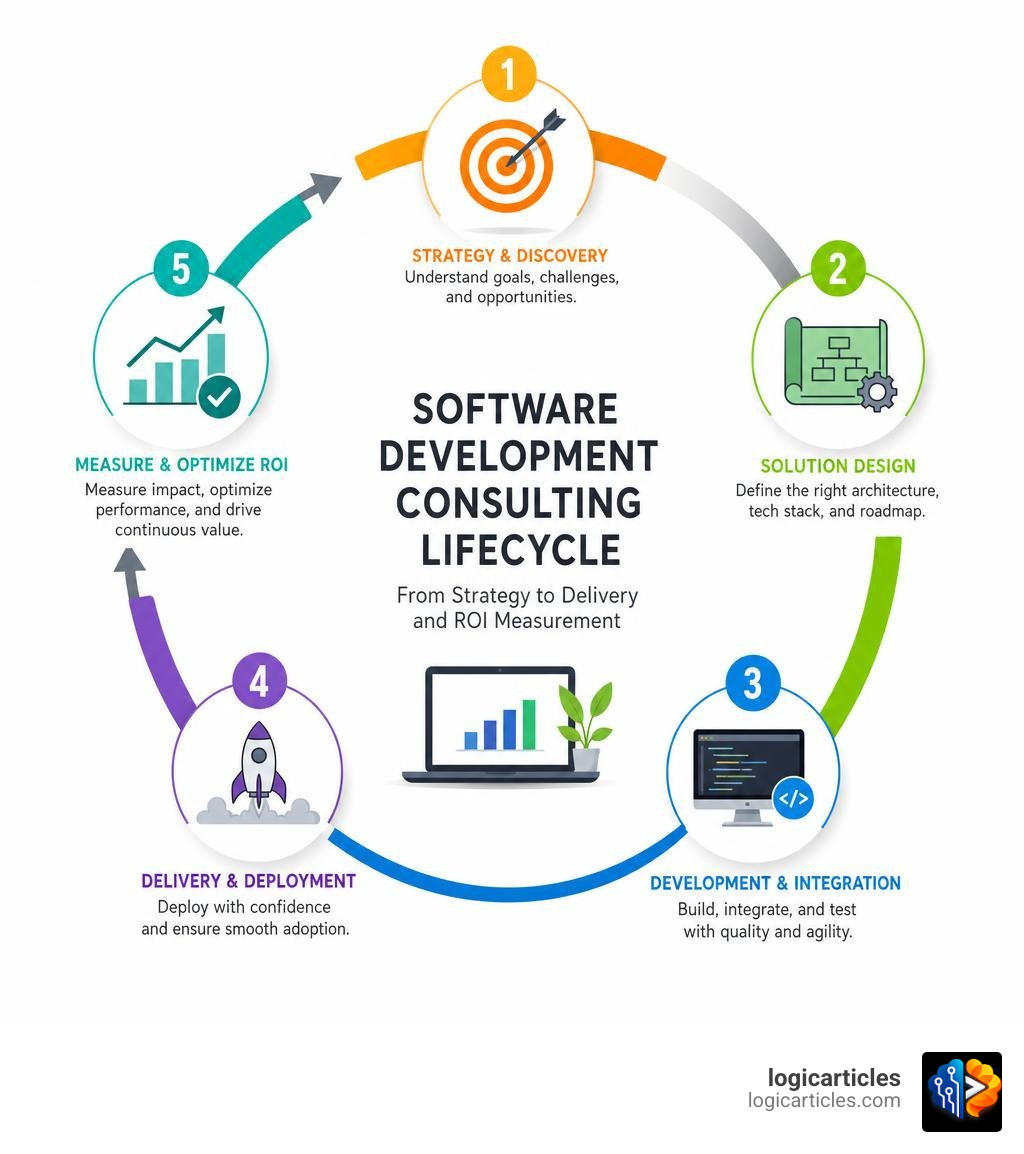
Demystifying software development consulting and Its Core Value

To understand the core value of software development consulting, we must first look past the buzzwords. At its heart, consulting is about bridging the gap between business objectives and technical execution. Many businesses know what they want to achieve—such as increasing online sales, reducing processing times, or automating manual workflows—but they do not know how to translate those desires into stable, scalable code.
A software development consultant acts as a strategic advisor. While a traditional developer is hired to write code based on a set of pre-determined specifications, a consultant questions those specifications to ensure they actually solve the business problem. They look at your technology ecosystem holistically, analyzing how new applications will interface with your existing infrastructure.
Furthermore, top-tier consultants provide technology-agnostic guidance. They do not push a specific programming language or cloud provider simply because it is what they know. Instead, they analyze your budget, timeline, and internal capabilities to recommend the absolute best fit for your unique situation. Whether that means leveraging open-source tools, building a modular monolith, or designing a distributed microservices platform, their goal is to make your software a long-term asset rather than a maintenance nightmare.
Key Deliverables of a software development consulting Engagement
When you partner with a consulting firm, you are not just paying for hours spent typing at a keyboard. You are investing in tangible, strategic assets designed to de-risk your development lifecycle. Typical deliverables from a high-value consulting engagement include:
- Detailed Technical Roadmaps: A step-by-step strategic plan outlining how to move from your current state to your desired future state, complete with milestones, resource requirements, and risk mitigation strategies.
- Comprehensive Software Stack Assessments: An in-depth audit of your existing technologies to identify performance bottlenecks, security vulnerabilities, and outdated frameworks.
- Architecture Redesigns: High-level system blueprints designed to improve resilience, optimize cloud costs, and ensure your system can handle future user growth.
- Custom Prototypes and Proofs of Concept (PoCs): Lightweight, functional models of your software built to validate assumptions and test technical feasibility before committing to full-scale development.
By utilizing professional custom software development and consulting services, organizations can establish a solid technical foundation that prevents costly course corrections down the line.
How Consulting Differs from Traditional Development
The difference between a software consultant and a traditional software developer comes down to the difference between strategy and execution.
+-----------------------------------------+
| SOFTWARE CONSULTANT |
|  - Focuses on "Why" and "What" |
|  - Aligns technology with business goals|
|  - Designs architecture & strategy |
+--------------------+--------------------+
 |
 v
+-----------------------------------------+
| SOFTWARE DEVELOPER |
|  - Focuses on "How" |
|  - Writes, tests, and deploys the code  |
|  - Executes the technical strategy |
+-----------------------------------------+
Traditional developers are execution specialists. They take a list of features (often called a product backlog) and turn them into functional code. This is essential work, but it assumes that the list of features is correct, secure, and aligned with business goals.
Consultants, on the other hand, are problem-solving specialists. They step back to ask: Is this the right feature to build? Will this database handle our projected load in three years? How will this impact our compliance requirements? They focus heavily on long-term maintainability, ensuring that your team can easily update, scale, and support the application long after the initial launch.
When to Hire a Software Consultant vs. Building In-House
Deciding how to execute your software strategy is one of the most critical operational decisions you will make. To help you evaluate the best path forward, we have compared the three primary approaches:
| Feature/Metric | Custom Software Consulting | In-House Development Team | Off-the-Shelf Software |
|---|---|---|---|
| Speed to Market | High (Rapid team assembly & onboarding) | Medium (Requires hiring and training) | Very High (Immediate deployment) |
| Customization | Unlimited (Built exactly to your specs) | Unlimited (Built exactly to your specs) | Low (Limited to vendor features) |
| Upfront Cost | Moderate to High | Very High (Salaries, benefits, overhead) | Low (Subscription or license fees) |
| Long-Term ROI | High (Custom assets, no licensing fees) | High (Direct control over IP) | Low to Medium (Perpetual fees) |
| Specialized Expertise | Immediate access to niche experts | Hard to source and retain | Dependent on vendor roadmap |
| Maintenance Burden | Managed via SLAs or handed over cleanly | Fully internal responsibility | Handled entirely by the vendor |
Building an in-house team is highly effective when software development is your core business model and you have the steady budget to support full-time salaries, benefits, and ongoing training. However, when faced with tight resource constraints, aggressive timelines, or the need for highly specialized skills, hiring a consultant is often the smarter financial move.
For example, if you are tackling a complex project like insurance software development, you need immediate access to professionals who understand legacy integrations, underwriting workflows, and strict financial regulations. Sourcing those experts individually for an in-house team can take months, whereas a consulting firm can deploy a fully cohesive, experienced team in a matter of weeks.
When to Choose software development consulting Over Off-the-Shelf Solutions
Off-the-shelf software is tempting. It is cheap upfront, quick to deploy, and requires zero development time. But off-the-shelf tools are built for the average business, not your business.
You should opt for custom software development consulting when your software needs to provide a distinct competitive advantage. If your core value proposition relies on a unique proprietary algorithm, a highly specialized workflow, or seamless integration with legacy internal tools, pre-packaged software will only hold you back.
Furthermore, off-the-shelf solutions often struggle to scale. As your business grows, you may find yourself paying exorbitant licensing fees or building messy “workarounds” to make the software fit your evolving processes. In highly specialized fields—such as EMR software development in 2026—the rigid nature of off-the-shelf products can even lead to compliance failures or severe operational bottlenecks. Custom software ensures that your digital tools adapt to your workflows, not the other way around.
Industry-Specific Expertise vs. Cross-Industry Insights
When selecting a consulting partner, businesses often face a dilemma: Should we hire a firm that only works in our specific industry, or one with broad experience across multiple sectors?
The truth is, the most valuable consulting firms offer a blend of both. Industry-specific expertise is crucial for navigating regulatory landscapes, understanding user expectations, and integrating with legacy systems. For instance, working with the best fintech software development company ensures that your application is built from day one with bank-grade security, PCI-DSS compliance, and robust transaction processing pipelines.
However, cross-industry insights are what drive true business innovation. A consulting firm that has solved complex data-streaming challenges in the logistics sector can apply those exact same real-time architectures to help a healthcare client monitor patient vitals. This cross-pollination of technology allows consultants to bring fresh, creative solutions to your business that industry-only players might never consider.
Core Services: Architecture, DevOps, and Legacy Modernization
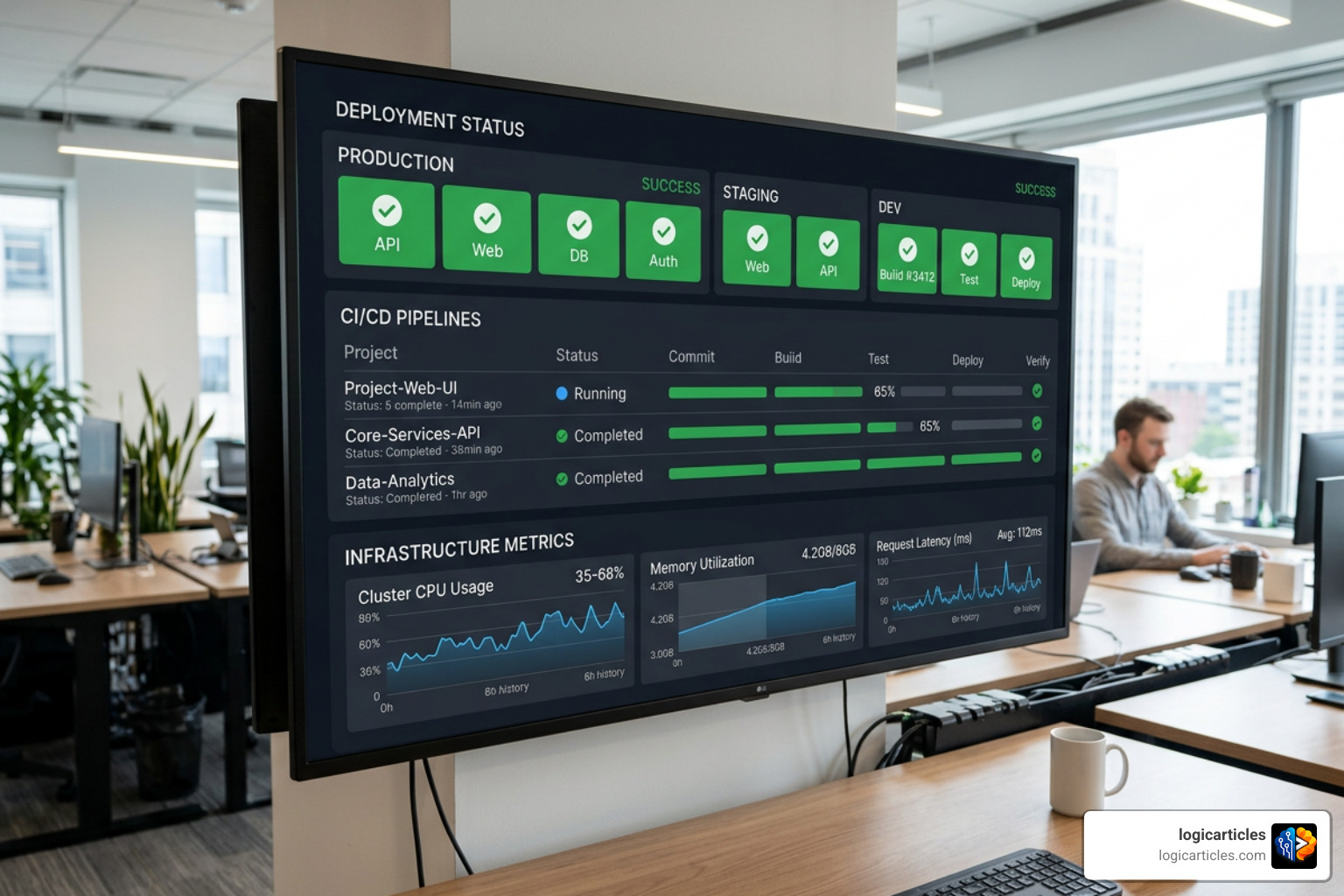
Modern software development consulting firms offer a wide range of services designed to support businesses at any stage of their digital transformation journey. From initial cloud migration strategies to continuous optimization, these core services ensure your platforms are stable, secure, and ready for the future.
By leveraging expert cloud application services, companies can transition away from costly, rigid on-premise hardware to flexible, hybrid cloud architectures. This transition is not just about moving files; it is about redesigning applications to be cloud-native, enabling automated scaling, simpler management, and significantly lower operational overhead. To keep these complex systems running smoothly, consultants also implement modern strategies for software stack management in 2026, ensuring that all libraries, frameworks, and third-party APIs remain updated and secure.
Legacy System Modernization and Technology Selection
One of the most common reasons organizations seek out software consultants is to tackle legacy modernization. Many established companies run on core software systems built decades ago. These systems are often highly fragile “monoliths” where changing a single line of code in one department can unexpectedly break an entirely unrelated process in another.
LEGACY MONOLITH (Fragile & Rigid)
+------------------------------------------+
|  UI  |  Business Logic  |  Database Access|
+--------------------+---------------------+
 |  (Modernization Process)
 v
MODULAR MICROSERVICES (Flexible & Scalable)
+--------------+ +--------------+ +--------------+
| User Service | | Order Service| | Billing Serv.|
+--------------+ +--------------+ +--------------+
Consultants help mitigate the immense risk of upgrading these systems. Rather than suggesting a risky, expensive “rip-and-replace” strategy, they typically recommend a phased legacy transformation. By gradually breaking down the monolith into modular, cloud-native microservices, they ensure your business operations continue running without disruption.
During this process, consultants apply modern web development best practices 2026 to select future-proof technologies, design resilient databases, and eliminate years of accumulated technical debt.
DevOps Adoption and Agile Process Implementation
Technology is only half the battle; the processes your team uses to build and maintain that technology are just as critical. Many software projects fail because of communication silos between the developers writing the code and the operations teams responsible for keeping the servers running.
Software consultants break down these silos by implementing DevOps practices and Agile development methodologies. They help your organization:
- Build Automated CI/CD Pipelines: Set up continuous integration and continuous delivery (CI/CD) pipelines so that new software updates are automatically tested and deployed to production with minimal human intervention.
- Establish Tight Feedback Loops: Introduce iterative Agile sprints, daily standups, and regular retrospectives to ensure that development work remains strictly aligned with shifting business priorities.
- Enable Your Internal Team: Rather than leaving you dependent on external help, consultants focus on team enablement, mentoring your in-house developers on modern coding standards, automated testing, and infrastructure management.
Pricing Models, ROI, and Selecting a Reliable Partner
Understanding how consulting services are priced is essential for establishing a healthy, transparent partnership. The pricing model you choose directly influences how risk is shared between your organization and the consulting firm.
To help you navigate this, let’s explore the three most common pricing structures:
- Time and Materials (T&M): You pay for the actual hours spent on your project and the cost of the materials used. This model offers maximum flexibility, making it ideal for projects with evolving requirements or complex R&D phases. However, it requires active management to prevent scope creep.
- Fixed Price: The project scope, timeline, and cost are agreed upon before any work begins. This model provides budget predictability, but it is highly rigid. If you need to make changes mid-project, you must go through a formal (and often costly) change-order process.
- Commitment-Based Pricing: A modern, outcome-driven model where the consulting firm commits to delivering specific business outcomes or a “lovable product” within a set budget. This aligns the consultant’s incentives directly with your business success, reducing the risk of project failure.
Regardless of the model you select, you must also plan for the post-launch phase. Working with a partner who can provide structured best software maintenance services 2026 ensures your application receives ongoing security patches, performance tuning, and updates as operating systems and browser standards evolve.
Evaluating the ROI of a Consulting Engagement
Measuring the success of a software consulting engagement goes far beyond checking if the project was delivered on time. To calculate true return on investment (ROI), we recommend tracking specific, quantifiable business metrics:
- Direct Cost Reductions: Compare your post-launch operational costs (such as cloud hosting fees, licensing costs, and manual labor hours) against your legacy baseline.
- Operational Efficiency Gains: Measure the reduction in processing times, automated task completion rates, and system uptime improvements.
- User Adoption and Satisfaction: Track how quickly your internal employees or external customers adopt the new software, utilizing net promoter scores (NPS) or daily active user (DAU) metrics.
- Development Velocity: Analyze how much faster your team can deliver new features to production thanks to the automated testing and DevOps pipelines established by the consultants.
Red Flags to Avoid When Selecting a Partner
The software consulting market is crowded, and not all firms deliver on their promises. To protect your investment, watch out for these critical red flags during the selection process:
- Lack of Transparency: If a firm is hesitant to explain their pricing structure, share real-world case studies, or give you direct access to the engineers who will be working on your project, walk away.
- Vendor Lock-In Tactics: Be wary of consultants who insist on building your software using proprietary, closed-source frameworks that only their firm can maintain. You should always retain full ownership of your source code and intellectual property.
- Vague Documentation Standards: High-quality software requires clear, comprehensive technical documentation. If a partner cannot show you their documentation templates or treats knowledge transfer as an afterthought, your internal team will struggle to maintain the software later.
- The “Yes-Man” Attitude: A truly valuable consultant is not afraid to challenge your assumptions. If a firm blindly agrees to every feature request without analyzing its technical feasibility, budget impact, or business value, they are acting as simple order-takers, not strategic partners.
Frequently Asked Questions about Software Development Consulting
What is the difference between a software consultant and a software developer?
A software developer focuses primarily on the execution phase—writing, testing, and deploying clean code based on defined requirements. A software consultant operates at a strategic level, helping you define those requirements, select the right technologies, design the system architecture, and align the entire project with your broader business goals.
How do software consultants ensure security and compliance?
Experienced consultants integrate security into every stage of the software development lifecycle (a practice known as DevSecOps). They conduct comprehensive security audits, implement robust data encryption, manage system secrets securely, and design architectures that comply with strict regulatory standards such as HIPAA, SOC 2, PCI-DSS, and GDPR.
How long do typical software consulting engagements last?
Engagements vary widely depending on your needs. A short-term architectural assessment or technology selection workshop might take 2 to 4 weeks. A comprehensive legacy modernization project or custom software build typically lasts anywhere from 3 to 12 months, while strategic advisory partnerships can span several years as your business grows.
Conclusion
In 2026, technology is no longer just a support function for your business—it is the engine that drives your growth, efficiency, and competitive advantage. Making the wrong technical decisions can result in years of technical debt, wasted budgets, and missed market opportunities.
Partnering with a reliable software development consulting firm ensures that your technology investments are strategic, future-proof, and designed to scale. At logicarticles, we are committed to helping organizations navigate these complex landscapes with confidence, clarity, and zero ego.
Ready to explore how custom technology can transform your business operations? Explore our curated guides to the Best Software Solutions to take your first step toward digital excellence.