Why Choosing the Best Fintech Software Development Company Matters in 2026

Finding the best fintech software development company for your project can be the difference between a product that scales and one that stalls at the first compliance audit.
Here’s a quick snapshot of the top fintech development companies to consider in 2026:
| Company | Best For | Key Strength |
|---|---|---|
| ScienceSoft | Enterprise & regulated products | 20+ years, BFSI-specific expertise |
| Itexus | Full-cycle & project rescue | 300+ fintech projects, AI-accelerated delivery |
| Kindgeek | AI-native regulated fintech | €10B+ processed, PSD2/SCA specialists |
| Vention | Legacy modernization | 300+ engineers, 200+ fintech projects |
| Innowise | Custom fintech solutions | Multi-sector compliance expertise |
| SumatoSoft | Production-readiness focus | Backend logic & integration depth |
| SDK.finance | White-label platforms | Fast go-to-market, mobile-first |
The global fintech market is on track to exceed $1.13 trillion by 2032, growing at a CAGR of 16.2%. Digital transaction values are already estimated to hit $10.52 trillion by the end of 2025. With 7.16 billion smartphone users worldwide by 2026, the demand for secure, scalable financial software has never been higher.
But here’s the thing most people don’t realize: fintech software is unforgiving. A bug doesn’t just break a screen — it becomes a balance dispute, a regulatory audit, or a partner review failure. The right development partner needs deep experience across four distinct domains: technical, legal, security, and financial operations.
This checklist will help you cut through the noise and identify exactly what separates a great fintech development partner from one that just looks good on paper.
Key Services Offered by the Best Fintech Software Development Company
When we look at the landscape of 2026, the best fintech software development company doesn’t just “write code.” They provide a holistic ecosystem of services that bridge the gap between complex financial regulations and seamless user experiences.
Modern fintech requires a diverse range of specialized solutions:
- Digital Wallets and Neobanking: Building the next generation of banks that exist entirely on a smartphone.
- Payment Gateway Integration: Ensuring that money moves securely from point A to point B without friction.
- Core Banking Systems: The “brain” of the financial institution that handles account management and transaction processing.
- Insurtech Solutions: Automating claims handling and risk assessment to make insurance faster and fairer.
- Wealth Management Tools: Providing AI-driven insights for personal finance and investment.

A leading Fintech Software Development Company | Kindgeek will often focus on “product-oriented thinking.” This means they don’t just build the features you ask for; they help you validate the product-market fit. Whether you are looking for the Best Construction Financial Management Software or a new retail trading app, the architecture must be designed for high-performance and mission-critical reliability.
Mobile Banking and Digital Wallet Innovation
The world is officially mobile-first. By 2026, the number of smartphone users is expected to reach 7.16 billion, covering roughly 88% of the global population. This massive adoption has fundamentally reshaped how we interact with money.
The best developers prioritize user-first design. We’ve seen that 54% of mobile banking users log in daily, and 72% of digital wallet users make payments multiple times per week. To keep these users engaged, top-tier apps now include:
- Biometric Authentication: Face and fingerprint ID for instant, secure access.
- Contactless Payments: Seamless NFC and QR code integration.
- Personalized Analytics: Using AI to tell users exactly where their money is going.
Blockchain and Cryptocurrency Infrastructure
Blockchain is no longer a buzzword; it’s the plumbing of modern finance. A top FinTech Software Development Company now integrates decentralized finance (DeFi) protocols directly into traditional banking apps.
This includes:
- Smart Contracts: Self-executing agreements that reduce the need for intermediaries.
- Asset Tokenization: Turning real-world assets like real estate or gold into digital tokens.
- Crypto-Fiat Exchanges: Allowing users to swap between Bitcoin and Dollars instantly within a single interface.
Navigating Regulatory Compliance and Security Standards
In fintech, compliance isn’t a “nice-to-have”—it’s the law. If your software doesn’t meet the rigorous standards of 2026, you won’t just lose users; you’ll face massive fines. For instance, we’ve seen cases where major exchanges were fined hundreds of millions of dollars for gaps in their AML (Anti-Money Laundering) programs.

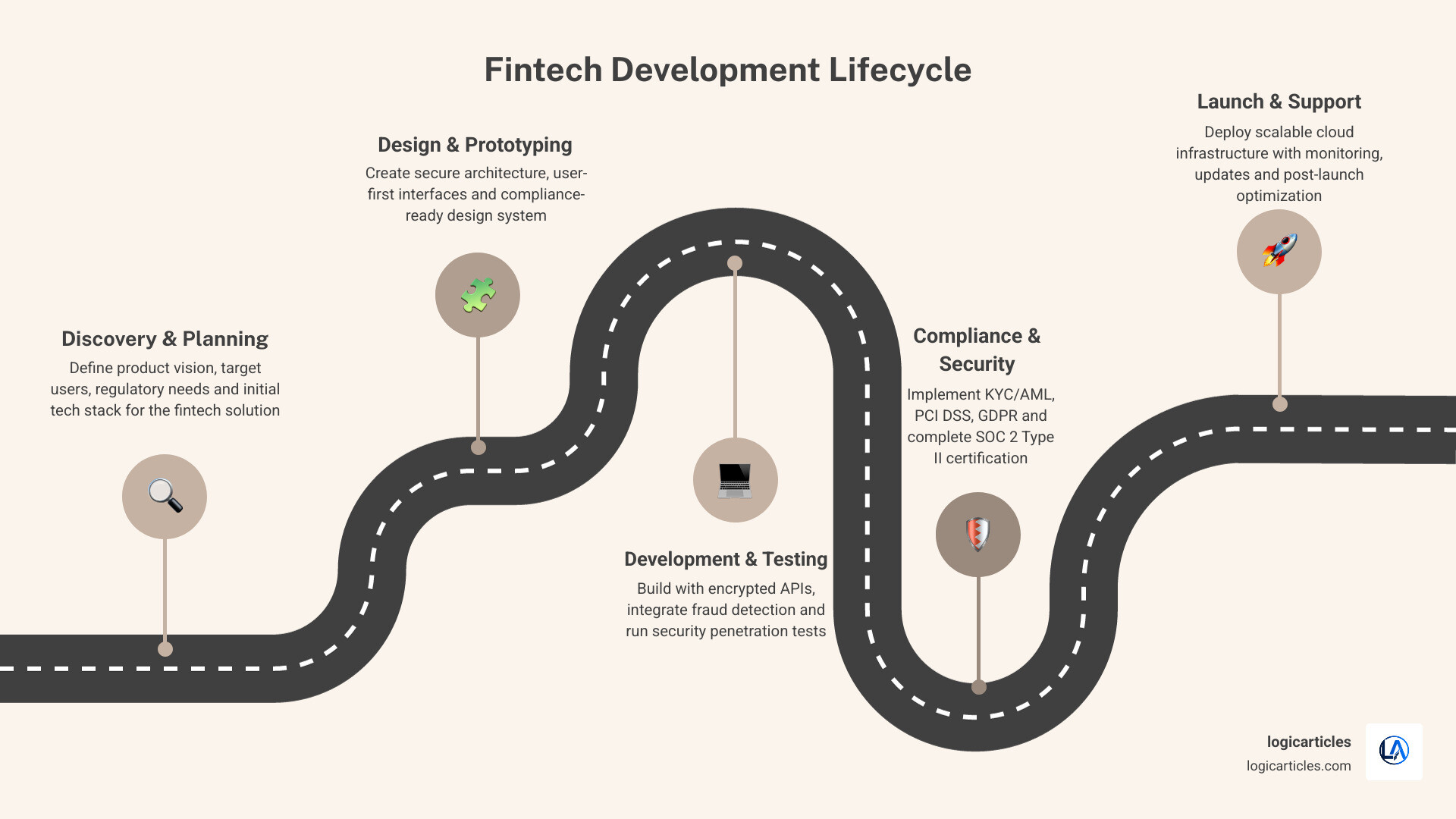
A professional Financial Software Development Company & Services | Vention builds compliance into the architecture from “Sprint Zero.” This includes:
- GDPR & CCPA: Ensuring data privacy and the “right to be forgotten.”
- PCI DSS Level 1: The gold standard for handling credit card information.
- KYC/AML Automation: Using AI to verify identities and flag suspicious transactions in real-time.
- SOC 2 Type II: Proving that your service organization manages data securely.
Security Protocols for the Best Fintech Software Development Company
Security in 2026 is about Zero-Trust Architecture. This means the system assumes every request is a potential threat until proven otherwise. We recommend looking for partners who implement:
- End-to-End Encryption: Data is encrypted at rest and in transit.
- Multi-Factor Authentication (MFA): Going beyond simple passwords to include SMS, email, and biometric checks.
- Real-Time Fraud Detection: Machine learning models that can spot a fraudulent transaction in milliseconds.
- OAuth 2.0: Securely delegating access without sharing passwords.
Global Regulatory Frameworks in 2026
The regulatory landscape is shifting rapidly. In 2026, we are seeing the full impact of the EU AI Act, which classifies certain financial AI systems as “high-risk,” requiring strict transparency and human oversight. Additionally, the PSD3 and PSR frameworks in Europe are pushing for even stronger anti-fraud measures and open banking transparency. In the US, keeping up with SEC regulations and state-specific money transmitter licenses remains a full-time job for legal-tech teams.
Advanced Technologies Shaping Fintech in 2026
To stay competitive, the best fintech software development company must master the “Big Four” of modern tech: AI, Blockchain, Cloud, and IoT.
AI and Machine Learning Integration
AI is the crown jewel of 2026 fintech. It’s estimated that generative AI alone adds between $200 billion and $340 billion in annual value to the global finance industry.
Leading companies like those found at Fintech Software Development Company USA use AI for:
- Automated Underwriting: Processing loan applications in seconds instead of days.
- Algorithmic Trading: Executing thousands of trades per second based on market sentiment.
- Hyper-Personalization: If you are using the Best Family Office Accounting Software, AI can predict your future cash flow needs based on historical data.
Cloud Computing and Scalability
Cloud-native development is no longer optional. Moving to the cloud (AWS, Azure, or GCP) can increase infrastructure cost efficiency by 29% and reduce application downtime by 57%.
The best developers use microservices architecture. Instead of one giant, clunky program, the app is built as a collection of small, independent services. If the “payment” service goes down, the “balance check” service keeps working. This “API-first” design allows for high-frequency processing, with some systems handling over 10,000 transactions per second with 99.99% uptime.
Criteria to Choose the Best Fintech Software Development Company
Choosing a partner is a high-stakes decision. You aren’t just hiring developers; you are choosing a co-pilot for your business journey.
| Feature | Custom Development | White-Label Platforms |
|---|---|---|
| Time to Market | 6–12 Months | 1–3 Months |
| Cost | High ($150k – $2M+) | Lower (Subscription/Licensing) |
| Flexibility | Total Control | Limited to Platform Features |
| Scalability | Built for Your Specific Needs | Dependent on Provider |
| Ownership | You Own the IP | You License the Tech |
When evaluating a Top 10 Fintech Software Development Companies [2026 Q2] list, look for Agile Methodology. Projects using Agile have a 64% success rate, compared to just 49% for the traditional Waterfall model. This flexibility is vital when market conditions or regulations change mid-project.
Understanding Costs and Development Timelines
Let’s talk numbers. Fintech development isn’t cheap because the stakes are high.
- Discovery Phase: Usually takes 2–4 weeks and costs between $30,000 and $50,000. This is where you map out the architecture and compliance needs.
- MVP (Minimum Viable Product): Typically takes 4–6 months and ranges from $100,000 to $250,000.
- Full Enterprise Solution: Can easily exceed $1,000,000 to $2,000,000 depending on the complexity of integrations and security requirements.
Maintenance isn’t free either. Expect to spend 15-20% of the initial development cost annually on support, updates, and security patches.
Proven Track Records and Industry Recognition
Don’t take a company’s word for it—look at their “battle scars.” A great partner will have a portfolio of production-ready products that serve millions of users. Look for:
- Case Studies: Detailed reports on how they solved specific technical or regulatory hurdles.
- Global Fintech Innovation Awards: Recognition from the industry that their work is “best-in-class.”
- High Referral Rates: If 70% of a company’s business comes from referrals, they are doing something right.
Frequently Asked Questions about Fintech Development
How much does it cost to build a custom fintech app in 2026?
Costs vary wildly based on complexity. A basic fintech app might start around $50,000, while a medium-complexity solution (like a lending platform with AI scoring) ranges from $100,000 to $300,000. Enterprise-grade systems with heavy compliance and legacy integrations can go well over $1,000,000.
What are the biggest security challenges in fintech software?
The biggest threats in 2026 are sophisticated AI-driven phishing attacks, API vulnerabilities, and data breaches. Developers counter these with multi-factor authentication, end-to-end encryption, and regular penetration testing to find weak spots before hackers do.
How long does the discovery phase typically take for a neobank project?
For a complex project like a neobank, the discovery phase usually takes 4 to 8 weeks. During this time, the team defines the technical architecture, selects the tech stack, maps out regulatory requirements (like KYC/AML), and creates a detailed project roadmap.
Conclusion
At LogicArticles, we believe that the right information leads to better business decisions. Building a fintech product in 2026 is an ambitious undertaking that requires more than just coding skills—it requires a strategic partnership with a team that understands the “money” side as well as the “tech” side.
By focusing on compliance, choosing a scalable cloud-native architecture, and prioritizing user experience, you can future-proof your financial product for the decade to come. Whether you are building a simple digital wallet or a complex AI-driven trading platform, the best fintech software development company will be the one that treats your compliance as a feature, not a hurdle.
Ready to dive deeper into financial tech? Check out More info about fintech insights to stay ahead of the curve.
3 thoughts on “Best Fintech Software Development Company 2026: Top Firms, Costs”