Why Choosing the Right Insurance Claims Software Vendor Matters in 2026

The market for insurance claims software vendors is large, fast-moving, and full of options — making it genuinely hard to know where to start.
Here are the top vendors to know in 2026:
| Vendor | Best For | Standout Feature |
|---|---|---|
| Guidewire ClaimCenter | Large P&C insurers | Insurance-grade AI, 270+ customers globally |
| Sapiens ClaimsMaster | Feature-depth seekers | Ranked most feature-rich by Celent |
| VCA Software | TPAs, MGAs, carriers | Up to 30% cost reduction, 2 hrs saved/day per handler |
| IBSuite | Cloud-native deployments | API-first, end-to-end platform |
| CCC IX Cloud | Auto/P&C insurers | Intelligent experience (IX) ecosystem |
| Faktor-ICS | European insurers | IoT integration, high configurability |
| Insurity SIMS Claims | Browser-based needs | Composite score 7.3/10, pure browser-based |
| BriteCore | Mid-market carriers | Cloud-native, modern stack |
Claims processing is one of the most operationally complex — and customer-facing — functions in insurance. When it goes wrong, policyholders notice immediately.
The pressure to modernize is real. Nearly nine in ten P&C insurance leaders say data and analytics are “extremely” or “very” important in claims management. Over two-thirds plan to move to cloud-based claims solutions by 2026.
And yet, many insurers are still running on legacy systems that slow down adjusters, create data silos, and frustrate customers.
The good news: a new generation of claims software vendors is solving these problems with automation, AI, real-time analytics, and digital-first workflows. This guide cuts through the noise and shows you exactly how the top platforms compare.
Core Features of Modern Insurance Claims Software VendorsV
When we evaluate modern insurance claims software vendorsV, we must look beyond basic digital record-keeping. The days of treating a claims system as a glorified digital filing cabinet are long gone. Today, the leading solutions function as intelligent orchestration hubs that connect policy data, third-party services, and customer communication channels.
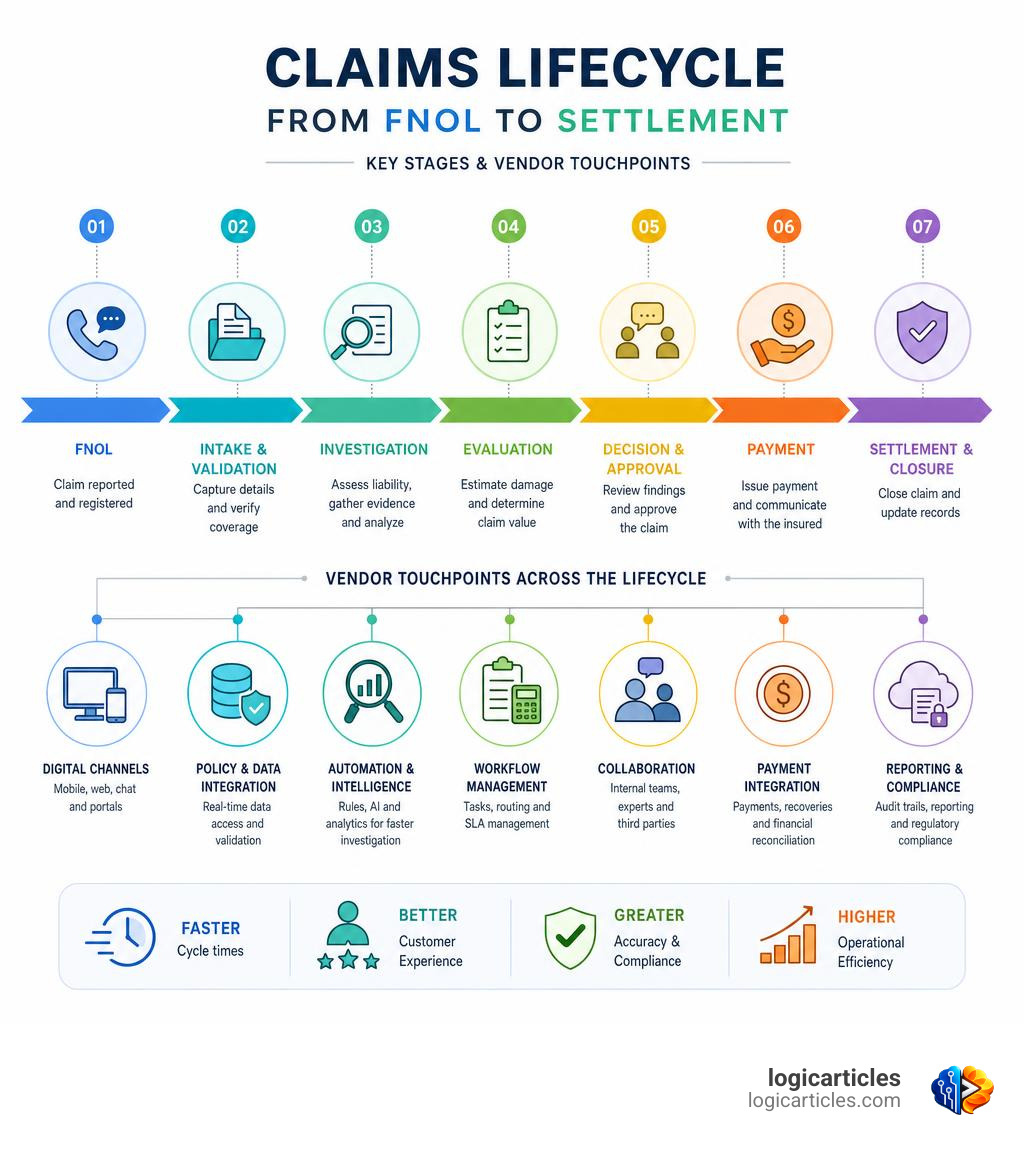
At their core, these platforms rely heavily on robust workflow automation and document management. They are built to guide a claim seamlessly from its initial First Notice of Loss (FNOL) to final payment. This involves capturing comprehensive policy details, tracking litigation actions, managing settlement evaluations, and maintaining a clear audit trail.
To help visualize how the leading software suites handle these core processes, we have mapped out their primary feature sets below:
| Feature Category | Core Capability | Business Value |
|---|---|---|
| Intake & FNOL | Multi-channel digital intake, wizard-based dynamic questioning | Lowers cycle times, improves data accuracy at entry |
| Workflow Engine | Rule-based task routing, automatic adjuster assignment | Eliminates manual sorting, ensures balanced workloads |
| Document Management | Optical Character Recognition (OCR), secure electronic storage | Speeds up document retrieval, reduces physical file dependency |
| Financial Authority | Tiered approval workflows, automated reserves calculation | Enhances internal compliance, prevents unauthorized payouts |
| Location Intelligence | Real-time geospatial mapping, weather data overlay | Accelerates catastrophe response, validates environmental claims |
A key differentiator for top-tier platforms is how they handle claims intake. Instead of static forms, modern systems use dynamic, wizard-based questionnaires. When a policyholder or agent inputs data, the system adapts in real-time, pulling relevant policy details and verifying coverage instantly.
Furthermore, integrating Location Intelligence Software – Insurance – Tracers allows claims teams to instantly cross-reference incident addresses with weather patterns, regional hazard data, and public records. This is especially vital during major weather events when insurers are flooded with claims and need to quickly verify if a specific property was indeed within the path of a storm.
AI-Driven Automation in Insurance Claims Software VendorsV
Artificial intelligence has shifted from a futuristic buzzword to an operational necessity. Within modern insurance claims software vendorsV, AI-driven automation is transforming how claims are prioritized, reviewed, and adjudicated.
By leveraging machine learning (ML) and Natural Language Processing (NLP), these systems can read incoming medical records, police reports, and damage estimates. Instead of an adjuster spending hours manually reviewing a 50-page medical file, NLP tools extract key diagnoses, treatments, and billing codes, matching them against the policy’s coverage limits automatically.
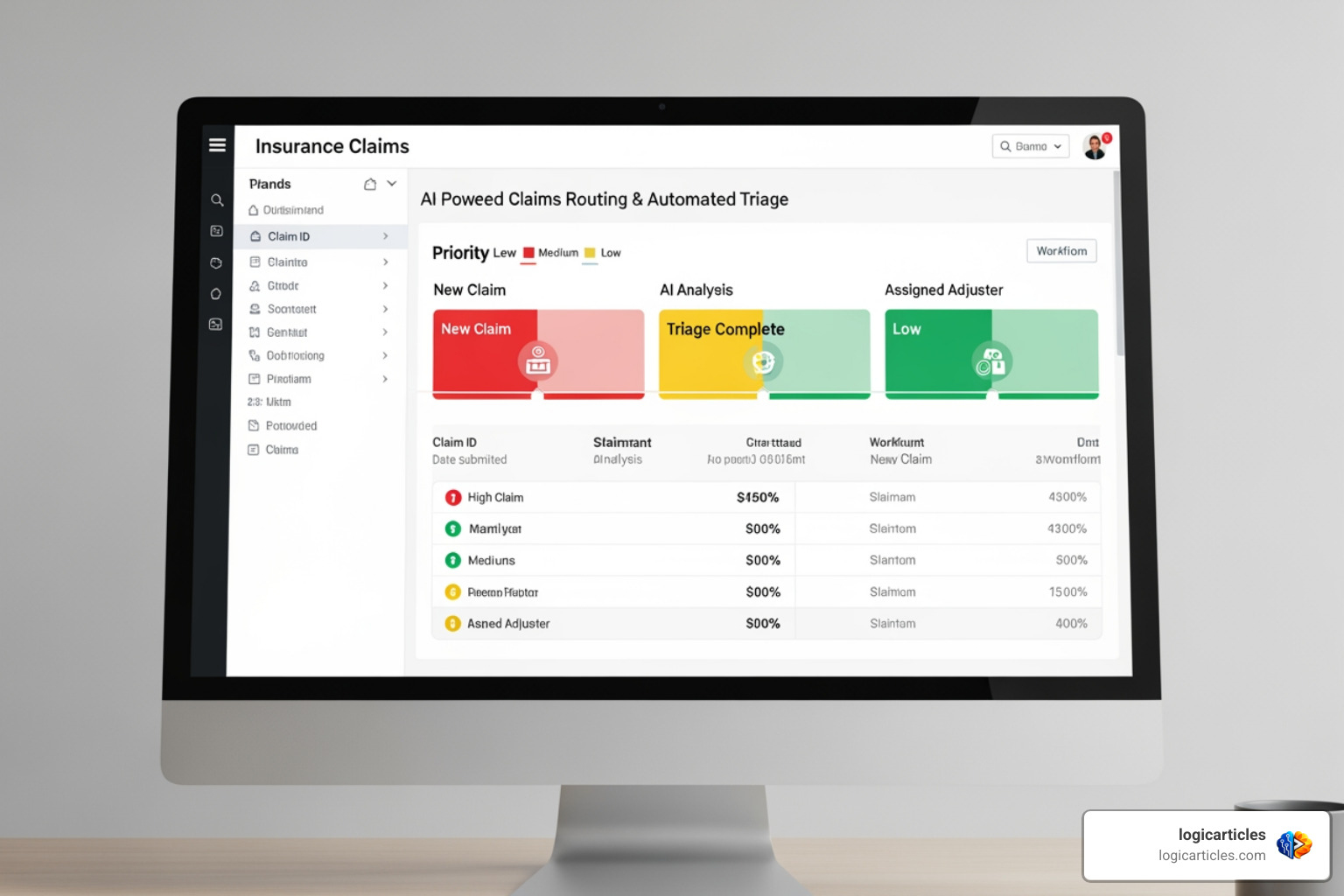
This level of automation enables straight-through processing (STP) for simple, low-complexity claims. For instance, a minor windshield damage claim can be automatically verified, approved, and sent to payment in minutes without human intervention.
For complex claims, AI serves as an assistant, feeding data into predictive models to calculate the likelihood of fraud or litigation. By cross-checking claim details with historical data, the system flags anomalies early.
To ensure complete compliance and thorough vetting of complex files, many top carriers pair these automated systems with specialized Insurance Claim Investigation and Compliance Solutions. This combination ensures that while simple claims fly through the automated pipeline, high-risk or suspicious claims are instantly routed to specialized investigators, keeping fraud losses to an absolute minimum.
Customer Experience and Digital Workflows
In 2026, customer experience (CX) is a major battleground in the insurance sector. Policyholders expect the same level of transparency and speed from their insurance company as they do from a food delivery app. This shift in expectations has forced insurance claims software vendorsV to build highly intuitive, consumer-facing digital workflows.
Modern claims software addresses this by offering:
- Omnichannel Intake: Allowing customers to start a claim on a mobile app, upload photos of the damage, and continue the process via a web portal or text message without losing their progress.
- Intuitive Mobile Forms: Enabling on-the-go data input with immediate data validation to check for missing information before the claim is submitted.
- Real-Time Tracking: Providing policyholders with a visual progress bar of their claim status, reducing the volume of inbound “status check” calls to customer service centers.
- Instant Digital Payments: Disbursing approved funds via digital payment rails directly to the claimant’s bank account or digital wallet in minutes.
These front-end interfaces must connect seamlessly with back-end adjuster workflows. As highlighted in Where’s Waldo/Articles/CLM Magazine, maintaining clear visibility and communication across all parties—adjusters, claimants, lawyers, and repair shops—is critical to preventing costly delays and litigation. When everyone has real-time access to the same dashboard, claims are resolved faster and with fewer disputes.
Top Insurance Claims Management Software Vendors in 2026
The vendor landscape in 2026 is highly competitive, featuring a mix of established legacy giants, cloud-native platforms, and highly specialized niche solutions. Selecting the right partner requires balancing your organization’s scale, existing infrastructure, and customization needs.
Guidewire ClaimCenter
As one of the most prominent names in the Property and Casualty (P&C) space, Guidewire ClaimCenter is a heavy-duty solution trusted by large, global insurers. With over 270 customers in more than 30 countries, Guidewire’s market presence is formidable. This dominance is backed by a massive commitment to innovation: Guidewire consistently invests 35% or more of its product revenue back into R&D, supported by a dedicated R&D team of over 700 professionals.
Running on the Guidewire Cloud, Insurance Claims Management Software – ClaimCenter | Guidewire offers deep, insurance-grade AI and analytics. A standout feature is ProNavigator, which embeds real-time intelligence directly into the claims lifecycle. This helps bridge the expertise gap between seasoned adjusters and newer team members by offering on-screen, real-time guidance.
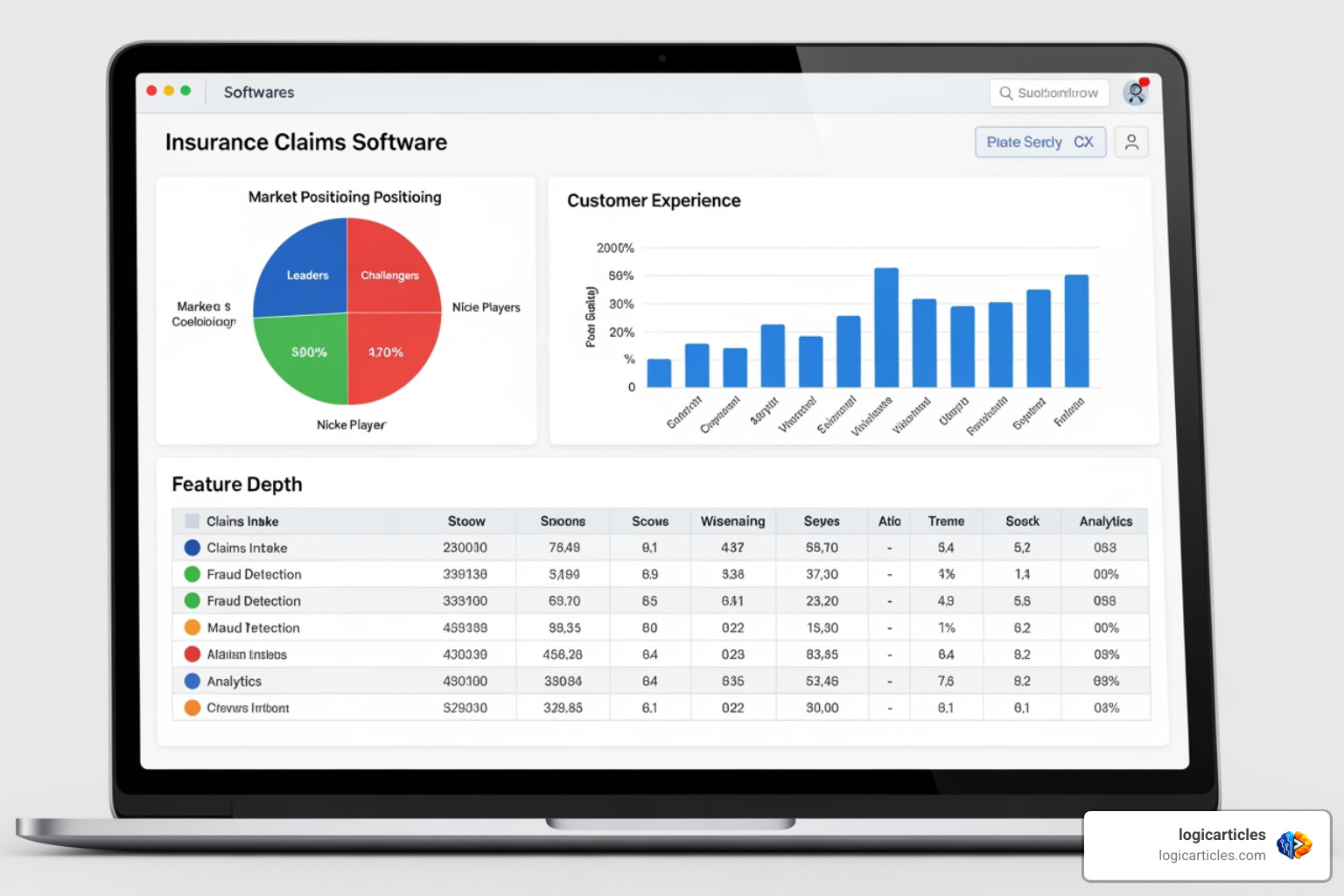
While Guidewire ClaimCenter earns a solid customer experience score of 7.5/10 and a composite score of 6.8/10 on SoftwareReviews, its sheer size and complexity mean that implementation is a major strategic undertaking that requires dedicated consulting resources.
Sapiens ClaimsMaster
Sapiens ClaimsMaster is highly regarded for its sheer depth of features and flexibility. In fact, it has been ranked by Celent as the most feature-rich claims software on the market. Built to support both personal and commercial lines, it manages the entire claims lifecycle from FNOL to final settlement.
The key strength of ClaimsMaster | Sapiens lies in its highly configurable, no-code architecture. Insurers can easily adapt the system to changing regulatory requirements, modify workflows, and set up straight-through processing rules without writing a single line of code. This no-code approach drastically reduces reliance on internal IT teams, allowing claims managers to optimize processes on the fly.
VCA Software
For Third-Party Administrators (TPAs), Managing General Agents (MGAs), and mid-sized carriers who need a highly agile, cost-effective platform, VCA Software is an outstanding option. VCA is built from the ground up to reflect how claims actually operate in the field, rather than forcing adjusters to adapt to rigid database structures.
According to industry data, implementing #1 Customer-Centric Insurance Claims Management Software can reduce the overall cost of the claims journey by as much as 30% while saving up to 2 hours per day per claim handler.
VCA features a robust Claims Core engine that includes specialized Lloyd’s market reporting capabilities, making it a favorite for Lloyd’s syndicates. Its bi-directional integration framework, DataBridge, eliminates manual data entry between policy administration and claims systems, allowing file handlers to learn the system in less than an hour.
Other Notable Insurance Claims Software VendorsV
Beyond the top three, several other insurance claims software vendorsV offer compelling solutions tailored to specific operational needs:
- IBSuite Claims Management: For companies seeking an agile, cloud-native, and API-first approach, the Claims Management – Digital Insurance Platform | IBSuite Insurance Software | Modern Insurance System is a highly flexible option. It features a hybrid rating engine and automated output management, allowing rapid integration with external insurtech tools and real-time data providers.
- CCC IX Cloud: Specifically focused on the automotive and collision repair ecosystem, the Intelligent Insurance Claims Experiences – CCC IX Cloud specializes in orchestrating data, advanced AI, and multi-party workflows. It focuses on turning standard user interfaces into “Intelligent Experiences” (IX), connecting insurers, repair shops, and parts manufacturers seamlessly.
- Faktor-ICS: Developed by Faktor Zehn, Claims Management Software for Insurance Companies is an innovative, European-centric claims system. It is highly adaptable, utilizes REST APIs for easy integration, and is designed to handle modern digital scenarios, including direct integrations with IoT devices and smart home sensors.
- Insurity SIMS Claims: A browser-based system built with direct input from insurance professionals, earning a strong 7.3/10 composite score and a 7.4/10 CX score.
- Vertafore ImageRight: Known for its powerful document management and workflow automation, holding a 7.0/10 composite score.
Key Criteria for Selecting a Claims Management Vendor
Replacing or upgrading a core claims system is a major business transformation. To ensure long-term value and minimize implementation risks, we recommend using a structured evaluation checklist.
When reviewing potential insurance claims software vendors, keep these critical criteria in mind:
- Integration Capabilities (API-First Design): Your claims system must talk to your policy administration system, billing platforms, and external databases. Look for vendors that offer robust REST APIs and pre-built integration frameworks.
- Security and Compliance Standards: Claims systems house sensitive personal, financial, and medical data. Ensure the vendor meets the highest security standards, such as SOC 2 Type II certification, HIPAA compliance, and local data privacy laws (like GDPR or CCPA).
- Configurability vs. Customization: Avoid heavy, hard-coded customizations. Look for platforms that offer visual, no-code/low-code configuration tools, allowing your business analysts to adjust workflows without waiting for developer cycles.
- Total Cost of Ownership (TCO) and ROI: Calculate not just the software licensing or SaaS fees, but also the costs of implementation, data migration, user training, and ongoing support. Compare these costs against projected savings from reduced claim cycle times and lower loss adjustment expenses (LAE).
Frequently Asked Questions about Claims Software
What is the average ROI of modern claims management software?
While ROI varies by company size, most insurers see substantial financial benefits within 12 to 18 months of deployment. By automating routine tasks and implementing straight-through processing, organizations frequently experience up to a 30% reduction in the cost of the claims journey. Additionally, claims handlers save an average of 2 hours per day, allowing them to focus on complex, high-value cases.
How do cloud-native claims solutions compare to legacy systems?
Legacy systems are often hosted on-premise, relying on rigid, outdated databases that require expensive manual upgrades and custom coding for integrations. Cloud-native solutions, on the other hand, offer seamless, automatic software updates, infinite scalability to handle volume spikes (such as during natural disasters), and an API-first architecture that allows easy connections to modern third-party tools.
What role does AI play in fraud detection during claims processing?
AI acts as a continuous, real-time security guard. By feeding claim data into predictive fraud evaluation models, the software scores each claim’s likelihood of fraud at the very moment of intake. It cross-checks social media, public records, and historical fraud patterns to flag suspicious anomalies—such as duplicate invoices or mismatched location data—and automatically routes those claims to specialized investigative units.
Conclusion
At logicarticles, we believe that choosing the right insurance claims software is one of the most critical decisions an insurance provider can make. In 2026, the right vendor is not just a software provider; they are a strategic partner in your digital transformation journey.
By selecting a platform that aligns with your specific operational scale—whether that is a global powerhouse like Guidewire, a feature-rich suite like Sapiens, or an agile, TPA-focused system like VCA—you can drastically reduce processing costs, empower your adjusters, and deliver the fast, transparent experiences your policyholders deserve.
Ready to optimize your business operations and discover more cutting-edge software comparisons? Explore more business tools and insights on our platform today!