Why Maritime Software Companies Are Reshaping Global Shipping
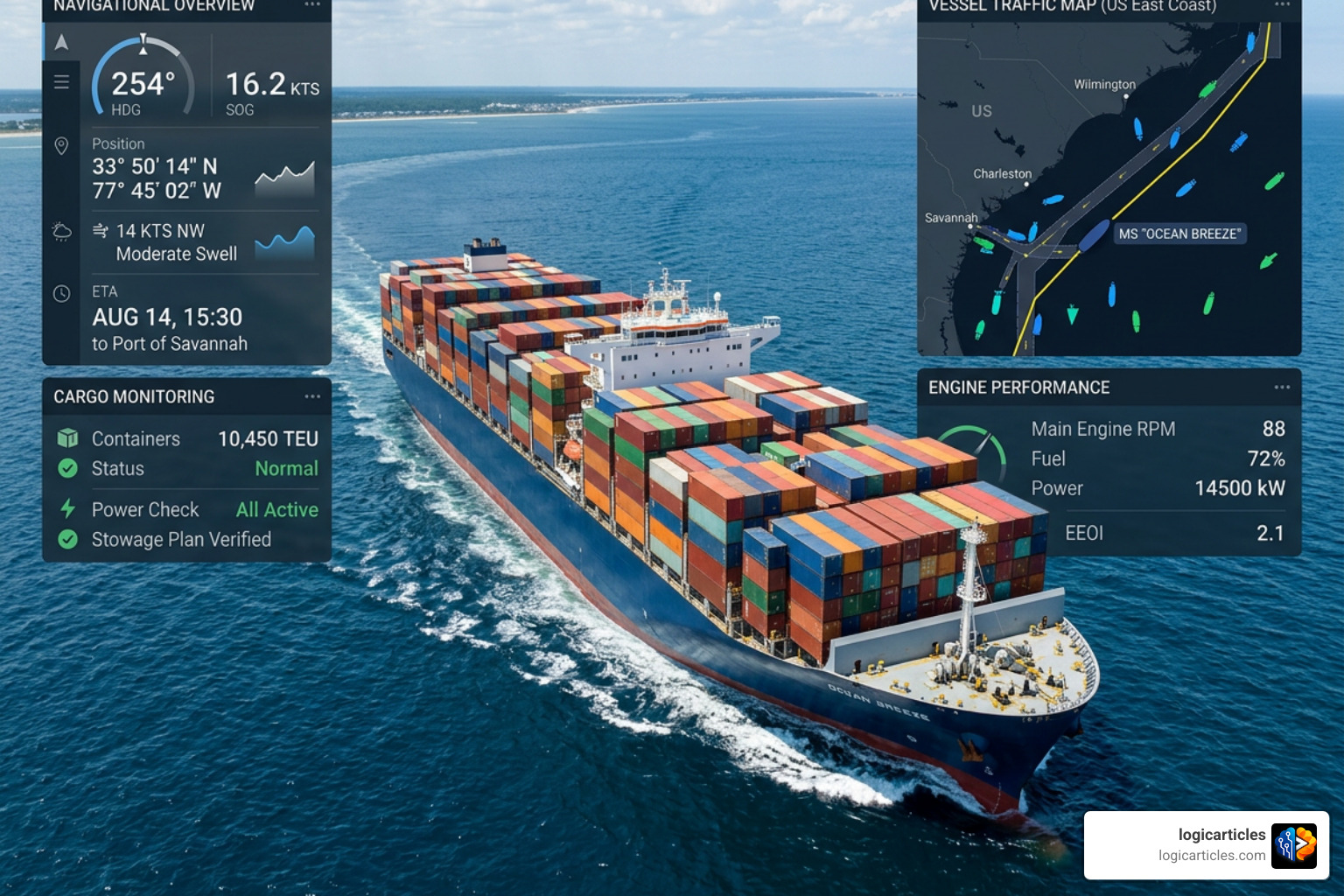
Maritime software companies are transforming one of the world’s oldest industries — turning paper-heavy, fragmented shipping operations into connected, data-driven fleets.
If you’re looking for a quick overview, here are the most important things to know:
| Category | Key Facts |
|---|---|
| Market Size (2025) | ~$1.86 billion globally |
| Projected Growth | 7.6% CAGR through 2033 |
| Cloud Adoption | 65.87% of market by 2024 |
| Largest Region | Asia-Pacific (36.32% share) |
| Fastest Growing Region | Middle East (10.39% CAGR) |
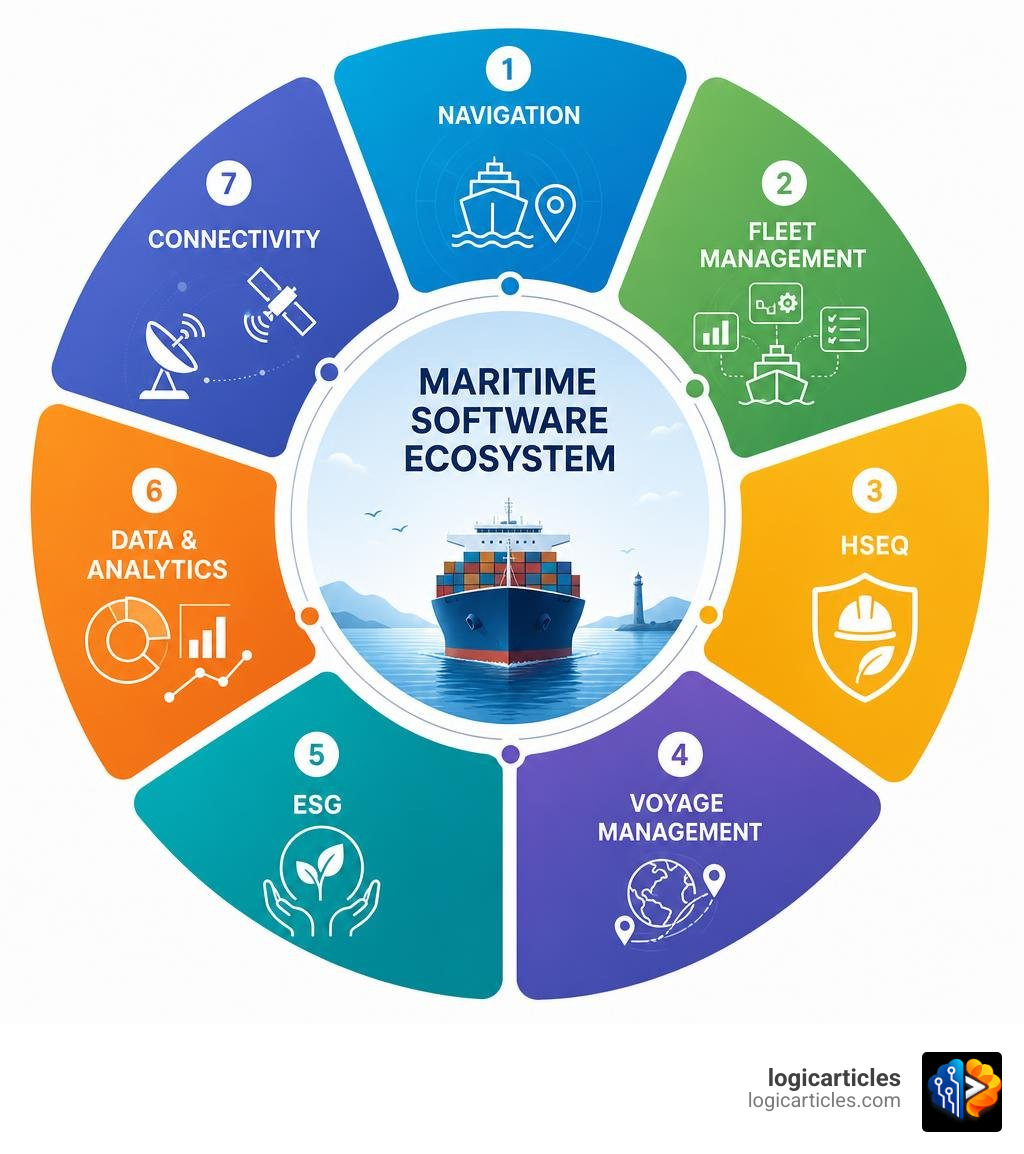
| Top Software Segments | Navigation, Fleet Management, Voyage/Port, HSEQ, ESG, Data & Analytics |
| Cost Savings Reported | Up to 20% operational cost reduction within one year |
| Companies Using Advanced Software | Over 70% of global shipping companies (up from 40% in 2020) |
Not long ago, port cost management was described by one shipping operator as “herding cats” — a tangle of phone calls, faxes, spreadsheets, and manual reconciliation. Crew schedules were tracked in Excel. Voyage plans were printed on paper. Fuel decisions were made on gut instinct.
That picture is changing fast.
Today, the maritime industry is in the middle of a long overdue digital shift. New IMO emissions regulations, rising fuel costs, and the explosion of vessel connectivity (Starlink is now aboard roughly 150,000 ships) are forcing shipping companies to rethink how they operate.
Software is now at the center of that rethink.
From autonomous navigation systems to cloud-based fleet management platforms, maritime software covers everything that happens between a vessel leaving port and arriving at its next destination — and everything in between.
This guide breaks down the full landscape: the market segments, the leading companies, what to look for when choosing a provider, and where the industry is headed next.
Market Overview: The Growth of Maritime Software Companies
The maritime industry has historically been slow to adopt new technologies. However, as we look at the landscape in June 2026, the transition from legacy, fragmented workflows to modern digital platforms is accelerating at an unprecedented pace.
To understand why maritime software companies are experiencing such high demand, we must first look at the stark contrast between traditional operations and digital-first shipping:
| Operational Area | Legacy Shipping Operations | Modern Digital Maritime Software |
|---|---|---|
| Data Syncing | Manual batch syncing, onboard servers, email updates | Real-time, cloud-native synchronization between ship and shore |
| Route Planning | Static paper charts, manual weather checks | Dynamic AI-driven route optimization and electronic charts (ENC) |
| Maintenance | Reactive repairs, paper-based logs, Excel tracking | Predictive maintenance, automatic alert triggers, digital PMS |
| Port Calls | Fragmented communications via phone, email, and fax | Automated port cost management, real-time berth tracking |
| Compliance | Physical binders, manual emissions calculations | Automated ESG tracking (CII, EU MRV), digital logbooks |
This shift from manual to digital is not just about convenience; it is a multi-billion dollar market transition.
Global Market Size and Growth Projections through 2028
The global maritime software market was valued at $1,859 million ($1.859 billion) in 2025. It is projected to grow at a compound annual growth rate (CAGR) of 7.6% through 2033. Some industry estimates place the current broader market closer to $2 billion, with projections climbing to approximately $3 billion by 2028 as double-digit annual growth rates take hold in high-demand segments.
Cloud platforms have become the dominant delivery model, accounting for 65.87% of the maritime software market and expanding at a 9.67% CAGR through 2030. Rather than maintaining expensive onboard servers and dealing with spotty VPN connections, modern operators prefer scalable Software-as-a-Service (SaaS) ecosystems that run seamlessly over modern satellite networks.
Geographically, the Asia-Pacific region holds the largest market share at 36.32%, driven by major shipping hubs in Singapore, China, Japan, and South Korea. Meanwhile, the Middle East is the fastest-growing region, sporting a 10.39% CAGR as regional players invest heavily in port infrastructure and supply chain modernization.
This rapid growth has also caught the attention of investors. The maritime software space is seeing highly active Mergers and Acquisitions (M&A) activity. Private equity (PE) sponsors and established industry conglomerates are actively consolidating the market, acquiring niche point solutions to build comprehensive, “one-stop-shop” maritime ERP platforms.
Key Drivers of Digital Transformation in Shipping
Several powerful macro trends are driving the demand for specialized maritime software:
- Stricter Environmental Regulations: The International Maritime Organization (IMO) has introduced aggressive decarbonization targets. Vessels must measure and report their Energy Efficiency Existing Ship Index (EEDI) and Carbon Intensity Indicator (CII). Software designed for sustainability and emissions tracking is growing at nearly 30% annually to help operators avoid heavy compliance penalties.
- The Connectivity Revolution: High-speed, low-latency satellite systems like Starlink have changed what is possible at sea. The number of vessels equipped with high-speed bandwidth has grown exponentially. This reliable connection allows ships to share data continuously with shore-side teams, turning vessels into floating IoT hubs.
- Escalating Cybersecurity Risks: As ships become more connected, they also become targets. Maritime cyber incidents have surged, prompting the IMO to mandate strict cyber risk management onboard. Consequently, cybersecurity investments in maritime infrastructure have reached $150 million annually, and software vendors must build systems using secure software development life cycles (SDLC).
Core Segments of the Maritime Software Market
The maritime software ecosystem can be divided into several distinct segments, each addressing specific pain points across the shipping value chain.
Navigation and Vessel Performance from Maritime Software Companies
Fuel represents 40% to 50% of a shipping company’s typical operating cost base. Therefore, navigation and vessel performance software is one of the most critical segments for direct return on investment (ROI).
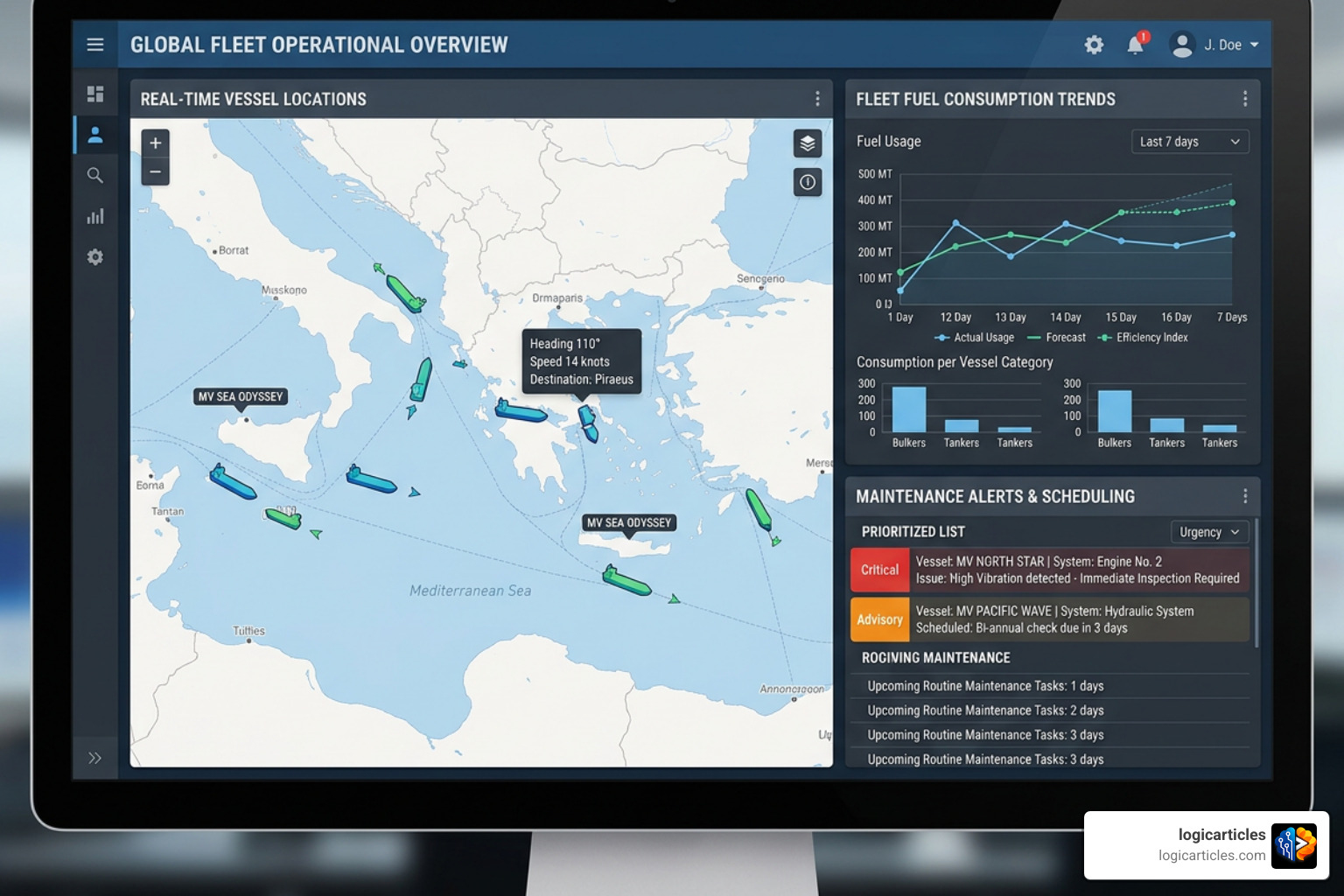
Modern e-navigation platforms replace traditional paper charts with Electronic Navigational Charts (ENCs) synchronized directly with Electronic Chart Display and Information Systems (ECDIS). These systems analyze weather forecasts, ocean currents, vessel draft, and port congestion in real time to calculate the most fuel-efficient routes.
Leading the charge in this space is NAVTOR | e-Navigation and Vessel Performance | Digital Charts | Digital Logbooks . NAVTOR specializes in smart, integrated e-navigation solutions, digital charts, and digital logbooks that simplify passage planning and ensure vessels maintain optimal speed and fuel efficiency.
At the cutting edge of this segment is the push toward autonomous operations. Companies like Avikus are pioneering AI-powered autonomous navigation solutions. Their HiNAS product family uses sensor fusion—combining radar, AIS, electro-optical (EO) cameras, and infrared thermal cameras—to achieve Level 2 autonomy. This system acts as an intelligent autopilot, executing real-time RPM optimization based on weather and currents, which has been proven to deliver average fuel savings of 4.2% (and up to 8% in certain conditions) while significantly reducing human error.
Fleet Management Systems by Maritime Software Companies
Fleet management software acts as the operational backbone of a shipping company. It unifies ship-to-shore communications, manages maintenance, tracks crew rotations, and ensures safety compliance.
Key components of these systems include:
- Planned Maintenance Systems (PMS): Tracks vessel machinery, schedules preventative maintenance, and manages spare parts inventory to prevent costly breakdowns.
- Crew Management: Manages crew training, certifications, payroll, and rest hours to comply with international maritime labor laws.
- HSEQ (Health, Safety, Environment, and Quality): Automates safety audits, risk assessments, drills, and incident reporting.
Operators looking to modernize their fleet operations often implement comprehensive Maritime Software Solutions to replace fragmented spreadsheets. For those focusing specifically on asset lifecycle and maintenance, choosing a dedicated Marine Fleet Management Software platform is essential.
A standout in the cloud-native fleet management space is Cloud Ship Management Software | Navatom . Navatom offers a real-time ship management platform with over 30 integrated modules—including PMS, procurement, HSEQ, and crew tracking—sharing a single data layer. Because it is cloud-native, it eliminates the need for legacy onboard servers and manual batch syncing, allowing ship managers to view fleet data in true real-time.
Another established category leader is SDSD – Maritime Fleet Management Software – Marine ERP – Ship Managers . With over 30 years of experience and serving more than 600 maritime clients worldwide, SDSD provides customizable cloud-based asset management, procurement, and shipbroking platforms, making them a go-to partner for legacy software modernization.
Commercial Voyage and Port Cost Management
This segment focuses on the financial and commercial side of shipping: chartering, voyage estimation, port cost management, and payment reconciliation.
Port charges and commissions represent 20% to 30% of a shipping company’s operating costs. Managing these expenses has traditionally been incredibly complex, involving multiple local port agents, varying tariffs, and manual paperwork.
Modern voyage management software addresses these inefficiencies by centralizing agent nominations, tracking port disbursements, and automating vendor payment reconciliation. This enables “just-in-time” arrivals, preventing situations where vessels speed across the ocean only to sit idle outside a congested port, wasting expensive fuel.
In this space, Your Trusted Maritime Software Provider | OneOcean offers a highly regarded digital ecosystem. Serving over 30,000 vessels globally, OneOcean connects ships, fleets, and shoreside teams to deliver forward-looking environmental management, voyage planning, and regulatory compliance.
Similarly, Maritime Shipping Software Solutions | ABS Wavesight , an independent subsidiary of the American Bureau of Shipping (ABS), delivers a powerful suite of products including Nautical Systems and eLogs. Installed on over 500 vessels globally, ABS Wavesight helps operators manage commercial performance, recordkeeping, and decarbonization pathways within a highly secure framework.
Key Selection Criteria for Shipping Operators
Selecting the right maritime software is a critical decision that impacts a company’s bottom line, crew safety, and regulatory standing.
Integration Capabilities and Cloud-Native Architecture
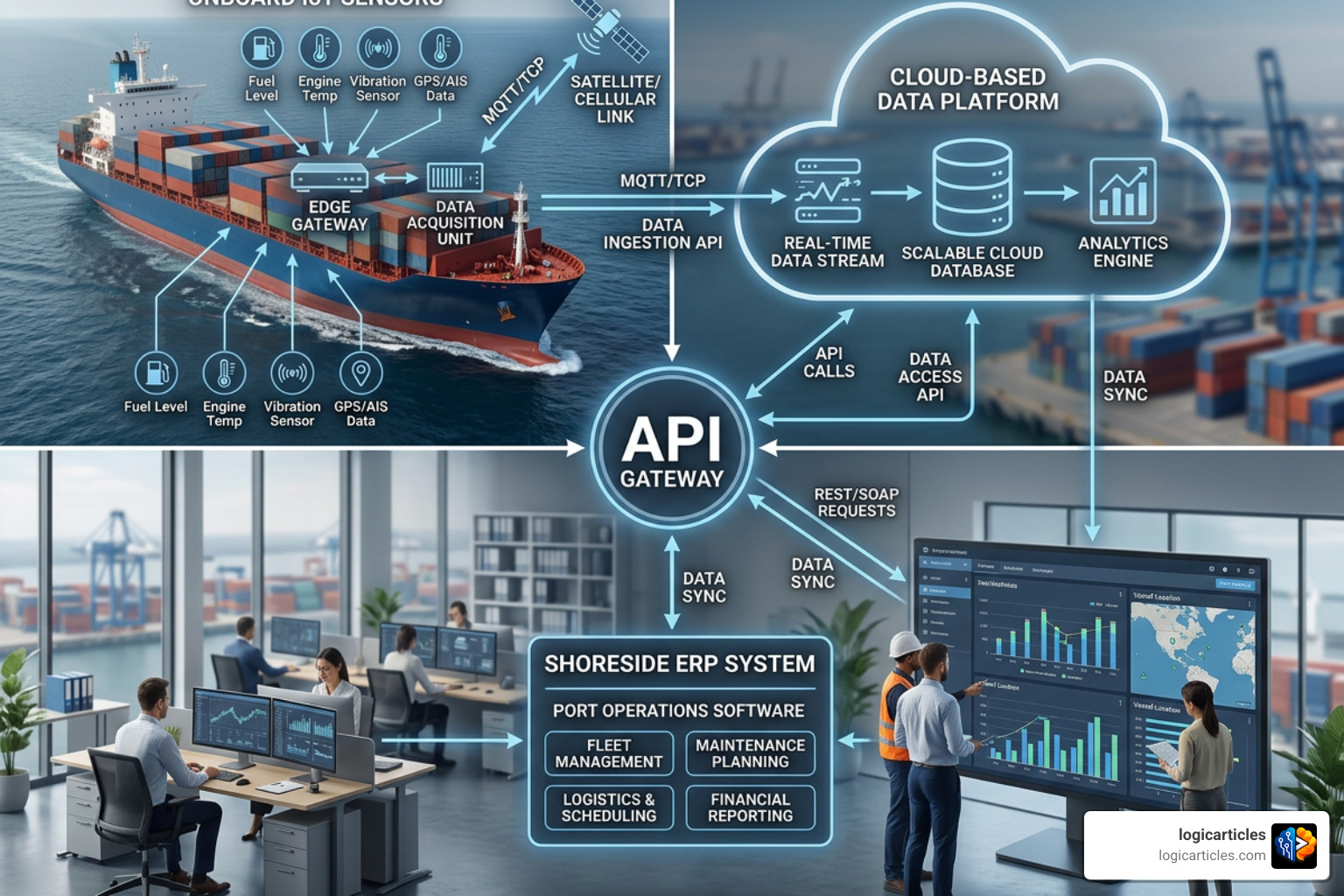
The maritime industry has long suffered from “disconnected tool syndrome.” If your planned maintenance system cannot talk to your procurement software, or if your navigation data is siloed from your shoreside voyage management platform, your team will waste hours manually re-entering data.
When evaluating providers, prioritize maritime software companies that offer:
- Cloud-Native Architecture: Avoid platforms that require local server installations on vessels. Cloud-native systems run in web browsers, update automatically, and sync in real-time over modern satellite connections.
- Open APIs: Ensure the software can easily integrate with your existing ERP, accounting systems, and third-party maritime data feeds (such as AIS tracking or weather services).
- Single Data Layer: Choose platforms where all modules (maintenance, crew, safety, procurement) share a single database, eliminating duplicate entries and data silos.
Regulatory Compliance and Cybersecurity Standards
Operating a global fleet means complying with a web of international, national, and local laws. Your software must be built from the ground up to support compliance with:
- The ISM Code (International Safety Management): The software should automatically log safety drills, manage non-conformity reports, and maintain audit trails for your Safety Management System (SMS).
- Environmental Regulations: Look for built-in calculators for IMO CII, EU MRV, and EU ETS (Emissions Trading System) to simplify reporting and carbon cost management.
Furthermore, with maritime cyberattacks on the rise, cybersecurity is non-negotiable. Ensure your software provider holds recognized security certifications, such as SOC 2 Type II and ISO 27001. Ask about their secure software development life cycle (SDLC) practices, data encryption methods, and multi-factor authentication (MFA) capabilities to protect your fleet’s operational data.
Frequently Asked Questions about Maritime Software
What is the difference between maritime software and logistics software?
While both deal with the movement of goods, they serve entirely different parts of the supply chain.
Logistics software (such as standard Transportation Management Systems, or TMS) focuses on the land-based supply chain, managing warehouse inventory, truck routing, freight forwarding, and container tracking across rail and road networks.
Maritime software is highly specialized and built specifically for vessel operations. It handles the unique physics, safety requirements, and international regulations of operating multi-million dollar steel assets at sea. This includes marine engineering maintenance (PMS), maritime safety codes (ISM), crew rest-hour compliance (STCW), marine navigation (ECDIS), and hydrodynamics-based fuel optimization.
How do maritime software solutions reduce operational costs?
Maritime software targets the largest cost centers in shipping:
- Fuel Savings: AI-driven route optimization and weather routing can reduce fuel consumption by 3% to 15%.
- Preventative Maintenance: Planned maintenance systems track machinery run hours to schedule servicing before catastrophic failures occur, preventing expensive emergency dry-docking and off-hire days.
- Port Call Optimization: Real-time communication and voyage planning enable just-in-time arrivals, reducing port waiting times and lowering port fees.
- Administrative Efficiency: Automating manual workflows—such as replacing paper logbooks with digital eLogs—can reduce crew administrative workloads by up to 40%, allowing seafarers to focus on safe vessel operations.
What role does AI play in modern maritime software?
AI is the driving force behind next-generation maritime tools. In modern platforms, AI is used for:
- Predictive Weather Routing: Analyzing massive meteorological datasets to predict the safest and most fuel-efficient paths.
- Predictive Maintenance: Monitoring real-time sensor data from main engines and auxiliary machinery to identify anomalies and predict equipment failures before they happen.
- Autonomous Navigation: Powering computer vision and sensor fusion systems to detect obstacles, prevent collisions, and optimize ship handling at sea.
- Port Analytics: Predicting port congestion and berth availability using historical AIS data and terminal schedules.
Conclusion
The maritime industry is no longer a digital laggard. Driven by strict environmental regulations, the availability of high-speed satellite connectivity, and the clear economic benefits of digital operations, shipping companies are rapidly partnering with specialized maritime software companies to future-proof their fleets.
By consolidating disconnected tools into unified, cloud-native platforms, operators can eliminate data silos, protect their assets from cyber threats, and achieve operational cost reductions of up to 20% within a single year.
Whether you are looking to optimize your vessel performance, streamline planned maintenance, or automate your port cost management, selecting the right digital partner is the first step toward a safer, cleaner, and more profitable voyage.
Explore the best software categories for your fleet to find the perfect digital solutions for your maritime operations.