Why Millions Are Looking for a Discord Alternative Right Now

If you’re searching for a discord alternative, here are the top options worth considering in 2026:
| Platform | Best For | Self-Hosted | E2EE |
|---|---|---|---|
| Stoat | Communities replacing Discord | Yes | Partial |
| Matrix / Element | Decentralized, federated chat | Yes | Yes |
| Rocket.Chat | Teams and businesses | Yes | Partial |
| mqvi | Privacy-first self-hosting | Yes | Yes |
| Gratonite | Friend groups and gaming | Yes | Partial |
| Nodes | Decentralized, no accounts | Yes | Yes (DMs) |
| TeamSpeak | Low-latency voice | Yes | Partial |
| Osmium | Voice + customization | No | Partial |
| Canopy | AI + human team workflows | Yes | Yes |
Discord built something genuinely great. Over 200 million people use it every month. But in 2026, trust is eroding — fast.
Discord’s text messages are still not end-to-end encrypted. The platform only added E2EE for voice and video calls in 2024, years behind industry standards. And in early 2026, Discord suffered a significant security breach, pushing many users to start looking elsewhere.
Then came the announcement that made a lot of people’s minds up: Discord plans to roll out age assurance checks in the second half of 2026, requiring facial scans or government-issued photo ID for access to certain servers. For privacy-conscious users, that’s a hard line.
There are smaller frustrations too. Free users lose access to threads after just three days. Boosted servers get three weeks. Either way, conversations disappear — and with them, community knowledge.
The result? A growing wave of users, communities, and teams actively moving to platforms that offer more control, better privacy, and real data ownership.
The good news is that the alternatives have never been better.
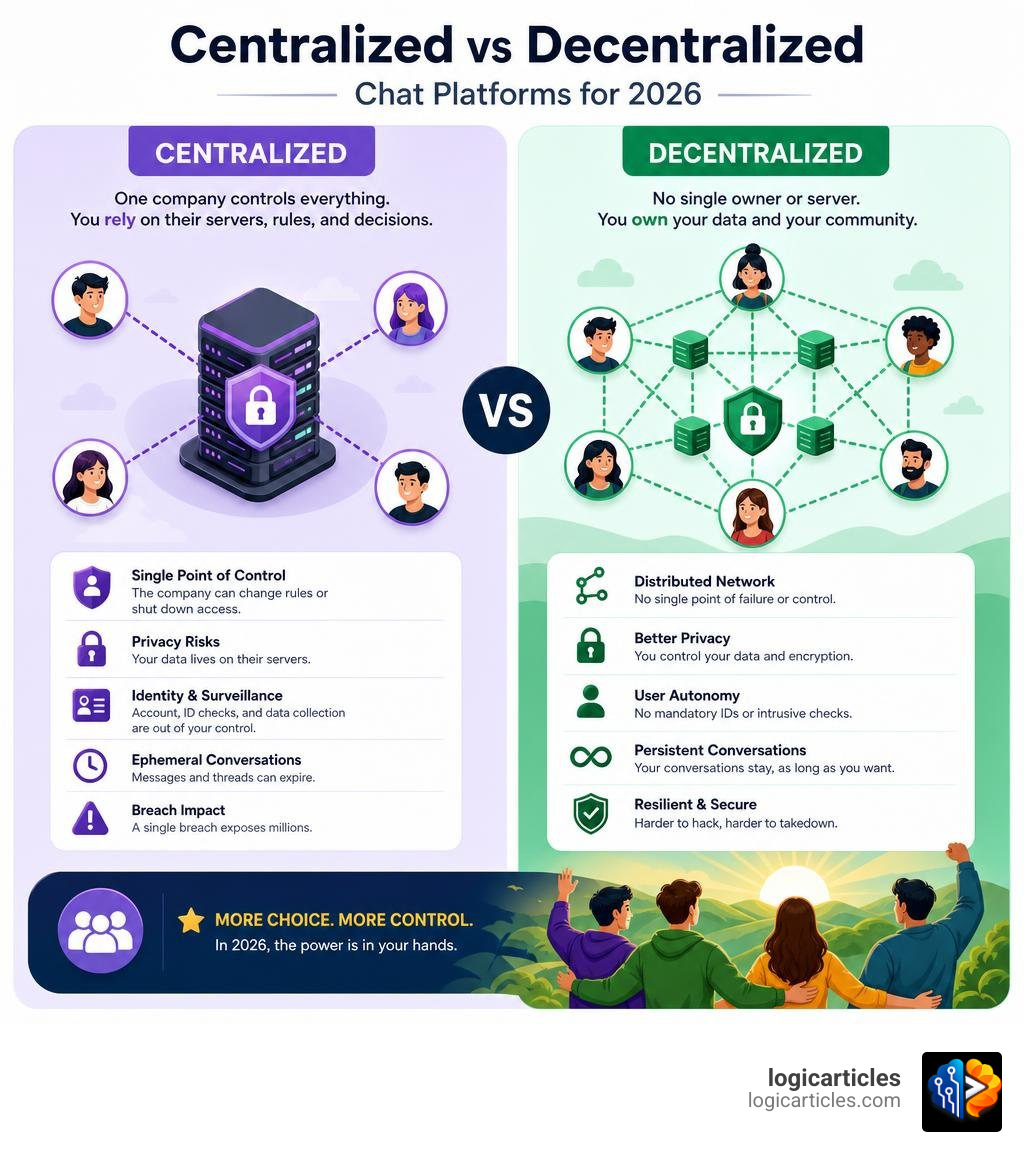
Why Users are Seeking a Discord Alternative in 2026
The shift away from Discord isn’t just about one bad update; it is about a fundamental misalignment of values. When Discord first arrived, it was a lightweight, gamer-focused chat client. Today, it is a massive corporate entity trying to monetize everything from profile decorations to server boosts, all while stepping on user privacy.
The introduction of mandatory age assurance checks in late 2026 is the final straw for many. Trusting a central corporation with your passport, driver’s license, or a biometric facial scan is a massive security risk. We have already seen the consequences of this: a major security breach just four months ago exposed sensitive user data, proving that central servers are always a prime target for hackers.
Furthermore, Discord’s data retention policies make it a poor fit for anyone trying to build a lasting knowledge base. Important discussions get buried, and because threads archive after three days for free users, valuable information is constantly lost. For communities that want to keep their history safe without paying extortionate monthly fees, looking into Cloud Storage Alternatives and self-hosted communication platforms has become a necessity.
By moving to a self-hosted or decentralized platform, you ensure that your community’s data belongs to you—not to a corporate board or advertisers.
Best Open-Source and Self-Hosted Platforms
For those of us who want absolute control over our data, open-source and self-hosted platforms are the gold standard. When you host your own server, there is no central authority that can change the privacy policy overnight, scan your private messages for AI training, or demand your photo ID.
The self-hosting landscape has matured tremendously. Today, setting up a private chat network is often as simple as running a single command using Docker Compose.
Two of the most exciting entries in this space are Gratonite and Nodes.
If you are looking for a platform built specifically for friend groups, creators, and gaming guilds, Gratonite Chat | Free, Open-Source Community Platform is an outstanding option. It is entirely free, open-source, and features a brilliant custom cosmetic and auction-house culture that makes your server feel like a cozy digital home rather than a sterile corporate workspace. It supports hop-in voice rooms, rich text chat, and allows you to easily host your own instance or connect with others via built-in federation.
On the other end of the spectrum is Leveq/Nodes , which takes a radical approach to privacy. Nodes is a decentralized, serverless platform where your identity is a cryptographic keypair generated directly on your device. There are no central accounts, no emails to register, and nothing to breach because no data is stored centrally. It uses WebRTC for voice, GunJS for decentralized data sync, and IPFS for file sharing, making it a truly resilient, peer-to-peer playground.
Stoat: The Promising Discord Alternative for Communities
For users who want a platform that looks and feels exactly like Discord but runs on their own hardware, Stoat (the platform formerly known as Revolt) is a highly compelling choice. It features the familiar layout of servers, text channels, voice rooms, roles, and fine-grained permissions.
Under the hood, Stoat’s self-hosting setup is managed via Docker Compose, which coordinates its services, including MongoDB for database management and KeyDB for fast caching.
However, while Stoat shows incredible promise, it is worth noting that it is still actively maturing. During recent testing, some self-hosted administrators noted minor interface bugs, such as legacy Revolt branding popping up, and authentication quirks when bridging accounts between public and private servers. Nevertheless, if you want a true one-to-one visual replacement for Discord that you can run on a basic virtual private server, Stoat is a project to watch closely.
Matrix and Element: Decentralized Federation
Matrix is not just an application; it is an open, decentralized standard for secure, real-time communication. The most popular client for Matrix is Element, which offers a polished, Discord-like interface with rooms, spaces, and direct messaging.
The core strength of Matrix is federation. This means you can host your own Matrix server in your living room, yet still seamlessly chat with users on other Matrix servers across the globe—just like how email works. Unlike Discord, Matrix features robust end-to-end encryption for text, voice, and video by default in private chats.
However, federation comes with its own set of challenges. Because anyone can host a server, moderation can get incredibly complex. In late 2025, the Matrix ecosystem struggled with spam and moderation issues in public rooms. Additionally, because a vast majority of casual users still rely on the central matrix.org homeserver, any outage on their main infrastructure (like the drive-failure incident in September 2025) can temporarily disrupt communication for millions.
mqvi and YaP: Developer-Friendly Self-Hosted Platforms
For developers and tech-savvy communities, there are some highly customizable, lightweight codebases that offer incredible performance.
The first is akinalpfdn/Mqvi , a privacy-first, open-source communication platform. Mqvi uses the Signal Protocol for end-to-end encrypted direct messaging and LiveKit SFrame for encrypted voice and video calls. It requires a modest server setup (minimum 2 vCPU and 4 GB RAM for a full self-host), but it gives you total sovereignty. You can even choose to self-host only the voice infrastructure to keep your high-bandwidth traffic off public servers while using their lightweight client.
Another fantastic developer-centric project is Xydroc-IO/YaP (Yet another Platform). YaP is built on a highly responsive Python asyncio and WebSocket backend paired with a modern React and TypeScript frontend. It is incredibly lightweight and features unique built-in extras like a permanent 24/7 lofi music streaming channel, a theater mode for watching media together, and a highly customizable 32-bit permission mask system for managing community roles.
Top Alternatives for Teams, Productivity, and Voice Chat
If you are using chat tools for business, remote work, or highly structured communities, Discord’s playful, gamer-oriented UI can quickly become a distraction. Professional teams need deep integrations, reliable search history, and built-in task management.
For organizations looking to move away from chaotic chat structures, exploring professional platforms is essential. While evaluating your options, you might also want to check out our comparison of the Best Exceed Software Alternatives Competitors to streamline your team’s overall productivity suite.
For general team collaboration, platforms like Rocket.Chat and Pumble offer incredible value. Rocket.Chat is fully open-source, highly secure, and compliant with strict data protection laws, making it a favorite for enterprise environments. Pumble offers a clean, Slack-like experience with unlimited message history on its free plan, ensuring your team never loses access to older files and conversations.
Canopy: Local-First Collaboration for Humans and AI Agents
The way we work is shifting, and our tools need to reflect that. README.md at main · kwalus/Canopy is a ground-breaking local-first communication platform designed specifically for hybrid teams composed of both humans and AI agents.
Instead of treating AI as a clunky chatbot plugin, Canopy treats AI agents as first-class participants. Agents get their own inboxes, heartbeats, and structured work objects.
Canopy is built on a peer-to-peer encrypted WebSocket mesh that uses ChaCha20-Poly1305 encryption. It allows teams to create isolated, local workspaces called Meshspaces. If you want a highly secure, modern platform where you can collaborate with local LLMs and human colleagues without your data ever leaving your local network, Canopy is in a league of its own.
Osmium: High-Performance Voice and Customization
For communities that care deeply about voice quality, customizability, and developer freedom, Osmium | Fast & stable chat for your communities is an outstanding option.
Osmium is built from the ground up on custom voice infrastructure designed to deliver ultra-low latency, crystal-clear audio, and immersive 3D positional controls. It features a fully open, unrestricted public API, allowing developers to build custom bots, webhooks, and integrations without having to jump through corporate approval hoops. With robust raid protection, regional data storage, and zero third-party data tracking, Osmium provides a incredibly stable and free home for large public communities.
TeamSpeak and Mumble: Low-Latency Voice-First Discord Alternative Options
If your primary use case for Discord is hopping into a voice channel while playing high-intensity games, you don’t need fancy UI themes or social media feeds. You need raw performance.
- TeamSpeak: The undisputed king of tactical gaming voice chat. It uses military-grade encryption, offers unparalleled background noise suppression, and consumes virtually zero system resources. You can easily rent or self-host a TeamSpeak server for a small annual fee and enjoy lag-free communication.
- Mumble: A completely free, open-source, and lightweight VoIP application. It features positional audio, which makes players’ voices sound like they are coming from their actual in-game locations. Because it is so lightweight, it runs perfectly on older hardware without causing frame-rate drops in your games.
Comparing the Top Platforms
Choosing the right discord alternative depends entirely on what your community values most. Let’s break down how these top options stack up across key categories:
| Platform | Hosting Type | Encryption Level | Target Audience | Primary Strength |
|---|---|---|---|---|
| Stoat | Self-Hosted / Cloud | Standard TLS | Gaming Communities | Familiar Discord-like UI |
| Element (Matrix) | Federated | Full E2EE Option | Privacy Advocates | Decentralized global network |
| Gratonite | Self-Hosted / Web | Transit & Rest | Friend Groups | Fun cosmetics, no limits |
| Nodes | P2P (No Servers) | E2EE (DMs) | Hardcore Privacy | No accounts, cryptographic ID |
| Canopy | Local-First / Peer | ChaCha20-Poly1305 | AI & Dev Teams | Native AI agent integration |
| Osmium | Hosted | Transit & Rest | Large Communities | Custom voice, open API |
| TeamSpeak | Self-Hosted / Rent | High-Grade AES | Competitive Gamers | Ultra-low latency voice |
Making the transition to a new platform can feel daunting, much like trying to find the 9 Best Spotify Alternatives in 2026 Ranked when you have years of curated playlists. The key is to evaluate feature parity and plan your migration slowly rather than trying to move everyone overnight.
Frequently Asked Questions about Discord Alternatives
What is the easiest Discord alternative to self-host?
For a quick, hassle-free setup, Gratonite and Stoat are the easiest platforms to self-host. Both provide simple, one-command installation scripts utilizing Docker Compose. With a basic Linux VPS, you can have a fully operational, private community platform online in less than five minutes.
Which Discord alternatives offer full end-to-end encryption for text?
If secure text messaging is your highest priority, Element (Matrix), mqvi, and Nodes are your best options. Unlike Discord, which only encrypts voice and video, these platforms protect your text conversations using advanced cryptographic protocols like the Signal Protocol and AES-256-GCM, ensuring that not even the server hosts can read your private chats.
How do I migrate my community from Discord to a new platform?
Migrating a community requires a clear strategy to avoid losing members along the way:
- Run a Dual-Platform Phase: Do not shut down your Discord server immediately. Set up your new platform and run both side-by-side for a few weeks.
- Use Integration Bridges: Tools like Matrix allow you to set up “bridges” that mirror chat rooms, allowing users on both platforms to talk to each other during the transition.
- Establish New Guidelines: Clearly outline your community’s new privacy expectations and rules. If you are handling formal community agreements or moderator guidelines, you can use digital signing tools like the Best Docusign Alternatives to quickly get your leadership team on the same page.
- Offer Incentives: Host game nights, exclusive discussions, or custom cosmetics (if using Gratonite) on the new platform to encourage users to make the jump.
Conclusion
At LogicArticles, we believe that the future of the internet belongs to open protocols, self-sovereign data, and genuine community ownership. Discord served us well for a decade, but their shift toward invasive age verification checks, centralized data vulnerabilities, and aggressive monetization has made looking for a discord alternative a smart move for 2026.
Whether you choose the decentralized federation of Matrix, the cozy, gaming-centric environment of Gratonite, or the high-performance simplicity of TeamSpeak, taking back control of your digital space is a rewarding step.
Ready to upgrade the rest of your digital toolkit? Explore more software reviews on LogicArticles to find the best privacy-first, high-performance tools for your daily workflow.