Why the Right Software for Lawn Care Business Changes Everything
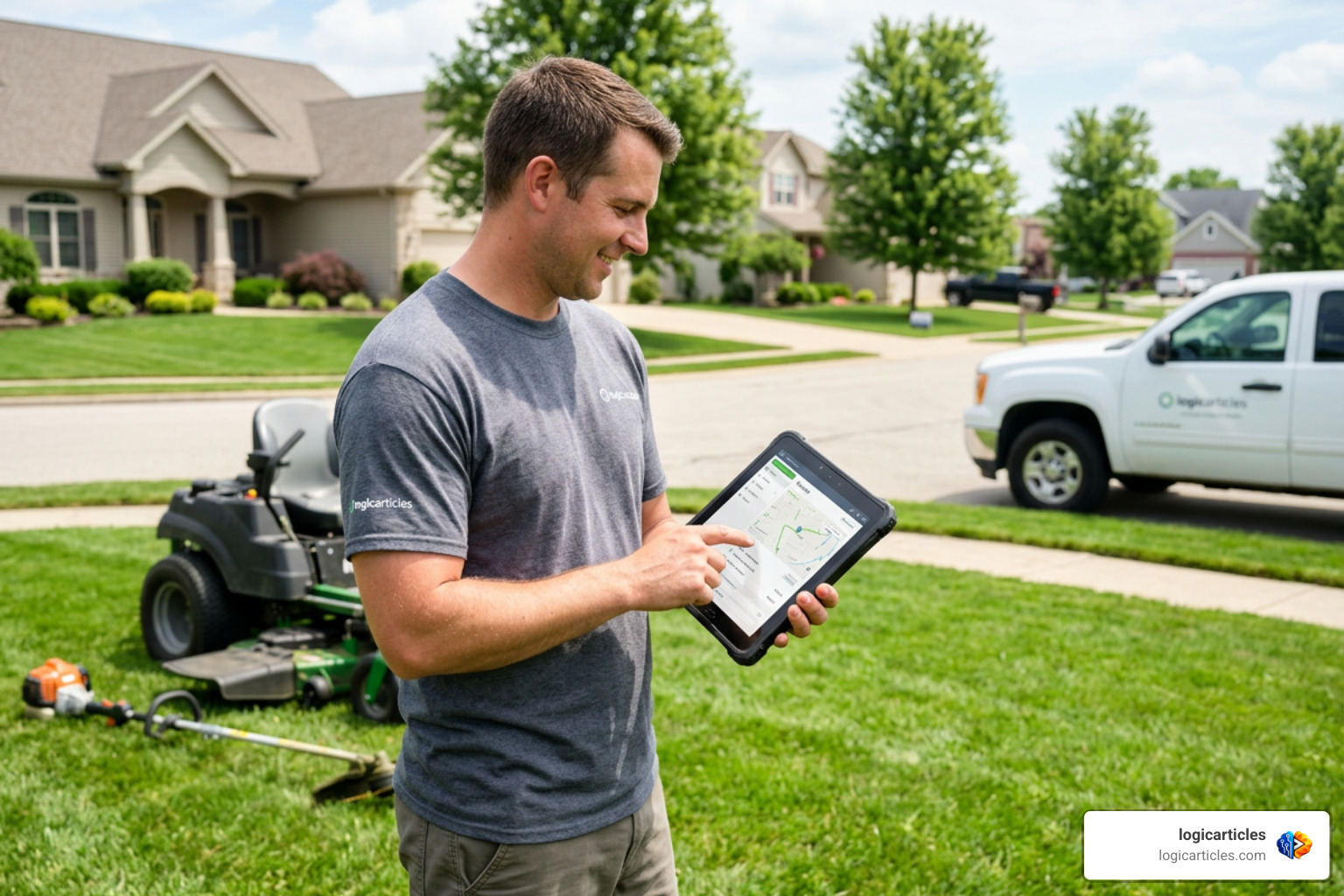
The best software for lawn care business owners lets you schedule jobs, dispatch crews, send invoices, and get paid — all from one platform. Here’s a quick look at the top options:
| Software | Best For | Starting Price | Free Trial |
|---|---|---|---|
| Jobber | Growing teams | ~$29/user/mo | 14 days |
| GorillaDesk | All-in-one field ops | Varies | 14 days |
| Housecall Pro | Customer management | Varies | Yes |
| LawnPro | Automation & invoicing | Free plan available | Yes |
| Yardbook | Budget-conscious owners | Free / $34.99/mo | Free plan |
| Connecteam | Crew management | $29/mo (30 users) | Free plan |
Running a lawn care business means juggling a lot at once. You’ve got crews in the field, customers waiting on quotes, invoices piling up, and routes to plan — often all before 8am.
Most owners start out managing everything manually. Spreadsheets, paper invoices, phone calls to dispatch crews. It works until it doesn’t.
The breaking point usually comes with growth. More customers means more complexity. And that’s exactly where lawn care software earns its place.
The right platform can save 10+ hours per week on scheduling and admin alone — time you can put back into growing the business or simply getting off the clock earlier.
This guide cuts through the noise. We compare the leading platforms, explain what features actually matter, and help you find the best fit for your operation — whether you’re a solo operator or managing multiple crews.
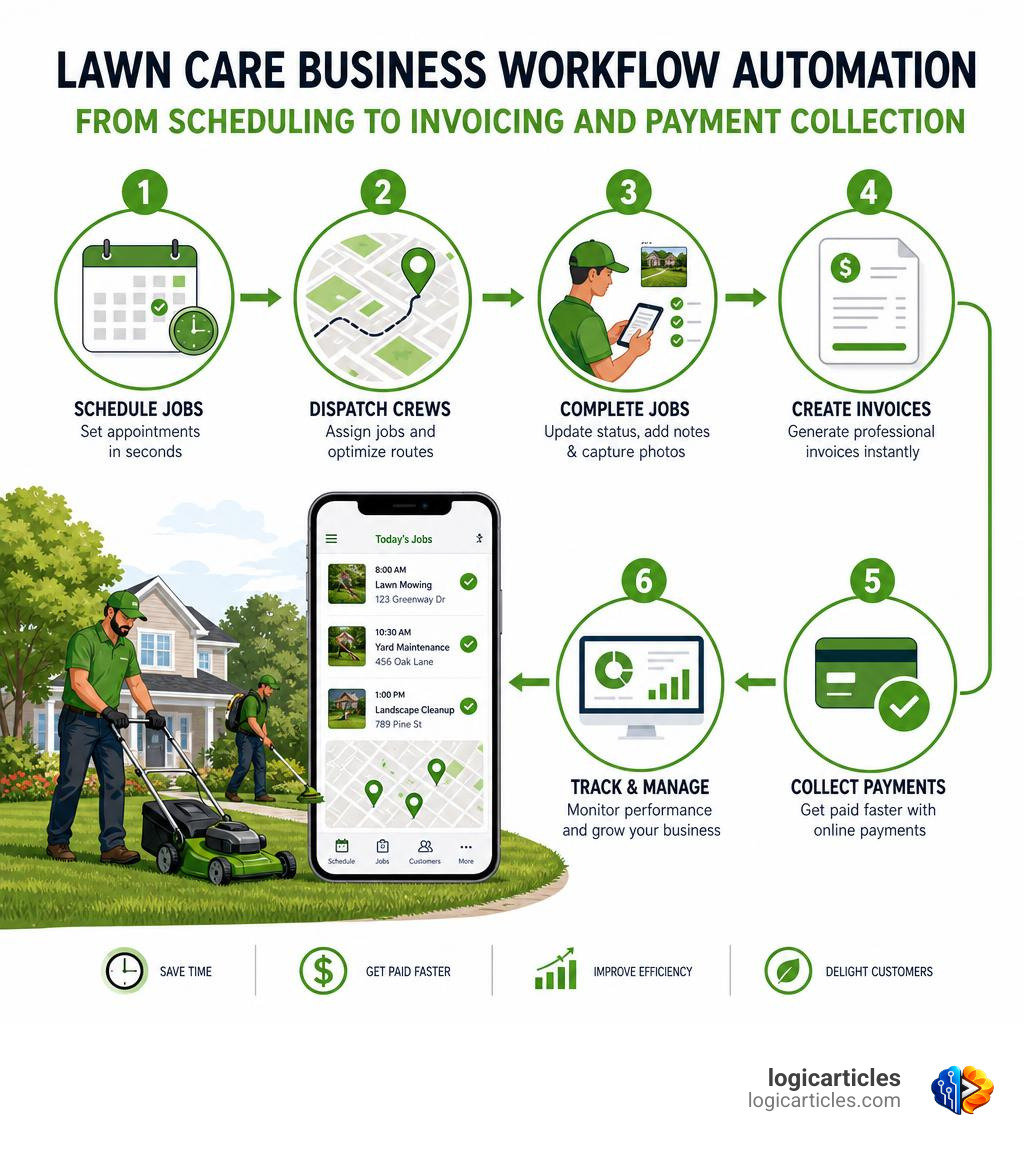
What is Software for Lawn Care Business Owners?
At its core, software for lawn care business management is a digital control center designed specifically for the green industry. Instead of bouncing between paper calendars, separate text threads, and basic accounting tools, this software consolidates your entire operation into a single dashboard.
For landscaping and lawn maintenance companies, managing field service operations is inherently dynamic. Weather changes instantly, equipment breaks down, and customers cancel at the last minute. Specialized lawn care software helps you absorb these shocks by connecting your office staff directly with your field crews in real time.
By utilizing Mobile Workforce Management Software Features Benefits AI 2026, modern platforms allow you to track job progress, update schedules on the fly, and capture customer signatures directly from a smartphone or tablet. This seamless connectivity ensures that your business remains agile, efficient, and positioned for sustainable growth.
Key Features of Modern Lawn Care Platforms
When evaluating different platforms, it is easy to get overwhelmed by long feature lists. However, the most successful lawn care businesses focus on a core set of features that directly impact daily productivity and cash flow.
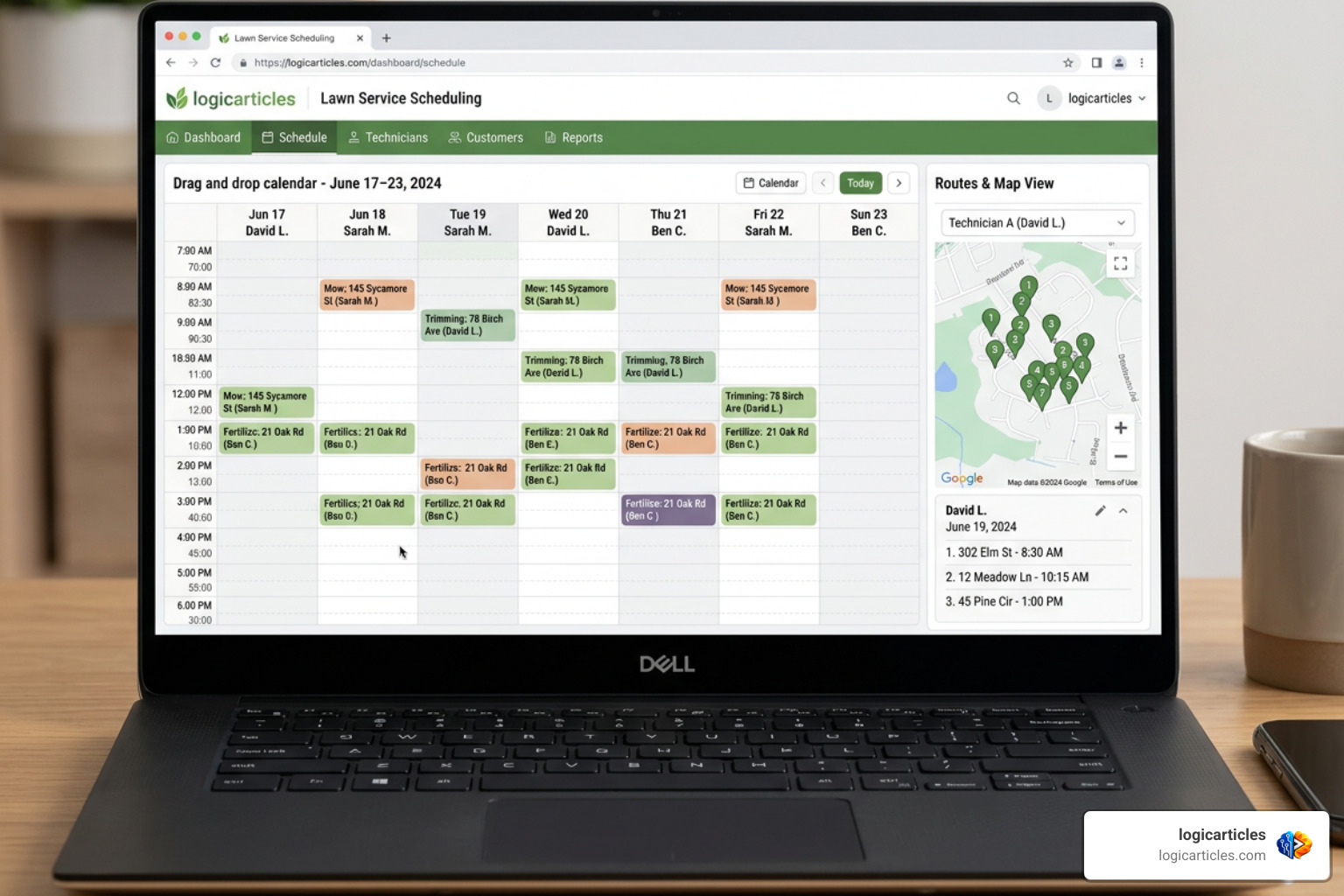
The foundation of any solid platform includes centralized customer relationship management (CRM) tools, comprehensive service history tracking, and property measurement capabilities. Having a detailed record of every job site—including gate codes, pet warnings, and past chemical applications—ensures that your crews can deliver consistent service without needing constant supervision.
Furthermore, modern platforms now integrate satellite imagery to allow remote property measurements. Instead of driving across town to estimate a yard, you can draw custom polygons on a map to calculate mowable square footage in seconds, letting you send accurate quotes faster than your competitors.
Scheduling and Dispatching in Software for Lawn Care Business
Efficient scheduling is the heartbeat of a profitable lawn care operation. Modern software replaces static whiteboards with dynamic, drag-and-drop calendars. If a storm rolls in or a crew member calls out sick, you can easily reschedule a whole day’s worth of jobs in bulk with just a few clicks.
Key features to look for in this department include:
- Visual Drag-and-Drop Calendars: Easily reassign jobs to different crews or time slots.
- Recurring Job Templates: Set up weekly mowing or bi-monthly fertilization programs once and let the software populate the calendar automatically.
- Crew Views: Give your field technicians a clear, uncluttered view of their daily agenda without exposing sensitive financial details.
- Quick Dispatching: Send instant notifications and job details directly to your crew’s mobile app.
For businesses looking to optimize how they assign and track these tasks across larger teams, checking out the Best Task Management Software in 2026 Tested can provide deeper insights into keeping field teams organized.
Route Optimization and GPS Tracking
Driving from property to property is one of the highest expenses for a landscaping company, both in terms of fuel and paid labor hours. Standard GPS apps can get you to a single address, but they don’t plan an efficient sequence for twenty different stops.
AI-powered route optimization tools analyze all your scheduled stops for the day and automatically arrange them into the most fuel-efficient sequence. This simple automation can cut drive times in half, saving your business thousands of dollars in fuel and vehicle wear-and-tear annually. Additionally, live technician tracking allows the back office to monitor job progress and provide customers with accurate ETAs.
Chemical Tracking and Compliance
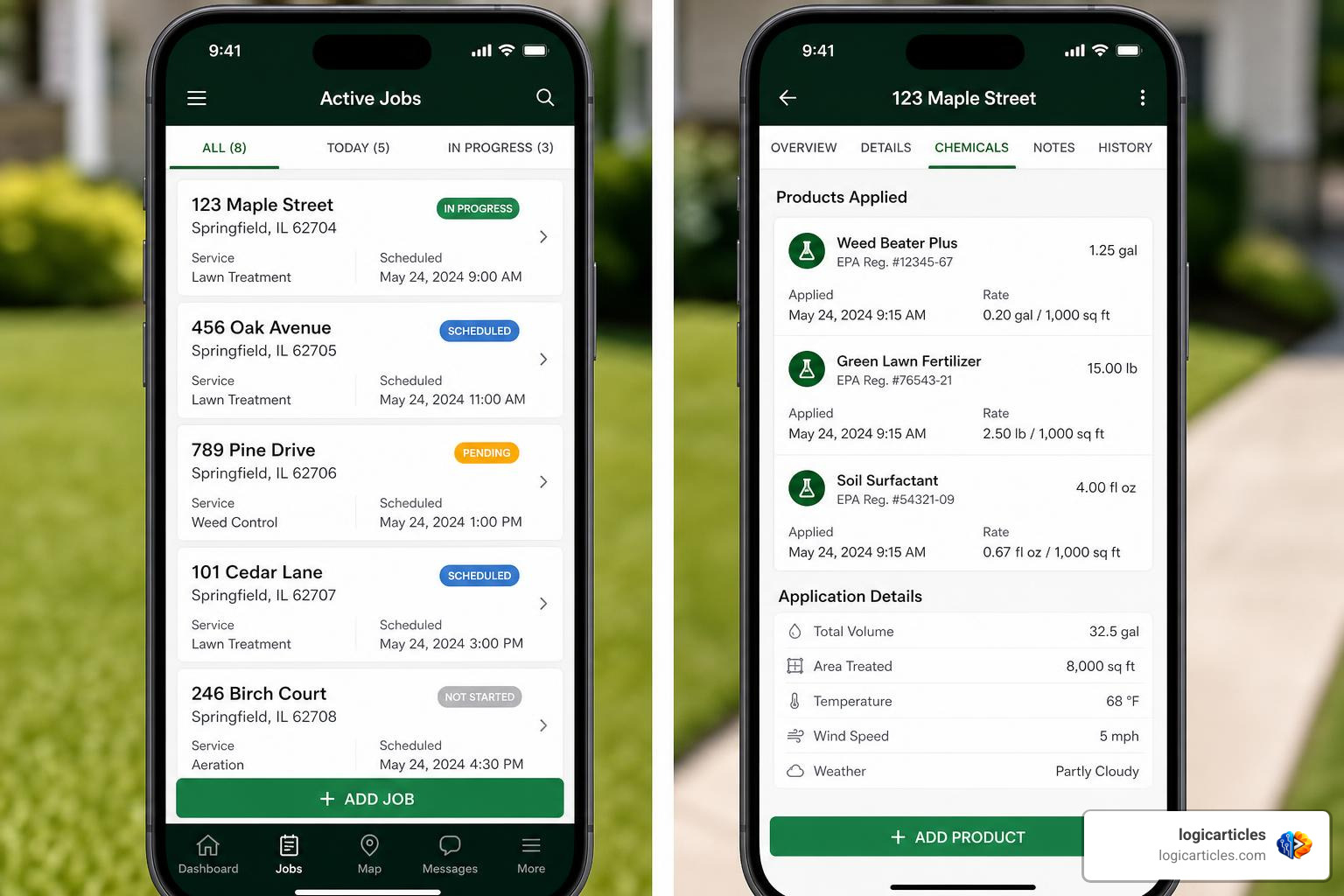
For businesses offering fertilization, weed control, or pest management, regulatory compliance is a major operational hurdle. Most local and federal laws require precise records of every chemical application, including the specific product used, application rates, total square footage treated, and even weather conditions at the time of application.
Top-tier software simplifies this by offering built-in chemical tracking modules. For instance, platforms like Lawn Care Software | Landscaping CRM Built for Pros | Turf Pro Logic treat lawn treatment programs as specialized workflows rather than generic recurring jobs. They allow you to log EPA registration numbers, auto-populate safety data sheets (SDS), and maintain flawless digital records to ensure your business remains fully compliant without adding hours of paperwork.
Comparing Pricing Models and Costs
Lawn care software is an investment, and understanding how different companies charge is essential for selecting a scalable solution. Most modern systems operate on a monthly subscription model, but there are alternative pricing structures to consider.
| Pricing Model | Average Cost | Best For | Key Advantage |
|---|---|---|---|
| Flat Monthly Fee | $30 – $100/mo | Solopreneurs & small teams | Predictable monthly overhead |
| Per-User / Per-Crew | $15 – $50/user/mo | Growing businesses | Scale costs directly with revenue |
| One-Time Purchase | $500 – $600 (one-time) | Desktop-only operations | Zero monthly recurring costs |
While cloud-based subscription models dominate the market due to their real-time mobile syncing, some traditional options like Lawn Care Business Software: Landscape Management, Invoicing: Adkad offer a one-time purchase desktop model. This can be highly appealing to small businesses that prefer offline management with no monthly fees, though it lacks the instant field-to-office communication of cloud solutions. For a broader look at the market, you can explore Lawn Care Business Software: 7 Options + Pricing – Quo to compare various pricing structures.
Free vs. Premium Software for Lawn Care Business
If you are a startup or a solo operator, you might not have the budget for premium software. Fortunately, the market offers several high-quality free or low-cost starter tiers.
Platforms like Yardbook: Landscaping Business Software | Lawn Care Business … offer robust free plans that include essential features like customer management, basic scheduling, and invoicing. These free options are ideal for getting your business off the ground.
As your team grows, however, you will likely need to upgrade to premium tiers. Paid versions unlock advanced features such as automated payment reminders, two-way text messaging, multi-crew dispatching, and deep integrations with accounting platforms. For a comprehensive look at how these entry-level systems scale into fully automated powerhouses, check out Lawn Care & Field Service Software | LawnPro .
Future Trends Shaping Lawn Care Operations in 2026
As we move through 2026, the green industry is rapidly adopting advanced technology to combat labor shortages and rising fuel costs. The biggest shift is the integration of AI-powered virtual assistants into daily management workflows.
Modern tools, such as the smart features found on AI-Powered Lawn Care & Pest Control Software for Small Crews | EarthaPro , are changing how solo operators price their work. Instead of guessing, owners can ask an integrated AI assistant to suggest pricing for services like hedge trimming or lawn treatments based on local market rates and property measurements.
Furthermore, the integration of seamless mobile payment processing is accelerating cash flow. By utilizing modern field tools linked to the Best Cloud POS Software in 2026, technicians can instantly text invoices with secure payment links directly to a customer’s phone upon job completion, often resulting in same-day payments. To see some of these mobile tools in action, you can watch videos like 16 Best Apps For Your Lawn Care Business – YouTube for a visual breakdown of modern field applications.
Frequently Asked Questions about Lawn Care Software
How does route optimization save money?
Route optimization software uses advanced algorithms to calculate the most efficient path between multiple job sites. Instead of manually mapping out your day, the system automatically reorganizes your stops to minimize back-tracking and traffic delays. This directly reduces fuel consumption, lowers vehicle maintenance costs, and allows your crews to complete more jobs per day, boosting overall productivity.
Can I track chemical usage for regulatory compliance?
Yes. Many specialized lawn care platforms allow you to record EPA registration numbers, track application rates, and log wind speed and weather conditions at the time of treatment. This ensures you maintain accurate, audit-ready digital records to satisfy local regulatory requirements. If you offer specialized services like irrigation alongside lawn care, you can also leverage specialized platforms like #1 Irrigation Service Software for Lawn Businesses | RealGreen to track backflow tests and system winterizations.
Is there a free software option for small crews?
Yes, several platforms offer free starter plans or free-for-life tiers for businesses with limited users. These plans generally cover basic scheduling, customer records, and invoicing. If you are looking for cost-effective ways to manage estimating and scheduling for a growing crew, starting with a budget-friendly tier like Starter is an excellent way to transition away from manual spreadsheets without a large upfront financial commitment.
Conclusion
At logicarticles, we believe that choosing the right software for your business shouldn’t be a guessing game. The right software for lawn care business management will eliminate your evening paperwork, keep your crews accountable, and ensure you get paid faster.
As you evaluate your options, consider your business’s current size and your long-term goals. If you are a solo operator, a free or low-cost starter plan may be all you need to get organized. If you manage multiple crews and handle chemical applications, investing in a premium platform with route optimization and compliance tracking will pay for itself in saved time and fuel.
For more practical, logic-driven insights into the best business tools on the market, explore our comprehensive reviews at logicarticles.com/category/best-software/.