Why the Right Business Process Optimization Tools Can Transform Your Operations

Business process optimization tools help organizations find inefficiencies, eliminate waste, and automate repetitive work — so teams can focus on what actually matters.
Here’s a quick look at the top options to compare:
| Tool | Best For | Key Strength |
|---|---|---|
| IBM Cloud Pak for Business Automation | Large enterprises | AI-powered workflows + process mining |
| Microsoft Power Automate | Microsoft ecosystem users | Low-code RPA + 1,400+ connectors |
| Appian BPM Suite | Complex case management | Fast app delivery + low-code |
| iGrafx Process360 Live | Process intelligence | Mining + design + simulation in one |
| Camunda ProcessOS | AI-native re-engineering | Agentic AI across full process lifecycle |
| Nintex Workflow Automation | Mid-market teams | Document automation + approvals |
| Bizagi | BPM + digital transformation | Visual modeling + BPMN 2.0 |
The business case is hard to ignore. Organizations using BPM platforms have reported a 365% ROI over three years and an 80% increase in productivity. Companies applying Lean and Six Sigma methods see an average 25–30% boost in productivity. And businesses that automate key workflows cut operational costs by up to 30%.
But here’s the problem: there are dozens of tools on the market, each promising to solve your process headaches. Some are built for IT teams. Others target business users. Some focus on mapping and analysis. Others on automation and execution.
Choosing the wrong one means wasted budget, frustrated employees, and processes that are no easier to manage than before.
This guide cuts through the noise. We compare the leading platforms head-to-head — looking at features, deployment options, ideal use cases, and real-world ROI — so you can pick the right fit for your organization’s size, industry, and goals.
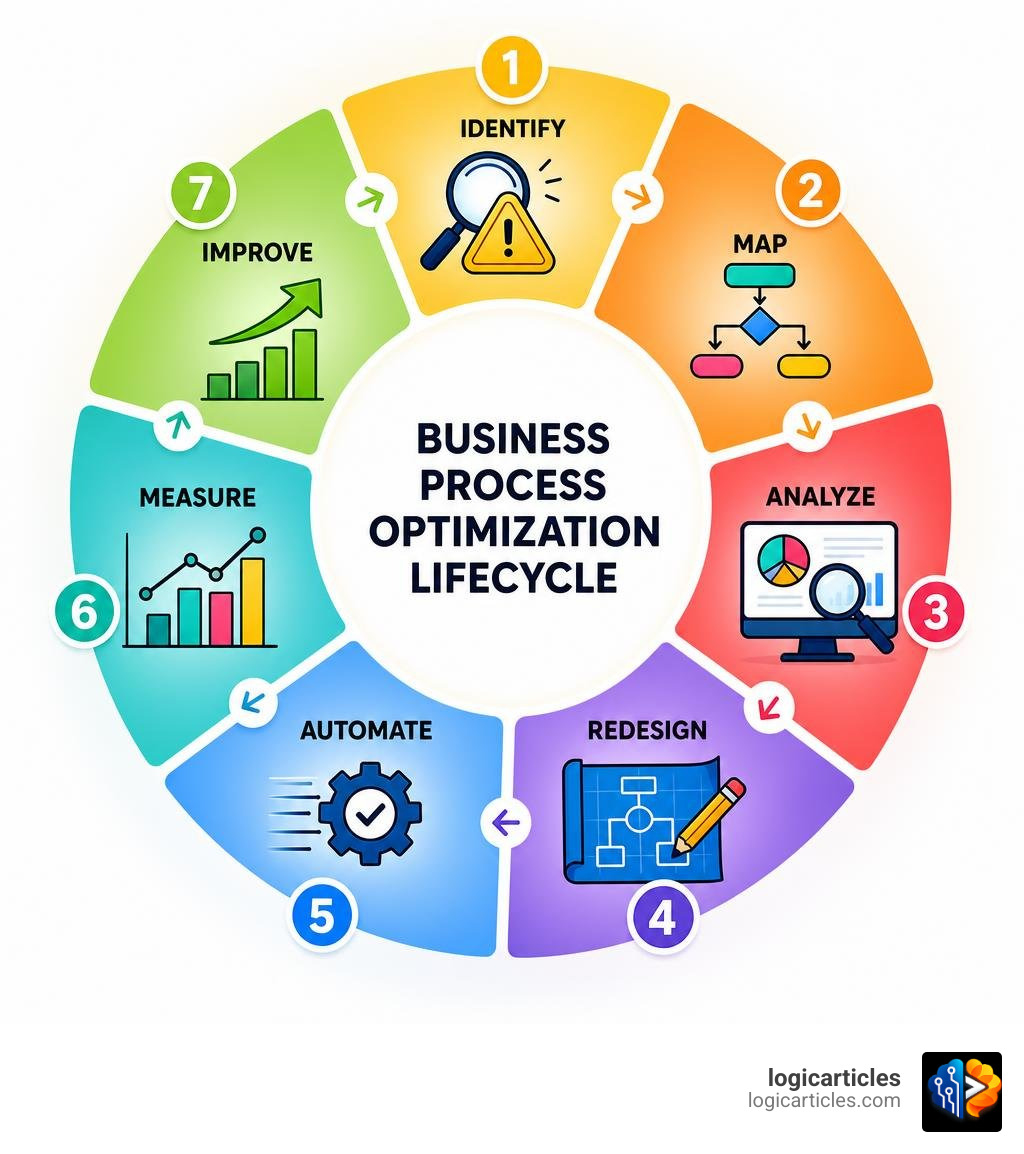
Understanding Business Process Optimization (BPO vs. BPM vs. BPI)
To build a highly efficient organization, we must first understand the landscape of process improvement. Terms like Business Process Optimization (BPO), Business Process Management (BPM), and Business Process Improvement (BPI) are often thrown around interchangeably, but they represent distinct strategies.
- Business Process Management (BPM): This is the overarching discipline and lifecycle. BPM is a structured management approach to analyze, design, model, execute, monitor, and continuously manage an organization’s business processes. It coordinates the behavior of people, systems, and things (like IoT devices) to produce specific, repeatable outcomes.
- Business Process Improvement (BPI): This refers to the tactical initiatives aimed at making incremental changes to existing workflows. It is often project-based and targets specific bottlenecks to achieve a quick productivity boost.
- Business Process Optimization (BPO): This is the practice of refining a process to make it as efficient and effective as possible. It is the peak phase of the BPM lifecycle. Optimization does not just manage or slightly improve a workflow; it leverages data-driven insights, advanced technologies, and automation to minimize operational costs, eliminate non-value-added activities, and maximize output quality.
When your underlying processes are optimized, managing daily tasks becomes significantly easier. In fact, keeping track of individual execution steps is best handled by the Best Task Management Software In 2026 Tested, which bridges the gap between high-level process design and day-to-day task execution.
The Role of Automation: BPA, RPA, and iBPMS
Modern process optimization relies heavily on the symbiotic relationship between process design and execution. This is where automation platforms step in:
- Business Process Automation (BPA): BPA is the technology-enabled automation of activities or services that run your business. While BPM defines the strategic workflow, BPA is the execution arm that replaces manual steps with automated software rules.
- Robotic Process Automation (RPA): RPA uses digital labor—software “bots”—to mimic human interactions with digital systems. RPA is ideal for handling repetitive, structured, UI-based tasks (like copying and pasting data between legacy systems) without requiring deep API integrations.
- Intelligent Business Process Management Suites (iBPMS): These platforms represent the evolution of traditional BPM. An iBPMS integrates real-time analytics, machine learning, and event-driven processing into the workflow engine to enable dynamic, data-driven decision-making.
The rise of low-code and no-code tools within these platforms has democratized automation. Today, up to 95% of applications can be built without direct IT intervention, allowing business users to optimize their own departmental workflows. If you are looking to scale a young company, integrating these automation layers with the Best Startup Growth Tools For 2026 can help you build highly scalable, lean operations from day one.
Core Methodologies and Business Process Optimization Tools
Software tools are only as good as the methodologies driving them. To optimize a process, we must apply structured, proven frameworks that identify root causes of waste and variation.
- Six Sigma: Developed to eliminate defects and variation, Six Sigma targets near-perfection, allowing no more than 3.4 defects per million opportunities. It relies heavily on statistical analysis.
- Lean Manufacturing: Originating at Toyota, Lean focuses entirely on removing waste (non-value-added activities) from the value stream to reduce lead times and inventory costs.
- DMAIC Framework: A cornerstone of Six Sigma, this five-phase methodology stands for:
- Define the problem and project goals.
- Measure current process performance.
- Analyze the data to determine root causes of defects or bottlenecks.
- Improve the process by eliminating root causes.
- Control the improved process to sustain future gains.
- Kaizen: A Japanese philosophy meaning “continuous improvement.” It encourages small, daily, incremental changes driven by employees at all levels of the organization.
- PDCA Cycle (Plan-Do-Check-Act): A simple but powerful iterative four-step model for carrying out change and continuously testing improvements.
- Value Stream Mapping (VSM): A visual tool used to map the path of information and materials from origin to the final customer. It highlights where value is added and where waste accumulates.
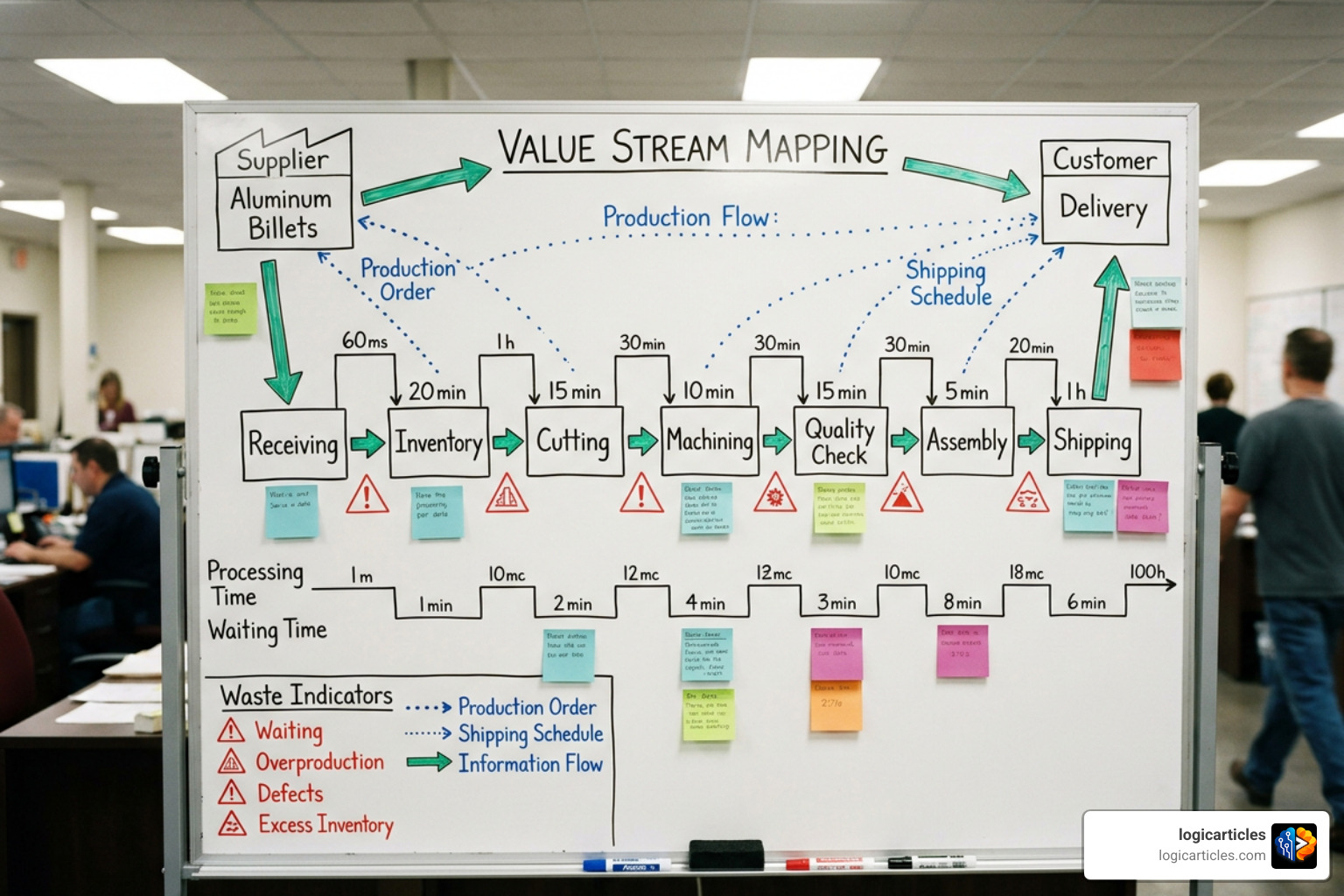
These methodologies are highly versatile. For instance, call centers and support teams frequently apply Lean principles to reduce customer wait times. By utilizing the Best Workforce Management Software For Call Centers, operations leaders can map agent availability directly against historical ticket volume, eliminating the waste of over-staffing while ensuring customer service targets are consistently met.
Key Features to Look for in Business Process Optimization Tools
When evaluating business process optimization tools, certain core capabilities are non-negotiable for enterprise success:
- Visual Modeling & BPMN 2.0 Compliance: The platform must feature an intuitive drag-and-drop interface that supports Business Process Model and Notation (BPMN 2.0) standards, ensuring both business analysts and IT developers speak the same visual language.
- Centralized Process Repository: A secure, single source of truth where all process documentation, versions, and associated business rules are stored.
- Process Intelligence & Mining: The ability to ingest event logs from your existing systems to automatically map out how processes are actually running in reality, rather than how you think they run.
- Robust Integration Capabilities: Pre-built connectors, APIs, and webhooks that allow the tool to exchange data seamlessly with your ERP, CRM, and legacy software.
- Risk and Architecture Management: Advanced tools go beyond simple flowcharts to integrate process management with Enterprise Architecture Management (EAM).
A prime example of this unified approach is Bpanda, a web-based process management platform that supports both BPMN 2.0 and ArchiMate 3.2 standards. It allows organizations to model, evaluate, and optimize workflows while managing risks, compliance, and GDPR requirements in sync with their overall IT architecture.
How to Implement Business Process Optimization Tools Successfully
A successful process optimization project requires a structured, step-by-step approach:
- Identify and Prioritize: Select a high-impact, manageable process to optimize first. Focus on workflows with high error rates, manual bottlenecks, or direct customer impact.
- Discover and Map: Work with cross-functional teams to map the current “As-Is” process. Avoid relying solely on executive opinions; observe the work where it actually happens (a practice known as a Gemba Walk).
- Analyze and Redesign: Use root cause analysis (like the 5 Whys or Fishbone diagrams) to identify bottlenecks. Design the “To-Be” process, focusing on eliminating non-value-added steps.
- Pilot Testing: Test the redesigned process on a small scale or within a single department to minimize operational disruption.
- Deploy and Train: Roll out the new workflow across the organization. Provide thorough documentation, tutorials, and workshops.
- Sustain and Monitor: Track KPIs using real-time dashboards to ensure the process remains efficient.
The biggest hurdle in this lifecycle is almost always change management and employee resistance. Employees are naturally comfortable with their existing routines. To overcome this, involve team members early in the design phase, communicate the “why” behind changes, and make their new daily routines as friction-free as possible.
Creating a comprehensive repository of training materials using the Best Knowledge Base Software In 2026 ensures that employees have instant, self-service access to updated process documentation, standard operating procedures, and software guides.
Measuring Success: KPIs and Real-World Use Cases
To prove the value of your process optimization initiatives, you must track quantifiable Key Performance Indicators (KPIs):
- Cycle Time: The total time from the start of a process to its completion.
- Error / Defect Rate: The percentage of process outputs that require rework or fail quality checks.
- Cost per Transaction: The operational cost associated with executing a single process run.
- Customer Satisfaction (CSAT) / Net Promoter Score (NPS): How process speed and quality improvements impact the end-user experience.
Real-World Success Across Industries
- Financial Services: An insurance company optimized its claim processing workflow, reducing the average processing time from 5 days down to just 2 days. This resulted in a 40% reduction in processing time and a substantial boost in customer retention.
- Healthcare Administration: A major hospital utilized root cause analysis and workflow mapping to streamline patient discharge procedures, successfully cutting discharge cycle times by 35% and freeing up critical bed capacity.
- Manufacturing: A medical device manufacturer applied Six Sigma to its assembly line, achieving a 40% reduction in production defects and saving over $300,000 annually in rework costs.
Optimizing operations is equally vital for field and remote staff. By leveraging Mobile Workforce Management Software Features Benefits Ai 2026, service businesses can automate dispatching, route planning, and real-time status updates. Furthermore, integrating your optimized workflows with the Best Hr Software For Small Businesses ensures that internal employee transitions, onboarding, and payroll processing run with the same automated efficiency as your core customer-facing operations.
Comparing the Leading Process Optimization Platforms
When selecting a platform, it is critical to compare how the top-tier solutions balance complexity, integration, deployment options, and return on investment.
| Platform | Deployment Options | Key Strengths | Ideal Scale | Typical ROI |
|---|---|---|---|---|
| IBM Cloud Pak | Hybrid Cloud, SaaS, Containers | Process mining, AI decision engines, enterprise document processing | Large Global Enterprises | 365% over 3 years |
| Microsoft Power Automate | Cloud-native, On-premises gateway | 1,400+ prebuilt connectors, deep Microsoft 365 & Copilot integration | SMBs to Enterprises | 248% over 3 years |
| iGrafx Process360 Live | SaaS, Cloud | Unified mining, visual design, predictive simulation, Digital Twin | Mid-market to Enterprise | 50% cost reduction |
| Camunda ProcessOS | Cloud-native, Private Git | Agentic AI orchestration, outcome-first re-engineering | Mid-market to Enterprise | Up to 80% time savings |
As you scale your process execution infrastructure across these heavy-duty cloud platforms, cloud hosting expenses can quickly spiral out of control. To prevent automated workflows from draining your IT budget, it is wise to run your operations alongside the Best Cloud Cost Optimization Tools For 2026 Cut Cloud Bills Fast to keep your cloud infrastructure lean and cost-effective.
Enterprise Automation and Workflow Orchestration
For large-scale organizations running complex, fragmented workflows across legacy systems, enterprise-grade orchestrators are essential.
- IBM Cloud Pak: The IBM Cloud Pak for Business Automation is a modular, containerized platform that can be deployed across any hybrid cloud environment. It combines process mining, workflow automation, decision management, and digital labor (RPA). By deploying containerized automation, enterprises can model complex operational rules and scale them dynamically, helping users process transactions (like margin requests or trade promotions) instantly with virtually zero manual errors.
- Microsoft Power Automate: As a leader in robotic process automation, Power Automate: Business Process Workflow Automation | Microsoft Power Platform offers an incredibly low barrier to entry. It provides desktop flows (RPA) for legacy systems, cloud flows (DPA) for modern APIs, and deep integration with Microsoft 365. With Copilot embedded directly in the platform, users can describe workflows in natural language to build automations up to 60% faster, saving thousands of manual hours annually.
Process Intelligence and Agentic AI Systems
The cutting edge of process optimization has moved beyond rigid, step-by-step flowcharts toward intelligent, self-adjusting systems.
- iGrafx Process360 Live: This platform represents the pinnacle of process intelligence. By combining process mining, modeling, and predictive simulation, iGrafx | Process Intelligence, AI, & Process Mining Platform allows businesses to build a “Digital Twin of the Organization” (DTO). This lets process managers backtest changes and simulate the impact of optimizations on cycle times and compliance before deploying them to production.
- Camunda ProcessOS: Taking a fundamentally different approach, ProcessOS: The Agentic Operating System for Business Processes | Camunda argues that adding AI to legacy processes only yields minor improvements. Instead, ProcessOS uses four specialized AI agents to discover, design, build, deploy, and continuously improve processes from the ground up based on desired outcomes. It evaluates process variants using a weighted scoring model called a “fitness function” and records organizational memory in a private git repository, accelerating future engineering cycles.
Frequently Asked Questions about Process Optimization
What is the difference between process mining and process optimization?
Process mining is an analytical technology that extracts data from system event logs (like ERP or CRM histories) to visualize how workflows are executing in real life. It uncovers bottlenecks, deviations, and compliance gaps. Process optimization is the broader, active practice of taking those data-driven insights and applying methodologies, automation, or structural re-engineering to improve the workflow and eliminate the identified waste.
How does generative AI enhance modern process automation?
Generative AI transforms automation from rigid, rule-based execution to flexible, cognitive orchestration. Instead of writing complex code, users can use natural language processing to design workflows. Gen AI can also parse unstructured documents, make autonomous decisions when exceptions occur, and dynamically adjust process paths based on real-time data—outperforming traditional, static RPA bots.
What are the biggest challenges when adopting process optimization software?
The three most common challenges are:
- Legacy Integration: Connecting modern optimization platforms to outdated, on-premises systems.
- Change Management: Managing employee pushback and ensuring adoption of new digital workflows.
- Data Silos: Gathering clean, consistent event logs across fragmented departmental tools to get an accurate view of end-to-end processes.
Conclusion
At logicarticles, we know that true operational excellence is not a one-time project—it is a continuous commitment to digital transformation. Implementing the right business process optimization tools is the single most effective way to eliminate operational waste, empower your workforce, and scale your business with confidence.
Whether you need a low-code automation tool like Power Automate, an enterprise orchestrator like IBM Cloud Pak, or an AI-native agentic system like Camunda ProcessOS, the right platform will help you turn chaotic workflows into structured, highly efficient engines of growth.
Ready to explore more industry-leading tools to optimize your business operations? Check out our curated guides in the Best Software Categories to find the perfect solutions for your tech stack.