What the Spotalike Review Tells You Before You Hit Play

This Spotalike review covers everything you need to decide if this free playlist tool is worth your time. Here’s the quick version:
| Question | Answer |
|---|---|
| What is it? | A free web tool that generates Spotify playlists from a single seed song |
| Is it safe? | Yes — ScamAdviser rates it “Very Likely Safe,” with a 14-year-old domain |
| Is it free? | Completely free, with optional Patreon support |
| How many results? | 10 song recommendations per search |
| Needs Spotify account? | No, to browse — yes, to save playlists |
| Overall rating | ~4.2/5 from user reviews; 2.78/5 on Product Hunt |
With over 50 million tracks on Spotify, finding new music that actually fits your taste is harder than it sounds. Spotify’s own algorithm learns from your history — which means it can trap you in a loop of the same artists and sounds.
Spotalike takes a different approach. You type in one song you love, and it generates a playlist of similar tracks — without factoring in what you’ve already been listening to.
The idea started in Sweden back in 2011, when a small UX design team felt Spotify’s early recommendations were just not good enough. As the developers put it in an interview with MAPSOUND: “Our playlists are neutral and not affected by what you’ve listened to previously.”
That single idea — an unbiased, history-free playlist — is what’s kept Spotalike pulling in roughly 516,000 monthly visitors more than a decade later.
But does it actually deliver? That’s what this review breaks down.
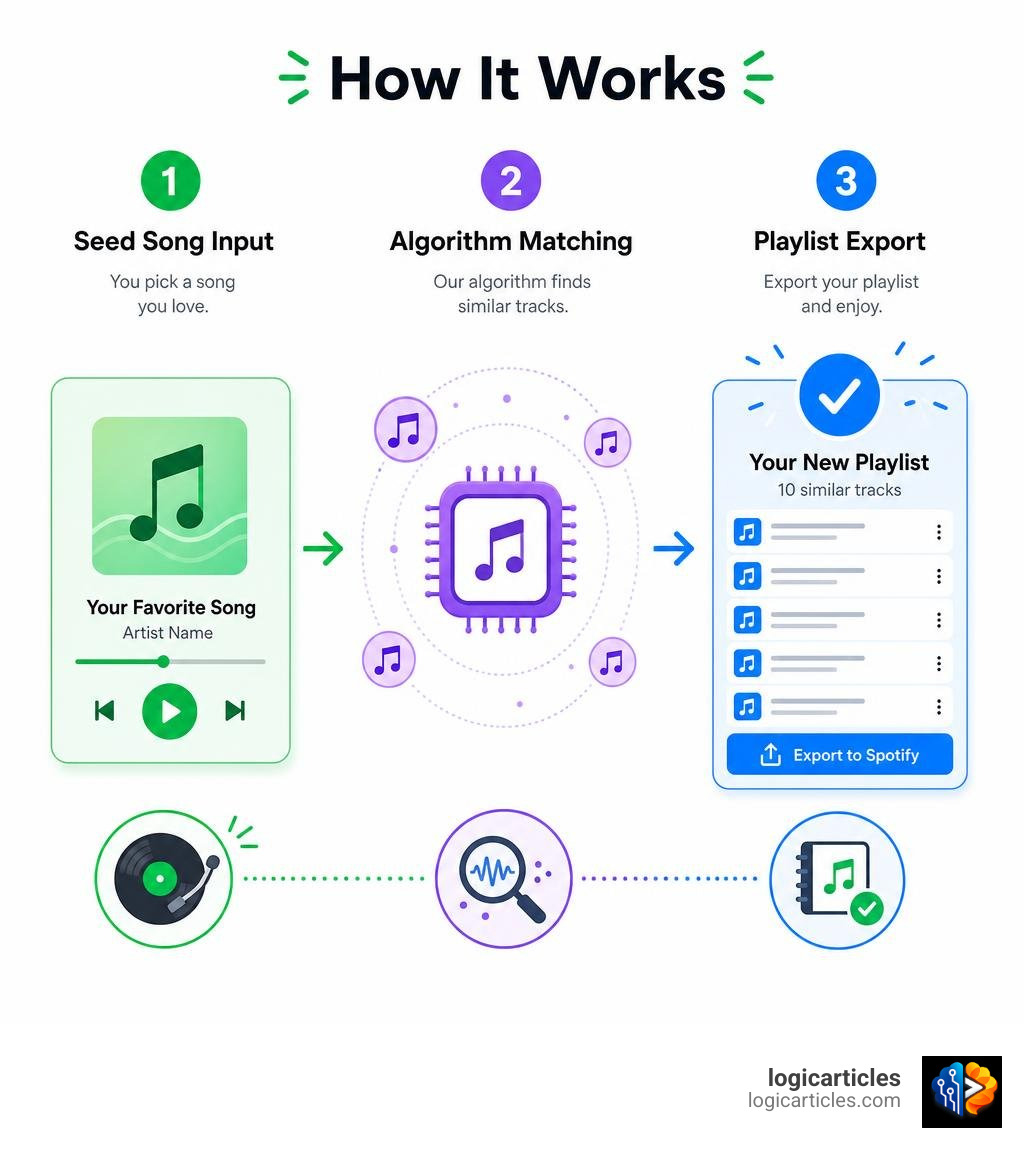
What is Spotalike and How Does It Work?
At its core, Spotalike is a minimalist, web-based utility designed to solve a very specific problem: “I love this exact song, and I want more songs just like it.”
Unlike full-scale streaming platforms that try to manage your entire library, Spotalike acts as a specialized bridge. It takes a single “seed track” provided by you, runs it through an underlying recommendation engine, and outputs a curated list of similar tunes. It relies heavily on the Spotify API to pull accurate track metadata and cover art, allowing you to instantly export the generated recommendations directly to your Spotify account as a brand-new playlist.
The user experience is intentionally simple. There are no flashing graphics, complex settings menus, or annoying sign-up prompts. You visit the site, search for your song, and let the algorithm do the heavy lifting.
The Core Mechanics of a Spotalike Review
When we test the actual workflow of Spotalike, we find that the entire process takes less than a minute. Here is the step-by-step breakdown of how it works:
- The Search Bar: You are greeted by a single search bar on the homepage. You type in the title of your favorite song or the name of an artist.
- Track Selection: Spotalike queries the Spotify database and presents a dropdown list of matching tracks. This ensures you select the exact version of the song you want (avoiding live versions or remixes unless specified).
- The 10-Song Limit: Once you select your seed track, Spotalike generates a list of exactly 10 closely matching tracks. While some users might find a 10-song playlist a bit short, the developers designed it this way to prioritize quality over quantity. By focusing on the absolute closest matches, they ensure that the playlist maintains high relevance.
- Saving and Exporting: Next to the generated list, you will see an “Add to Spotify” button. Clicking this prompts you to authorize Spotalike to access your Spotify account. Once authorized, the tool automatically creates a new playlist in your library with the tracks it found.
The Algorithm: Last.fm Data vs. AI Recommendations
One of the most fascinating aspects of Spotalike is how its underlying technology has evolved over the years.
When the tool launched in 2011, Spotify’s native recommendation algorithms were still in their infancy. To build a better matchmaking engine, the developers turned to Last.fm. For over a decade, Last.fm had been building a massive, historical database of music taste by tracking what millions of users actually listened to (a process called “scrobbling”).
Spotalike used Last.fm’s collaborative filtering data. Instead of analyzing the mathematical waves of the audio, the algorithm looked at user behavior: “If thousands of people who listen to Track A also regularly listen to Track B, then Track B is a great recommendation.”
However, relying entirely on historical listening data has its limits. For instance, brand-new songs often suffer from a “data lag” because not enough people have listened to them yet to establish collaborative patterns.
To address this, Spotalike underwent a major technical update in March 2021, transitioning to modern AI-driven acoustic analysis.
Today, Spotalike combines historical collaborative data with deep acoustic analysis. The AI evaluates specific musical characteristics of your seed track, including:
- Tempo (BPM): Matching the speed and heartbeat of the track.
- Energy: Measuring how intense and active the music feels.
- Valence: Analyzing the musical positiveness (happy vs. sad tones).
- Danceability: Evaluating how suitable the track is for dancing based on tempo, rhythm stability, and beat strength.
This hybrid approach allows Spotalike to make highly accurate recommendations, bridging the gap between old-school user habits and modern machine learning.
Is Spotalike Safe, Legit, and Free to Use?
Whenever you use a third-party tool that connects to your personal accounts, safety is a top priority. We took a deep look “under the hood” to evaluate Spotalike’s security credentials, and the results are reassuring.
According to ScamAdviser, Spotalike has a trust score of “Very Likely Safe.” The domain spotalike.com has been active for 14 years (registered way back on August 25, 2011), which is a strong indicator of legitimacy. Scammers rarely maintain domain stability for over a decade.
From a technical standpoint, the platform uses a valid Google Trust Services SSL certificate to encrypt your connection, and the site is securely hosted behind Cloudflare. Because Spotalike uses the official Spotify API, it never sees or stores your Spotify password; the authentication happens safely through Spotify’s secure login portal.
Best of all, Spotalike is 100% free to use. There are no premium tiers, paywalls, or hidden subscription fees. The project is maintained as a labor of love by developers who fund the hosting costs through minimal, non-intrusive on-site advertising and voluntary donations on Patreon.
For more detailed discussions on its safety and user feedback, you can read the Spot A Like Reviews – Read Customer Reviews of Spotalike.com or check out the technical breakdown in the Spotalike Review – AIToolbox360 .
Key Features, Pros, and Cons of Spotalike
To give you a balanced view of this tool, let us explore the main scenarios where Spotalike shines, as well as the areas where it falls short.
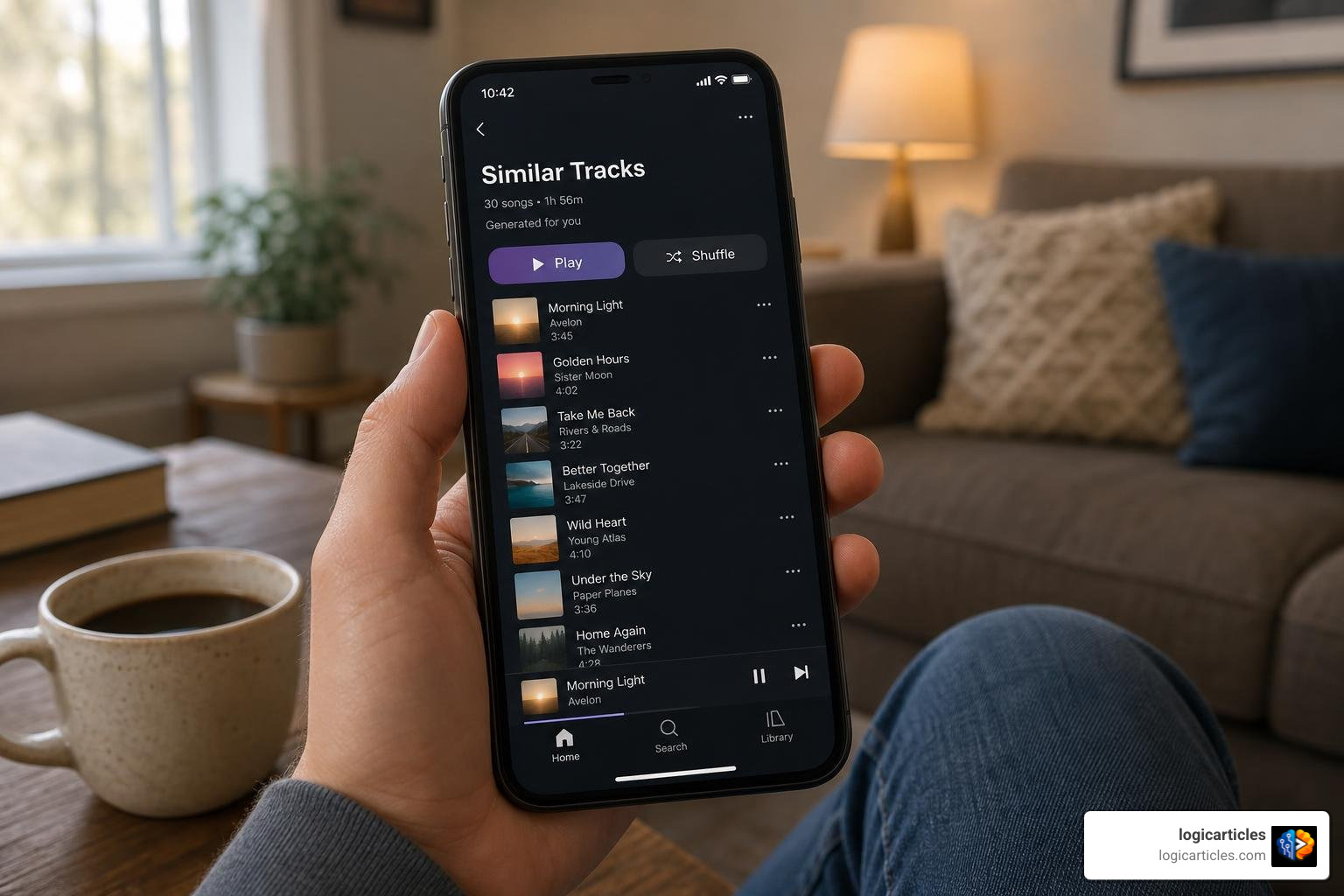
Spotalike is incredibly versatile when it comes to quick music discovery. Some of the most popular use cases include:
- Workout Music: Enter one high-energy track, and instantly get 10 more with a matching BPM to keep your workout momentum going.
- Party Playlists: If you are hosting a social gathering and want to maintain a specific mood — like a nostalgic 90s hip-hop vibe or a relaxing acoustic afternoon — Spotalike can build a cohesive soundtrack in seconds.
- Genre Exploration: Because the acoustic algorithm connects songs based on their actual sound rather than superficial genre tags, it is a fantastic tool for cross-genre discovery. You might enter an indie-rock song and find a dream-pop track that matches the vibe perfectly.
Pros and Cons: A Balanced Spotalike Review
Like any tool, Spotalike has its strengths and weaknesses. Here is what we found during our hands-on testing:
The Pros:
- Zero Friction: You do not need to register an account, enter an email address, or log in just to generate a playlist. You can browse recommendations freely.
- Unbiased Recommendations: Because it ignores your past listening history, it helps you break out of your personal “filter bubble” and discover artists you would have never found otherwise.
- Time-Saving: It eliminates the tedious task of hunting down similar artists manually.
- High-Quality Matches: The 10-song limit ensures that the recommendations are highly relevant to the seed track.
The Cons:
- Exclusive Spotify Dependency: You cannot export these playlists to Apple Music, YouTube Music, or Deezer directly from the tool.
- No Built-in Editing: You cannot swap out or delete songs from the list within the Spotalike interface. You have to export the playlist to Spotify first and make edits there.
- 10-Song Limit: For users looking to build long, multi-hour playlists, having to run multiple searches can feel a bit repetitive.
- Occasional Data Gaps: If you search for an extremely obscure indie artist or a song that was released yesterday, the tool may occasionally fail to generate results due to a lack of collaborative data.
For a deeper dive into user testimonials and feature ratings, you can explore the Spot A Like Reviews 2026: Details, Pricing, & Features or see how the community rates the tool on Spot A Like .
The Ultimate Spotalike Review: How It Compares to Alternatives
To truly understand the value of Spotalike, we need to look at how it holds up against its main competitors, both native and third-party.
Spotalike vs. Spotify Radio and Apple Music
How does Spotalike compare to the native features of major streaming platforms? Let’s take a look at the key differences:
| Feature | Spotalike | Spotify Radio | Apple Music |
|---|---|---|---|
| Price | Free | Free / Premium | Paid Subscription |
| History Bias | None (100% neutral) | High (factors in your taste) | High (highly personalized) |
| Playlist Size | Exactly 10 songs | Exactly 50 songs | Endless algorithmic stream |
| Account Required | No (to generate) | Yes | Yes |
| Customization | Low | Medium | High |
While Spotify’s “Song Radio” is excellent, it generates exactly 50 tracks and heavily weights its choices based on what you have already listened to. If you want a truly clean slate, Spotalike is the superior option.
Apple Music, on the other hand, offers a massive catalog of over 75 million songs and incredible editorial playlists, but its interface is far more complex and lacks a simple, single-click “seed song to playlist” web tool that operates outside of its paid ecosystem. You can read a detailed head-to-head comparison on Apple Music VS Spotalike – compare differences & reviews? .
If you are looking for other ways to stream your music, check out our guide on the 9 Best Spotify Alternatives in 2026 Ranked to see how the landscape is changing.
Spotalike vs. Other Third-Party Playlist Generators
There are several other third-party tools in the music discovery space, each with its own unique spin:
- MagicPlaylist: Similar to Spotalike, MagicPlaylist lets you enter a seed track, but it gives you more immediate control, allowing you to choose the playlist length (from 1 to 100 tracks) before exporting.
- Smarter Playlists: This is a powerhouse tool for power users. It allows you to build complex playlists visually using a flow-chart interface, mixing different sources, genres, and eras. If Spotalike is a simple point-and-shoot camera, Smarter Playlists is a professional DSLR.
- volt.fm: Focuses more on analyzing your existing Spotify library and showing you detailed statistics about your listening habits, rather than generating quick, single-track playlists.
For those searching for budget-friendly streaming options, we have compiled a list of the Best Cheaper Spotify Alternatives to help you save money while keeping your music library fresh.
Frequently Asked Questions about Spotalike
We have gathered some of the most common questions users ask when exploring Spotalike.
Do I need a Spotify account to use Spotalike?
No! You do not need a Spotify account to use the basic search and recommendation features of Spotalike. You can type in a song, view the 10 recommended tracks, and even listen to 30-second audio previews directly in your web browser. However, if you want to listen to the full tracks or save the generated playlist to your library, you will need to link a Spotify account.
Who is the team behind Spotalike?
Spotalike was originally developed in 2011 by Osynlig, a highly respected UX (User Experience) design agency based in Sweden — the very same country where Spotify was born. The project started as a fun, night-and-weekend passion project by developers who were frustrated with the music discovery tools available at the time. To this day, the tool is maintained by passionate music lovers who keep the service running smoothly. For more about its history and origins, you can check out Spotalike: Recensione di Freeonline .
Can I use Spotalike with other music streaming apps?
Currently, Spotalike is exclusively built to integrate with Spotify. It utilizes Spotify’s database and API for its search results and playlist exporting. If you use Apple Music, YouTube Music, or Amazon Music, you can still use Spotalike to discover new song titles, but you will have to manually search for and add those songs to your respective music app.
If you are looking to escape ads and find platforms that offer uninterrupted listening, take a look at our curated list of the Best Music Streaming Apps Without Ads.
Conclusion
At the end of the day, Spotalike is a brilliant micro-tool that does exactly what it promises. By stripping away complex algorithms, registration forms, and personalized bias, it returns music discovery to its purest form: starting with a song you love and finding ten more that share its soul.
Whether you are trying to break out of a music rut, building a high-intensity workout mix, or planning the soundtrack for your next party, Spotalike is a free, safe, and incredibly fast utility that deserves a permanent spot in your digital bookmark bar.
If you enjoyed this Spotalike review and want to keep up with the latest trends in technology, automation, and creative software, Explore more AI tools on LogicArticles to find your next favorite digital companion!