Why White Label Reputation Management Software Is a Game-Changer for Agencies

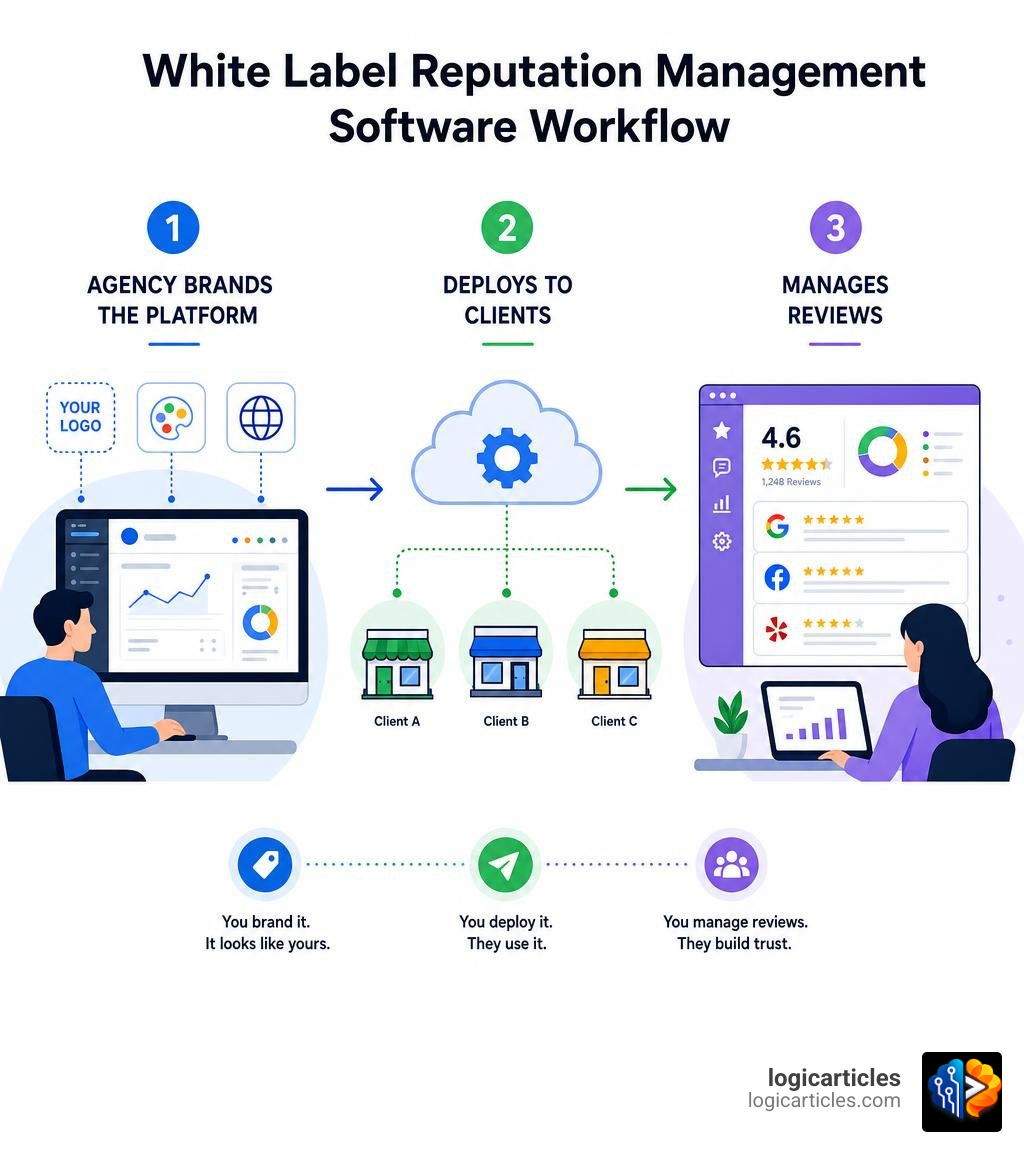
White label reputation management software lets agencies resell fully branded review management tools to clients — without building any technology themselves. The agency’s logo, domain, and colors appear everywhere. Clients never see the underlying vendor.
Here’s a quick breakdown of what it covers:
| Feature | What It Means for Agencies |
|---|---|
| Custom branding | Your logo, domain, and colors throughout |
| Review monitoring | Track reviews across 50-200+ platforms |
| AI review responses | Auto-generate replies at scale |
| Client portals | Clients log in to your branded dashboard |
| Reporting | Branded PDF reports sent to clients |
| Pricing model | Flat-rate or per-location; resell at markup |
Online reviews have become one of the most powerful signals in local search. Agencies that help clients manage them well are delivering something clients can see and feel — which makes it one of the stickiest services you can offer.
The numbers back this up. Agencies using white label reputation platforms report up to 40% higher client retention rates. And with flat-rate platforms available, gross margins of 70-90% are realistic when reselling at $99-$400+ per client per month.
The challenge? There are dozens of platforms competing for your business — each with different pricing structures, AI capabilities, and white label depth. Some offer cosmetic white labeling (just a logo swap). Others give you full domain control, custom billing, and client-level permissions.
This guide compares the best options so you can choose the right fit for your agency.
What is White Label Reputation Management Software?
At its core, white label reputation management software is a pre-built, enterprise-grade platform that an agency can purchase, rebrand, and present to clients as its own proprietary technology.
Standard vs. White Label: The Core Differences
Standard reputation tools are sold directly to the end-user (the business owner) under the software vendor’s brand name. If you sign up a client for a standard tool, the client knows exactly which third-party software you are using. They see the vendor’s logo, receive emails from the vendor’s domain, and log into the vendor’s portal.
With a white label platform, the vendor’s identity is completely stripped away. We can customize the platform to feature our agency’s logo, brand colors, favicon, and custom domain. This technical and cosmetic transition turns a third-party utility into our own proprietary SaaS product.
Client Experience Ownership and Platform Infrastructure
When we own the client experience, we control the narrative. The client interacts exclusively with our brand. They log into a portal hosted on our domain (e.g., dashboard.ouragency.com), receive automated email alerts sent via our custom mail servers, and view reports featuring our branding.
By utilizing a white-label infrastructure, we avoid the risk of clients bypassing our agency to buy directly from the software provider. It elevates our agency from a basic service provider to an indispensable technology partner.
How White Labeling Works Technically
To make a platform truly look like your own, several technical configurations happen behind the scenes:
- Custom Domains & DNS Configuration: We point a subdomain of our agency’s website (like
reviews.ouragency.com) to the platform’s servers using CNAME records. This ensures that the entire user journey occurs under our domain. - Branded Client Portals: The login screen, dashboard interface, and navigation menus are customized with our logo, custom CSS, and brand colors.
- SMTP Email Setup: To prevent automated review request emails or weekly reports from landing in spam, we configure SMTP settings or custom DKIM/SPF records. This ensures all system emails are sent directly from our agency’s email address (e.g.,
support@ouragency.com). - Favicon Customization: Even the tiny icon in the browser tab is updated to match our logo, ensuring a seamless visual experience.
Using professional White Label Reputation Management Software allows us to establish this technical setup in a matter of minutes without writing a single line of code.
Why Agencies Need White Label Solutions
Selling services is great, but selling software-enabled services is how agencies scale. Without white label tools, agencies are stuck in a cycle of trading hours for dollars.
Brand Consistency and Trust
When a client hires an agency, they expect a cohesive experience. If we send them to three different third-party dashboards to track their SEO, PPC, and reviews, the experience feels disjointed. By consolidating these services under our own brand, we build trust and position ourselves as a high-end, full-service operation.
Recurring Revenue and Margin Control
Reputation management is one of the easiest services to package as a monthly recurring revenue (MRR) stream. Because the software automates the tedious work of review monitoring and generation, we can charge clients a premium while keeping our operational costs low.
By combining these tools with the Best Startup Growth Tools For 2026, we can build highly profitable, automated service packages that scale infinitely.
Key Benefits of White Label Reputation Management Software
- Rapid Scalability: We can onboard dozens or hundreds of client locations without a linear increase in manual work or staffing costs.
- Deals and Client Acquisition: Many platforms include automated audit tools. We can run a quick reputation scan for a prospect, generate a branded report showing their review gaps, and use it to close the deal.
- Deep Portfolio Reporting: We can schedule automated weekly or monthly reports that aggregate data across all client locations, constantly proving our value.
- Client Self-Service or Managed Services: We can offer a hybrid model. Some clients want to log in and respond to reviews themselves, while others prefer to pay us a premium to manage it for them.
Using a dedicated White-Label Reputation Software for Agencies gives us the flexibility to offer both models under our own brand, maximizing our revenue potential.
Core Features to Look For in a Platform
Not all white-label platforms are built equal. To deliver real value to our clients, we need a robust feature set that goes beyond basic review aggregation.
Multi-Location Dashboard
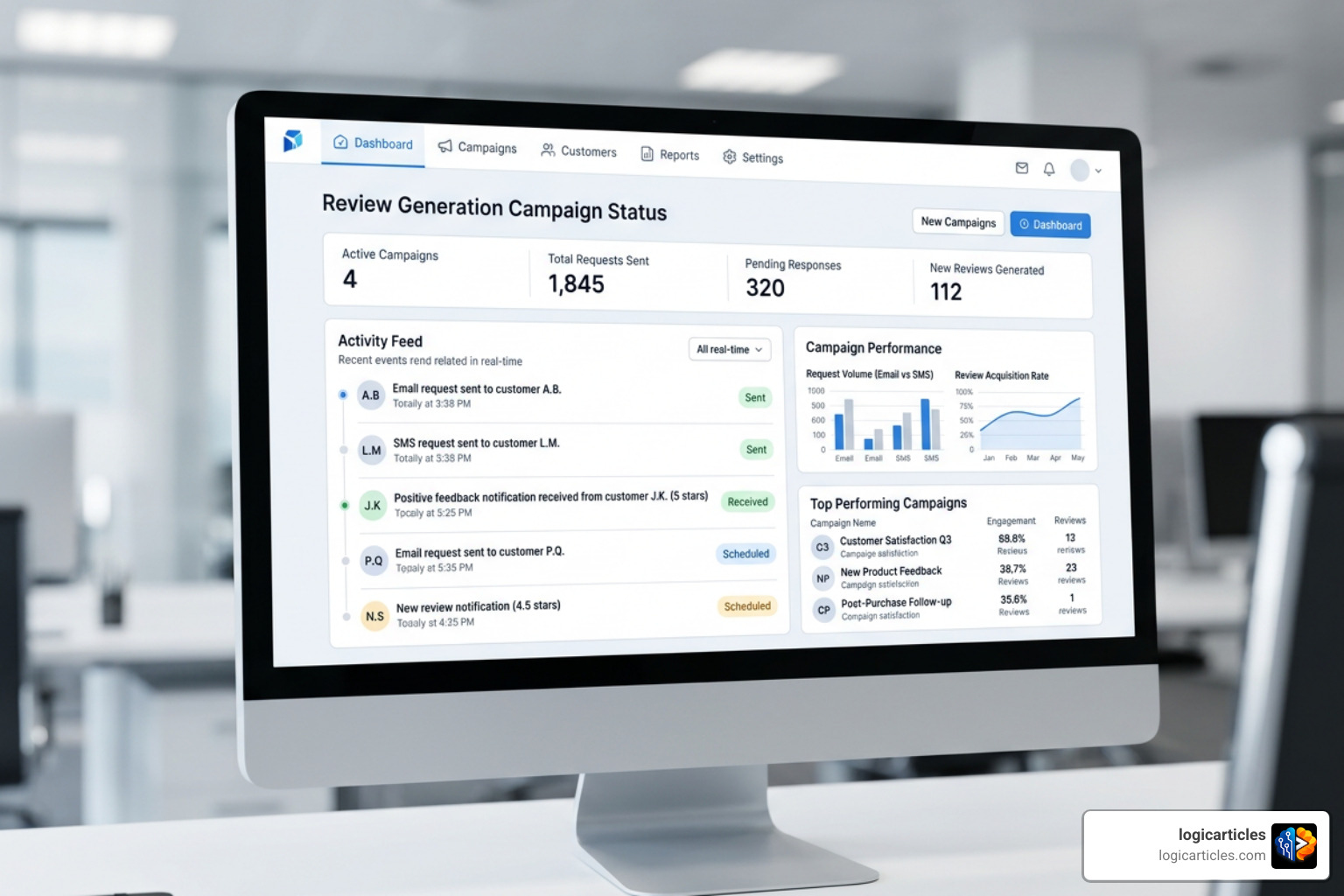
If we are managing a franchise or a business with dozens of locations, logging in and out of individual accounts is a nightmare. We need a single “Command Center” dashboard where we can view all client locations at a glance, perform bulk actions, and easily toggle between different client views.
Multi-Channel Review Generation
Getting new reviews is the number one goal for most local businesses. The software should support multiple collection methods:
- SMS & Email Automation: Automated campaigns sent to customer lists after a purchase or service appointment.
- QR Codes & NFC Technology: Physical stands or cards placed at checkout counters that customers can scan to leave an immediate review.
- Smart Routing: A funnel-style flow that guides happy customers to public review platforms like Google and Facebook, while routing negative feedback to a private form so the business can resolve the issue internally.
AI-Powered Review Response and Sentiment Analysis
Writing unique, personalized responses to hundreds of reviews is incredibly time-consuming. Modern platforms solve this with advanced AI engines.
Instead of generic, robotic templates, advanced AI review response systems can analyze the specific text of a review and incorporate custom business facts. For example, if a reviewer mentions “happy hour,” the AI can automatically reference the business’s specific happy hour schedule.
Furthermore, phrase-level sentiment analysis allows us to look beyond simple star ratings. The software can map reviews to specific categories (like pricing, staff friendliness, or cleanliness) to give clients actionable insights into their operations. This makes it an incredibly valuable addition to our agency’s suite of the Best Content Software.
Competitor Analysis and Local Search Grid Tracking
To keep clients long-term, we need to show them how they stack up against their local competitors.
We should look for platforms that offer:
- Local Map Rank Tracking: A visual grid showing how the client ranks in Google Maps across different physical coordinates in their city.
- Competitor Benchmarking: Real-time tracking of competitors’ review volume, average ratings, and response rates.
- Share of Voice Metrics: Insights into who is dominating local search results for key industry terms.
Essential Integrations
To fit seamlessly into our existing workflows, the reputation software must connect with other key tools. We should expect deep integrations with:
- Google Business Profile, Facebook, and Yelp: For direct review monitoring and posting.
- CRMs (HubSpot, Salesforce, etc.): To automatically trigger review requests when a deal is closed.
- Zapier & Webhooks: For building custom automations.
- Social Media Platforms: To easily share positive reviews as social proof posts.
Using a fully integrated White Label Reputation Management Platform – Grow Agency Revenue | Reputeup ensures we can connect all of these channels under our own brand without technical friction.
Pricing Models and Agency Profit Margins
Understanding platform pricing is critical because it directly impacts our agency’s gross margins and ability to scale.
There are two primary pricing models in the white-label space:
1. Per-Location Pricing
This is the traditional model where the software provider charges a set fee (e.g., $20 to $40) for every location or “seat” we add. While this is affordable when we only have 1 or 2 clients, it quickly becomes expensive as we grow. If we manage 100 locations, our software cost could easily soar to $2,000–$4,000 per month, eating deeply into our margins.
2. Flat-Rate Pricing
Some modern platforms offer a flat monthly fee (often around $99 to $299/month) for unlimited clients, locations, and users. This model provides ultimate cost predictability. Whether we have 5 clients or 500, our software cost remains exactly the same, allowing our gross margins to climb as high as 90%.
| Pricing Metric | Per-Location Model | Flat-Rate Model |
|---|---|---|
| Base Monthly Cost | Low starting cost ($20 – $40) | Moderate ($99 – $299) |
| Cost at 10 Locations | $200 – $400 / month | $99 – $299 / month |
| Cost at 100 Locations | $2,000 – $4,000 / month | $99 – $299 / month |
| Scalability | Poor (costs scale with growth) | Excellent (predictable software overhead) |
| Ideal For | Brand new agencies with 1-2 clients | Growing agencies looking to maximize margins |
How to Evaluate and Compare Platforms
When comparing different white label reputation software providers, we use a structured evaluation matrix to ensure we get the best value for our agency and our clients.
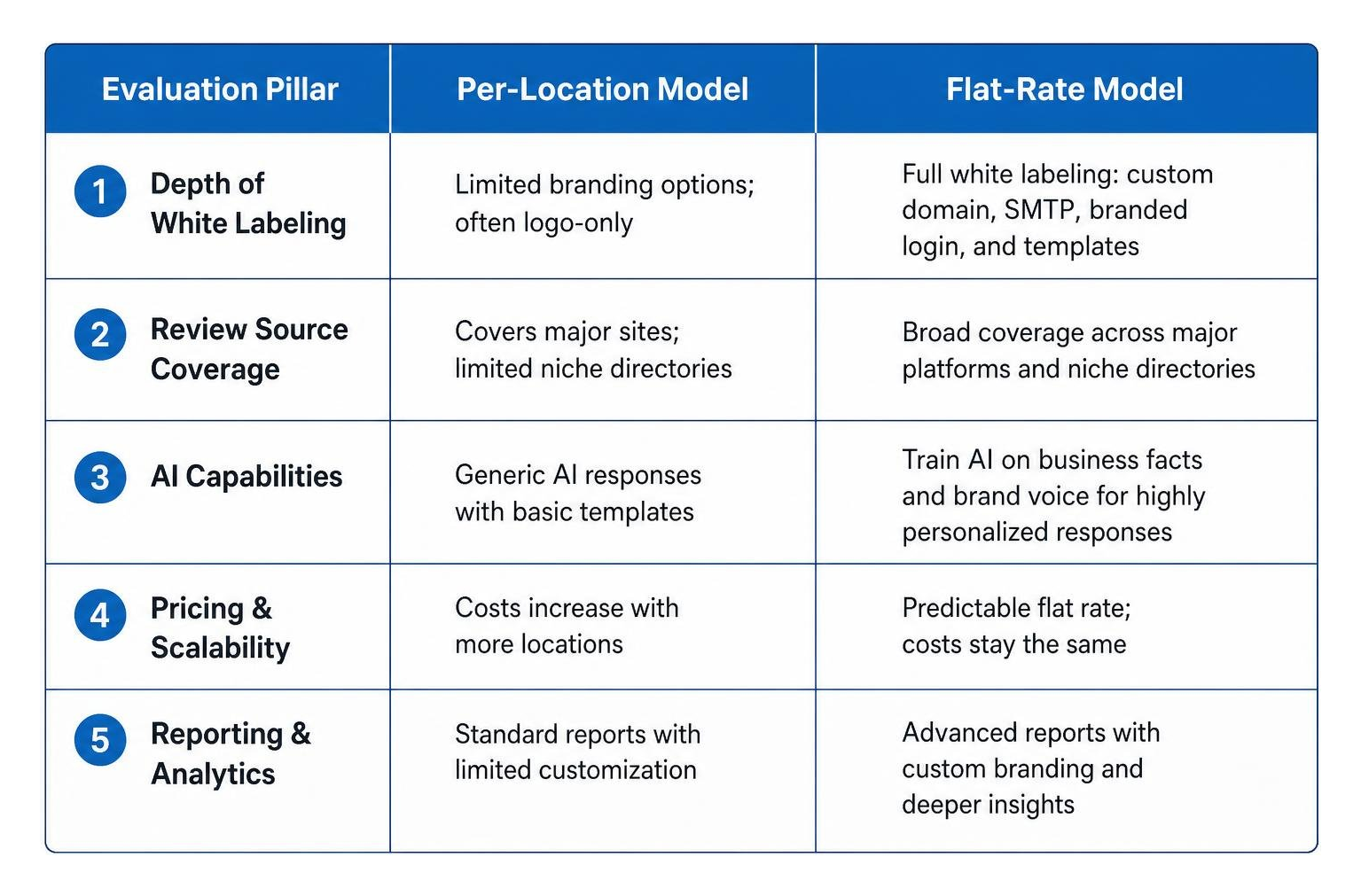
To choose the right partner, we recommend evaluating vendors across five key pillars:
- Depth of White Labeling: Is it just a logo swap, or do we get full custom domain mapping, custom SMTP, branded client login screens, and custom-branded email/SMS templates?
- Review Source Coverage: Does the platform monitor and generate reviews across the major networks (Google, Facebook, Yelp) as well as industry-specific directories (TripAdvisor, Angi, Trustpilot, etc.)?
- AI Capabilities: Does the AI generate generic templates, or can we train it on specific business facts and brand voices to write highly personalized, context-aware responses?
- Compliance and Security: Is the platform GDPR and CCPA compliant? If we work with healthcare clients, does it offer secure, HIPAA-compliant workflows for review collection?
- Agency Support & Onboarding: Does the vendor provide marketing assets, pitch decks, sales training, and active customer support to help us resell the software successfully?
Frequently Asked Questions about Reputation Management
How long does it take to set up a white label reputation platform?
Most modern white-label platforms can be set up in under an hour. The longest part of the process is waiting for your DNS changes (pointing your custom subdomain to the platform) to propagate, which typically takes between 15 minutes and 24 hours. Uploading your logo, setting your brand colors, and configuring your email settings can be done in minutes.
Can clients manage their own reviews within the portal?
Yes. High-quality platforms offer robust, role-based access control. We can invite clients to log into our branded portal with specific permissions. For instance, we can give a store manager permission to respond to reviews for their specific location while restricting them from changing campaign settings or viewing other locations.
Is HIPAA compliance necessary for reputation software?
If you serve clients in the healthcare space (doctors, dentists, clinics), HIPAA compliance is absolutely necessary. Patient feedback and review collection must follow strict data privacy rules. Ensure your chosen platform offers secure, HIPAA-compliant workflows so you can safely manage feedback without risking privacy violations.
Conclusion
Offering reputation management services is one of the most reliable ways to build a highly profitable, scalable agency in 2026. By using the right white label reputation management software, we can deliver immense value to local businesses, improve their local search visibility, and secure predictable monthly recurring revenue—all under our own agency’s brand.
To explore more software categories that can help you scale your agency operations, check out our comprehensive guides on the https://logicarticles.com/category/best-software/.