What Talent Management Software Actually Does (And Why It Matters)

Talent management software is a digital platform that helps organizations attract, develop, and retain the right people — covering everything from recruiting and onboarding to performance reviews, learning, and succession planning.
Here’s what most talent management platforms include:
- Recruiting & applicant tracking — post jobs, screen candidates, schedule interviews
- Onboarding — automate new hire paperwork, checklists, and task assignments
- Performance management — set goals, run reviews, and track continuous feedback
- Learning & development — deliver training and map career pathways
- Succession planning — identify and prepare future leaders
- Compensation management — align pay with performance and equity data
- Engagement tools — pulse surveys, recognition, and flight risk analytics
Think of it as the operating system for your people strategy — one place where HR, managers, and employees all connect around growth and performance.
The problem most companies face is straightforward: organizations invest heavily in hiring great people, then fail to plan for what happens next. Roles go unfilled. Top performers leave. Leadership pipelines dry up. A well-implemented talent management system addresses each of these gaps in a structured, data-driven way.
The results can be significant. Organizations using modern talent platforms report an 83% increase in time spent on strategic HR work, a 37% reduction in average onboarding time, and a 69% increase in manager roles covered by a succession plan.
Whether you’re evaluating your first platform or replacing an outdated system, this guide covers everything you need to know — from core features and pricing to AI capabilities and global compliance.
What is Talent Management Software and Its Core Functions?
To understand how talent management software optimizes a business, we have to look past basic payroll and time-tracking spreadsheets. While traditional HR software focuses on administrative record-keeping, talent management platforms focus entirely on the growth, capability, and optimization of your workforce.

By integrating these tools, we can transition from reactive troubleshooting to proactive workforce development. For smaller, growing teams, choosing the right foundational tools is essential. You can read more about starting with the right setup in our guide on the Best Hr Software For Small Businesses.
Core Modules of Talent Management Software
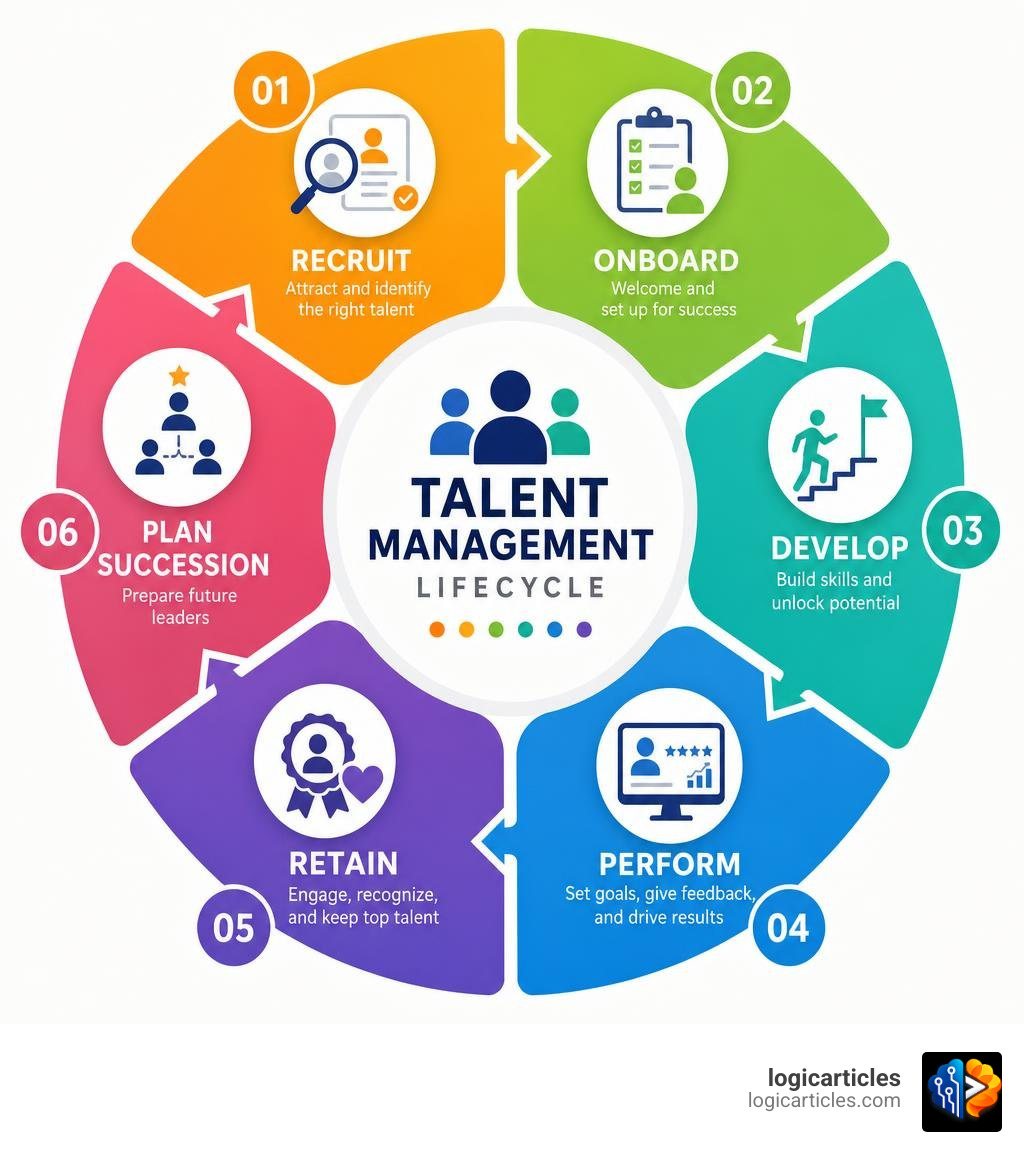
A complete talent management suite typically breaks down into several key operational modules, each handling a critical phase of the employee lifecycle:
- Applicant Tracking & Sourcing: Modern recruiting requires speed. Tools like Zoho Recruit | All-in-one recruitment software for HR teams and staffing agencies help HR teams source, track, and engage candidates from a centralized dashboard. This keeps the hiring pipeline moving and reduces candidate drop-off.
- Onboarding Automation: The transition from candidate to employee sets the tone for an individual’s entire tenure. Automated onboarding handles task assignments, compliance checklists, and digital document signing before day one even begins.
- Goal Tracking & OKRs: Aligning individual efforts with company objectives is crucial. Platforms like Lattice enable teams to set structured SMART goals and track key results in real time.
- Continuous Feedback & 1:1s: Annual reviews are no longer enough. Modern platforms encourage daily habits of feedback, structured manager updates, and peer-to-peer recognition to keep teams aligned.
- Learning Pathways: Professional development is a major driver of employee retention. Learning management modules deliver personalized training courses, track certifications, and identify skills gaps.
- Succession Planning: Organizations face major disruptions when key leaders depart without a backup plan. Succession modules map your talent pipeline, identifying high-potential employees early and preparing them for future leadership roles.
Aligning Performance and Compensation
One of the most powerful aspects of modern talent management software is its ability to directly connect performance metrics with compensation decisions. Traditionally, merit cycles and salary reviews were managed on disconnected spreadsheets, leading to errors, bias, and a lack of transparency.
By unifying performance reviews and compensation management, we can run objective, data-driven merit cycles. Managers can review an employee’s goal achievements, peer feedback, and learning milestones side-by-side with localized market salary data.
Additionally, talent platforms provide pay equity insights, helping organizations analyze compensation across demographics, locations, and departments. This ensures that top performers are rewarded fairly and transparently, which directly protects against turnover and compliance issues.
Key Benefits of Modern Talent Systems
Investing in a dedicated talent platform delivers measurable business value across every department. When employees have clear goals, structured development paths, and regular feedback, performance naturally improves.
The data speaks for itself. Organizations using unified talent suites experience a 44% increase in the usage of unified performance and goal management tools. Furthermore, by automating routine workflows, HR departments experience an 83% increase in time available for strategic talent initiatives rather than manual paperwork.
These platforms also streamline how we organize day-to-day operations. For organizations managing deskless or on-the-go teams, integrating these tools with mobile strategies is key. Learn more about optimizing these workflows in our article on Mobile Workforce Management Software Features Benefits Ai 2026.
Driving Engagement and Retention with Talent Management Software
Employee turnover is incredibly expensive, both in direct recruitment costs and lost productivity. Modern talent software combats this issue by creating structured environments where employees actually want to stay.
- Transparent Career Pathing: When employees can see a clear, visual roadmap of where their career can go within an organization, they are far less likely to look elsewhere.
- Internal Mobility: Instead of hiring externally for every new role, talent systems analyze internal skills profiles to match current employees with open positions, promoting growth from within.
- Flight Risk Analytics: Advanced platforms analyze patterns such as declining feedback participation, missed milestones, or tenure milestones to flag employees who may be disengaged, allowing managers to intervene before it’s too late.
- Structured Mentoring: Research shows that employees who participate in mentoring programs are disproportionately likely to stay for the long term. Systems like MentorcliQ help automate mentor matching and track program success.
Comparing Enterprise Suites, Pricing, and Implementation
When selecting talent management software, organizations generally choose between comprehensive enterprise Human Capital Management (HCM) suites and specialized talent modules.

Enterprise suites like Human Capital Management (HCM) Software | Workday US offer a single, unified database for core HR, payroll, benefits, and talent. On the other hand, specialized platforms or modern recruitment systems focus heavily on delivering deep, best-of-breed features for specific stages like hiring and preboarding.
| Feature / Aspect | Enterprise HCM Suites (e.g., Workday, Dayforce) | Specialized Talent Platforms (e.g., Talentech, Lattice) |
|---|---|---|
| Primary Focus | All-in-one core HR, payroll, compliance, and talent. | Deep, specialized features for specific talent areas. |
| Integration Complexity | Low internal friction; all modules run on one database. | Requires API integrations to sync with core HR systems. |
| Implementation Time | Typically 6 to 12+ months. | Typically 4 to 12 weeks. |
| Pricing Model | Complex enterprise agreements, multi-year contracts. | Subscription-based, often per-user/per-month. |
| Best For | Large enterprises wanting a single source of truth. | Mid-sized companies seeking agile, user-friendly tools. |
Pricing Models and Implementation Realities
Most modern talent platforms operate on a software-as-a-service (SaaS) subscription model. Pricing is usually calculated on a per-user, per-month (PUPM) basis, ranging from $3 to $15+ per employee depending on the number of modules selected. Enterprise platforms may also charge flat annual licensing fees and substantial upfront implementation costs.
Implementation is a major undertaking that requires careful planning:
- Discovery & Configuration: Defining workflows, review templates, and custom goals.
- Data Migration: Safely moving historical employee data, performance records, and certifications.
- Integrations: Connecting the talent suite to payroll, communication tools (like Slack or Teams), and IT directory systems.
- Change Management: Training managers and employees to ensure high platform adoption.
While a specialized tool can go live in a matter of weeks, a full enterprise suite deployment typically takes several months of dedicated coordination.
How AI, Analytics, and Global Compliance Drive Strategy
The role of artificial intelligence in HR has shifted from a futuristic concept to an everyday reality. Modern talent platforms leverage machine learning to make talent decisions faster, fairer, and highly personalized.
Using talent intelligence platforms, organizations can build custom talent applications on top of global skills databases. This allows companies to analyze over a billion career trajectories to predict workforce movements and identify skills gaps before they impact the business.
This level of intelligence is especially critical when managing complex, highly collaborative teams. To see how tracking daily tasks fits into this broader strategy, check out our review of the Best Task Management Software In 2026 Tested.
AI-Driven Recruiting and Succession Planning
AI significantly enhances how we find and nurture talent:
- Automated Screening: AI-driven applicant tracking systems can scan thousands of resumes in seconds, matching candidates based on verified skills rather than keyword matching, reducing bias and saving hours of manual review.
- Skills-Based Succession: Instead of relying on subjective manager recommendations, AI analyzes employee skills, performance history, and learning progress to suggest optimal internal candidates for leadership pipelines. This data-driven approach has contributed to a 69% increase in manager roles covered by succession plans.
- Global Compliance: Managing international teams introduces complex legal hurdles. Modern talent platforms help organizations hire and onboard across hundreds of countries by automatically generating localized contracts, managing compliant payroll, and aligning with regional regulations like GDPR.
For specialized industries, such as customer support operations, managing these schedules and compliance needs requires dedicated tools. Discover how this works in our guide on the Best Workforce Management Software For Call Centers.
Frequently Asked Questions about Talent Management
How long does it take to implement a talent system?
A standalone talent module (like a performance or engagement tool) can be implemented in 4 to 8 weeks. A full enterprise suite migration (combining core HR, payroll, and talent) typically takes 6 to 12 months depending on organization size, data complexity, and integration requirements.
Can we purchase individual talent modules?
Yes. Many vendors offer modular purchasing, allowing you to buy only what you need (such as starting with an ATS or performance management) and add modules like learning or succession planning later. However, some enterprise vendors require you to use their core HR database to access their talent modules.
What trends are shaping talent management in 2026 and beyond?
The shift toward skills-based organizations is the dominant trend in 2026. Companies are moving away from rigid job descriptions and instead matching employees to projects based on verified skills. Additionally, conversational AI agents are becoming standard, allowing employees to ask questions about career growth, policy details, and learning paths in plain language.
Conclusion
Implementing the right talent management software is no longer just an administrative upgrade — it is a core business strategy. By unifying recruiting, performance, learning, and succession planning, we can build more resilient, engaged, and productive workforces.
As we navigate the workplace of 2026, leveraging data, AI, and integrated workflows is the key to staying competitive. To continue optimizing your business operations and team workflows, explore our extensive library of productivity software guides.