Why Marine Fleet Management Software Is Transforming Maritime Operations in 2026
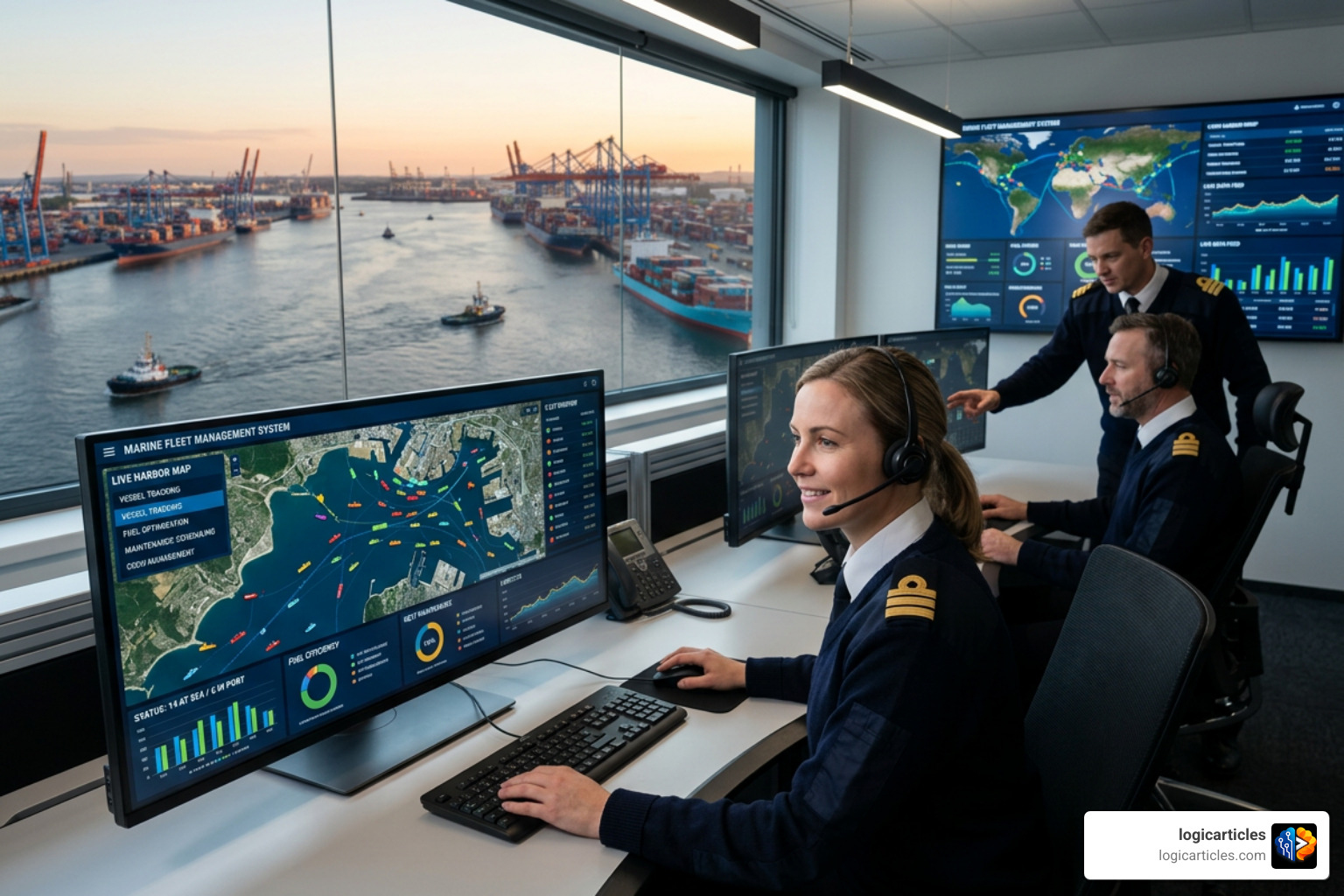
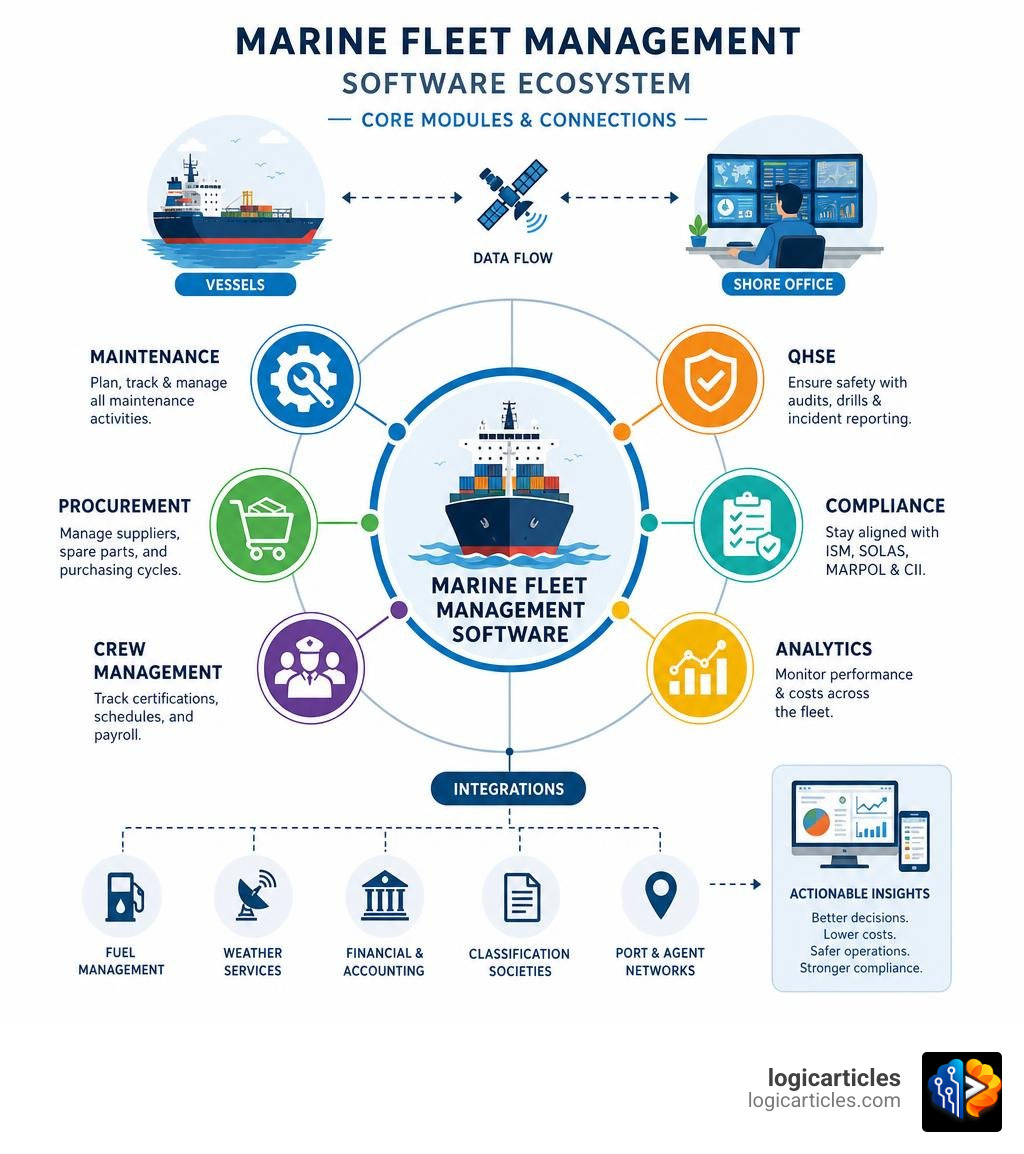
Marine fleet management software is a digital platform that helps ship owners and operators manage vessel maintenance, crew, procurement, compliance, and performance — all from one system.
Quick answer for what it covers:
- Maintenance — schedule and track planned and unplanned repairs
- Procurement — manage spare parts, suppliers, and purchasing cycles
- Crew management — track certifications, schedules, and payroll
- QHSE — handle safety audits, drills, and incident reporting
- Compliance — stay aligned with ISM, SOLAS, MARPOL, and CII regulations
- Analytics — monitor fleet-wide performance and costs in real time
Running a vessel fleet in 2026 is not simple. Fuel costs are rising. Regulations are tightening. Crews are spread across oceans. And maintenance alone can account for up to 30% of a vessel’s total operating costs.
For most operators, the old way of working — spreadsheets, paper logs, disconnected systems — simply can’t keep up.
That’s where marine fleet management software comes in. It connects the dots between ship and shore, giving technical managers, fleet operators, and executives a single source of truth for everything happening across their vessels.
The market is growing fast. In 2024, it was valued at USD 1.9 billion. By 2034, it’s projected to reach USD 5.6 billion — a compound annual growth rate of 11.5%. That growth isn’t hype. It reflects real pressure on operators to digitise or fall behind.
This guide explains everything: what these platforms do, how to choose one, and what to watch out for.
Core Functions of Marine Fleet Management Software
At its heart, marine fleet management software acts as the central nervous system for maritime operations. Instead of having your crew update local Excel files while your shore-based technical team struggles to track purchase orders via email, this software unifies all processes into a single, shared database.
To appreciate the difference this makes, let’s look at how traditional methods stack up against modern digital platforms:
| Feature | Traditional (Paper & Excel) | Modern Marine Fleet Management Software |
|---|---|---|
| Data Visibility | Delayed; files sent via email weekly or monthly | Real-time; instant updates between ship and shore |
| Maintenance Tracking | Reactive; manual reminders; high risk of missed tasks | Proactive; automated schedules based on running hours |
| Compliance Readiness | Stressful; manual file gathering before port state control audits | Instant; centralized document control and audit-ready trails |
| Inventory & Spare Parts | Guesswork; frequent over-stocking or critical shortages | Automated; inventory counts linked to active work orders |
| Procurement Cycle | Slow; manual RFQs, fragmented supplier communication | Streamlined; integrated supplier portals and automated approvals |
This dramatic shift from reactive firefighting to proactive coordination explains why the global market is expanding rapidly. In 2024, North America held a dominant position in this space, capturing over 31% of the market share with USD 0.5 billion in revenue. By component, software solutions made up the lion’s share at 68% of total revenue, while cloud-based platforms dominated deployment models with a 60% share. Unsurprisingly, the shipping industry itself is the primary driver, accounting for 45% of the total market end-users.
By consolidating these workflows, ship owners gain complete fleet-wide visibility. Whether you are managing five tugboats or fifty bulk carriers, having a unified view of your assets’ lifecycles allows you to make data-driven decisions that lower operating expenses (Opex). If you are looking to explore how these platforms fit into the broader landscape of maritime technology, read our detailed breakdown of Maritime Software Solutions.
For operators seeking a highly focused, independent platform to move away from chaotic spreadsheets, tools like Marad – Maritime Fleet Management Software provide a user-friendly entry point to centralize maintenance, inventory, crew, and safety certifications without unnecessary complexity.
Key Modules and Integration Architecture
Modern maritime platforms are inherently modular. This means you do not have to deploy a massive, complex system overnight. Instead, you can start with a core module—such as planned maintenance—and gradually add modules for procurement, crew management, or safety as your organization scales.
An effective platform does not operate in a vacuum. To deliver maximum value, it must connect seamlessly with your broader corporate tech stack. This is achieved through a multi-tiered integration architecture:
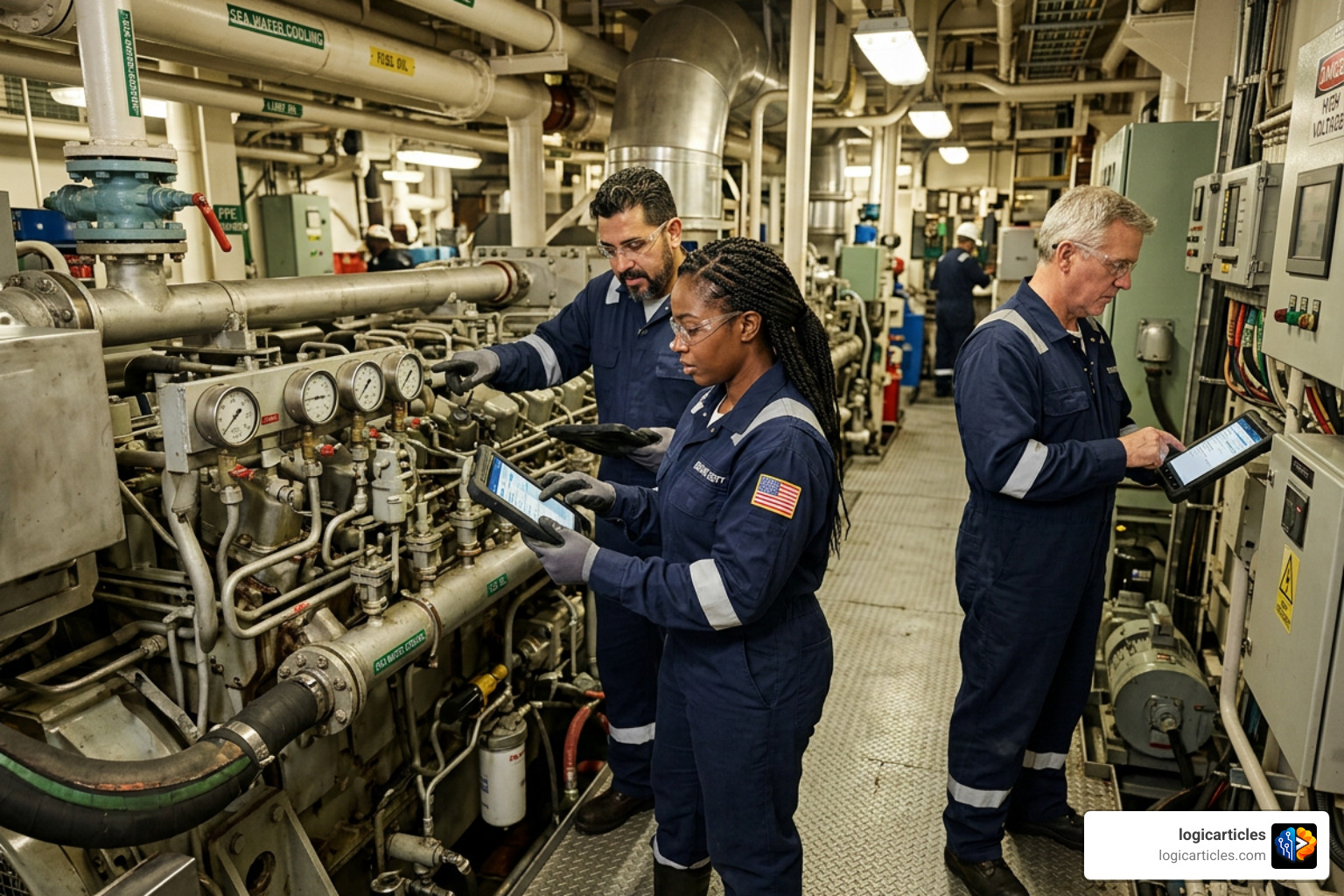
- Operational Integration (Onboard): Mobile tools and tablets allow crew members to perform inspections, update inventory, and log maintenance tasks directly from the engine room.
- Technical and Data Integration: The system connects directly to IoT sensors, flow meters, and condition monitoring tools on the vessel. This enables real-time tracking of parameters like vibration, temperature, and fuel consumption.
- Enterprise Integration: Through modern REST APIs and middleware, the fleet software syncs data with your shore-side Enterprise Resource Planning (ERP) systems (like SAP, Oracle, or Microsoft Dynamics) to align technical operations with corporate accounting.
Planned Maintenance Systems vs Marine Fleet Management Software
A common point of confusion is the difference between a traditional Planned Maintenance System (PMS) and a comprehensive marine fleet management platform.
A traditional PMS is highly specialized. It focuses almost exclusively on scheduling routine maintenance, tracking equipment running hours, and managing work orders. While a PMS is vital, it represents just one piece of the operational puzzle.
In contrast, marine fleet management software includes a PMS but surrounds it with integrated modules for procurement, QHSE, crewing, and financial analytics.
This integration is crucial because maintenance does not happen in isolation. In a legacy PMS, a chief engineer might schedule an overhaul only to discover the required spare parts are out of stock. With an integrated fleet management system, scheduling that overhaul automatically checks inventory levels. If a part is missing, the system automatically drafts a requisition in the procurement module.
Given that maintenance can consume up to 30% of a vessel’s operational costs, avoiding unexpected breakdowns and optimizing spare parts inventory is key to protecting your margins. For scaling operations that need to move past basic task-tracking and standardize workflows across multiple vessels, platforms like Maritime Fleet Management Software for Growing Fleets | AMOS™ Horizon offer a powerful way to unify technical management and boost asset reliability.
Procurement, QHSE, and Crewing Modules
Beyond maintenance, three core modules drive the day-to-day value of fleet management platforms:
1. Procurement and Inventory
Manual purchasing processes are notorious for causing administrative bottlenecks. Integrated procurement modules connect vessels directly with shore-side purchasing teams and approved suppliers. By automating request-for-quote (RFQ) workflows and linking parts usage to maintenance tasks, companies typically see a 15% to 25% reduction in purchasing cycle times.
2. Quality, Health, Safety, and Environment (QHSE)
Staying compliant with international maritime regulations—such as the International Safety Management (ISM) Code, SOLAS, and MARPOL—is a monumental task. The QHSE module centralizes document control, tracks safety drills, logs non-conformities, and manages corrective actions. This structured approach can reduce audit preparation time by up to 50% by keeping all safety management system (SMS) records organized and instantly accessible.
3. Crew Management and Payroll
Managing a global seafaring workforce involves complex scheduling, multi-currency payroll, and strict compliance with the STCW convention and MLC 2006. Crewing modules track crew contracts, plan rotations, and send automated alerts before critical safety or medical certifications expire.
If you want to understand how modern mobile tools are revolutionizing how teams are scheduled and managed on the move, check out our guide on Mobile Workforce Management Software Features Benefits Ai 2026. Furthermore, while managing maritime crew rotations has its own unique challenges, comparing these workflows to onshore scheduling models can offer valuable operational insights—see our analysis on the Best Workforce Management Software For Call Centers to learn how high-density scheduling systems optimize labor productivity.
Cloud-Native Architecture and Real-Time Sync
Historically, maritime software relied on local servers installed on each ship. These servers required periodic manual data synchronization (often via batch emails), leading to frequent data conflicts and heavy IT maintenance loads.
In 2026, the industry has firmly embraced cloud-native and hybrid architectures. Backed by high-speed satellite networks like Starlink—which is now active on roughly 150,000 vessels globally—modern platforms sync data in real time.
However, because satellite connections can still drop in remote ocean regions, the best software uses a “local-first” hybrid model. The crew can work seamlessly offline on local tablets or computers. The moment a connection is re-established, the platform automatically runs a lightweight, low-bandwidth synchronization to update the shore-side database without disrupting operations.
For fleets looking to eliminate onboard servers entirely and run their technical management in real time, Cloud Ship Management Software | Navatom offers a true SaaS, cloud-native platform that removes hardware dependencies and provides instant data sharing between ship and shore.
Implementation Challenges and Selection Criteria
Transitioning to a digital platform is a major strategic move, and it does not come without hurdles. Understanding these challenges early is the best way to ensure your implementation succeeds.
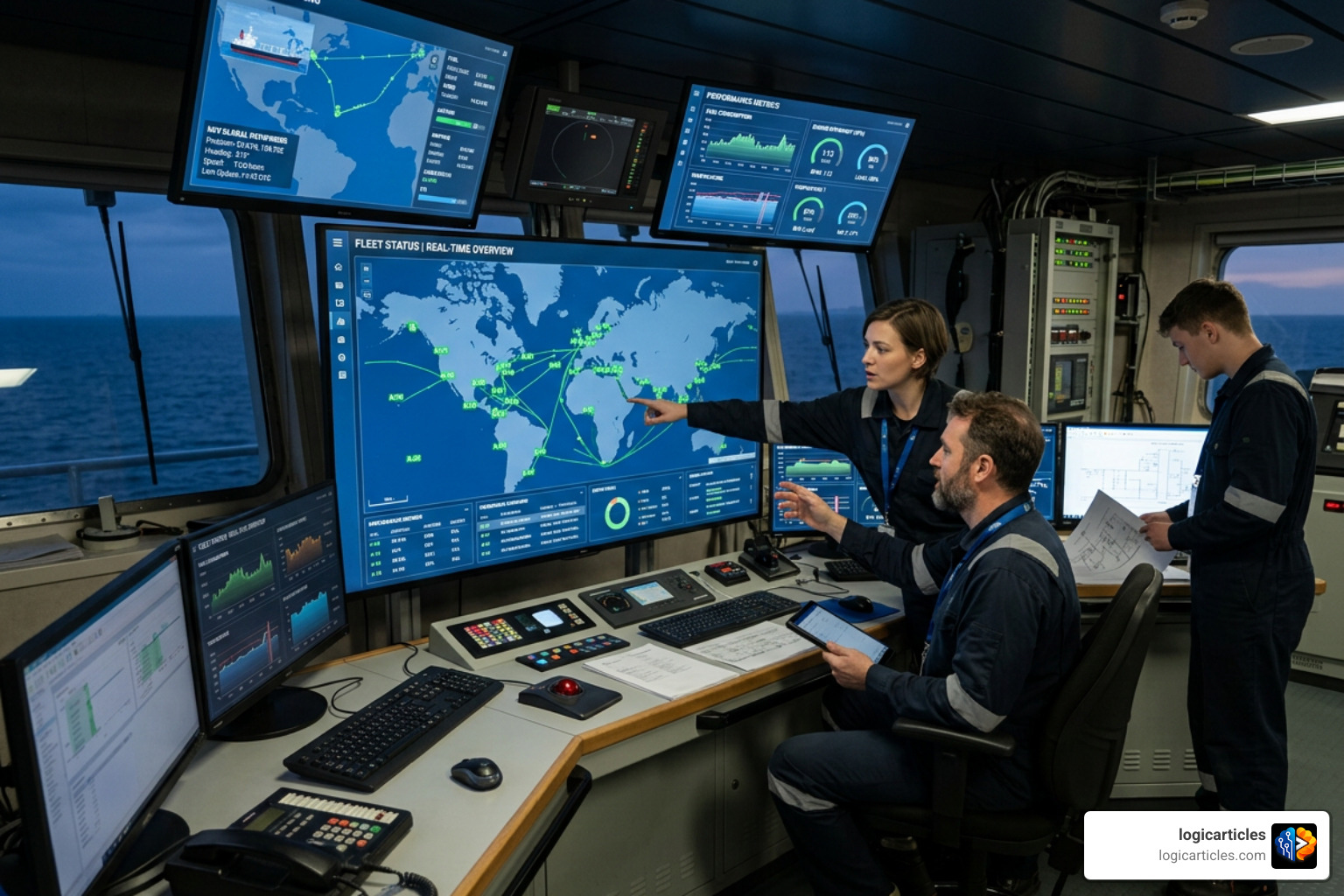
The most common pitfalls during software rollouts include:
- Poor Data Migration: Garbage in, garbage out. If your existing equipment registers, spare parts lists, and maintenance histories are inaccurate, importing them into a new system will only replicate those inefficiencies.
- Resistance to Change: Crew members and shore staff are often comfortable with their legacy habits. Without a clear change management strategy and hands-on training, adoption rates will suffer.
- Cybersecurity Risks: As maritime operations become more connected, they also become more vulnerable. With maritime cyber incidents rising significantly over the last few years, choosing a platform with enterprise-grade security and ISO 27001 certification is non-negotiable.
- Integration Complexity: Trying to connect a new fleet management tool to an outdated legacy accounting system can lead to unexpected development costs and project delays.
Selecting the Right Marine Fleet Management Software
When evaluating vendor options, we recommend focusing on five key criteria:
- Operational Fit: Does the software match your specific vessel types? A superyacht fleet, a tugboat operation, and a fleet of LNG carriers have vastly different operational and regulatory needs.
- Scalability: Can the platform grow with you? Ensure the licensing and technical architecture can seamlessly scale from 5 vessels to 50+.
- Vendor Domain Experience: Choose a vendor that understands maritime realities. Software designed by maritime and mechanical engineers will always have more practical, intuitive workflows than a generic asset management tool adapted for shipping.
- AI and Predictive Capabilities: Look for platforms that leverage AI-driven predictive maintenance and digital twins to monitor machinery health and optimize voyages.
- Ease of Use: A system is only as good as the data entered into it. If the user interface is overly complex, your crew will avoid using it, leading to poor data quality.
For organizations that require an end-to-end maritime ERP that covers not just technical ship management but also shipyard dry-docking, marine surveys, and port agency workflows, WHIZMarine — Ship Management, Shipyard & Marine Survey ERP | WHIZTEC provides a highly comprehensive, fully integrated platform built for complex maritime ecosystems.
Additionally, if your business model relies heavily on independent vessel assessments and third-party inspections, utilizing specialized tools like AI-Powered Marine Surveyor Software | Smart ERP for Marin… | Codeison can streamline surveyor workflows and generate automated, AI-driven inspection reports directly from the field.
To ensure your team stays on track during the software evaluation and setup phase, it is helpful to use structured tracking tools. Take a look at our review of the Best Task Management Software In 2026 Tested to keep your implementation project on schedule. If your implementation also involves managing physical infrastructure upgrades or dry-dock shipyard modifications, you might find useful project management strategies in our guide to the Best Construction Manager Software.
Frequently Asked Questions about Vessel Management
How does marine fleet management software reduce vessel downtime?
By replacing reactive maintenance with proactive, condition-based scheduling, the software ensures that machinery is serviced before a critical failure occurs. It tracks running hours and equipment parameters in real time, automatically triggering work orders and flagging the spare parts needed for the job. This prevents the costly delays associated with waiting for parts to arrive at a port.
Can fleet management systems integrate with existing ERPs?
Yes. Most modern, cloud-native marine platforms feature open REST APIs and pre-built integration connectors. This allows them to sync seamlessly with major corporate ERPs like SAP, Oracle, and Microsoft Dynamics, ensuring that technical requisitions, purchase orders, and crew payroll data flow automatically into your accounting systems.
How does the software assist with environmental compliance?
The software acts as a centralized data repository for fuel consumption, emissions, and waste management. It automates the collection of data required for international environmental frameworks, including the Carbon Intensity Indicator (CII) and the EU Monitoring, Reporting, and Verification (MRV) regulations, helping operators optimize voyages and maintain compliant ratings.
Conclusion
Implementing marine fleet management software is no longer a luxury reserved for the world’s largest shipping conglomerates. In 2026, digitizing your workflows is a fundamental requirement for any operator who wants to control maintenance costs, retain qualified crew, and navigate an increasingly complex regulatory landscape.
By unifying your maintenance, procurement, QHSE, and crewing data into a single, real-time platform, you can transform your operational data into a powerful competitive advantage.
Ready to discover more tools and strategies to streamline your business operations and boost organizational efficiency? Explore our comprehensive resources in the productivity software category.