What Is AS/400 Software — and Do You Still Need It?
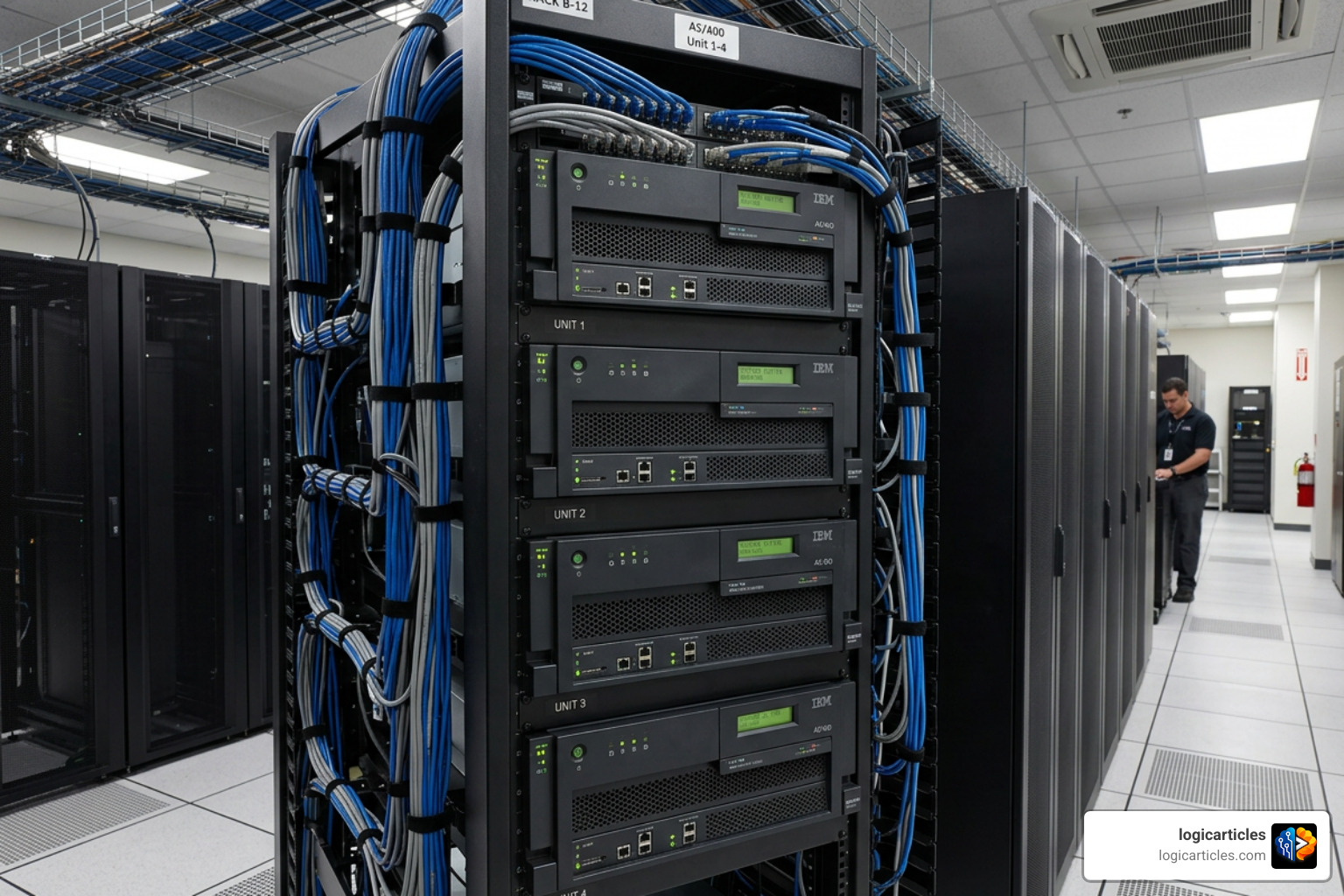
AS/400 software is a suite of applications, operating systems, and development tools built to run on IBM’s midrange computing platform, now known as IBM i on Power Systems. If you’re looking for a quick orientation, here’s what you need to know:
The most widely used AS/400 software includes:
- IBM i operating system — the modern evolution of the original OS/400
- RPG and COBOL — the primary programming languages for business logic
- Db2 for i — the integrated relational database built into the platform
- ERP and business applications — finance, manufacturing, logistics, and healthcare systems
- Modernization tools — IDEs, DevOps pipelines, and web interface converters
More than 100,000 companies still run IBM i on Power Systems as of 2022. And a quick search on LinkedIn turns up over 2,500 open roles for AS/400 professionals. This is not a dead platform.
When IBM launched the AS/400 in June 1988, it was described by industry analyst Robert Fertig as “the most significant announcement since the personal computer.” At the time, offices ran on paper and fax machines. The AS/400 could process up to 45,000 transactions per hour — ten times faster than its predecessor, the System/36 — and it brought networked computing within reach of ordinary small and medium-sized businesses for the first time.
More than three decades later, the platform has outlasted countless competitors, survived multiple rebrands, and continues to power mission-critical workloads in banking, manufacturing, insurance, and government.
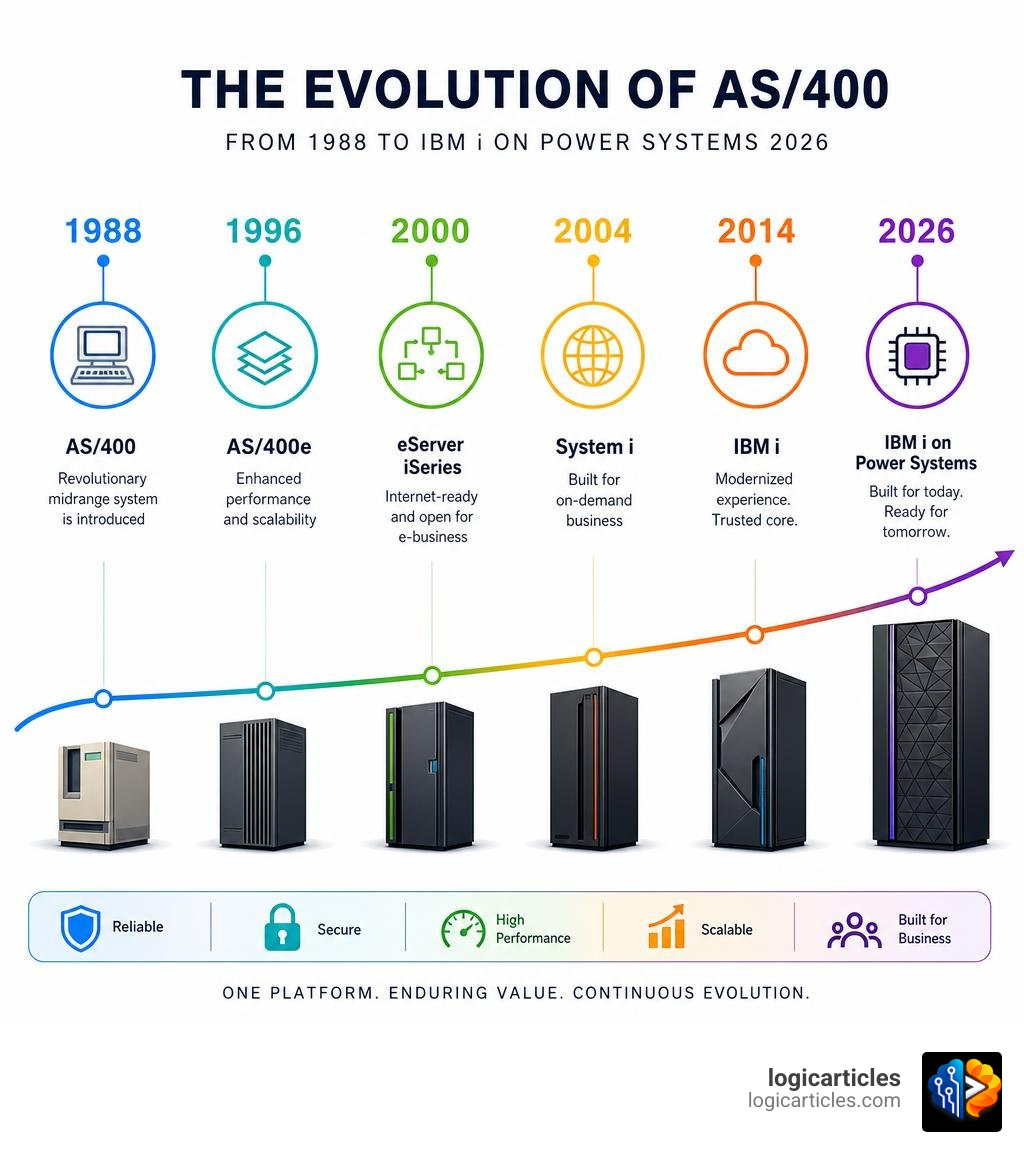
The Evolution and Architecture of as400 software
To understand why as400 software remains so incredibly resilient in June 2026, we have to look beneath the hood. The platform’s survival is not an accident of history; it is the result of brilliant architectural decisions made during a secret “skunkworks” project in the mid-1980s.
After the ambitious “Fort Knox” consolidation project failed in 1985, IBM engineers pivoted to the “Silverlake” project. Their goal was to merge the best features of the System/36 and System/38 into a single, highly integrated midrange system. The result was the AS/400 (Application System/400), released in 1988. It was a massive commercial success. By the end of 1990, there were an estimated 111,000 installations, generating $14 billion in annual revenue. That number surged to 250,000 by 1994, and by 1997, IBM had shipped over 500,000 systems worldwide.
At the core of this engineering marvel are three architectural pillars:
1. Technology Independent Machine Interface (TIMI)
In most computing systems, software is compiled directly to the hardware’s specific processor instructions. If you change the processor architecture (say, from CISC to RISC), you have to rewrite or recompile all your software.
IBM solved this with TIMI—a platform-independent software layer that sits between the applications and the physical hardware. TIMI defines a virtual instruction set. When you install as400 software, it compiles to this virtual interface. When the physical processor changes, only the underlying translator needs to be updated. This allowed companies to seamlessly transition from 48-bit CISC processors to 64-bit PowerPC processors in 1995 without rewriting a single line of application code.
2. Single-Level Store
Unlike modern operating systems that force developers to explicitly manage file systems, memory buffers, and disk storage, the AS/400 uses a “single-level store” architecture. It treats all main memory (RAM) and disk storage as one giant, continuous 64-bit address space (with 128-bit pointers built into the instruction set). The operating system automatically handles where data lives, making disk-to-RAM bottlenecks virtually disappear for the application layer.
3. Object-Based Design
On Unix and Windows systems, “everything is a file.” On the IBM i operating system , everything is an object. A program is an object, a database table is an object, and even a user profile is an object. Every object has a strict type definition, built-in persistence, and security controls. This makes it impossible to run malicious code inside a data object, which is why the system is famously immune to traditional file-executable viruses.
Core Components of Legacy as400 software
Legacy as400 software is built on a highly integrated stack. Unlike modern systems where you must manually stitch together operating systems, databases, security frameworks, and web servers, IBM built everything into a single licensed unit.
- RPG (Report Program Generator): Originally created in 1959 to mimic punched card processing, RPG evolved into a highly sophisticated, business-focused programming language. Modern free-form RPG looks and feels like any contemporary procedural language, but it remains incredibly efficient at processing massive database workloads.
- COBOL: Used primarily for financial and mainframe-style batch processing, COBOL continues to run critical accounting and ledger systems on the platform.
- Db2 for i: This is not an external database engine that you install on top of the OS. Db2 is baked directly into the operating system kernel. Because the database is fully integrated, database queries run at lightning speeds without the overhead of modern client-server connections.
- Control Language (CL): A powerful scripting language used to control system operations, manage job queues, and orchestrate batch processing.
Understanding the relationship between these layers is key to managing your system. For a deeper dive into how low-level system instructions interact with high-level code, check out our guide on Firmware Vs Software.
IBM i vs AS/400: Understanding the Differences
If you walk into an enterprise IT department today, you will likely hear people use “AS/400,” “iSeries,” “System i,” and “IBM i” interchangeably. However, there is a distinct difference between the hardware and the software.
- AS/400 (1988–2000): This refers to the original physical midrange hardware running the OS/400 operating system.
- iSeries and System i (2000–2008): Mid-generation rebrands as IBM transitioned the hardware to newer architectures.
- IBM Power Systems (2008–Present): The modern physical hardware. These are incredibly powerful servers running advanced POWER processors.
- IBM i (2008–Present): The modern, fully integrated operating system designed for Power Systems.
In short, AS/400 is the historical hardware, while IBM i is the modern operating system.
Today’s IBM i on Power Systems supports advanced virtualization through Logical Partitions (LPARs). This allows a single physical server to run multiple completely isolated virtual machines, running combinations of IBM i, AIX (IBM’s Unix), and Linux simultaneously.
Why Organizations Continue to Use IBM i Today
Why do global banks, massive retail chains, and international shipping giants refuse to migrate away from their legacy systems? The answer comes down to economics, performance, and security.
- Unrivaled Reliability: IBM Power Systems are designed for “five nines” (99.999%) availability. It is not uncommon for an IBM i server to run for a decade without a single unplanned reboot. The turnkey OS design requires very little IT maintenance, allowing small teams to manage massive enterprise workloads.
- Unmatched Performance: IBM’s POWER processors are estimated to be 3 to 5 times more powerful than standard x86 commodity processors. For transactional workloads, database operations, and high-volume batch processing, a single Power System can outperform massive clusters of Intel-based servers.
- Cyber Resiliency: With the release of IBM i 7.6, IBM introduced built-in multi-factor authentication (MFA) directly into the operating system. Combined with its object-based architecture and integrated security model, the platform provides unmatched defense against modern ransomware attacks.
- Low Total Cost of Ownership (TCO): While the initial hardware purchase can be expensive, the minimal staffing requirements, lack of database licensing fees, and incredible hardware longevity make it far cheaper over time than maintaining a fragile, highly distributed cloud stack. To learn more about keeping your enterprise software running smoothly, read our analysis of Software Stack Management In 2026.
Key Industries and Use Cases
The legacy of as400 software is deeply embedded in the plumbing of the global economy. Over 100,000 companies depend on it for their most critical operations:
- Banking and Finance: Core banking systems, electronic funds transfers (EFT), loan processing, and high-volume ledger management.
- Manufacturing: Manufacturing Execution Systems (MES), production scheduling, material requirements planning (MRP), and inventory tracking.
- Logistics and Warehousing: Warehouse Management Systems (WMS)—such as Manhattan Associates—and real-time supply chain logistics.
- Insurance: Policy management, claims processing, and complex actuarial database calculations.
AS/400 vs Modern IT and Cloud Solutions
To put things in perspective, let’s compare the traditional AS/400 architecture with modern x86-based cloud solutions:
| Feature | IBM i on Power Systems | Modern x86 Cloud Systems |
|---|---|---|
| Architecture | Integrated (OS, DB, Security in one stack) | Distributed (Stitched together via APIs) |
| Processor Power | Extremely High (POWER processors) | Moderate (Commodity Intel/AMD) |
| Database Integration | Built-in (Db2 for i runs at kernel level) | External (SQL, PostgreSQL, Oracle installed separately) |
| Security Model | Object-based, immune to file-based viruses | File-based, highly vulnerable to malware |
| Maintenance Needs | Extremely low, self-managing | High, requires constant patching and DevOps |
| Upgrades | Seamless (TIMI ensures backward compatibility) | High risk (Updates often break dependencies) |
While many organizations are exploring cloud migration, they quickly realize that migrating a complex, highly customized ERP from IBM i to an x86 cloud environment is incredibly expensive and risky. Instead, forward-thinking enterprises are adopting a hybrid cloud model—keeping their core transaction databases on IBM Power Systems while connecting them to modern web applications, AI tools, and mobile front-ends.
How to Modernize and Maintain Your Systems
If you are currently running legacy as400 software, you do not have to throw the baby out with the bathwater. You can modernize your applications, automate your workflows, and integrate modern development tools without risking your stable database core.
To ensure your systems remain supported, reliable, and compliant, we recommend partnering with experienced professionals. Learn more about your options in our comprehensive guide to the Best Software Maintenance Services 2026 Costs Types Slas Best Providers. If you need help plotting a modernization roadmap, we also suggest checking out our insights on Software Development Consulting In 2026.
Modernizing Your as400 software Ecosystem
For decades, the biggest hurdle to maintaining as400 software was cultural. Younger developers, trained on Git, VS Code, and automated testing, were hesitant to work on green-screen (5250) terminal interfaces using command-line tools.
Fortunately, you can now bring modern DevSecOps to the IBM i platform. By implementing Continuous Integration and Continuous Deployment (CI/CD) pipelines, you can manage your RPG and COBOL source code using Git repositories, automate your builds, and perform automated impact analysis before deploying code changes to production.
To bridge this gap seamlessly, we highly recommend looking at ARCAD for DevOps, a CI/CT/CD automation tool for IBM i . ARCAD allows you to build modern DevOps workflows directly on the IBM i platform without having to rewrite your underlying RPG code first, resulting in up to 85% faster build times and 70% lower IT audit costs.
Essential Tools for IBM i Development and Testing
If you are still developing on the platform using the classic green-screen Source Entry Utility (SEU) and Programming Development Manager (PDM), it is time for an upgrade. Modern software suites can dramatically boost your development speed and software quality.
- Integrated Development Environments (IDEs): Move away from the green screen and adopt IBM Rational Developer for i . Built on the Eclipse platform, this robust IDE provides modern code completion, visual debugging, and application design tools specifically for RPG and COBOL developers.
- Automated Testing: Manual testing is slow, expensive, and prone to human error. With SmartTest400:- Automated testing for IBM i , you can automate over 80% of your functional and regression testing. It allows you to create repeatable test scripts and manage database checkpoints, ensuring your system-wide updates don’t break existing business logic.
- Green-Screen Replacement: For developers who want to transition away from traditional SEU/PDM without fully committing to heavy IDEs, the open-source project richardschoen/workwithibmipdm provides a free, Windows-based alternative. It lets you work with IBM i source members using modern PC text editors like VS Code or Notepad++ while preserving your familiar workflows.
By equipping your team with these tools, you transform legacy systems into highly productive environments. To understand how these tools fit into your broader organizational toolkit, read our guide on What Is Productivity Software.
Frequently Asked Questions about AS/400
Is AS/400 a mainframe?
Technically, no. The AS/400 is classified as a midrange computer. While it shares many characteristics with mainframes—such as extreme reliability, high security, and massive transaction throughput—it is not “big iron” like the IBM Z series. Mainframes are designed to handle massive, centralized input/output operations for global banking networks, whereas midrange systems were designed to bring high-performance computing to individual enterprises and business departments.
Why is AS/400 still in demand in 2026?
The demand remains high because of the platform’s stability, low maintenance cost, and the sheer volume of critical business data stored on it. Replacing a fully functional, 30-year-old ERP system that runs a multi-billion-dollar business is incredibly risky and rarely yields a positive ROI. Furthermore, with over 2,500 open positions for AS/400 professionals on LinkedIn, companies are actively seeking talent to help them maintain, secure, and modernize their systems.
What programming languages does AS/400 support?
While RPG and COBOL are the traditional powerhouses of the platform, modern IBM i systems support a wide variety of programming languages. You can run SQL, Java, C, C++, Python, PHP, Node.js, and even run modern web applications directly on your Power Systems hardware.
Conclusion
The story of the AS/400 is a testament to the power of exceptional software architecture. What began as a 1988 hardware release has evolved into a modern, cloud-ready operating system that continues to run the most critical workloads on earth.
At logicarticles, we believe that digital transformation doesn’t mean deleting your history; it means building a bridge from your stable legacy systems to the modern web. By adopting modern DevOps, utilizing robust IDEs, and implementing automated testing, you can keep your core as400 software running smoothly, securely, and efficiently for decades to come.
Ready to explore more of the best business tools, software options, and enterprise guides? Head over to our Best Software Categories page to find the right solutions for your organization!