Why Insurance Software Development Is Transforming the Industry in 2026

Insurance software development is the process of designing, building, and maintaining digital systems that help insurers automate underwriting, manage policies, process claims, and stay compliant — all in one place.
Quick answer for busy professionals:
- What it is: Building custom or configuring off-the-shelf software to run core insurance operations
- Who needs it: Insurance carriers, MGAs, InsurTech startups, and brokers
- Core capabilities: Policy administration, claims processing, underwriting automation, compliance tools, and customer portals
- Why it matters now: 84% of insurance system purchases are cloud-based, and the global InsurTech market is growing from $23.54 billion in 2026 to a projected $132.71 billion by 2034
- Key benefit: Custom solutions deliver up to 122.22% ROI and reduce compliance violations by up to 60%
The insurance industry is under real pressure. Legacy systems are expensive to maintain, hard to scale, and increasingly out of step with what regulators and customers expect.
At the same time, 75% of modern insurance customers now prefer to manage their policies and claims online. That gap between what carriers can deliver and what customers demand is growing fast.
This guide breaks down everything you need to know — from the core challenges of aging systems, to the features that matter most, to how to choose the right development partner and what to expect from your investment.
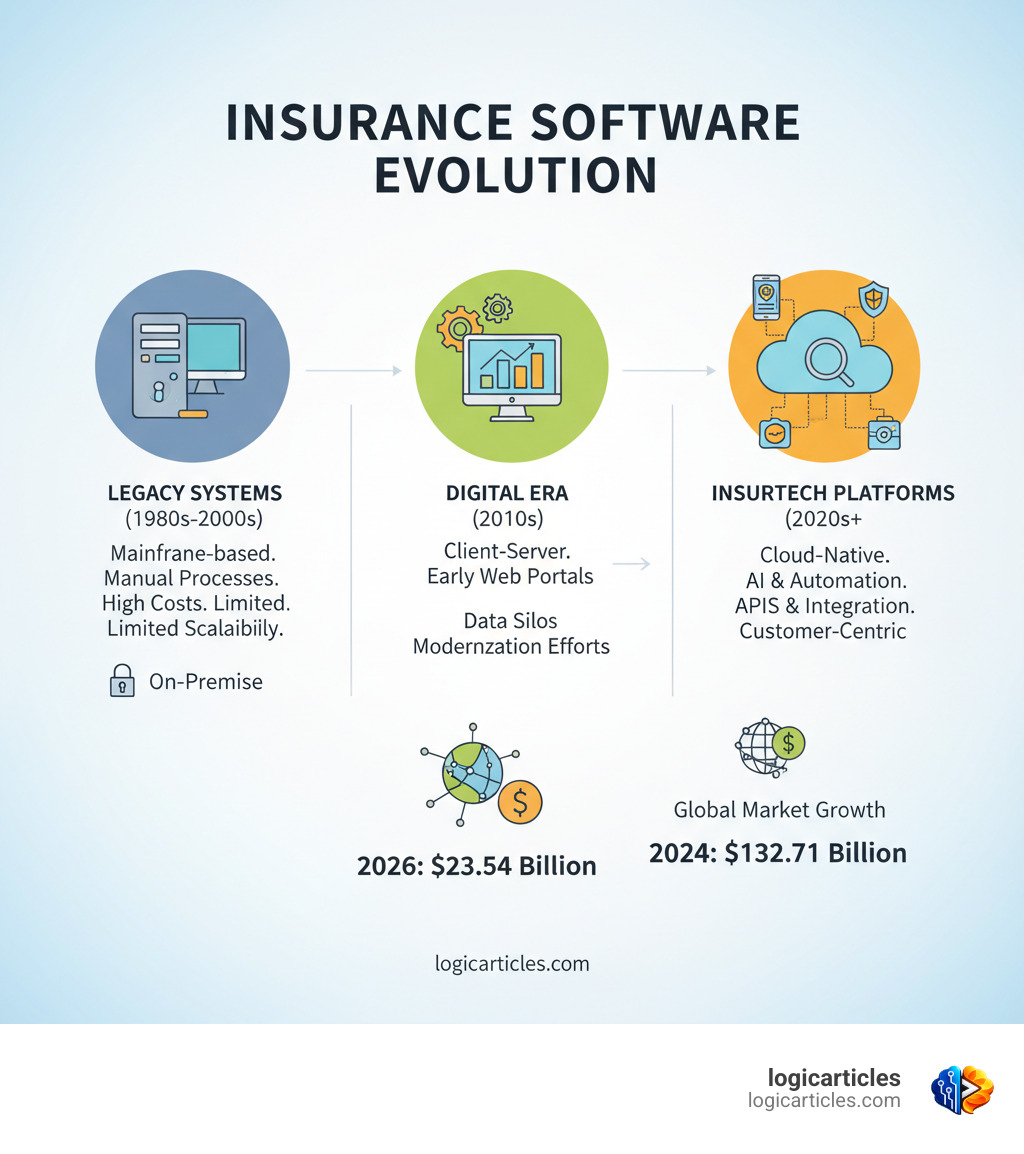
The Core Challenges of Legacy Systems in 2026
For decades, many insurance carriers relied on massive, mainframe-based host systems. While these legacy systems were built to last, they were not designed for the rapid digital era of 2026. Today, relying on outdated infrastructure introduces major operational bottlenecks and financial risks.

High Maintenance Costs and Code Decay
Legacy host programming languages are continually dying out. Finding COBOL or other older-generation developers is becoming both incredibly difficult and expensive. Carriers find themselves allocating massive portions of their IT budgets just to keep old systems running, rather than investing in growth or new product launches.
Severe Data Silos
Older core systems often store data in isolated databases that do not talk to each other. When an agent needs to review a client’s history across multiple policy lines (such as automotive, commercial property, and life), they must navigate multiple legacy platforms. This fragmentation slows down workflows, leads to human error, and completely blocks the use of modern predictive data analytics.
Security Vulnerabilities
Data security is a top priority for any financial sector, but legacy environments are notoriously difficult to patch against modern cyber threats. According to industry data, data breach costs are 55% lower for organizations using custom insurance solutions designed with modern security protocols compared to those relying on legacy infrastructure.
Regulatory Compliance Struggles
The regulatory environment is changing faster than ever. Insurance carriers must comply with complex, evolving frameworks such as NAIC, IFRS 17, Solvency II, and regional privacy acts like GDPR and HIPAA. Legacy systems simply lack the architectural flexibility to update rules quickly. This leaves carriers exposed to fines and operational friction.
Custom Insurance Software Development vs. Off-the-Shelf Platforms
When carriers decide to modernize, they face a classic dilemma: should they buy a pre-packaged platform or invest in custom insurance software development?
While off-the-shelf software can seem appealing due to faster initial setup, it often forces insurance companies to change their unique business processes to fit the software’s rigid features. In contrast, custom-built solutions are designed around your specific workflows, giving you complete control over your product design and data.
For specialized lines or unique business models, Bespoke Insurance Software Development offers the tailored integration and custom-designed modules required to align perfectly with long-term business goals.
Side-by-Side Comparison
| Feature / Criteria | Custom-Built Insurance Software | Off-the-Shelf Platforms |
|---|---|---|
| Upfront Cost | Higher initial investment | Lower initial licensing fee |
| Long-Term ROI | High (63% of executives report better returns over time) | Diminishing returns due to recurring licensing fees |
| Compliance & Auditing | High (40–60% fewer compliance violations) | Generic compliance features that require manual workarounds |
| Scalability & Flexibility | Unlimited; scales seamlessly with your business | Constrained by vendor roadmaps and API limitations |
| Integration | Seamlessly connects with any legacy or third-party API | Often requires costly custom middleware |
| Time-to-Market | 6 to 18+ months depending on complexity | Weeks to months (but with limited customization) |
While off-the-shelf platforms are suitable for standard operations with basic requirements, custom insurance software provides the architectural flexibility needed to dominate niche markets and adapt to rapid regulatory shifts.
Core Features of Modern Insurance Software
A modern insurance platform is not just a single application; it is an interconnected ecosystem of modules designed to streamline operations and elevate the customer experience.
When planning your software architecture, we recommend focusing on these primary pillars:
- Policy Administration Systems (PAS): The central engine that manages the entire lifecycle of a policy—from initial quote generation and underwriting to endorsements, renewals, and cancellations.
- Billing and Payment Gateways: Automated invoicing, multi-currency support, commission management for agents, and secure integrations with payment processors.
- Customer and Agent Portals: Self-service portals that give policyholders 24/7 access to view policies, make payments, and track claims, while providing agents with clean dashboards to manage accounts.
- Actuarial and Compliance Tools: Advanced systems that track regulatory filings state-by-state, maintaining row-level audit trails to ensure compliance.
For organizations looking to optimize their claims workflows specifically, choosing the right underlying vendor or engine is critical. You can explore our detailed breakdown of the Best Insurance Claims Software Vendors to see how different platforms handle modern claims automation.
AI-Driven Underwriting in Insurance Software Development
Underwriting has historically been a bottleneck, relying on manual data entry and slow risk assessment. Modern insurance software development solves this by integrating AI and machine learning to automate the risk evaluation process.
With custom underwriting software, carriers can experience a 20-30% cut in administrative expenses. By pulling real-time data from third-party APIs, IoT devices, and historical databases, automated underwriting systems can process standard applications instantly—a process known as straight-through processing (STP).
If you are looking to build a secure, compliant underwriting platform, working with an experienced Custom Insurance Software Development Company – ScienceSoft can help you design automated workflows that reduce fraud risk and accelerate your time-to-market.
Claims Automation and Advanced Analytics in Insurance Software Development
Claims management is the ultimate test of a carrier’s customer experience. When a disaster strikes, policyholders want fast, transparent, and empathetic service.
Modern claims engines utilize computer vision for automated damage estimation (e.g., analyzing photos of a car accident) and Natural Language Processing (NLP) to digitize First Notice of Loss (FNOL) reports.
Implementing custom claim management software can speed up claim processing times by up to 74%. Furthermore, combining this automation with data analytics and Business Intelligence (BI) software can improve customer retention in high-profit segments by 5–10%.
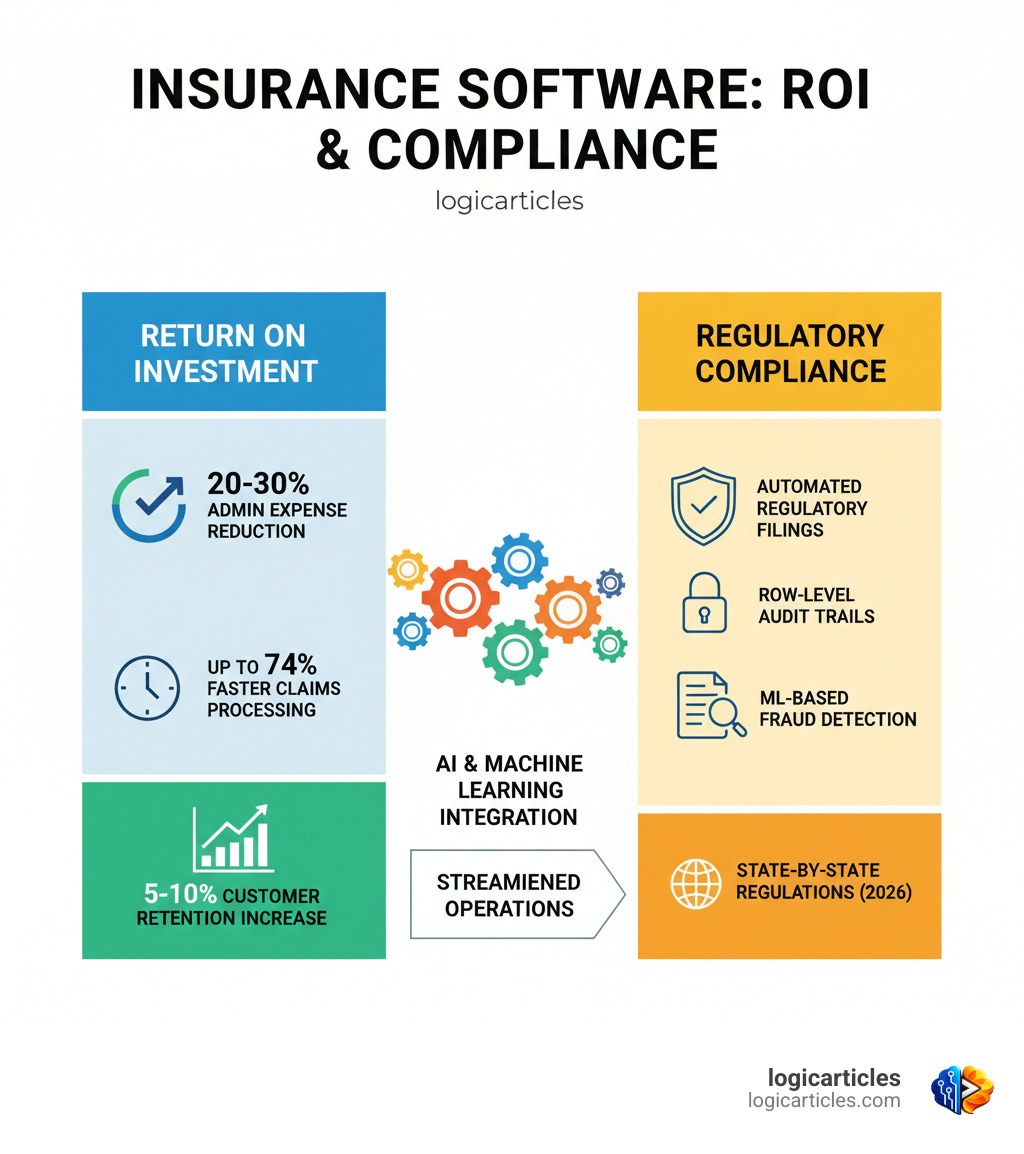
When building these highly automated systems, working with a specialized Insurance Software Development Company | Pharos Production ensures that your platform incorporates regulator-aware automated workflows, ML-based fraud detection, and robust API integrations.
The ROI and Operational Benefits of Custom Solutions
Investing in custom insurance software development is a significant financial commitment, but the quantitative returns speak for themselves.
- Impressive ROI: Custom insurance software solutions deliver an average 122.22% ROI, generating net benefits of $1.1 million after accounting for initial investment costs.
- Fewer Compliance Violations: Organizations using custom software see 40% to 60% fewer compliance violations compared to those using generic, off-the-shelf platforms. This is because custom platforms can build regulatory rules directly into the system’s architecture, enabling a 70% better adaptation to regulatory changes.
- Stronger Customer Retention: Personalized communication during the claims process can increase customer retention rates by up to 30%. Additionally, custom-built insurance portals can increase retained premium by 25% by offering a smoother, more engaging user experience.
Implementation Roadmap: Timelines, Costs, and Partner Selection
Building custom insurance software requires a structured, phase-based approach. Because insurance systems handle sensitive financial and personal data, skipping steps during planning or testing can result in costly security vulnerabilities.
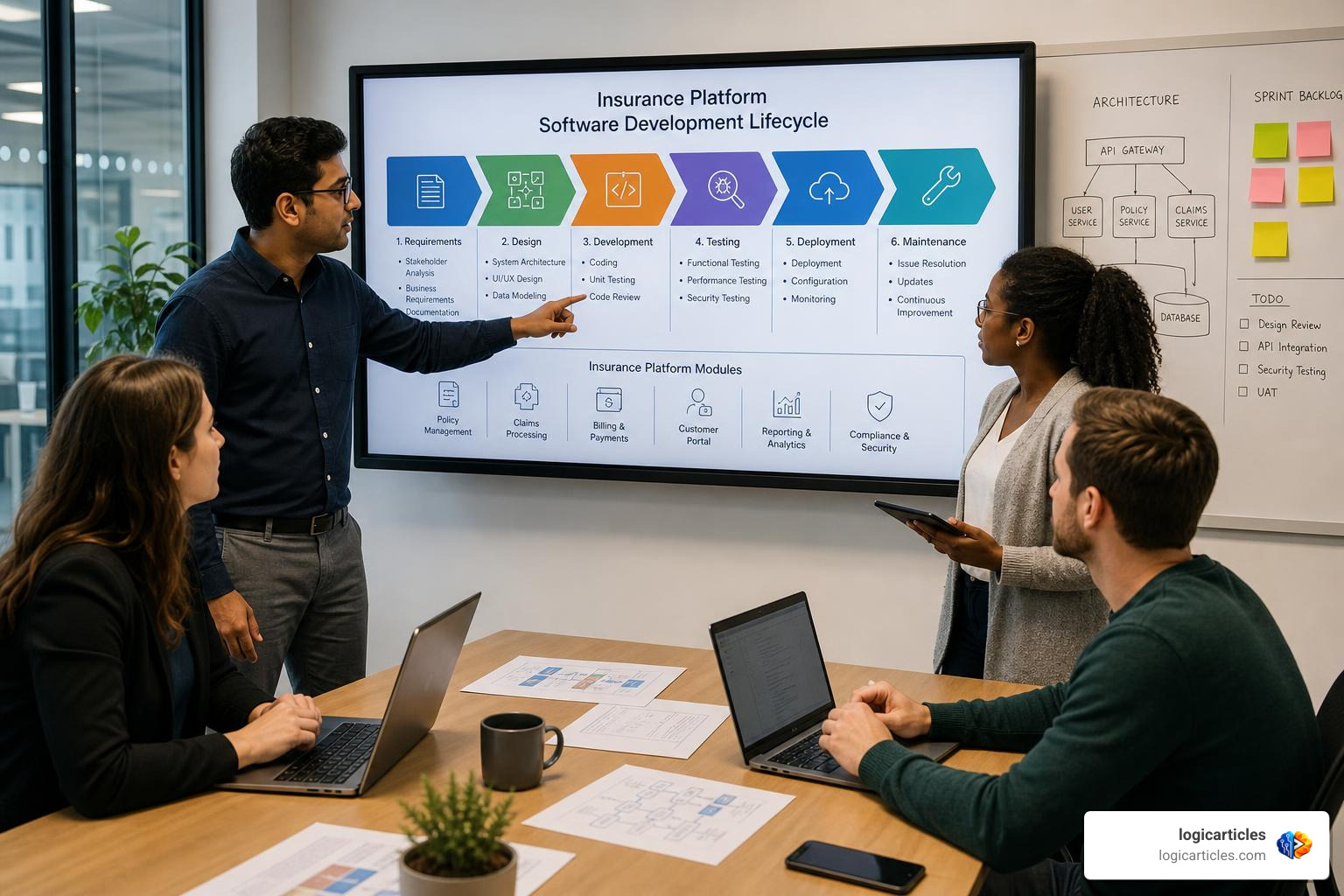
1. Discovery and Feasibility Analysis (Weeks 1-4)
Before writing a single line of code, your development partner must map your existing IT infrastructure, define integration points, and outline the regulatory standards (such as HIPAA or SOC 2) your platform must meet.
2. Architecture Design and Tech Stack Selection (Weeks 5-8)
In 2026, we highly recommend a cloud-native, containerized architecture. This ensures that your system can scale dynamically during peak demand (such as during a major weather event). Common tech stacks use robust, maintainable backends (like Java or .NET) paired with secure REST APIs.
3. Agile Development and Iteration (Months 3-12+)
Using an agile methodology, the development team builds the software in two-week sprints. This allows stakeholders to review working modules (such as the policy creation engine or the claims intake form) and provide feedback in real-time. For a comprehensive look at what to plan for during this phase, check out Insurance Software Development: What You Must Know in 2026 to align your business objectives with your technical roadmap.
4. Rigorous Testing and Compliance Auditing (Ongoing)
Testing must cover security vulnerability scanning, load testing, and strict compliance checks. Every database transaction must have row-level audit trails to satisfy regulatory audits.
5. Deployment and Migration
Migrating data from legacy mainframes to a modern cloud database is often the most delicate part of the project. A phased migration strategy—where data is migrated in batches—helps ensure zero downtime and prevents data loss.
Frequently Asked Questions about Insurance Software
What are the main benefits of custom insurance software over off-the-shelf solutions?
Custom insurance software is built specifically for your unique business workflows, meaning you do not have to pay for unused features or change your operational model. It offers significantly better scalability, reduces compliance violations by 40-60%, lowers data breach costs by 55%, and delivers a much higher long-term ROI (averaging 122.22%).
How long does it take to develop custom insurance software?
A typical custom insurance platform takes anywhere from 6 to 18+ months to develop, depending on its complexity. A basic Minimum Viable Product (MVP) or a single automated module (like a custom underwriting tool) can sometimes be delivered in 2 to 4 months, while a full-scale legacy system replacement will take longer.
What compliance standards must modern insurance software meet?
Depending on your geographic location and the lines of insurance you offer, your software must comply with standards such as NAIC, Solvency II, IFRS 17, HIPAA, GDPR, SOC 1 & SOC 2, and ISO 27001. Custom software allows you to build compliance rules directly into your database architecture, making audits much easier.
Conclusion
In 2026, modern technology is no longer optional for insurance carriers—it is the defining factor that separates market leaders from stagnant businesses. Legacy systems are simply too slow, too expensive, and too risky to maintain in today’s fast-moving regulatory and digital landscape.
Investing in custom insurance software development allows you to break down data silos, automate complex claims and underwriting processes, and deliver the seamless online experiences that 75% of modern customers expect.
At logicarticles, we believe in using practical, logic-driven insights to help businesses navigate digital transformation. If you are ready to future-proof your insurance operations, streamline your workflows, and maximize your ROI, Explore LogicArticles for more expert guides, tool reviews, and actionable marketing insights today.