Why Finding the Best Condo Management Software Matters More Than Ever

The best condo management software can be the difference between a smoothly run community and one buried in paperwork, missed payments, and frustrated residents.
Here’s a quick look at the top platforms to know in 2026:
| Platform | Best For | Standout Feature |
|---|---|---|
| Condo Control | All sizes, self-managed & professional | AI copilot + full accounting suite |
| AppFolio | Mid-to-large portfolios | AI automation (saves ~10 hrs/week) |
| Yardi Breeze Premier | Growing HOA/condo businesses | Violation tracking + resident portals |
| PayHOA | Self-managed associations | Simple finances + communication tools |
| Shiftsuite | Condo/strata management firms | Integrated tech stack + virtual AGM |
| Condo Manager | Accounting-focused managers | Advanced integrated accounting |
| Solume | Smaller communities | Reserve tracking + easy onboarding |
Right now, roughly 74 million Americans live in HOA-governed communities. The industry collectively handles over $90 billion in annual revenue across more than 370,000 community associations. That’s an enormous amount of money, coordination, and responsibility — often managed by volunteer board members juggling real jobs and real lives.
The old way — spreadsheets, paper binders, phone tag with vendors — simply doesn’t hold up anymore. Residents expect transparency. Boards need accountability. Managers need efficiency at scale.
And the frustrations are real. Consider someone who can’t get their account balance after 5 PM. Or a board member who misses an annual meeting because the only notice was pinned to a bulletin board. Or a maintenance request that disappears into a void with zero follow-up. These aren’t edge cases — they’re everyday friction points that the right software can eliminate entirely.
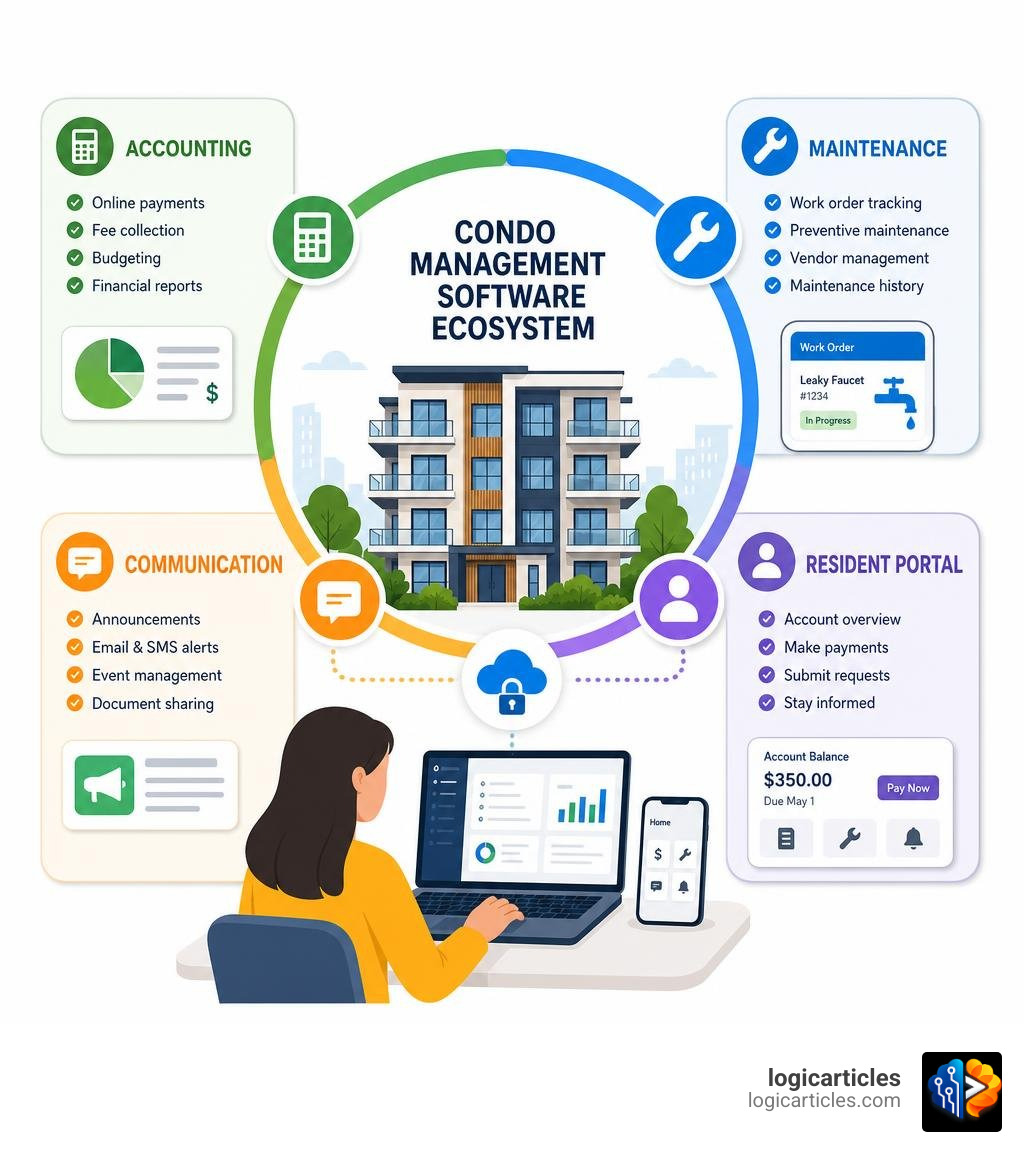
Modern condo management platforms bring together accounting, maintenance tracking, resident communication, and compliance tools into one system. The result: less administrative chaos and more time spent on what actually matters — running a healthy, well-funded community.
What is the BEST Condo Management Software?
At its core, the best condo management software serves as the digital control center for a community association. It is a specialized, cloud-based platform designed to handle the unique financial, operational, and administrative needs of condominiums, housing cooperatives, and homeowners associations (HOAs).
But how does it differ from standard rental property management software?
While standard rental software focuses on landlord-tenant relationships, lease agreements, and tenant turnover, condo management software centers on shared ownership, long-term governance, and community living.
In a rental property, the landlord owns the building and is looking to maximize rental yield. In a condominium, the residents collectively own the building’s common areas and infrastructure. This fundamental difference means standard rental tools simply cannot handle the complexities of condo governance.
For instance, a condo platform must manage:
- Unit Owner Ledgers: Tracking individual owner accounts, assessments, and special assessments rather than monthly tenant rent.
- Board Governance: Facilitating board meetings, tracking votes, managing proxies, and archiving meeting minutes.
- Shared Amenities: Booking party rooms, tennis courts, or guest suites with automated rule enforcement.
- Shared Portfolios: Integrating operations for communities that might combine residential units, commercial spaces, and shared parking structures. To dive deeper into how these multi-faceted portfolios are managed at an enterprise level, you can explore our guide on best real estate portfolio management software in 2026.
Condo software replaces fragmented tools—like disorganized Facebook groups, Nextdoor threads, paper binders, and disjointed Excel sheets—with a single, secure source of truth.
Core Features of Modern Association Platforms
To run a condominium efficiently, we need a platform that connects every part of the operation. The most effective systems in 2026 rely on five core pillars:
- Integrated Accounting: Double-entry accounting built specifically for community associations, complete with operating and reserve fund tracking.
- Automated Communication: Multi-channel systems that send text alerts, emails, and physical mailers to ensure every owner is reached.
- Operations and Maintenance: Work order tracking, preventative maintenance scheduling, and vendor management.
- Governance and Compliance: Tools for digital voting, proxy collection, violation tracking, and document retention.
- AI and Automation: Intelligent copilots that handle routine resident inquiries, draft communications, and automate repetitive tasks.
Financial Tools in the BEST Condo Management Software
Financial transparency is the single most important factor in maintaining trust within a condominium community. When financial records are disorganized, suspicion and disputes quickly follow.
Unlike standard businesses, condominiums must run on strict fund accounting principles. We must manage at least two distinct pools of money: the Operating Fund (for daily expenses like utilities, landscaping, and minor repairs) and the Reserve Fund (allocated for long-term capital replacements, such as a new roof or elevator modernization).
Modern platforms provide integrated accounting solutions that prevent these funds from being commingled. For example, systems like Software Accounting – Condo Manager offer advanced multi-division fund balance sheets and direct payment modules. These tools allow associations to collect common charges electronically and pay vendors without manual double-entry.
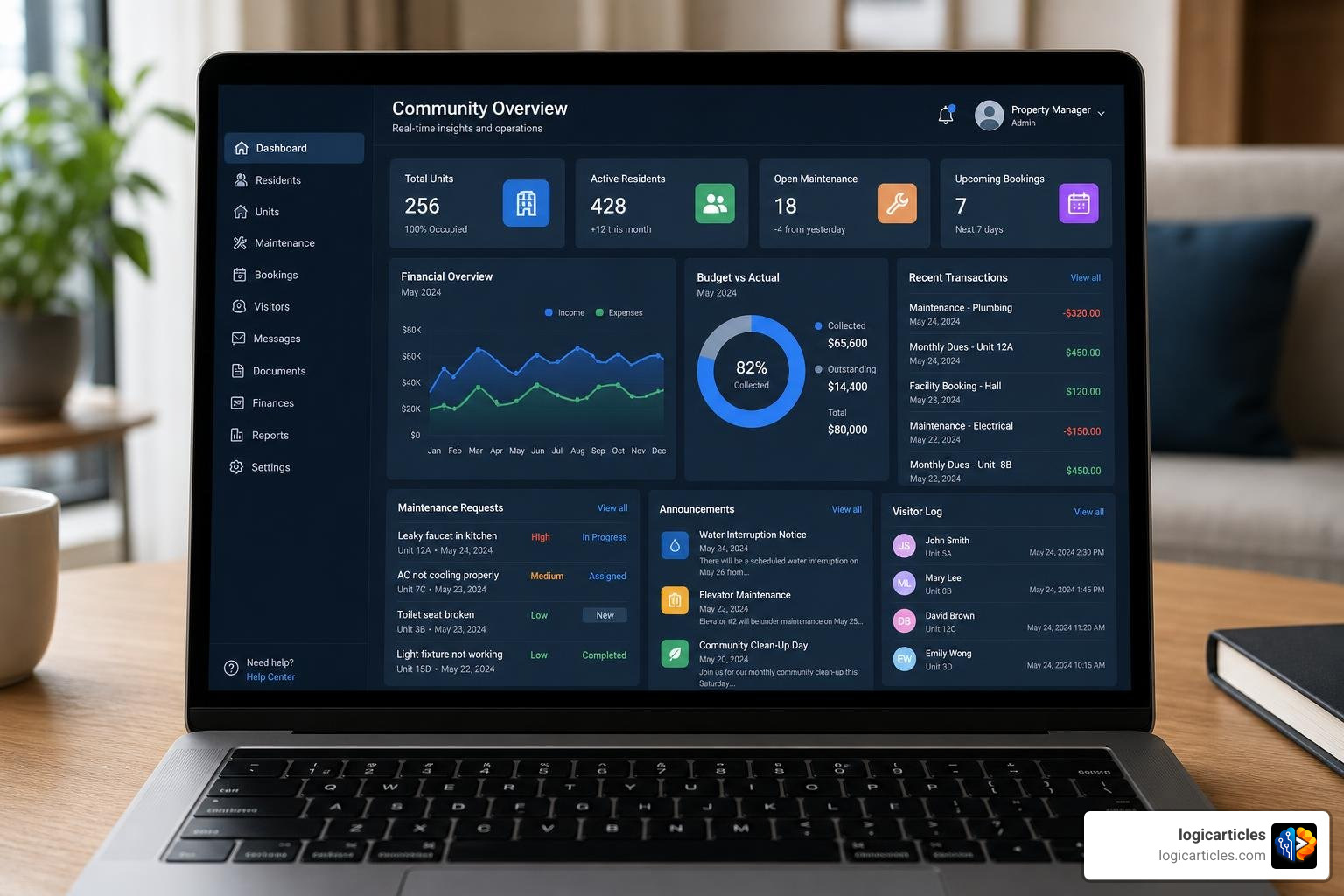
To keep a community financially healthy, the best condo management software must generate board-ready, real-time reports. Here are the essential financial reports your platform should produce at the click of a button:
- Balance Sheet: A real-time snapshot of the association’s assets, liabilities, and equity, keeping operating and reserve funds strictly separated.
- Budget vs. Actual Report: A monthly comparison of actual expenditures against the approved annual budget to identify variance early.
- Accounts Receivable / Delinquency Report: A clear ledger showing which owners are behind on their dues, facilitating automated late fees and collection notices.
- General Ledger: A comprehensive, immutable audit trail of every financial transaction processed by the association.
- Accounts Payable & Vendor Aging: A report tracking outstanding invoices, ensuring utility bills and contractors are paid on time to avoid service disruptions.
Operations and Maintenance in the BEST Condo Management Software
Condominiums are complex physical structures with extensive shared infrastructure. Unlike a single-family home, a high-rise condo building relies on heavy-duty HVAC systems, commercial elevators, cooling towers, and sophisticated security access controls.
When a maintenance request is submitted, it shouldn’t get lost in a property manager’s email inbox. Modern condo platforms feature robust work order systems that operate similarly to specialized CMMS software. Residents can submit maintenance requests directly through their portal, attach photos of the issue, and receive real-time status updates as a technician is assigned.
Furthermore, managing these shared assets requires close coordination with external professionals. The software should integrate seamlessly with contractor management tools to track vendor insurance certificates, manage bids for major capital projects, and generate IRS-compliant 1099 forms automatically.
Whether it’s routine elevator maintenance or emergency plumbing repairs, having a clear digital trail ensures that the board remains protected and the building’s physical asset value is preserved.
Key Benefits of Integrated Community Platforms
Implementing an integrated condo management system brings measurable benefits to everyone involved—from the volunteer board members to the property management staff and the residents themselves.
- For Board Members: Volunteer burnout is a massive issue in community associations. By automating tasks like invoice approvals, violation notices, and document distribution, boards can operate with the professionalism of a paid management firm in a fraction of the time. Integrated task management tools keep board projects on track, ensuring that actions decided during meetings are actually executed.
- For Property Managers: Efficiency is the name of the game. In 2026, leading platforms leverage AI to dramatically increase the manager-to-door ratio. For instance, data shows that over 96% of AppFolio customers reported increased operational efficiency after implementing AI-powered solutions. Early users of AI assistants (like AppFolio’s Realm-X) save an average of 10.3 hours per week on to-do lists and 11.9 hours per week on communication tasks. That is nearly a full day of work reclaimed every week!
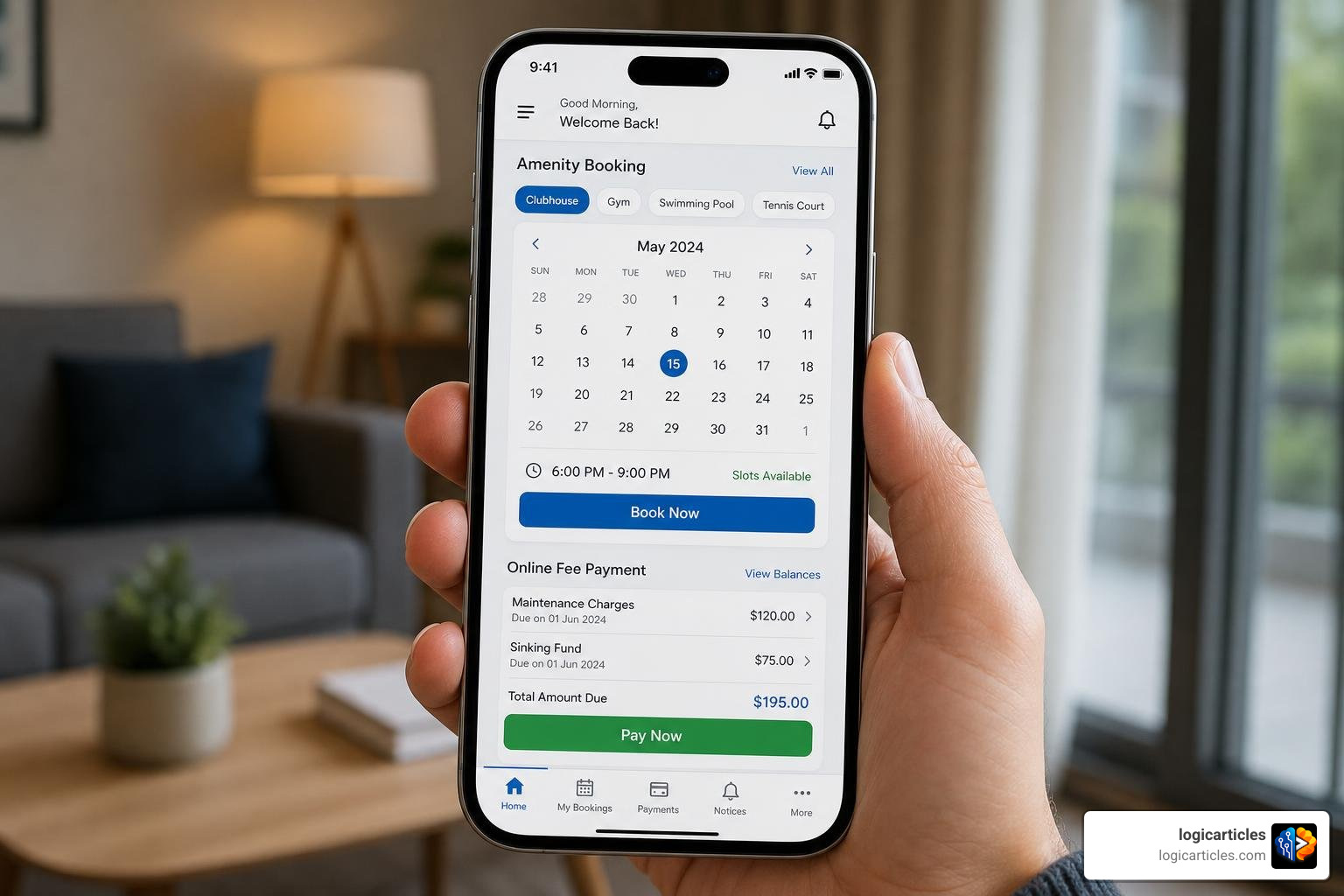
- For Residents: Today’s homeowners expect instant, self-service access to their community. Through secure resident portals, owners can pay their monthly assessments via autopay, book the community clubhouse with instant confirmation, view governing documents, and submit maintenance requests 24/7. This level of transparency dramatically reduces the volume of repetitive phone calls and emails sent to the management office.
How to Evaluate and Select the Right Platform
Selecting the right software for your community requires careful planning. We recommend starting with a clear audit of your current pain points. Are you struggling with delinquent dues? Is communication failing? Are maintenance requests falling through the cracks?
Once you have identified your needs, schedule a free demo with your top choices. During the demo, don’t just watch a polished sales presentation. Ask to walk through real-world scenarios:
- How quickly can we generate a standard board packet?
- Can we customize violation letters and send them via text, email, and USPS simultaneously?
- What does the resident experience look like on a mobile phone?
To help you decide on the overall architecture of your tech stack, consider the trade-offs between all-in-one platforms and specialized software:
| Evaluation Criteria | All-in-One Platform | Specialized Software (Best-of-Breed) |
|---|---|---|
| Data Integrity | High. Single database prevents double-entry errors between operations and accounting. | Moderate. Relies on API integrations which can occasionally break or lag. |
| User Experience | Consistent. Residents, board members, and staff use a single interface and login. | Fragmented. Users may need to log into separate apps for payments, maintenance, and voting. |
| Feature Depth | Broad. Covers everything from accounting to key fobs, though specialized tools may have deeper niche features. | Deep. Extremely advanced features in a single vertical (e.g., dedicated hotel booking). |
| Implementation | Simpler. One onboarding process with a single software provider. | Complex. Requires managing multiple vendor contracts, timelines, and setup fees. |
When you are ready to implement, look for platforms that offer dedicated onboarding assistance. Transitioning your historical data—including owner ledgers, vendor accounts, and physical asset registries—typically takes 60 to 90 days depending on the size of your portfolio.
Leading platforms like Condo Control | Condo, HOA and Property management software make this transition easier by offering 99% ease of setup ratings, comprehensive training resources, and automated data import tools to ensure a stress-free launch.
Frequently Asked Questions about Condo Software
Transitioning to a new digital ecosystem often raises questions for boards and residents alike. Here are some of the most common queries we encounter.
How does condo software differ from standard rental software?
Condo software is built around the concept of cooperative ownership and joint governance. Standard rental software tracks leases, security deposits, and tenant-landlord correspondence.
In contrast, condo management software handles owner equity, reserve fund tracking, special assessments, board meeting proxies, and electronic voting for board elections. It also handles covenant enforcement (violations) and architectural change requests, which are completely irrelevant to rental properties.
While some rental platforms have been retrofitted to accommodate HOAs, specialized platforms like Condo Management Software | Shiftsuite – The Complete Tech Stack or Condo Master, the Online Condominium Management System are designed from the ground up for strata and condo structures.
Is it safe to store community data in the cloud?
Yes, provided you choose a reputable provider. Modern cloud-based condo management software utilizes bank-level encryption (SSL/TLS) for data in transit and at rest.
Additionally, these systems offer role-based permissions. This means a regular resident can only see their own ledger and general community announcements, while a board member has access to financial reports, and a vendor can only view assigned work orders. This is infinitely more secure than storing sensitive owner details, bank routing numbers, and community records in unencrypted spreadsheets or physical filing cabinets.
What is the typical onboarding timeline for new software?
The typical onboarding timeline ranges from 60 to 90 days. During the first 30 days, we focus on auditing and cleaning historical data, setting up the chart of accounts, and configuring system settings.
The next 30 days involve importing owner directories, setting up recurring billing, and training staff.
In the final 30 days, the platform is launched to the community, resident portals are activated, and the first automated invoices are sent out.
Conclusion
The digital transformation of community association governance is no longer a luxury—it is a necessity. In 2026, managing a condominium with paper binders and manual spreadsheets is a recipe for volunteer burnout, financial errors, and resident frustration.
By implementing the best condo management software, communities can automate tedious administrative tasks, protect their reserve funds, and provide residents with the modern, self-service experience they expect. Whether you are a professional property manager looking to scale your business or a self-managed board aiming to run a more transparent community, the right software is your ultimate tool for success.
For more expert guides, software reviews, and deep dives into the tools shaping our digital world, explore our complete best software category at logicarticles.