The Best Envelope Budgeting Apps in 2026: A Quick Answer
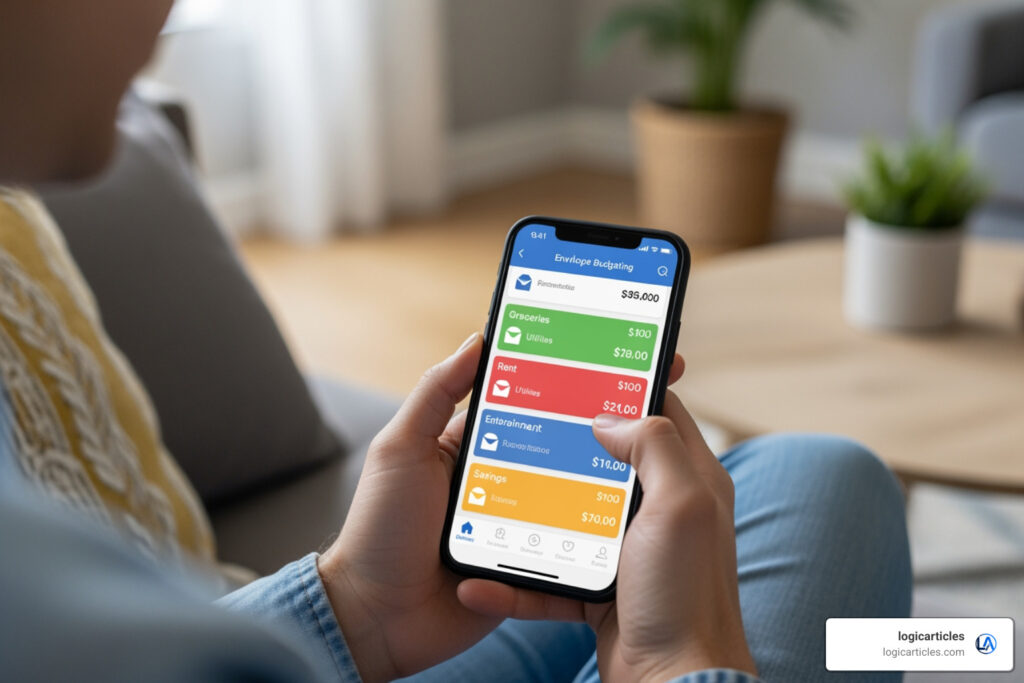
Looking for the right envelope budgeting app? Here’s a fast overview of the top options:
| App | Best For | Price | Standout Feature |
|---|---|---|---|
| Goodbudget | Simplicity & sharing | Free / Premium | 3M+ downloads, cross-device sync |
| Envelope | Banking + budgeting | ~$10/mo or $40/yr | Built-in checking account |
| YNAB | Zero-based budgeters | ~$14.99/mo | Deep reporting & support |
| EnvelopeBudget | Affordability | $4/mo or $40/yr | 34-day free trial |
| EnvelopePro | Beginners | Free / $14.99/mo | No bank sync required |
| Spense | Proactive spenders | Free | Plaid auto-sync |
Managing money has never been more confusing. You earn a paycheck, it hits your account, and somehow it’s gone before the month ends.
That’s exactly the problem the envelope budgeting method was built to solve. Traditionally, people would divide their cash into labeled envelopes — one for groceries, one for rent, one for fun. When the envelope was empty, spending stopped. Simple. Effective.
The only catch? Carrying around physical cash in a world of debit cards and contactless payments isn’t practical or safe.
That’s where digital envelope apps come in. They take the same proven logic and move it to your phone. No cash required.
In this guide, we break down how these apps work, which ones are worth your time, and how to pick the right one for your life.
What is an Envelope Budgeting App and How Does it Work?
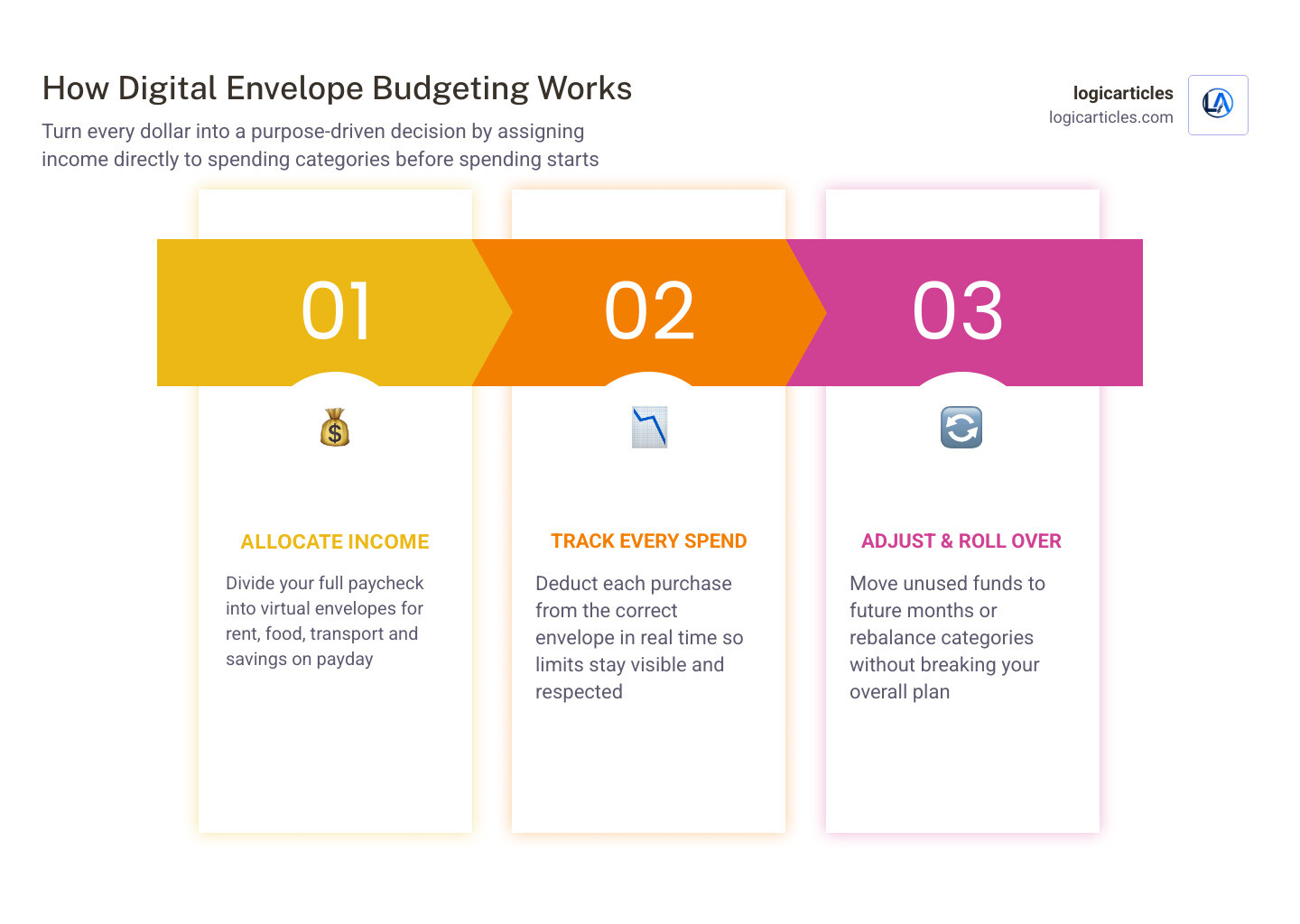
At its core, an envelope budgeting app is a digital version of the “cookie jar” method. Instead of physical paper envelopes stuffed with $20 bills, you have virtual categories. When you get paid, you allocate every single dollar to a specific purpose. This is often referred to as zero-based budgeting—where your income minus your expenses equals zero.
The process is straightforward:
- Income Allocation: You tell the app how much you earned.
- Fill Your Envelopes: You distribute that money into virtual buckets like “Rent,” “Groceries,” “Dining Out,” and “Gas.”
- Real-Time Tracking: As you spend money using your debit or credit card, you record the transaction in the app (or it syncs automatically). The app then deducts that amount from the corresponding envelope.
- Set Spending Limits: If your “Dining Out” envelope is down to $5, you know you’re eating at home for the rest of the week.
One of the standout modern solutions is Budgeting App with Built-In Banking | Envelope , which takes this a step further by integrating your actual bank account with the envelopes. This means your “budget” and your “bank balance” are the same thing, eliminating the need to constantly cross-reference two different apps.
Digital apps also allow for “sinking funds”—envelopes for irregular expenses like annual car insurance or holiday gifts. You can roll over balances from month to month, so if you didn’t spend all your grocery money in May, it’s still there waiting for you in June. This proactive approach forces you to make spending decisions before you swipe your card, rather than looking back at a spreadsheet in regret at the end of the month.
The Digital Evolution of the Envelope Budgeting App
We live in a cashless society. In 2026, most of us haven’t touched a physical $50 bill in months. The evolution of the envelope budgeting app has made this classic system relevant again.
Automation is the biggest game-changer. Modern apps can automatically sync with your bank via secure services like Plaid, categorize your transactions, and even send you notifications if you’re nearing a limit. Security has also evolved; your data is backed up to the cloud automatically, and multi-device sync ensures that if you and your partner are both out shopping, you’re looking at the same real-time balance.
Some apps even offer location-based widgets. Imagine walking into a grocery store and your phone automatically displays your “Groceries” envelope balance on your home screen. That’s the power of the digital evolution.
How Digital Envelopes Compare to Traditional Cash
While your grandmother’s cash system worked wonders for her, digital envelopes offer several advantages for the modern user.
| Feature | Traditional Cash Envelopes | Digital Envelope App |
|---|---|---|
| Safety | High risk (loss/theft) | High (FDIC insured/Encrypted) |
| Convenience | Low (carrying cash is bulky) | High (always on your phone) |
| Interest | 0% (cash doesn’t grow) | Up to 3.07% APY in some apps |
| Tracking | Manual receipts/memory | Automatic history & reports |
| Split Transactions | Difficult to manage | Easy (split one bill into 3 envelopes) |
| Online Shopping | Impossible | Seamless |
Key Benefits of Using Digital Envelopes in 2026

Why are so many people switching to an envelope budgeting app? Because it actually changes behavior. Unlike traditional tracking apps that just tell you that you already spent too much, envelope apps prevent the overspending from happening in the first place.
Using a tool like the Envelope: Budgeting & Banking – App Store – Apple provides immediate financial clarity. You stop asking “Can I afford this?” based on your total bank balance and start asking “Do I have enough in my ‘Fun’ envelope?”
This shift leads to:
- Impulse Control: When you see a physical (or digital) limit, you’re less likely to buy that third coffee of the day.
- Debt Payoff: By giving every dollar a job, users often find “hidden” money they can throw at credit card balances or student loans. Some users have reported paying off over $100,000 in debt just by gaining this level of control.
- Household Harmony: For couples, joint accounts and synced envelopes mean no more arguments about who spent what. Everyone sees the same “truth.”
- Net Worth Tracking: Many modern apps now include a net worth tracker, allowing you to see your progress beyond just your monthly spending.
Essential Features to Look for in an Envelope Budgeting App
When we evaluate these tools, we look for features that make the system sustainable. If an app is too hard to use, you’ll quit after two weeks.
- Bank Sync vs. Manual Entry: Some people prefer the discipline of manual entry (like in EnvelopePro), while others want the convenience of automatic syncing via Plaid (like in Spense).
- Joint Accounts: If you’re budgeting with a partner, look for apps that offer built-in joint accounts with shared transaction feeds.
- Virtual Cards: Some apps allow you to create virtual debit cards tied to specific envelopes. You could have a “Subscriptions” virtual card that only has access to the money you’ve set aside for Netflix and Spotify.
- High-Yield Interest: In 2026, your money should be working for you. Look for apps that offer interest (like the 3.07% APY offered by some providers) on the money sitting in your “Protected” or “Savings” envelopes.
- Early Paycheck Access: Many digital banking/budgeting hybrids now allow you to access your direct deposit up to two days early.
Security and Privacy in Modern Budgeting Tools
We know that connecting your financial life to an app can feel risky. However, modern apps use bank-level security. This includes 256-bit encryption and read-only access—meaning the app can see your transactions to categorize them, but it cannot move your money around without your permission.
Furthermore, if the app includes banking features, ensure it is FDIC insured up to $250,000 through a partner bank. Biometric authentication (Face ID or Touch ID) adds another layer of protection, ensuring that even if you lose your phone, your budget remains private.
Implementation Strategies for Beginners
Ready to start? Don’t try to be perfect on day one. Most people take about three months to really get the hang of an envelope budgeting app.
- Pick Your App: Start with a free version or a trial. For instance, Envelope Budgeting App | Free Budget Tracker – EnvelopeBudget offers a 34-day trial with no credit card required.
- Create Your Categories: Start simple. Rent, Groceries, Utilities, Transport, and “Everything Else.” You can get more granular later.
- Fund Your Envelopes: Look at your current bank balance and decide what that money needs to do before you get paid again.
- Track Every Expense: Whether it’s a $2 candy bar or a $2,000 rent check, it needs to come out of an envelope.
- Review and Adjust: At the end of the first week, you’ll probably realize you under-budgeted for groceries. That’s okay! Move money from another envelope to cover it.
Common Challenges and How to Overcome Them
The biggest hurdle is manual discipline. If you choose an app without bank sync, you have to remember to enter every transaction. We recommend doing this at the cash register—it takes three seconds and prevents a backlog of receipts.
Another challenge is the guilt of overspending. Traditional budgeting feels like a failure if you go over. In the envelope world, we call it “rolling with the punches.” If you overspend in one category, you simply take money from another. The app helps you see the trade-off: “If I spend more on this dinner, I have less for my vacation fund.” This isn’t a failure; it’s an informed choice.
Technical setup can also be a bit of a headache, especially with bank syncing issues. If your bank’s connection breaks, don’t panic. Most apps have a “reconcile” feature that lets you manually adjust your balance to match your bank statement.
Frequently Asked Questions about Envelope Budgeting
Is an envelope budgeting app better than a spreadsheet?
For most people, yes. Spreadsheets are “reactive”—you look at what you spent last month. An envelope budgeting app is “proactive”—it tells you what you can spend right now. Plus, apps live on your phone, making them much easier to use while you’re actually at the store.
Can I use an envelope budgeting app with my partner?
Absolutely. Most top-tier apps like Goodbudget and Envelope offer syncing across multiple devices. This ensures that if your spouse spends $50 on gas, you see that the “Gas” envelope is $50 lighter immediately, preventing “accidental” overspending.
Do I have to connect my bank account to use these apps?
No. Many apps, such as EnvelopePro or the free version of Goodbudget, allow for completely manual entry. This is a great option for those who are highly concerned about privacy or who want the extra discipline of recording every transaction themselves.
Conclusion
At logicarticles, we believe that the best tools are the ones that simplify your life while providing clear, actionable data. The envelope budgeting app is a perfect example of this. By combining the psychological power of the old-school envelope system with the convenience of 2026 technology, these apps give you a level of control over your finances that a simple checking account never could.
Whether you’re trying to climb out of debt, save for your first home, or just stop wondering where your money went, there is an app on this list that can help. Start small, be patient with yourself during the adjustment period, and enjoy the peace of mind that comes with knowing exactly where every dollar is going.
For more insights on the latest financial tools and marketing software, check out our More info about best software page. Achieving financial freedom starts with a single step—or in this case, a single virtual envelope.