Which Software Is Best for a Landlord in 2026?
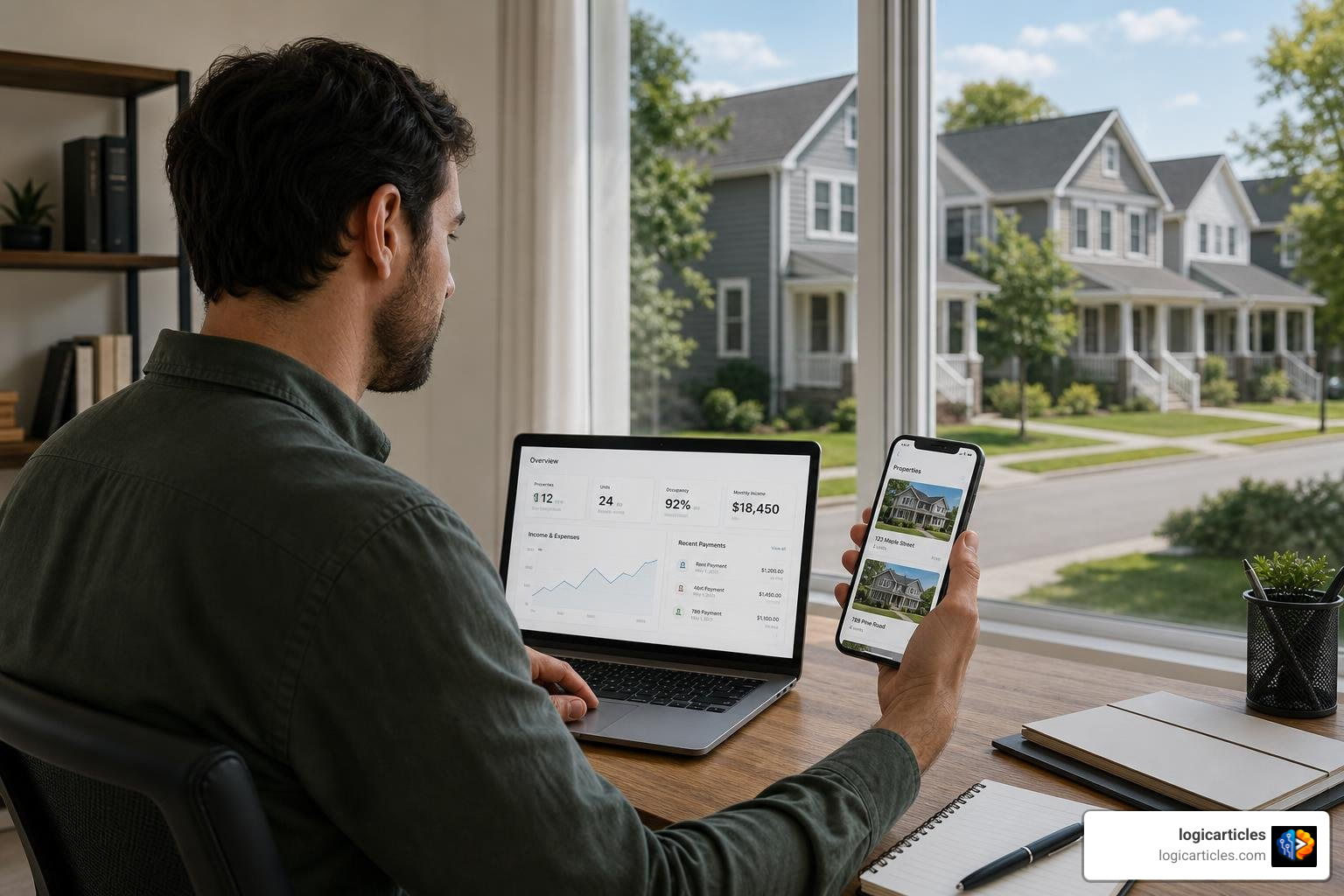
Which software is best for a landlord? Here’s a quick answer based on portfolio size:
| Portfolio Size | Best Software Options |
|---|---|
| 1-10 units (DIY) | Avail, TurboTenant, Landlord Studio, Innago |
| 11-50 units | Baselane, Hemlane, Rentec Direct, DoorLoop |
| 50-200 units | Buildium, Yardi Breeze |
| 200+ units | AppFolio |
The right pick depends on three things: how many units you manage, what features you actually need, and how much you want to spend.
Managing rental properties in 2026 is a different game than it was five years ago. Landlords are juggling tenant screening, rent collection, maintenance requests, lease renewals, and tax reporting — often across multiple properties — all at once.
For a long time, a spreadsheet and a filing cabinet got the job done. Not anymore.
As portfolios grow, manual tracking breaks down fast. Errors creep in. Payments get missed. Tax season becomes a nightmare. And chasing tenants for rent is nobody’s idea of a good time.
That’s exactly why purpose-built landlord software exists — and why so many landlords are making the switch.
The challenge is that there are dozens of platforms out there, each claiming to be the best. Some are free. Some charge per unit. Some use AI to automate nearly everything. Others are simple dashboards built for the landlord managing two rental houses on the side.
This guide cuts through the noise and helps you find the right fit.
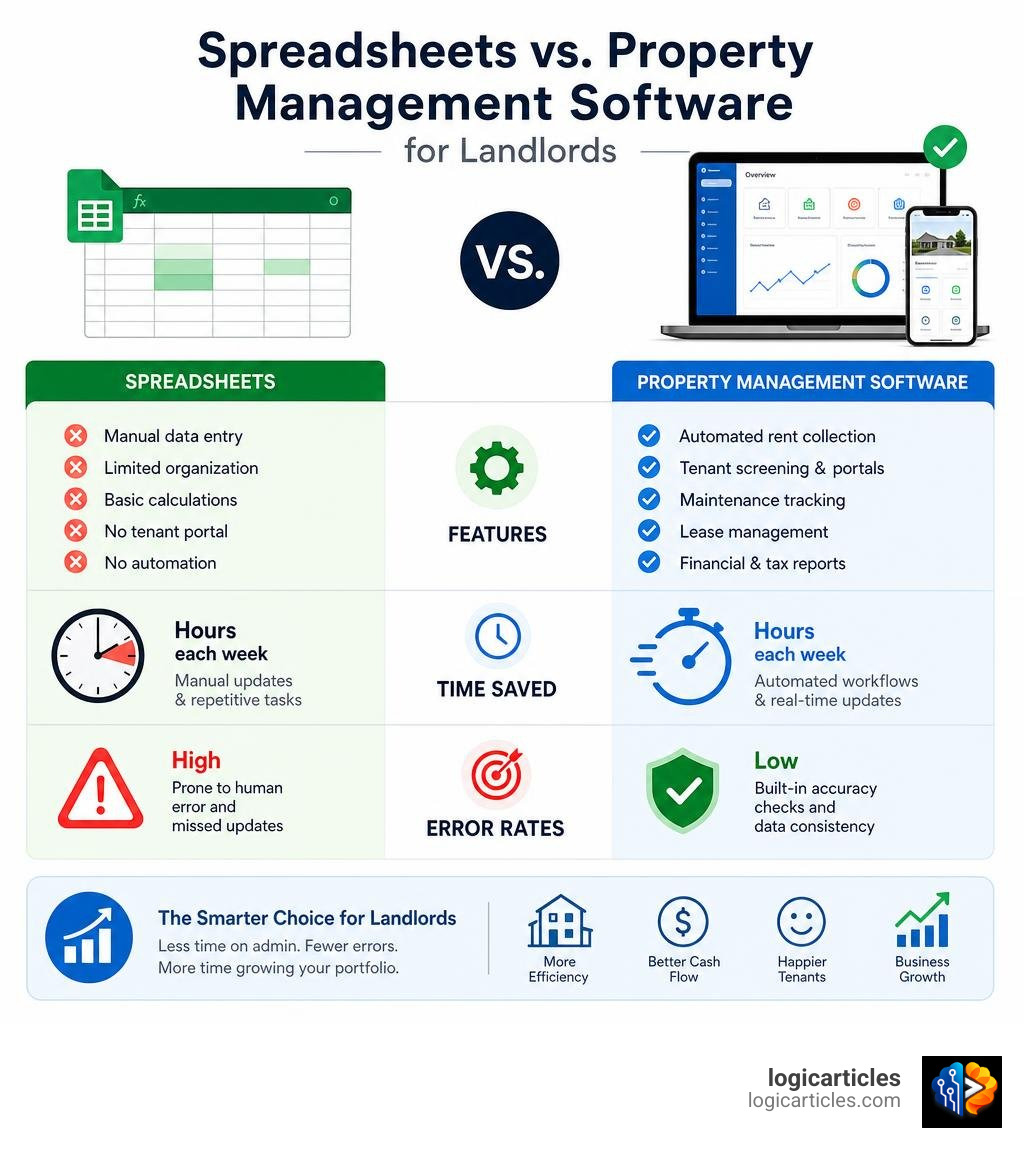
Key Features to Look For: Which Software is Best for a Landlord?
When you begin evaluating the Best Software For Landlords, it is easy to get overwhelmed by flashy marketing and endless lists of features. However, the Best Rental Property Software is not necessarily the one with the most bells and whistles. It is the one that directly solves your day-to-day administrative headaches.
To determine which software is best for a landlord, we first need to look at the core features that drive operational efficiency.
- Online Rent Collection: The lifeblood of your rental business is cash flow. Look for platforms that support automated ACH transfers. Premium tools often offer accelerated payment processing (like “FastPay”), which gets the money into your account in days rather than a week. Many platforms also offer credit-boosting features for tenants, reporting their on-time payments to credit bureaus to encourage promptness.
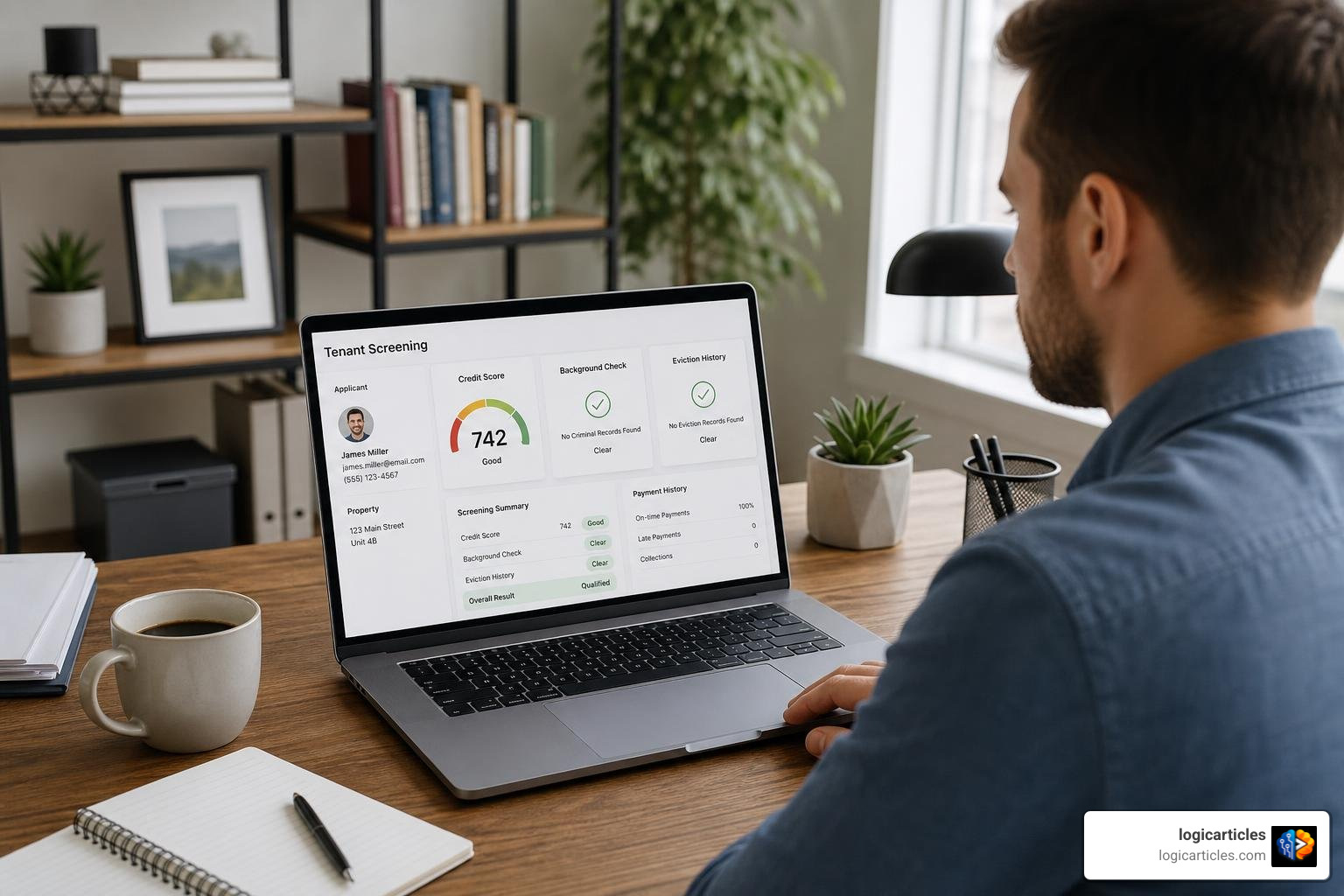
- Tenant Screening: A bad tenant can cost you thousands in unpaid rent and legal fees. Robust software should allow you to run comprehensive background checks—including credit, criminal, and eviction history. By utilizing secure integrations with bureaus like TransUnion through platforms like Property Management Software for Landlords | Landlord Studio, you can request these reports directly. This setup allows applicants to input their own sensitive information (such as Social Security Numbers) securely, eliminating your liability for storing sensitive data.
- Lease Management: Writing lease agreements from scratch is a legal minefield. Look for platforms that offer lawyer-reviewed, state-specific lease templates. This ensures you comply with local landlord-tenant laws. Digital signing features allow you to execute leases quickly without printing a single page.
Core Operations and Financial Tracking
While finding tenants and collecting rent are highly visible tasks, the real work happens behind the scenes in your bookkeeping. Landlords are running a business, and that business requires strict accounting.
Unlike general accounting tools like QuickBooks, which can feel overly complex and are not designed for property-specific tracking, dedicated landlord software organizes finances around your properties and units.
A primary goal of property accounting is tax preparation. Your software should automatically categorize every expense to align with the IRS Schedule E (Form 1040) categories. This ensures you can easily hand over clean reports to your CPA or instantly generate tax documents yourself, saving hours of manual data entry during tax season.
Furthermore, integrating these tools with robust financial systems can protect your business from cash-flow volatility, as detailed in our guide on the Best Accounting Software Solutions For Risk Management In 2026.
How to Decide Which Software is Best for a Landlord Managing Hybrid Rentals
A growing trend in 2026 is the hybrid portfolio—where a landlord manages both long-term residential leases and short-term (vacation) rentals. Managing this mix within a single system can be incredibly difficult because the operational demands are so different.
Long-term rentals require monthly rent collection, annual lease renewals, and standard tenant screening. Short-term rentals require rapid turnover coordination, channel management (syncing Airbnb, VRBO, etc.), and frequent guest communication.
When looking for a unified solution, landlords should look for platforms built with a mobile-first philosophy that can handle rapid scheduling alongside traditional tenant portals. Mobile parity is critical here: you need to be able to toggle from a standard 12-month lease dashboard to a cleaning crew coordination calendar while standing inside a unit. Platforms like Rentalize 360 | Mobile-First Platform for Landlords are designed specifically to bridge this gap, ensuring that hybrid operators do not have to pay for two separate software subscriptions to run their businesses.
Comparing Software Solutions by Portfolio Size and Pricing Models
One size does not fit all in property management. The tool that makes sense for a landlord with a single duplex will likely choke a property manager overseeing a multi-family complex.
To help visualize how the top platforms compare across different tiers, we have mapped out their pricing structures and ideal use cases:
| Software Platform | Starting Price | Pricing Model | Best For | Trustpilot / Capterra Rating |
|---|---|---|---|---|
| Avail | $0 / unit | Free tier / $9 per unit premium | DIY Landlords (1-10 units) | 4.1 (Trustpilot) |
| Landlord Studio | Free basic tier | Paid plans by unit count | Rent & Expense Tracking | 4.9 (Capterra) |
| Baselane | $0 / month | Free banking & bookkeeping | Financial-focused Landlords | 4.6 (Trustpilot) |
| LandlordPro | $0 (up to 4 units) | Flat-rate tiers ($19 to $99/mo) | Independent Landlords | N/A |
| Rentora | $39 / month | Sub + per-unit fee | AI-driven automation | N/A |
| RealAnalyticsPro | $24 / month (annual) | Flat rate, no per-unit fees | Analytical DIY Landlords | N/A |
| Buildium | $62 / month | Subscription + bank setup fees | Mid-sized portfolios (50+) | 4.3 (Trustpilot) |
| AppFolio | $280 / month minimum | Per-unit fee with high minimum | Large portfolios & enterprise | 3.0 (Trustpilot) |
When choosing a platform, you must look at how the pricing model scales with your business. Some platforms charge a flat monthly fee, while others charge a per-unit fee.
If you plan to scale, a per-unit fee can quickly eat into your margins. Conversely, if you have a small portfolio, paying a high monthly minimum (such as AppFolio’s $280/month minimum or Propertyware’s $250/month minimum) makes no financial sense.
For landlords managing specialized properties, it is also worth checking out our dedicated roundups for the Best Apartment Management Software and the Best Commercial Property Management Software to see how niche requirements alter the cost-benefit equation.
Determining Which Software is Best for a Landlord with Small Portfolios
For landlords managing 1 to 20 units, cost-efficiency and simplicity are the top priorities. You do not need enterprise-grade workflows; you need to get rent paid on time and keep your receipts organized without spending half your weekend on administrative work.
At this scale, platforms like Property Management Software for Small Landlords (1-20 Units) | RealAnalyticsPro offer a compelling alternative to traditional per-unit pricing. By charging a flat fee with no per-unit upsells, they keep your software overhead entirely predictable.
For DIY landlords, the focus should be on reducing friction for your tenants. If a tenant has to download a heavy, complex app just to pay rent, they are more likely to resist. Browser-accessible tenant portals that allow quick ACH setup are highly effective at this scale, maintaining a professional experience without unnecessary complexity.
Scaling to Large Portfolios and Enterprise Systems
Once a portfolio grows past 50 units, the operational bottlenecks change. You are no longer just managing properties; you are managing a team of leasing agents, maintenance techs, and external vendors.
At this enterprise level, platforms like Buildium and AppFolio become the industry standards. AppFolio, for example, consistently ranks as a top property management software for growth-minded operators managing anywhere from 100 to over 10,000 units. According to the G2 Summer 2026 Grid Report, it ranks highest in ease of use and user adoption for large-scale operations.
These enterprise platforms offer advanced features like automated accounts payable, bank reconciliation workflows, and robust team permission settings. If you are managing specialized communities, integrating these systems with the Best Condo Management Software can help streamline HOA communication and board reporting.
The Role of AI, Automation, and Mobile Parity in Modern Property Management
The biggest shift in property management software in 2026 is the transition from passive record-keeping to active automation. Traditional software acted as a digital filing cabinet—it recorded that a task was completed by a human. Modern, AI-powered software actually executes the tasks under human supervision.
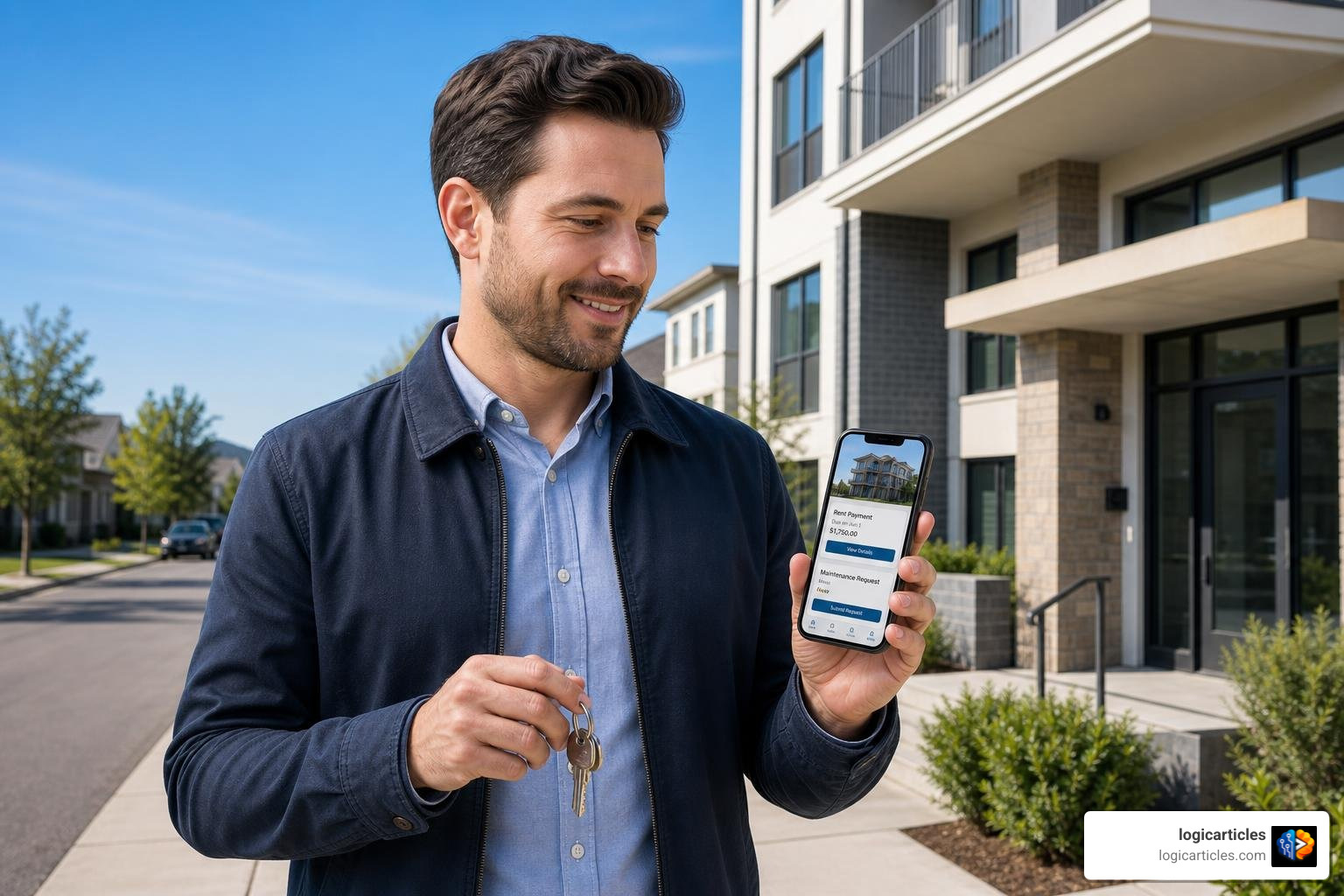
This evolution has massive implications for efficiency. For instance, early users of AppFolio’s Realm-X AI assistant and messages report saving an average of 10.3 hours per week on completing their to-do lists and 11.9 hours per week on communication-related tasks. Over 96% of surveyed customers have reported a noticeable increase in overall operational efficiency after adopting these AI solutions.
These productivity boosts are not limited to large corporations. Independent landlords can leverage similar automations by utilizing tools highlighted in our review of the Best Task Management Software In 2026 Tested.
At the same time, platforms like Rentora – Property Management Platform are proving that AI can completely change the tenant experience. Rentora’s AI tools claim a 98% on-time rent collection rate by automatically managing tenant communication, predicting maintenance issues, and streamlining move-in workflows.
AI-Powered Maintenance and Communication
Maintenance coordination is historically the most stressful part of being a landlord. An emergency leak at 11:00 PM can ruin your week.
AI-powered platforms can now triage these issues autonomously. When a tenant submits a maintenance request (or even calls an AI assistant), the system can:
- Parse the tenant’s description or photo to diagnose the issue.
- Cross-reference the age and repair history of the equipment (for example, flagging a 12-year-old water heater with a high failure risk).
- Automatically contact vetted local contractors, check their availability, and schedule a repair window.
For landlords who prefer a simpler, human-built approach that still leverages modern efficiency, LandlordPro – Property Management Software Built by a Landlord, for Landlords provides an intuitive middle ground. It features AI receipt scanning to instantly extract vendor names, dates, and amounts from paper receipts, alongside structured eviction timeline tracking and property-specific mortgage cards.
If you are frequently coordinating with local service providers to keep your properties looking sharp, you might also find our guide to the Best Software For Lawn Care Business useful for understanding how vendors manage their own schedules and dispatching.
Transitioning from Spreadsheets to Dedicated Platforms
Making the jump from a manual spreadsheet or a legacy offline database to modern property management software can feel daunting. Many landlords delay the transition because they fear losing historical data or disrupting their active tenants.
To ensure a smooth transition, we have outlined the ideal migration timeline:
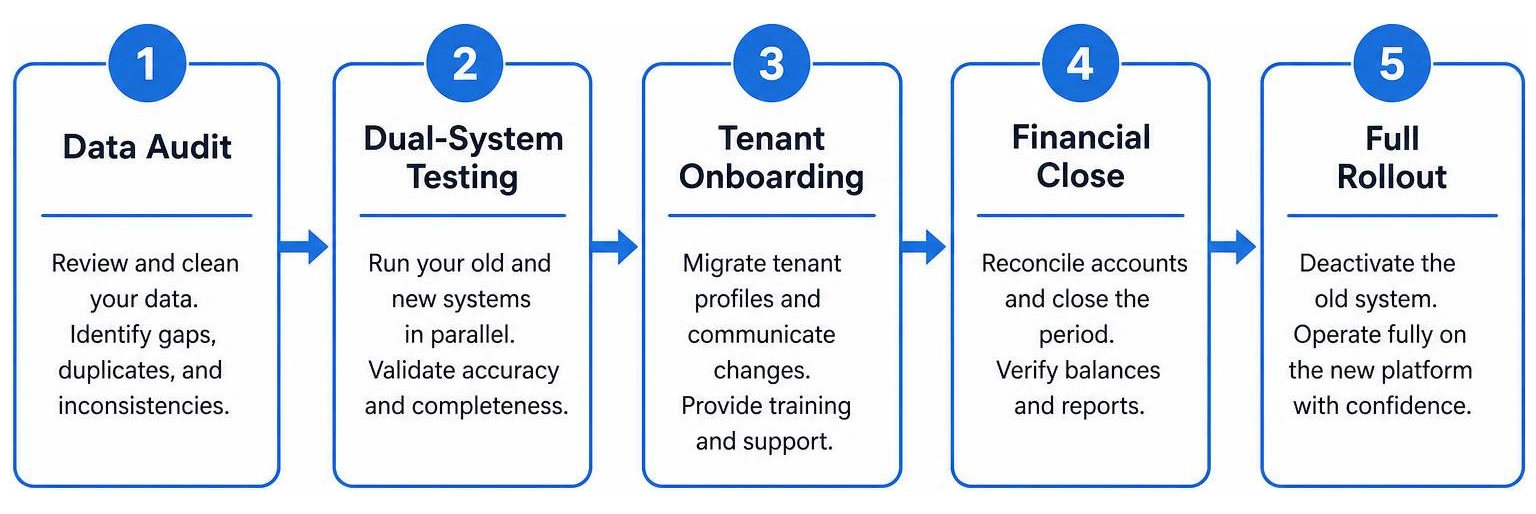
During this transition, it is wise to run a “dual-system” period. For 30 to 60 days, keep your old spreadsheet active alongside your new platform. This allows you to validate that all rent payments, security deposits, and maintenance histories are being recorded accurately before you completely shut down the old process.
Choosing a platform with a built-in Best Property Management CRM Software will also make tenant communication during this onboarding phase significantly easier.
Frequently Asked Questions About Landlord Software
Is free property management software sufficient for scaling a rental business?
Yes, but with caveats. Free platforms like Innago or the basic tier of Avail | Landlord Software & Property Management Software for Rental Property Management are fantastic for landlords with 1 to 10 units. They offer core tools like listing syndication, tenant screening, and online rent collection at zero monthly cost to the landlord.
However, these “free” platforms usually monetize by charging transaction fees to your tenants (such as ACH or credit card processing fees) or charging applicants directly for screening reports. As you scale past 15 or 20 units, these fees can add up, and your tenants may prefer a platform that does not charge them to pay rent. Upgrading to a paid tier (like Avail’s Unlimited Plus for $9/unit/month) often waives these ACH fees, unlocks custom lease options, and provides faster payment processing.
What are the risks of continuing to use spreadsheets for property management?
The primary risks are human error and fragmented data. A single broken formula in an Excel sheet can throw off your entire portfolio’s Net Operating Income (NOI) calculation.
Additionally, spreadsheets cannot automatically send late rent reminders, track maintenance ticket lifecycles, or securely store tenant background checks. Relying on spreadsheets also increases security risks, as sensitive personal data is often stored in unencrypted local files.
If you are managing major renovation projects across your portfolio, you may also need specialized tracking. In those cases, keeping your property management software separate from your construction tracking via the Best Construction Financial Management Software is critical to maintaining clean books.
How long does it typically take to transition to a new property management platform?
For a small portfolio (under 20 units), you can easily get set up and onboard your tenants within a week. For mid-to-large portfolios (50+ units), the industry standard transition period is between 60 to 90 days. This longer timeline is necessary to clean historical data, configure bank accounts, run dual-system testing, and ensure a clean financial close at the end of the month.
Conclusion
Choosing which software is best for a landlord is a strategic decision that directly impacts your portfolio’s profitability and your personal peace of mind.
If you are a DIY landlord managing a handful of units, prioritizing simplicity, ease of use, and straightforward tax reporting (via platforms like Avail or Landlord Studio) will save you hours of administrative work. If you are managing a rapidly growing or enterprise-scale portfolio, investing in a robust, AI-powered system like AppFolio will allow you to scale your unit count without having to scale your headcount proportionally.
Take the time to audit your current administrative bottlenecks, take advantage of free trials, and pick a platform that will grow with your investment goals.
Ready to explore more tools to optimize your business operations? Explore more software solutions on LogicArticles.