Why Enterprise Rank Tracking Software Matters More Than Ever in 2026
Finding the best enterprise rank tracking software is no longer just about checking where you rank on Google. In 2026, the search landscape has fundamentally changed — and most tracking tools haven’t kept up.
Here’s a quick answer if you’re comparing options right now:
Top Enterprise Rank Tracking Software in 2026:
| Platform | Best For | Key Differentiator |
|---|---|---|
| seoClarity | Large in-house teams | Real-time, unlimited competitor analysis |
| Advanced Web Ranking (AWR) | Global multi-engine tracking | Pixel position + 4,000+ search engines |
| Dragon Metrics | International SEO | 100,000+ local tracking locations |
| DemandSphere | BI-heavy enterprises | Native BigQuery integration, Visual Rank |
| Rankar Rank Tracker | Agencies | Backlink ROI per keyword, GSC sync |
Three shifts are driving the urgency to upgrade your tracking stack right now:
- Zero-click searches now account for over 60% of all Google queries
- AI Overviews can reduce organic click-through rates by as much as 61% when they appear
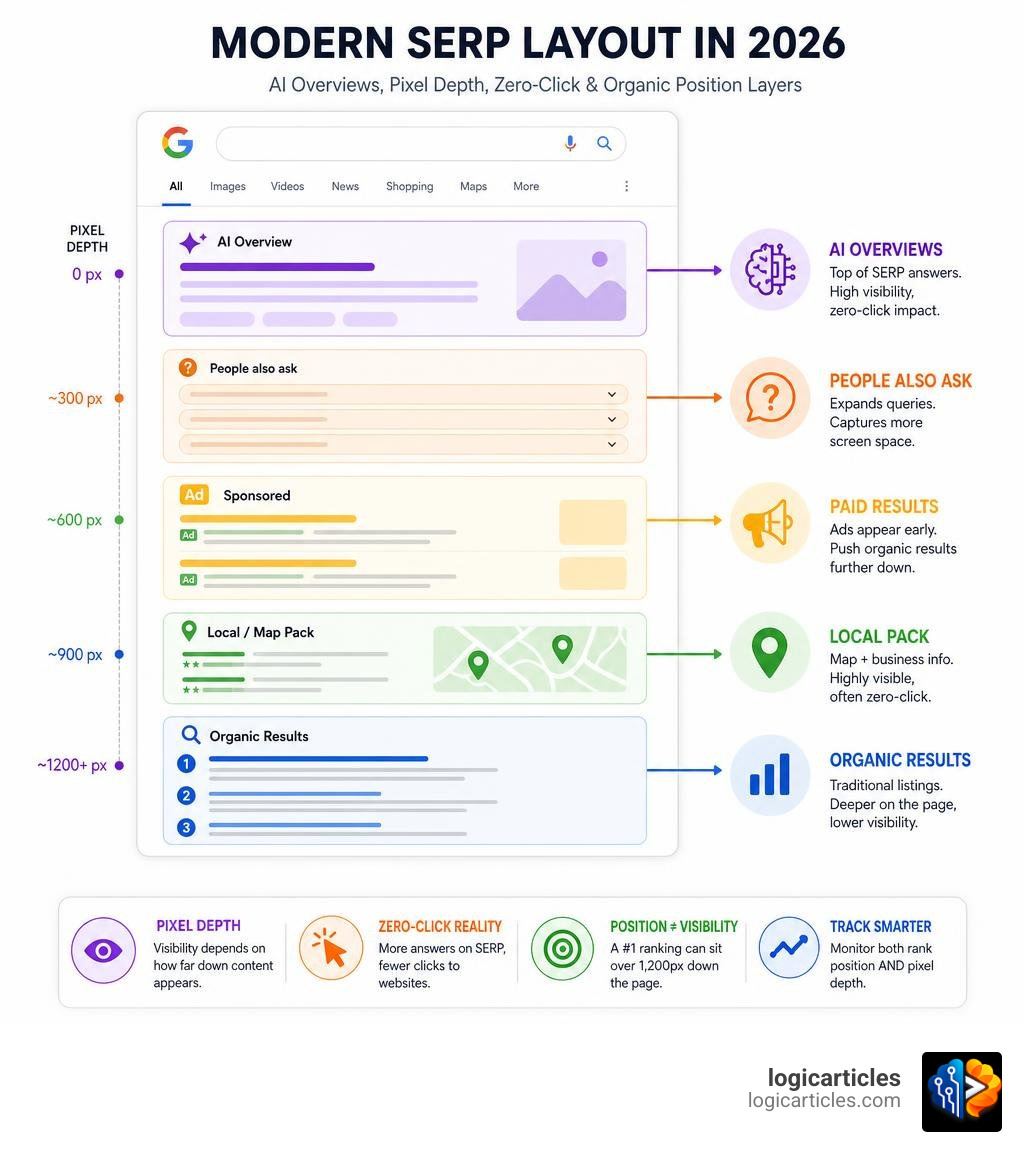
- Pixel depth has replaced simple rank position as the true measure of visibility — a “#1 ranking” can sit over 1,200 pixels down the page when AI answers, ads, and knowledge panels appear above it
On top of that, Google’s deprecation of the num=100 parameter in late 2025 — what analysts are calling “The Great Decoupling” — broke how most tools collected bulk ranking data, forcing enterprise platforms to rebuild their data infrastructure from the ground up.
The tools that adapted are now far more accurate. The ones that didn’t are quietly giving you stale, incomplete data.
This guide compares the platforms that made the cut.
Key Features of the BEST enterprise rank tracking software
Enterprise-level search engine optimization requires a completely different class of software. While a small business might only care about whether their main homepage ranks on page one, a global enterprise must monitor millions of keyword-market combinations, track hundreds of competitors, and report to diverse stakeholders.
To find the best enterprise rank tracking software, we must look beyond standard ordinal tracking. Today, the leading tools focus on several advanced features:
- Pixel Depth and Absolute Visibility: Standard rank tracking measures ordinal position (1, 2, 3), but this no longer correlates directly with traffic. If an AI Overview, a local map pack, and three sponsored ads sit above the first organic result, your “Position 1” link is actually pushed deep below the fold. Pixel tracking measures the exact physical distance down the page, giving you a realistic picture of user visibility.
- AI Search Visibility and Citation Tracking: With the rise of generative search, your software must monitor whether your brand is cited in Google AI Overviews, ChatGPT Search, Perplexity, Gemini, and Claude. Tracking mentions and source-level citations is now as critical as tracking standard blue links.
- Hyperlocal Multi-Location Tracking: Global brands need to know how they rank not just at a country level, but down to specific ZIP codes, neighborhoods, and GPS coordinates. This is especially true since 46% of all Google searches have local intent, and 44% of those clicks go directly to the Local Pack.
- Enterprise-Grade API and Raw Data Access: Large organizations cannot rely solely on pre-packaged dashboards. They need robust API access to feed ranking data directly into their own internal business intelligence (BI) systems, data lakes, and custom reporting suites.
To understand how tracking has evolved, consider this comparison between traditional tracking models and modern pixel-based tracking:
| Metric | Traditional Rank Tracking | Modern Pixel-Based Tracking |
|---|---|---|
| Measurement Unit | Ordinal rank number (e.g., #3) | Distance from top of screen in pixels (e.g., 850px) |
| SERP Feature Impact | Ignored (assumes #1 is always at the top) | Fully accounted for (measures how features push results down) |
| Zero-Click Context | Cannot detect if a user found the answer on-SERP | Correlates pixel real estate with zero-click likelihood |
| Data Source Reliability | Heavily impacted by num=100 deprecation | Relies on raw HTML extraction and real-user rendering |
When managing massive data pipelines, combining search metrics with other enterprise data is crucial. For organizations looking to analyze these massive datasets, utilizing the Best Big Data Analytics Tools In 2026 Ranked By Performance can provide the processing power necessary to turn raw SERP crawls into actionable commercial insights.
Core Capabilities of the BEST enterprise rank tracking software
At scale, a rank tracking platform is only as good as its underlying data infrastructure. The best enterprise rank tracking software must process millions of queries daily without hitting performance bottlenecks or rate limits.
This requires a highly resilient architecture that balances speed, cost, and data freshness. Following the deprecation of the num=100 parameter, leading platforms had to shift from bulk query scraping to sophisticated, real-user simulation pipelines. This ensures that the rankings you see are verified and match what real users experience in their specific browsers and locations.
For growing teams scaling their digital operations, integrating these tools with broader business systems is essential. Utilizing the Best Startup Growth Tools For 2026 alongside your enterprise rank tracker can help align search performance with your overall customer acquisition strategy.
Advanced Integrations for the BEST enterprise rank tracking software
Enterprise SEO does not exist in a vacuum. To drive real business value, ranking data must seamlessly merge with other critical datasets:
- Google Search Console (GSC) & Google Analytics: By pairing your tracked keywords with actual clicks, impressions, and conversion data, you can move past vanity metrics and focus on revenue-generating terms.
- Data Warehouses (BigQuery, Snowflake, Redshift): Raw ranking data should be delivered automatically to your cloud warehouse. This allows your data science teams to run custom SQL queries and correlate SEO performance with product inventory, price changes, or offline marketing campaigns.
- BI Tools (Looker Studio, Tableau, Power BI): Executive teams rarely want to log into another SEO tool. Seamless integrations with Looker Studio and Tableau allow you to build unified corporate dashboards that present search visibility alongside overall business KPIs.
Managing these complex integration projects across multiple departments requires clear organization. To keep your development and marketing teams aligned during implementation, check out our guide on the Best Task Management Software In 2026 Tested to ensure a smooth deployment.
Navigating the 2026 Search Landscape: AI Overviews and Pixel Depth
The search engine results page (SERP) of 2026 is highly dynamic. With over 60% of searches now ending without a click, traditional SEO strategies must adapt. When Google displays an AI Overview, the organic click-through rate for standard web results can drop by as much as 61%. To make matters more challenging, AI Overview results are highly volatile, with roughly 70% of citations shifting completely within a two-to-three-month window.
This volatility is why pixel depth tracking has become the industry standard. It is no longer enough to know that you rank in the top three; you must know if those top three positions are buried below the fold. Platforms like the Rank Tracker: Unified SEO + AI Search Performance | SEOmonitor have pioneered methods to track both traditional organic positions and generative AI visibility side-by-side, giving enterprises a comprehensive view of their true digital footprint.
For e-commerce and retail brands, managing this visibility directly impacts pricing and margin calculations. If you find your organic visibility dropping due to an AI summary, you may need to adjust your promotional strategies. Understanding how to align your visibility with pricing models using the Best Revenue Management Software In 2026 can help protect your bottom-line margins when search traffic fluctuates.
Top Enterprise Rank Tracking Platforms Reviewed
Choosing the best enterprise rank tracking software requires evaluating how well each platform handles massive scale, global localization, and competitive intelligence. Below, we review the top platforms leading the market in 2026.
seoClarity Rank Intelligence
For massive in-house enterprise teams, seoClarity’s Rank Intelligence is a powerhouse. It is designed to eliminate the common pain points of legacy tracking tools, such as static reports, manual exports, and restrictive competitor limits.
- Real-Time Analysis & Dynamic Segmentation: seoClarity allows you to slice and dice your ranking data dynamically using regular expressions (regex) and wildcards. You can analyze your performance at the keyword, folder, subdomain, or individual URL level on the fly.
- Unlimited Competitor Comparisons: Unlike tools that charge you extra for every competitor you want to track, seoClarity offers an open canvas. You can compare your visibility against any competitor in any market without hidden fees.
- Robust BI Integrations: The platform connects natively with BigQuery, Redshift, Google Analytics, and Looker Studio, turning raw ranking data into actionable business intelligence.
To explore their enterprise capabilities, visit the official Enterprise Rank Tracking – Smart Rank Tracker for Enterprise SEO | seoClarity page.
Additionally, for large organizations managing physical assets alongside their digital presence, coordinating operations is key. Utilizing the Best Cmms Software For 2026 can help keep your physical infrastructure running smoothly while your marketing team dominates the search results.
Advanced Web Ranking (AWR)
Advanced Web Ranking (AWR) is one of the most reliable and long-standing names in rank tracking, offering incredible depth for global enterprises and agencies alike.
- Unmatched Search Engine Coverage: AWR supports over 4,000 search engines, including Google, Bing, Baidu, Yandex, YouTube, Amazon, and DuckDuckGo.
- HTML SERP Snapshots: AWR stores complete HTML snapshots of the SERPs it crawls. This provides an audit trail, allowing you to go back in time and see exactly what the searcher saw, diagnosing why a competitor suddenly jumped ahead.
- Pixel Position Tracking: By measuring the precise physical distance of your listings from the top of the screen, AWR ensures you report on actual above-the-fold visibility rather than theoretical rankings.
Learn more about their global tracking capabilities by visiting Rank Tracker for SEO & AI Visibility Tracking Worldwide | AWR .
Dragon Metrics
If your enterprise operates across multiple international markets, Dragon Metrics provides an incredibly detailed and flexible rank tracking solution tailored for global campaigns.
- Hyperlocal Tracking at Scale: Dragon Metrics supports local rank tracking in over 100,000 locations down to the city, neighborhood, or postal code level across 238 language and country combinations.
- Advanced Keyword Clustering: With their Tag Assistant and clustering features, you can automatically group and segment thousands of keywords, preventing manual spreadsheet clutter.
- Cannibalization & SERP Feature Monitoring: The platform tracks over 30 different SERP features and alerts you instantly if multiple pages on your site are competing for the same search term.
To see how they handle complex international campaigns, check out the Enterprise Rank Tracker Software | Dragon Metrics product tour.
For international e-commerce brands, managing multi-currency pricing alongside localized SEO is a major challenge. Combining localized tracking with the Best Price Optimization Software ensures your search visibility aligns perfectly with localized pricing strategies.
DemandSphere
DemandSphere is built for enterprises that treat search data as a core engineering and business intelligence asset. It treats rank tracking as an architecture decision rather than just a software subscription.
- Native BigQuery Integration: DemandSphere bypasses standard dashboard limitations by delivering raw SERP data directly to your BigQuery instance, enabling custom SQL analysis and deep integration with your corporate BI stack.
- Visual Rank & Pixel Tracking: Their Visual Rank metric measures exactly where your brand appears on screen, accounting for the 65+ different SERP features they track daily.
- Multi-Brand Portfolio Management: Each brand in your portfolio can operate as an independent entity with its own keyword sets and dashboards, while executive roll-up views provide high-level metrics for the entire parent company.
Discover how they handle millions of daily crawls at the Enterprise Rank Tracker – Track Millions of Keywords Daily | DemandSphere page.
Rankar Rank Tracker
Rankar’s Rank Tracker is a highly focused, agile tool built specifically for agencies and modern marketing teams who need to prove the direct financial impact of their SEO work.
- Backlink ROI Tracking: Rankar unique feature correlates your link-building spend with ranking improvements, calculating an exact cost-per-position metric that clients and stakeholders can easily understand.
- Two-Hour GSC Sync: While most tools sync Search Console data once a day, Rankar pulls clicks, impressions, and CTR data every two hours via OAuth.
- Cluster Health Scores: Instead of tracking individual keywords in isolation, Rankar groups your terms into semantic clusters and assigns a health score (0-100) based on overall performance and trend lines.
For agencies looking to streamline their reporting, visit Rank Tracker — Daily SERP Tracking for Agencies | RankTracker | Rankar .
Frequently Asked Questions about Enterprise Rank Tracking
How do AI Overviews affect organic click-through rates in 2026?
AI Overviews have fundamentally disrupted standard user behavior on the SERP. When an AI Overview is present, the organic click-through rate for traditional results can drop by up to 61%. This drop is most severe on informational queries where the AI can fully answer the user’s question directly on the search page, resulting in a zero-click search. For transactional queries, the impact is less severe, but the presence of product carousels and AI shopping assistants still pushes traditional organic results further down the page.
What is the difference between traditional rank tracking and pixel tracking?
Traditional rank tracking reports your ordinal position on the page (e.g., Position 1, 2, or 3) based on a count of web links. However, it ignores all visual elements like ads, map packs, and AI summaries. Pixel tracking measures the absolute physical distance (in pixels) from the very top of the browser window to your link. This reveals whether your “Position 2” ranking is actually sitting 1,400 pixels down the page, requiring users to scroll significantly to find your brand.
How did the deprecation of num=100 impact enterprise data infrastructure?
In late 2025, Google deprecated the num=100 URL parameter, which historically allowed SEO tools to pull 100 search results in a single query. This change forced rank tracking software to run multiple individual crawls to gather the same depth of data, leading to “The Great Decoupling.” Modern enterprise platforms had to completely rebuild their parser infrastructure, moving away from simple scraping to sophisticated, browser-rendered queries to ensure data accuracy and verification.
Conclusion
In 2026, dominating the search engines requires a sophisticated approach to data. Relying on a single, legacy SEO tool often leads to fragmented reporting and blind spots in your search visibility. The most successful global brands are moving toward a “hybrid stack” model — combining powerful intelligence suites like seoClarity or AWR for raw data and global scale, with specialized tools like Dragon Metrics or Rankar for localized execution and ROI tracking.
By choosing a platform that supports pixel depth tracking, AI visibility monitoring, and native BI integrations, you ensure your enterprise is ready to navigate the zero-click landscape.
If you are ready to explore more enterprise-grade software solutions to optimize your corporate workflows, check out our curated directory of the Best Software Solutions to find the perfect tools for your organization’s growth.