Why the Best Revenue Management Software Can Make or Break Your Bottom Line

Finding the best revenue management software for your business is one of the highest-ROI decisions you can make in 2026. Hotels using a modern revenue management system (RMS) typically see a 15–20% lift in RevPAR. B2B and SaaS companies report sharper forecasting, faster billing cycles, and less revenue leakage.
Here’s a quick look at the top options by use case:
| Software | Best For | Starting Price |
|---|---|---|
| Cloudbeds Revenue Intelligence | Independent & mid-size hotels | Contact for pricing |
| IDeaS | Luxury & large hotel chains | Contact for pricing |
| Duetto GameChanger | Boutique hotels | Contact for pricing |
| RoomPriceGenie | B&Bs, inns, small hotels | ~$6/room/month |
| Salesforce Revenue Cloud | B2B & enterprise sales teams | Contact for pricing |
| NetSuite | Mid-to-large businesses | Contact for pricing |
| Chargebee | SaaS & subscription companies | Free tier available |
| Zoho | SMBs with subscription models | From $29/month |
If you’re still setting prices manually — whether in a spreadsheet or your property management system — you’re likely leaving money on the table. Markets shift in hours, not weeks. Competitors reprice dozens of times per day. And the data you need to respond is already there; it just isn’t connected or working for you yet.
Revenue management software solves exactly that. It pulls together historical data, live market signals, and competitor rates to help you price smarter — automatically.
The right tool depends heavily on your industry, team size, and how much automation you want. This guide breaks it all down so you can choose with confidence.
What is Revenue Management Software and How Does It Work?
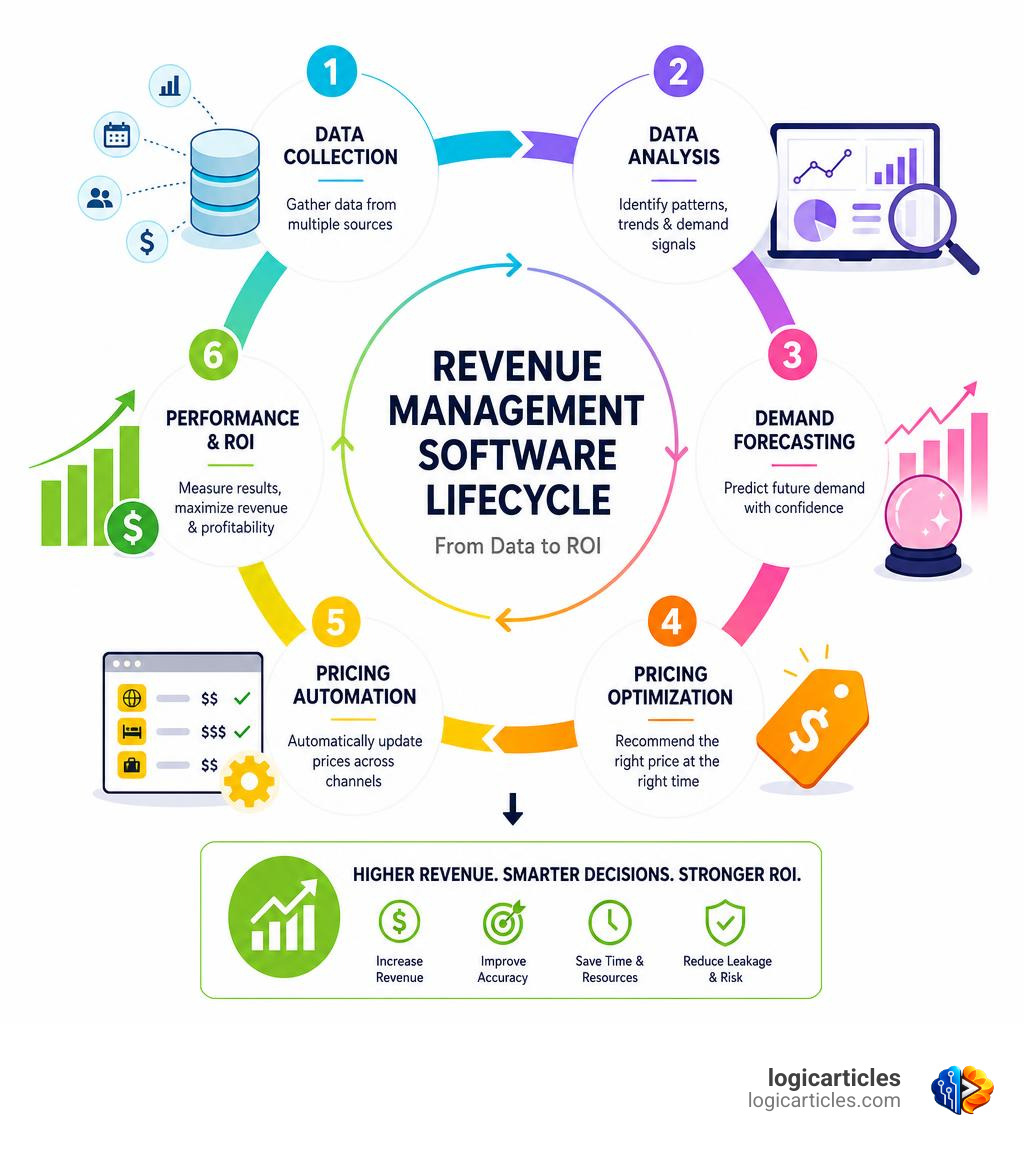
Revenue management is the strategic process of using data and analytics to optimize your pricing. At its core, it ensures you sell the right product to the right customer at the right time for the right price.
But doing this manually in 2026 is virtually impossible. The sheer volume of data points—competitor pricing, market demand, historical purchasing behavior, local events, and even real-time weather changes—requires specialized technology to process.
That is where a dedicated revenue management system (RMS) comes in. An RMS tracks revenue from a myriad of channels while monitoring customer behavior and market trends to forecast future revenue. It works by continuously ingesting internal and external data, running it through advanced algorithms, and outputting optimized pricing recommendations.
For businesses with complex pricing structures, subscription models, or perishable inventory (like hotel rooms, flight seats, or advertising slots), this software acts as the central brain of their commercial operations. If you want to understand how this fits into broader commercial strategy, check out our guide on the Best Price Optimization Software.
Core Features of Modern Revenue Management Systems
To find the best revenue management software for your specific setup, you need to understand what features are non-negotiable. Modern systems have evolved past simple rate-shopping tools. Today, they offer highly sophisticated, end-to-end management capabilities:
- Demand Forecasting: Utilizing predictive analytics to project future demand based on historical patterns, booking velocity, and external market indicators.
- Pricing Optimization Engines: Recommending or automatically executing optimal rates dynamically throughout the day.
- Inventory Management & Controls: Managing length-of-stay restrictions, overbooking limits, and channel availability to maximize yield.
- Real-Time Data Syncing: Ensuring that as soon as a transaction happens on one channel, inventory and pricing adjust instantly across all other distribution channels.
- Reporting Dashboards & Visualization: Providing clear, actionable insights rather than burying users in spreadsheets.
For properties that want to see how these features operate inside a unified hospitality platform, tools like Hotel Revenue Intelligence Software – Move faster and smarter show how real-time insights can be turned into immediate pricing power.
The Business Benefits of Automated Pricing
Why invest in an RMS? The short answer is that manual pricing is costing you money.
The first major benefit is a measurable lift in RevPAR (Revenue per Available Room) or total revenue. Across the hospitality industry, hotels that switch onto a revenue management system generally experience a RevPAR increase of between 5% and 20%. Some specialized solutions, such as Cloudbeds Revenue Intelligence, have the potential to boost RevPAR by up to 18%.
Beyond the direct financial lift, the operational efficiency gains are massive. Hotels and businesses using revenue management systems save between 20 to 40 hours per month by streamlining manual workflows. Instead of spending hours logging into competitor sites and manually adjusting rates in a Property Management System (PMS) or ERP, your team can focus on high-impact strategic work.
This automation also acts as a powerful labor offset. In a tight labor market where many businesses struggle to fill open positions, having a system that runs 24/7 and executes thousands of calculations a second keeps your operations lean and agile. To see how these savings impact your overall financial health, take a look at our analysis of the Best CFO Software Tools for Small Business.
Comparing the BEST revenue management software Types
Not all revenue management systems are built around the same philosophy. Depending on your business model, you will need to choose between different architectures and pricing engines.
Standalone vs. Integrated Systems
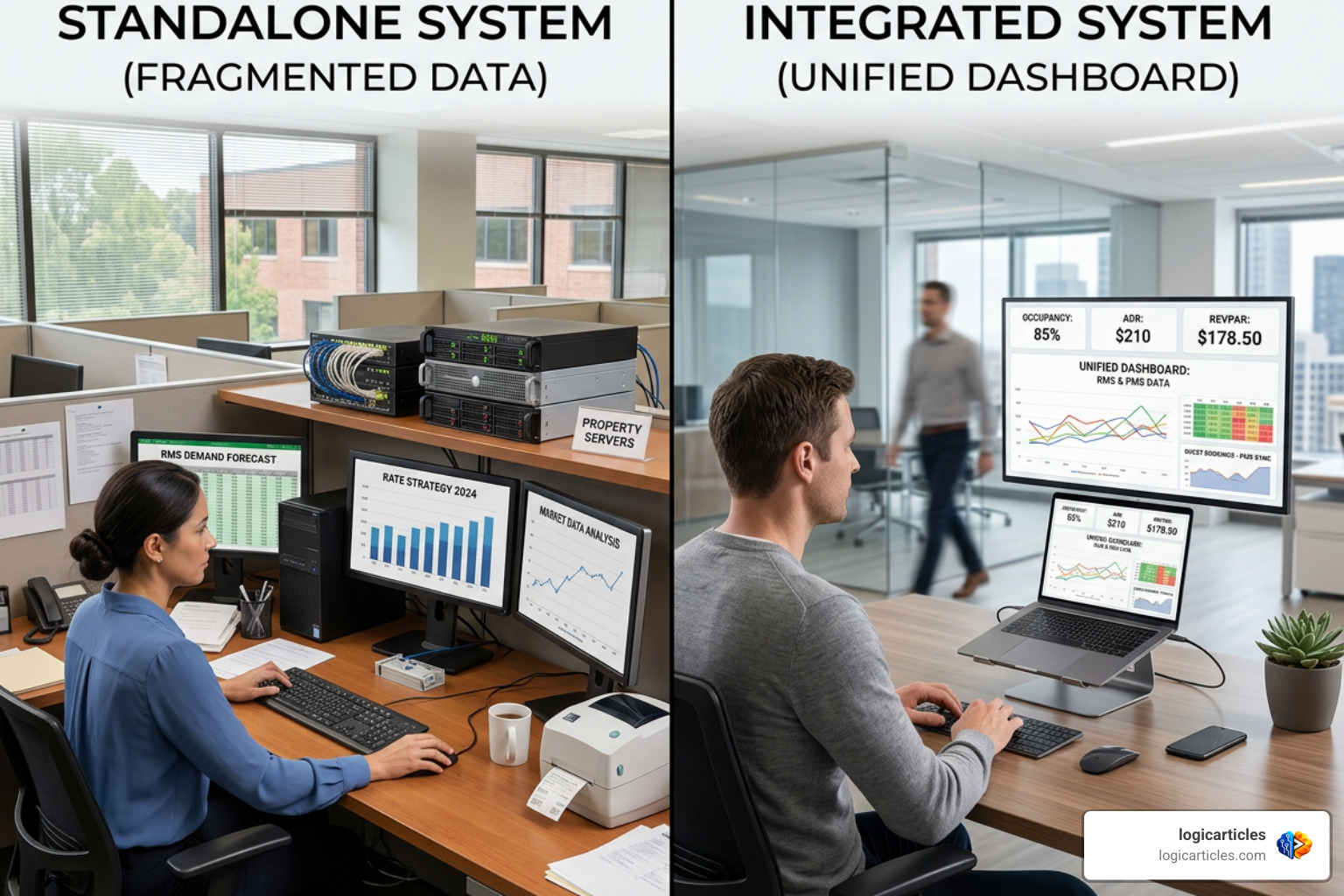
One of the first decisions we must make is whether to implement a standalone platform or an integrated/native module.
- Standalone Systems: These are dedicated, best-of-breed platforms designed purely for revenue management. They pull data from your existing Property Management System (PMS), ERP, or CRM via APIs, process it, and push recommendations back. They offer incredible depth of features but require stable, well-maintained integrations to avoid data silos.
- Integrated/Native Modules: These are built directly into your core business systems (like an embedded RMS module inside a PMS or ERP). Because they live in the same ecosystem, they require no external integrations or additional vendor relationships. They are highly reliable and simple to use, though they may lack some of the ultra-advanced modeling features of standalone giants.
If you are a multi-industry business or need to coordinate sales pipelines alongside billing, exploring the Best revenue management software for different industries in 2026 can help clarify how integrated CRM platforms handle complex pricing and subscription lifecycles. If you are also managing massive tech infrastructures, balancing these software costs is vital—see our list of the Best Cloud Cost Optimization Tools for 2026: Cut Cloud Bills Fast.
AI-Driven vs. Rules-Based Software
The next major distinction is how the software calculates its pricing recommendations:
- Rules-Based Software: This system relies on “if-then” logic that you define. For example: “If occupancy is over 80%, then raise rates by 10%.” While this gives you absolute control, rules-heavy platforms can become incredibly complex and difficult to troubleshoot over time as custom logic accumulates.
- AI-Driven Software: These platforms utilize machine learning and causal AI to analyze billions of data points per hour. They don’t just look at occupancy; they process historical trends, competitor moves, local events, and market momentum to predict demand with up to 95% accuracy over a 90-day window.
AI-driven systems, like the one highlighted in the Hotel Revenue Management Software System | Infor platform, allow for continuous, multidimensional pricing that adapts to market fluctuations in real time, reducing the need for manual overrides.
Top Revenue Management Software Options in 2026
To help you compare the top options in the market, we have broken down the leading tools of 2026 into their primary business categories.
Best revenue management software for Hospitality and Travel
The hospitality sector pioneered revenue management, and it remains home to some of the most advanced systems available:
- Cloudbeds: Known for its highly intuitive The Most Powerful Software for Hotel Revenue Managers , which combines PMS, channel management, and AI-driven pricing into a single, seamless platform.
- IDeaS: The undisputed “Rolls Royce” of hotel revenue management. It is rated 92% by 355 luxury hotels and is built for complex, multi-property operations that require deep scientific modeling.
- Duetto (GameChanger): Highly favored by boutique and independent properties, rated 93% by 335 boutique hotels for its flexible, open-pricing methodologies.
- RoomPriceGenie: The ultimate champion for smaller properties, B&Bs, and motels. It is rated 97% by 256 Bed & Breakfast & Inns and 98% by 87 Motels, offering simple, automated “set-and-forget” pricing.
- RevOpt: Backed by decades of pricing design, RevOpt » Revenue Management Optimization offers patented predictive analytics that help chains and management companies secure a 6% to 18% revenue lift.
For a deeper dive into how these hospitality tools stack up, read through the 10 Best Revenue Management Software Providers and Which One … analysis.
Best revenue management software for B2B and SaaS
If you aren’t selling hotel rooms, your revenue management needs will look slightly different. You will need platforms that handle subscription billing, contract compliance (like ASC 606), and complex quoting:
- Salesforce Revenue Cloud: A powerhouse for mid-to-large sales teams. It connects CPQ (Configure, Price, Quote) with billing to ensure absolute consistency across the entire customer lifecycle. Check out the 8 Best Revenue Management Software Options in 2026 – Salesforce to see how it unifies sales and finance.
- NetSuite: Excellent for automated revenue recognition schedules, removing the manual headache of tracking recurring contracts in spreadsheets.
- Zoho: A highly customizable, cost-effective option for growing businesses looking to automate subscription lifecycles.
- Chargebee: The go-to tool for SaaS businesses managing complex billing tiers, usage-based pricing, and recurring revenue streams.
How to Evaluate and Choose the Right Revenue Management System
Choosing the best revenue management software is a high-stakes decision. The wrong tool will sit unused, while the right one will act as a silent partner that consistently drives up your profitability.

Key Evaluation Criteria for Businesses
When we sit down to evaluate different platforms, we should look at four main pillars:
- Data Quality & Reliability: An RMS is only as good as the data it receives. Look for platforms that automatically validate data and flag inconsistencies or “mapping drift” from your PMS or ERP.
- Ease of Use & Adoption: If the platform is too complex, your team will default to manual overrides or abandon it entirely. Choose a system that makes complex analytics feel clear and actionable.
- System Flexibility: Can the software execute your specific business strategy? Make sure you can set safety limits (like price floors and ceilings) so you always retain ultimate control over your brand.
- Integration Stability: Ensure the software offers native, two-way integrations with your existing tech stack (CRM, ERP, PMS, or channel managers) rather than fragile, custom-built connectors.
For hospitality brands, exploring Hotel Revenue Management Software | Revenue Analytics can reveal how modern, multi-property teams manage large portfolios efficiently without losing local market agility. If you are building custom financial tech to support these operations, consult our list of the Best Fintech Software Development Company.
Cost, Implementation, and Expected ROI
What should you expect to spend, and what is the return?
- Pricing Models: Hospitality systems typically charge a flat monthly fee or a per-room, per-month rate (ranging from $0 to $13 per room). B2B systems are usually priced per user seat or as a percentage of managed revenue.
- Implementation Timelines: Lightweight, no-code platforms can be up and running in a few days. Large enterprise integrations can take several months, though modern cloud-based systems have significantly shortened this window.
- ROI Expectations: Most businesses see a return on investment within the first few weeks of going live, primarily driven by immediate rate corrections and massive time savings.
Whether you are running a commercial business or a mission-driven organization, tracking these financial investments is crucial. For those in the social sector, our guide on the Best NonProfit Financial Management Software offers similar insights into balancing software costs with measurable organizational impact.
Frequently Asked Questions about Revenue Management
How does revenue management software integrate with a CRM?
The integration between an RMS and a CRM creates a seamless, two-way flow of customer data. This ensures that your sales team can generate accurate, real-time quotes based on current demand, while the finance team benefits from automated billing and compliant revenue recognition.
What industries benefit most from dynamic pricing?
While hospitality and travel (airlines, car rentals, hotels) are the traditional users, dynamic pricing is highly beneficial for any industry with perishable inventory or fluctuating demand. This includes media (ad space), entertainment (event ticketing), retail, and SaaS/subscription services.
How long does it take to implement an RMS?
Implementation times vary based on complexity. A modern, cloud-based hotel RMS or a no-code B2B pricing tool can often be integrated with your core systems and start generating recommendations in just a few days. Enterprise-grade systems requiring custom data migration and extensive team training can take between 2 to 5 months.
Conclusion
The gap between businesses using intelligent, automated pricing and those still relying on spreadsheets is widening fast. Implementing the best revenue management software for your unique operations is no longer a luxury—it is the foundation of a modern commercial strategy.
By automating the busywork of data collection and rate adjustments, these platforms return hours to your week and ensure you never leave money on the table. Ready to explore more tools that can optimize your business operations? Explore logicarticles tools to find the logical, data-driven insights your team needs to scale.