Why Most Real Estate Development Projects Struggle Without the Right Software
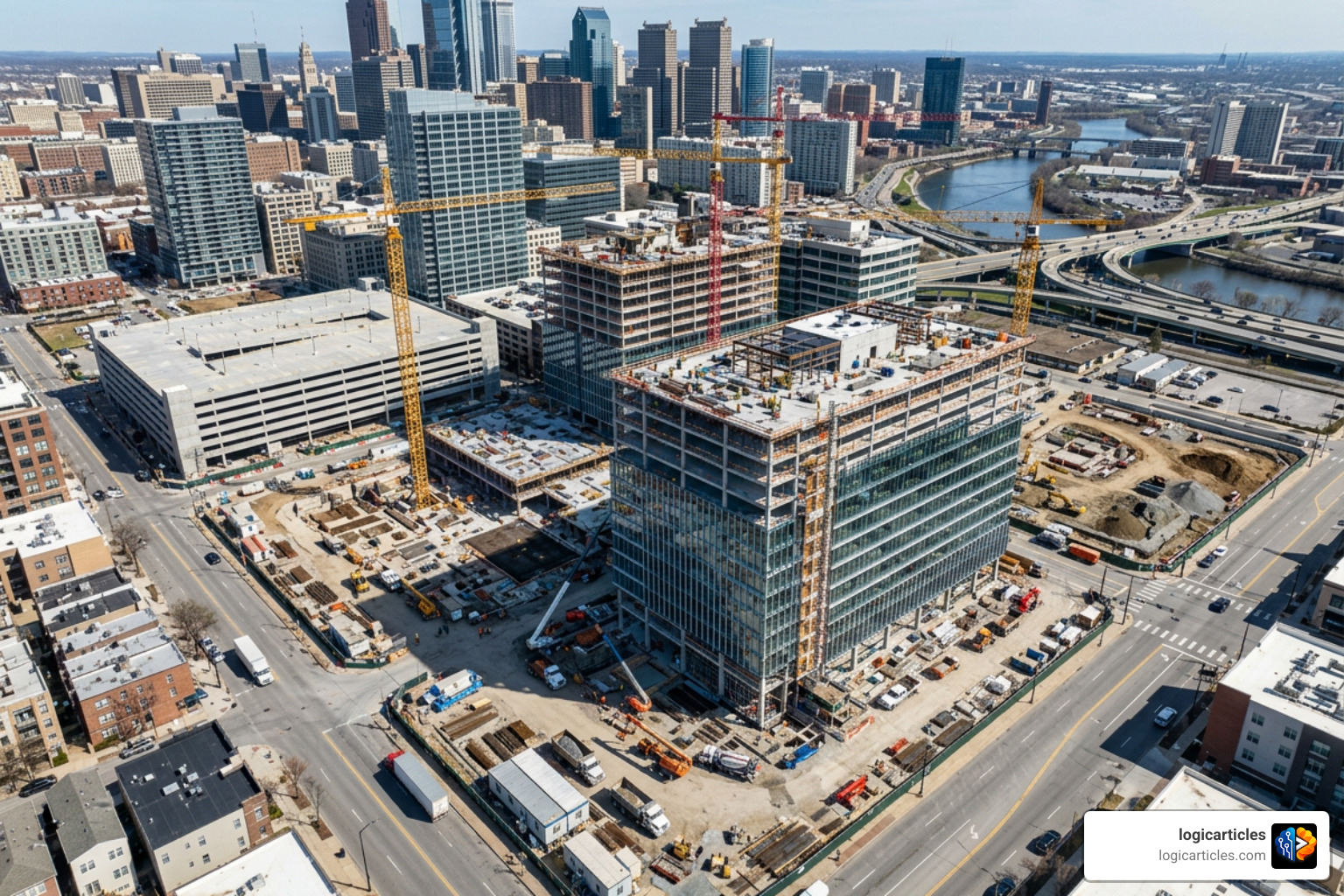
Commercial real estate development software is a category of tools that helps developers plan, finance, manage, and deliver property projects — from initial site evaluation through construction and stabilization.
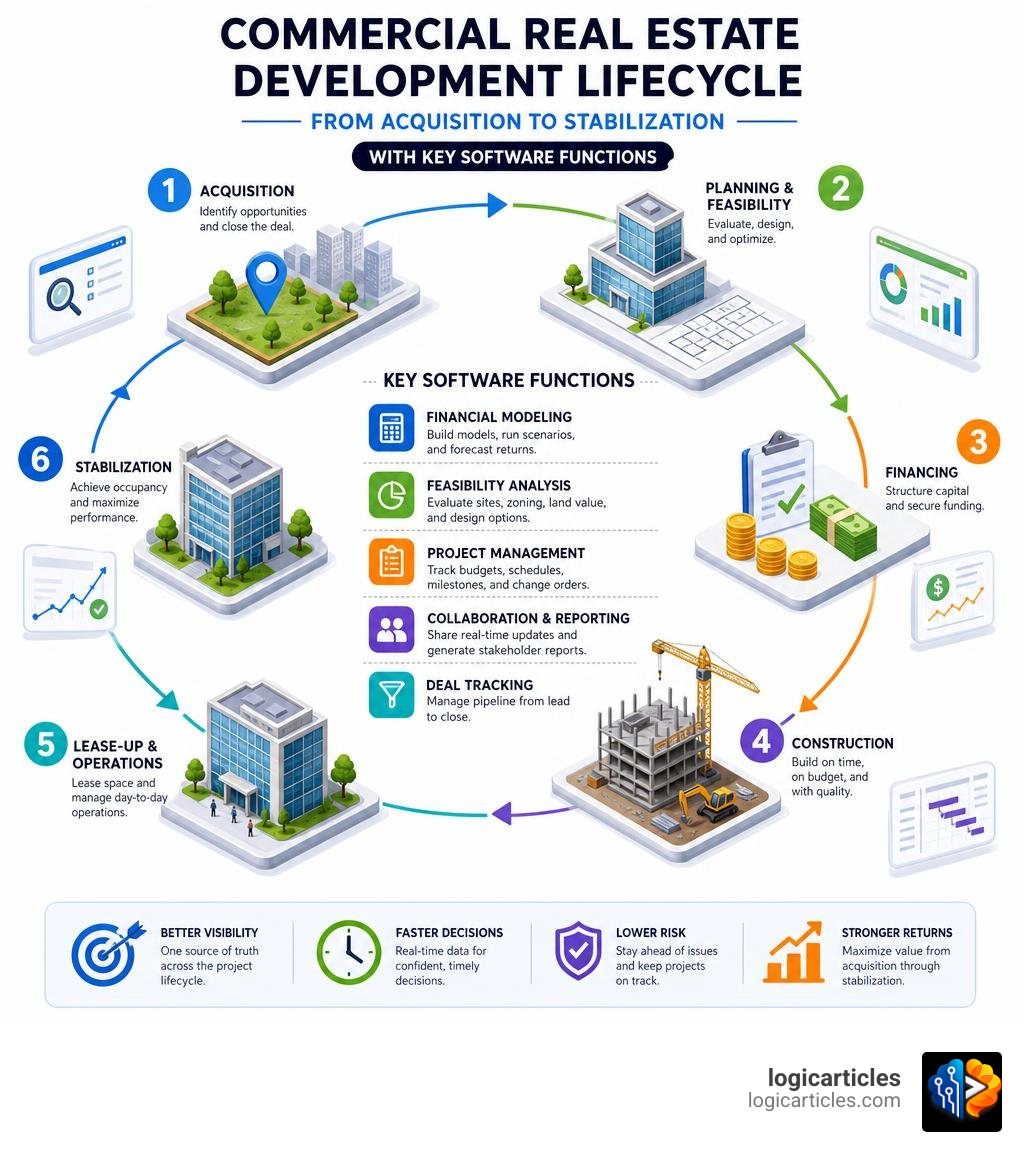
Here’s a quick look at what these platforms typically do:
| Function | What It Does |
|---|---|
| Financial modeling | Build pro formas, model debt/equity structures, run scenario analysis |
| Feasibility analysis | Evaluate sites, zoning, residual land value, and design options |
| Project management | Track budgets, schedules, milestones, and change orders |
| Collaboration & reporting | Share real-time updates with investors, lenders, and teams |
| Deal tracking | Manage acquisition pipeline from lead to close |
Most development teams start with spreadsheets. And for a single small project, that can work — barely.
But as portfolios grow, the cracks show fast. Data lives in different files. Versions get mixed up. Forecasts go stale. And when something changes on-site, the people who need to know often find out too late.
The numbers reflect this. 70% of real estate project delays are caused by poor coordination between stakeholders and inadequate visibility into timelines and documentation. That’s not a construction problem — it’s an information problem.
The right software fixes that by connecting your deal data, budgets, schedules, and reporting in one place. The result is fewer surprises, faster decisions, and more predictable outcomes.
This guide walks you through the main types of platforms, the features that matter most, and how to pick the right tool for your team.
What is Commercial Real Estate Development Software?
At its core, commercial real estate development software acts as a centralized operating system for your projects. Instead of letting critical project data scatter across disconnected emails, text threads, and desktop folders, these platforms pull everything into a single environment.
By unifying data across the entire development lifecycle, we can transition smoothly from the initial land acquisition phase all the way through construction and asset stabilization.
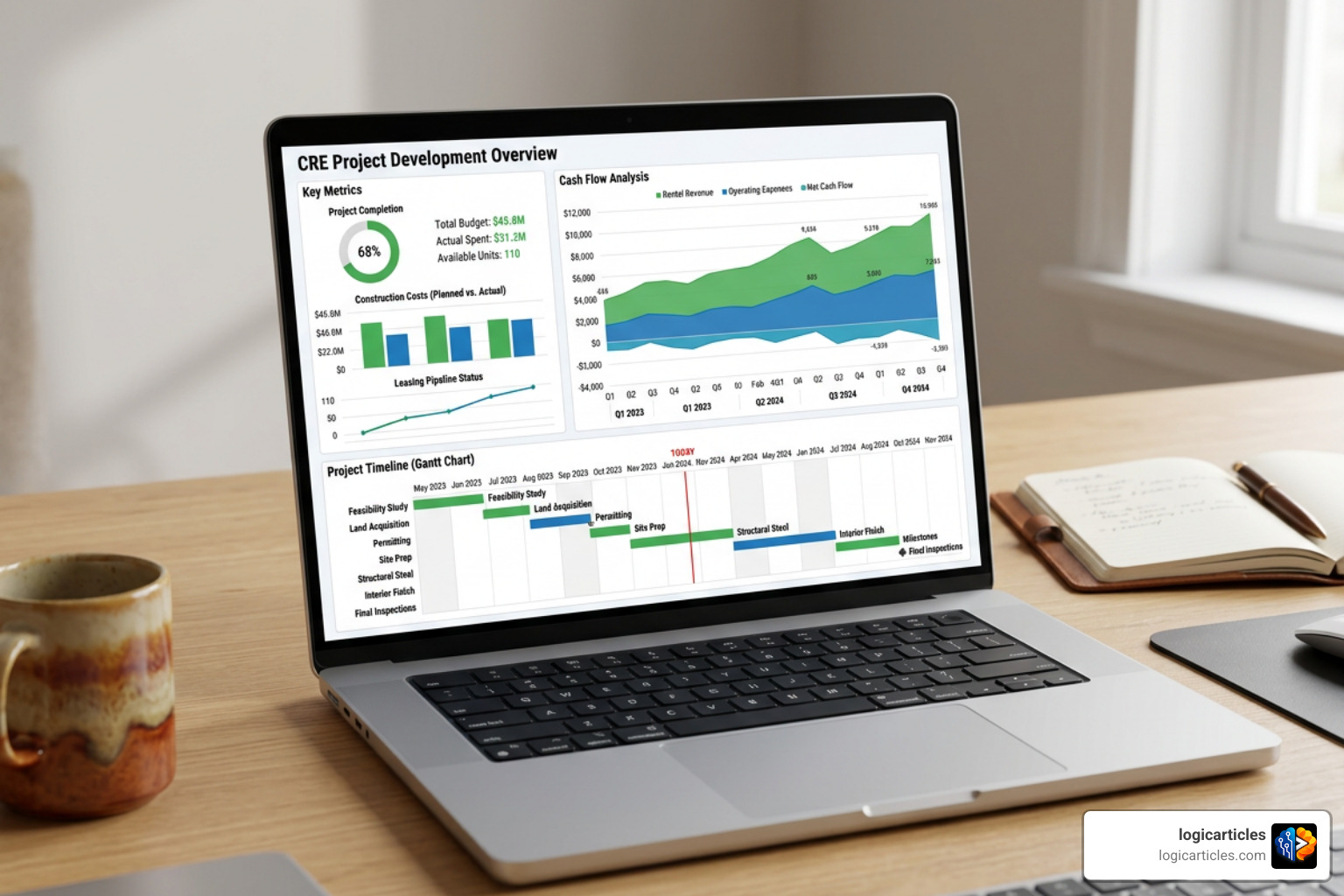
Whether we are assessing a site’s physical constraints, tracking a multi-million dollar budget, or managing lender draw requests, these platforms provide real-time project control. They help developers mitigate risks before they turn into costly mistakes, ensuring that every stakeholder—from the general contractor on-site to the equity partner in the boardroom—stays aligned.
Core Types of Commercial Real Estate Development Software
Not all development tools are built for the same tasks. To choose the right platform, we first need to understand the distinct categories of software available in 2026:
- Deal Tracking and Pipeline Management: Before a project even becomes a project, we need to find and secure the land. Deal management software helps developers manage their acquisition pipeline from lead to close. Dedicated platforms like Acreus allow teams to search properties, analyze zoning codes, and track pipeline metrics in one place. For developers looking to move from lead to close efficiently, using a specialized solution like Acreus Deal Management ensures that high-potential sites do not slip through the cracks.
- Financial Modeling and Pro Forma Tools: These platforms focus heavily on underwriting, cash flow forecasting, and capital structuring. They allow us to test the financial viability of a project before committing capital, modeling complex debt, equity, and joint venture (JV) structures.
- Project Management and Cost Control: Once a deal is under contract, the focus shifts to execution. These tools automate budget tracking, simplify invoice approvals, manage change orders, and streamline the monthly draw request process.
- All-in-One and Corporate Real Estate (CREM) Platforms: Designed for enterprise developers or non-property companies managing massive portfolios, these systems handle everything from location planning and construction to ongoing maintenance and eventual demolition.
Why Specialized Tools Outperform Spreadsheets
Many development teams still rely on a fragile web of spreadsheets to run their businesses. While spreadsheets are highly customizable, they are also prone to human error, lack real-time data integration, and create dangerous information silos.
When team members work out of localized files, version control quickly falls apart. A single broken formula in a pro forma can lead to a disastrously miscalculated bid. Furthermore, traditional task management systems lack the real estate-specific context required to manage complex physical builds. While we have tested general systems in our review of the Best Task Management Software in 2026 Tested, those generic platforms cannot automatically track construction draw requests or parse zoning codes.
Specialized commercial real estate development software eliminates these manual bottlenecks. Industry data shows that teams adopting dedicated development management platforms experience up to an 80% reduction in manual and administrative work, a 66% reduction in cost overruns, and an average of 40% time saved per employee. By automating routine data entry and centralizing project records, developers can spend less time fixing broken spreadsheets and more time scaling their pipelines.
Key Features to Look For in Modern Platforms
When evaluating different software options, we should focus on the specific capabilities that directly address our team’s daily bottlenecks.
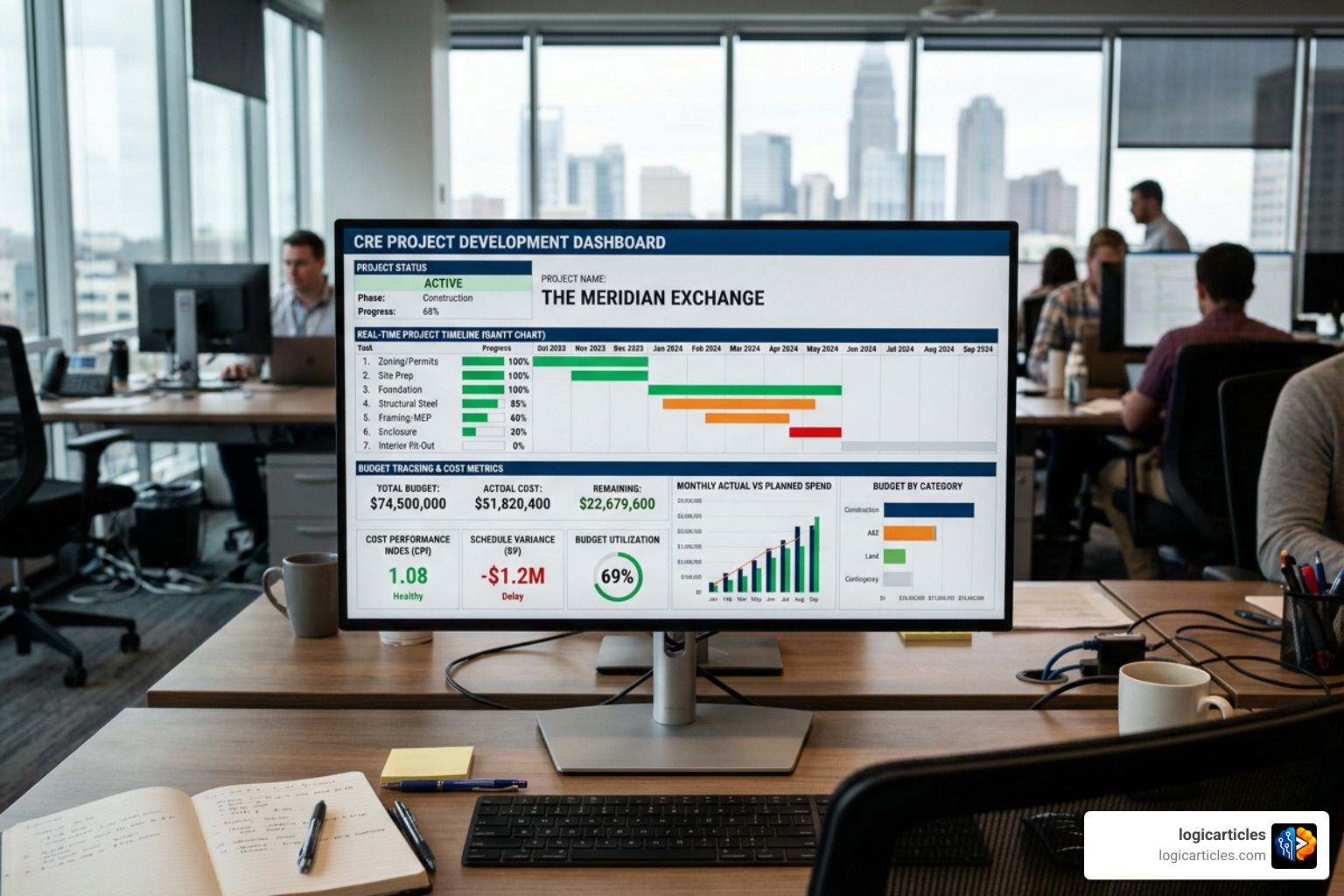
Financial Modeling and Cash Flow Forecasting
A development project is only as good as its financial foundation. Modern platforms must offer robust financial modeling capabilities that allow us to calculate residual land value, run sensitivity analyses, and model complex capital stacks.
To ensure your projects remain profitable, look for the following essential financial modeling capabilities:
- Dynamic Cash Flow Projections: Automatically reforecast your cash flows as actual expenditures are imported from your accounting systems.
- Scenario and Sensitivity Analysis: Easily sensitize interest rates, construction costs, and absorption schedules to see how they impact your internal rate of return (IRR) and yield on cost.
- Flexible Capital Structuring: Model multi-tiered joint venture waterfalls, preferred equity, and construction loan interest reserves.
For enterprise-grade underwriting, platforms like ARGUS Developer have served as an industry standard for over 30 years, used across 100+ countries and taught in more than 200 universities globally. Utilizing these specialized systems ensures your financial models meet the rigorous reporting standards expected by institutional investors. For deeper insights into the construction phase of your finances, you may also want to explore our guide to the Best Construction Financial Management Software.
Feasibility and Generative Site Design
Before we spend thousands of dollars on architectural fees, we need to know what can physically fit on a site. Modern feasibility platforms allow developers to define site parameters using parcel data, set zoning constraints (such as floor area ratios, height limits, and setbacks), and generate optimized design options in minutes.
For example, TestFit Site Solver leverages real-time generative design to automate site planning. By integrating zoning rules and financial pro forma data directly into the design process, developers can evaluate multiple configurations side-by-side.
These tools can even optimize earthwork costs by calculating cut-and-fill volumes automatically, helping teams avoid high-risk sites early in the due diligence process.
Collaboration and Stakeholder Reporting
Real estate development is a team sport involving hundreds of external partners, including brokers, architects, engineers, general contractors, and lenders. Keeping everyone aligned is a massive challenge.
Modern development software solves this by centralizing document management and automating reporting. Key features include:
- Automated Draw Management: Streamline your monthly lender draw requests by automatically compiling invoices, lien waivers, and budget tracking sheets into investor-ready packages.
- Real-Time Dashboards: Give equity partners and lenders secure portal access to view project milestones, budget variances, and construction progress.
- Mobile Accessibility: Enable field teams to upload photos, approve change orders, and update schedules directly from the job site.
By utilizing platforms that offer automated draw packages, some firms have managed to streamline their draw request process by up to 75% while cutting invoice approval times by 80%. To see how this fits into broader project execution, check out our analysis of the Best Construction Manager Software.
Step-by-Step Guide to Choosing the Right Platform
Selecting the right software requires a clear understanding of your organization’s current workflows and long-term goals.
Evaluating Your Portfolio and Project Complexity
The first step in our selection process is to assess our current portfolio and team structure. A boutique developer focusing on local mixed-use renovations has vastly different software needs than an institutional developer managing a multi-billion dollar industrial pipeline.
Consider the following factors:
- Asset Classes: Do you focus on a single asset class (e.g., multifamily) or do you manage a diverse portfolio of retail, office, and industrial properties? If you are managing multiple completed assets alongside active developments, you will benefit from reading our guide to the Best Real Estate Portfolio Management Software in 2026.
- Team Size and Roles: Who will be using the software? Financial analysts need deep underwriting tools, while project managers need budget tracking and site collaboration features.
- Portfolio Objectives: Non-property companies (such as retail chains or gas station networks) managing their own corporate locations may require modular corporate real estate management (CREM) packages like com.TRADENET to oversee site selection, construction, lease compliance, and eventual decommissioning.
Implementing Commercial Real Estate Development Software Successfully
Buying the software is only half the battle; the real challenge is getting your team to adopt it. To ensure a smooth transition without disrupting active projects, we recommend following these best practices:
- Designate a Software Champion: Assign an internal team member to lead the implementation process, act as the primary point of contact, and troubleshoot issues.
- Prioritize Clean Data Migration: Before importing active projects into your new platform, audit your existing spreadsheets. Ensure all budgets, historical cost data, and vendor contacts are clean and accurate.
- Leverage Dedicated Onboarding: Work closely with your software provider’s customer success team. Platforms like Northspyre offer structured onboarding programs specifically designed to transition teams off spreadsheets with minimal friction.
- Establish Standard Operating Procedures (SOPs): Clearly define how and when the software should be updated. For instance, mandate that all new invoices must be uploaded and approved through the platform rather than via email.
- Integrate with Existing Systems: Ensure your new development tool connects seamlessly with your accounting software and contractor management tools. For more on managing on-site vendor relationships, refer to our guide on the Best Contractor Management Software.
Comparing Software Categories and Pricing Models
Understanding how different platforms charge for their services is crucial for budgeting. Software pricing in 2026 generally falls into three main models:
- Per-User Subscription: You pay a monthly or annual fee for each user seat. This is common for deal tracking and general project management tools.
- Per-Project Pricing: Pricing is based on the number of active projects or the total dollar volume of your development pipeline. This model is highly scalable for growing developers.
- Enterprise Licensing: Custom enterprise pricing designed for large firms requiring advanced integrations, custom reporting, and unlimited user seats.
| Software Category | Primary Focus | Best For | Typical Pricing Model |
|---|---|---|---|
| Deal & Pipeline Management | Site selection, zoning research, CRM | Acquisition teams & brokers | Per-user subscription |
| Financial & Pro Forma | Underwriting, JV waterfalls, debt modeling | Financial analysts & CFOs | Annual enterprise licensing |
| Project & Cost Control | Budget tracking, invoice approvals, draws | Project managers & accountants | Per-project or volume-based |
| Corporate Real Estate (CREM) | Portfolio lifecycle, compliance, maintenance | Non-property corporations | Custom modular licensing |
Frequently Asked Questions
How does development software improve risk management?
By centralizing project data, development software gives us real-time visibility into budget variances, contingency usage, and potential cost overruns. Instead of discovering a budget bust weeks after it happens, these platforms use automated alerts to warn us when a line item is projected to exceed its allocation.
This allows developers to make proactive adjustments, run scenario plans to find alternative savings, and maintain precise control over project contingencies.
Can small-to-medium developers benefit from these platforms?
Absolutely. While enterprise tools exist, there are highly accessible, mobile-first options tailored for smaller development teams and construction businesses.
Adopting these tools allows smaller teams to compete with larger firms by automating administrative tasks—saving up to 2.5 hours per day per manager—and maintaining high billing rates with minimal client disputes.
How does this software integrate with property management systems?
Once a development project is built and leased up, it enters the “stabilization” phase. At this point, the property data needs to transition from development tracking to active property management.
Most modern development platforms offer integrations that allow you to export final budgets, vendor directories, and lease data directly into property management systems. To learn more about managing assets post-construction, explore our comprehensive guide on the Best Commercial Property Management Software or read about tracking lease agreements in our review of Commercial Lease Management Software 2026.
Conclusion
In 2026, relying on fragmented spreadsheets and manual workflows is no longer a viable strategy for commercial real estate developers. To scale successfully, manage rising material costs, and deliver predictable returns to investors, teams must embrace digital maturity.
Implementing the right commercial real estate development software streamlines your workflows, protects your profit margins, and ensures your projects stay on schedule.
If you are ready to optimize your team’s operational workflows and boost your business efficiency, explore our latest resources and guides in our Productivity Category.