Which Gaming Platform Should You Actually Use?

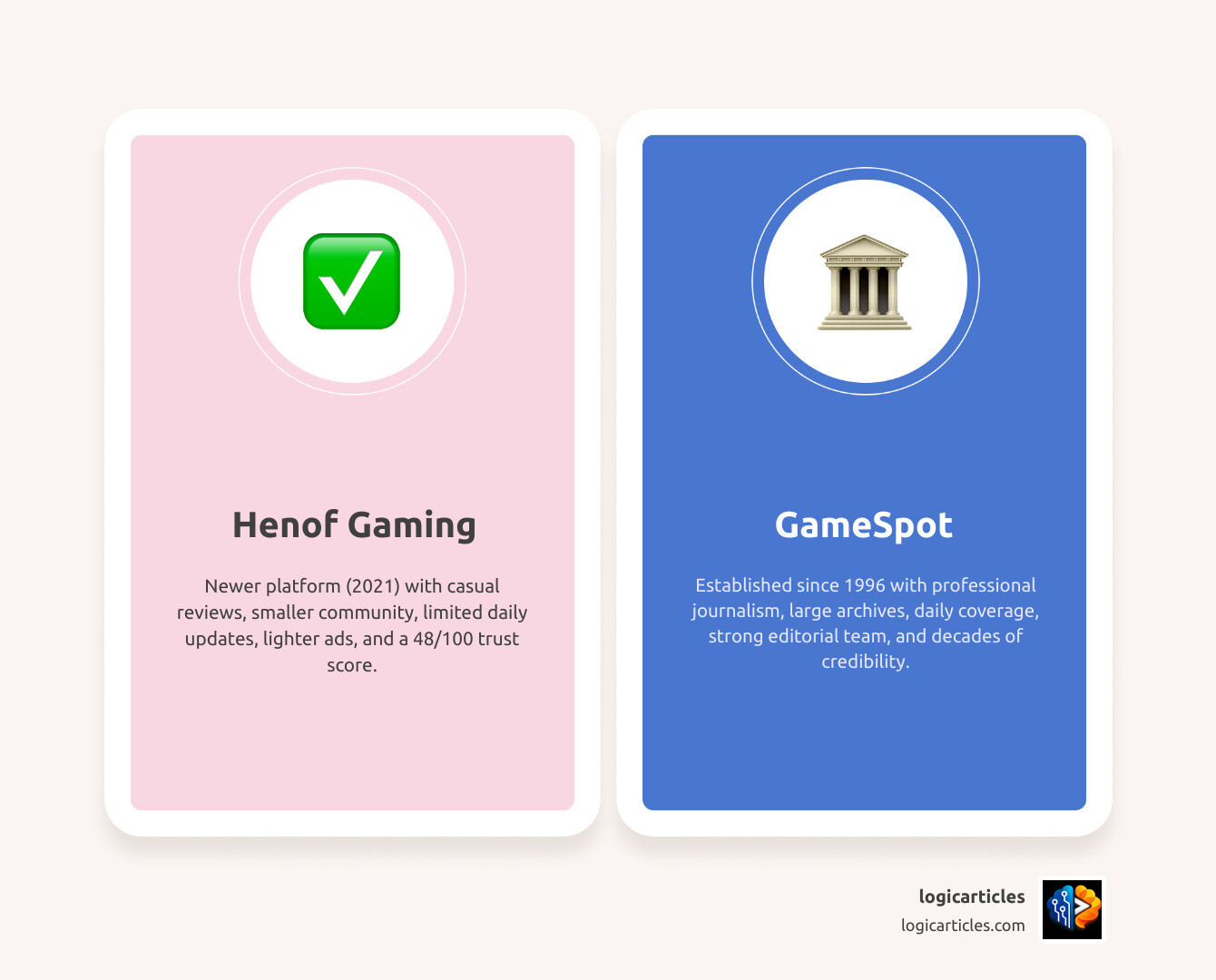
When comparing Henof Gaming vs GameSpot, the short answer is: GameSpot is the stronger, more established platform, but Henof may suit casual or mobile-first readers who want a simpler reading experience.
Here’s a quick breakdown:
| Feature | Henof Gaming | GameSpot |
|---|---|---|
| Founded | 2021 | 1996 |
| Authority Score | 26 (Semrush) | High, established |
| Content Frequency | Several articles/week | Dozens of articles/day |
| Review Style | Casual, personal | Professional journalism |
| Mobile Experience | Cleaner, minimal ads | Heavy ads reported |
| Trust Score | 48/100 (use caution) | Well-established credibility |
| Free to Use | Yes | Yes |
| Community | Small, growing | Large, decades-old |
Gaming is a big space — and the platform you turn to for reviews, news, and guides matters more than most people realize.
GameSpot has been around since 1996, giving it nearly 30 years of archived reviews and a large, professional editorial team. Henof.com is a much newer site, with its domain registered in August 2021, and it positions itself as a fresher, more community-driven alternative.
But newer doesn’t always mean better — and established doesn’t always mean trustworthy. Both platforms have real strengths and real weaknesses worth understanding before you commit to either one.
This comparison breaks it all down clearly.
What is Henof Gaming vs GameSpot?
To understand how these two platforms stack up, we have to look at where they came from and who they are trying to serve.
GameSpot is one of the absolute pillars of the gaming internet. Launched all the way back in 1996, it has spent three decades building an incredibly vast library of game reviews, breaking news, industry interviews, and video coverage. Owned by media giant Red Ventures, GameSpot operates as a highly structured, professional journalistic outlet. When a major AAA game launches, GameSpot is almost always there on day one with a scored review that helps shape the industry’s Metacritic average.
On the other side of the ring sits Henof.com. Registered on August 30, 2021, Henof is a much younger player in the space. Rather than trying to compete directly with corporate giants, Henof positions itself as a more accessible, casual hub. It focuses heavily on browser-based games, mobile-first tips, and straightforward, jargon-free guides.
While some promotional articles online paint Henof as a “tech juggernaut,” the reality is much more modest. It is a smaller, blog-style site that appeals to casual players who find massive media sites a bit overwhelming.
To see how their core models differ, you can check out this detailed breakdown of the Henof Gaming vs GameSpot: 7 Key Differences.
Content Quality, Depth, and Review Styles
When you click on a game review, you want to know if the game is actually worth your hard-earned money and time. How a site evaluates gameplay mechanics, graphics, and storytelling tells you a lot about its editorial standards.
GameSpot’s reviews are written by professional critics who dive deep into the design philosophy of a game. They will spend pages dissecting how the movement system complements the level design, whether the narrative pacing holds up in the final act, and how the graphical performance fares across different console generations. They back up their written content with high-production video reviews, side-by-side graphical comparisons, and professional video walkthroughs.
Henof Gaming takes a much more casual, peer-to-peer approach. Its reviews read less like formal critiques and more like a recommendation from a friend. They focus on whether a game is fun, how easy it is to pick up, and whether it works well on a mobile device or a lower-end PC.
While Henof lacks the deep analytical essays and video production of GameSpot, it excels at providing simple, step-by-step written walkthroughs for mobile strategy titles and casual puzzle games. For a closer look at their general content offerings, you can read the profile on Henof Gaming: Your Hub for Game Reviews and News – Geeks Around World.
Review Credibility in Henof Gaming vs GameSpot
Credibility is the currency of gaming journalism, and both platforms have unique situations regarding trust.
Because of its size, GameSpot has faced its share of corporate controversies over the decades. The most famous of these was the 2007 firing of editor Jeff Gerstmann after he gave a mediocre review to a game heavily advertised on the site. While GameSpot has spent years rebuilding its reputation and enforcing strict editorial guidelines, the reality of corporate-owned media means readers must always stay vigilant about potential advertiser influence.
Henof Gaming, as an independent blog, doesn’t have those same corporate ties, but it has its own set of transparency issues. Automated trust-scoring tools give Henof.com a moderate trust score of 48 out of 100, advising readers to use caution.
Furthermore, while some marketing campaigns claim Henof has a massive Semrush Authority Score in the 60s or 70s, its actual organic Authority Score sits at a modest 26. In fact, Henof is frequently sold as a guest-post backlink site across at least six different freelance marketplaces, meaning some of its content is sponsored by third parties looking to boost their own search rankings.
For a deeper dive into these trust metrics, check out Is Henof.com Gaming Worth Your Time? My Honest Take.
Coverage and Frequency of Updates
If you want up-to-the-minute news on industry acquisitions, patch notes, and esports tournaments, GameSpot is hard to beat. Because they have a massive, global team of writers, they publish dozens of articles every single day. From massive AAA blockbusters to niche indie releases, GameSpot covers the entire landscape continuously.
Henof Gaming operates at a much slower pace, updating with several articles a week rather than dozens a day. They don’t have the resources to cover every major news story or esports tournament, so they focus on curated topics, trending mobile games, and casual tech hardware reviews. If you are looking to learn more about the broader console landscape, we also recommend checking out our guide on Console TheGameArchives.
While some promotional blogs claim that Henof is a future tech giant, as seen in Henof.com Gaming: The Ultimate Tech Juggernaut of 2026, it is best to view Henof as a casual, low-stakes blog rather than an all-encompassing industry juggernaut.
User Experience, Design, and Mobile Optimization
The way a website is designed can completely make or break your reading experience. If a page takes ten seconds to load or shifts around while you are trying to read a paragraph, you are probably going to click away.
GameSpot’s desktop site is visually impressive and packed with features, including interactive databases, user forums, and embedded video players. However, because it is heavily monetized, the desktop design can feel cluttered. If you do not use ad-blockers, you may find your screen filled with auto-playing video ads, pop-ups, and side banners that slow down your navigation speed.
Henof Gaming has a much simpler, blog-like user interface. It lacks the advanced features of GameSpot, but its lightweight design means it loads incredibly fast on almost any desktop browser.
Navigating Henof Gaming vs GameSpot on Mobile
Mobile optimization is where Henof Gaming shines for a lot of casual readers. Because the site is lightweight and free of heavy corporate ad scripts, navigating its pages on a smartphone is smooth and snappy.
Henof also leans heavily into browser-based play, offering simple, no-download games directly through your mobile browser. If you want to see what kind of quick-play titles they host, you can browse the Top 10 Games on Henof.com to Play in 2026.

GameSpot on mobile can sometimes be a frustrating experience. Between the cookie consent banners, sticky bottom ads, and auto-playing videos, trying to read a long-form review on your phone can feel like navigating an obstacle course. If you frequently read gaming news on your phone, Henof’s cleaner layout is a welcome alternative.
Monetization and Ad Experience
Both platforms are entirely free to access, but they pay the bills in very different ways.
GameSpot relies on traditional digital media monetization: programmatic display ads, premium ad takeovers, affiliate links, and an optional paid subscription model that removes ads for a monthly fee. This model keeps their massive writing team employed, but it directly impacts the user experience for non-paying readers.
Henof Gaming uses far fewer intrusive display ads, which makes for a cleaner reading experience. However, its primary monetization comes from selling guest-post backlinks on freelance marketplaces. This means that some articles on Henof may actually be paid placements designed to look like organic blog posts.
To learn more about what everyday users think of this balance, you can read the 5 Honest Henof Gaming Reviews: Worth Your Time in 2025?.
Frequently Asked Questions about Gaming Platforms
Is Henof Gaming safe and legit in 2026?
Yes, Henof Gaming is safe to browse. The website uses standard SSL encryption, and because its browser-based games do not require any downloads, there is no risk of downloading malware to your device.
However, because of its anonymous ownership, moderate trust score of 48/100, and backlink-selling business model, we recommend treating its editorial advice—especially regarding tech purchases or financial topics—with a healthy dose of skepticism.
Does GameSpot require a paid subscription?
No, GameSpot does not require a paid subscription. All of its news articles, video reviews, and guides are completely free to access. They do offer a premium subscription tier, but this is entirely optional and is primarily used to remove ads and unlock a few minor community features.
Which platform is better for mobile and indie gamers?
Henof Gaming is highly tailored for casual, mobile-first, and browser-based gamers who want quick, easy-to-read guides. GameSpot, on the other hand, is much better for hardcore gamers who want deep, investigative journalism, comprehensive coverage of major AAA console and PC releases, and high-quality video content.
Conclusion
When we put Henof Gaming vs GameSpot side by side, the winner depends entirely on what you are looking for in a gaming site.
If you want professional journalism, deep critical analysis of gameplay mechanics, and up-to-the-minute coverage of the entire gaming industry, GameSpot is the clear choice. It has the history, the resources, and the editorial depth that a small blog simply cannot match.
If you are a casual gamer who primarily plays on mobile, enjoys quick browser-based games, and wants a fast, lightweight reading experience without intrusive ads, Henof Gaming is a handy alternative to keep bookmarked. Just keep its lower trust score and backlink-focused model in mind when reading its recommendations.
If you are looking to upgrade your digital setup or find the perfect tools to elevate your play, check out our guide to the Best Gaming Software in 2026. If you need a break from gaming and want to stream some music, we have also ranked the 9 Best Spotify Alternatives in 2026 Ranked.
For more in-depth tech comparisons and software reviews, Explore our Best Software Category!