Why the Right Incident Management Software for Healthcare Can Save Lives
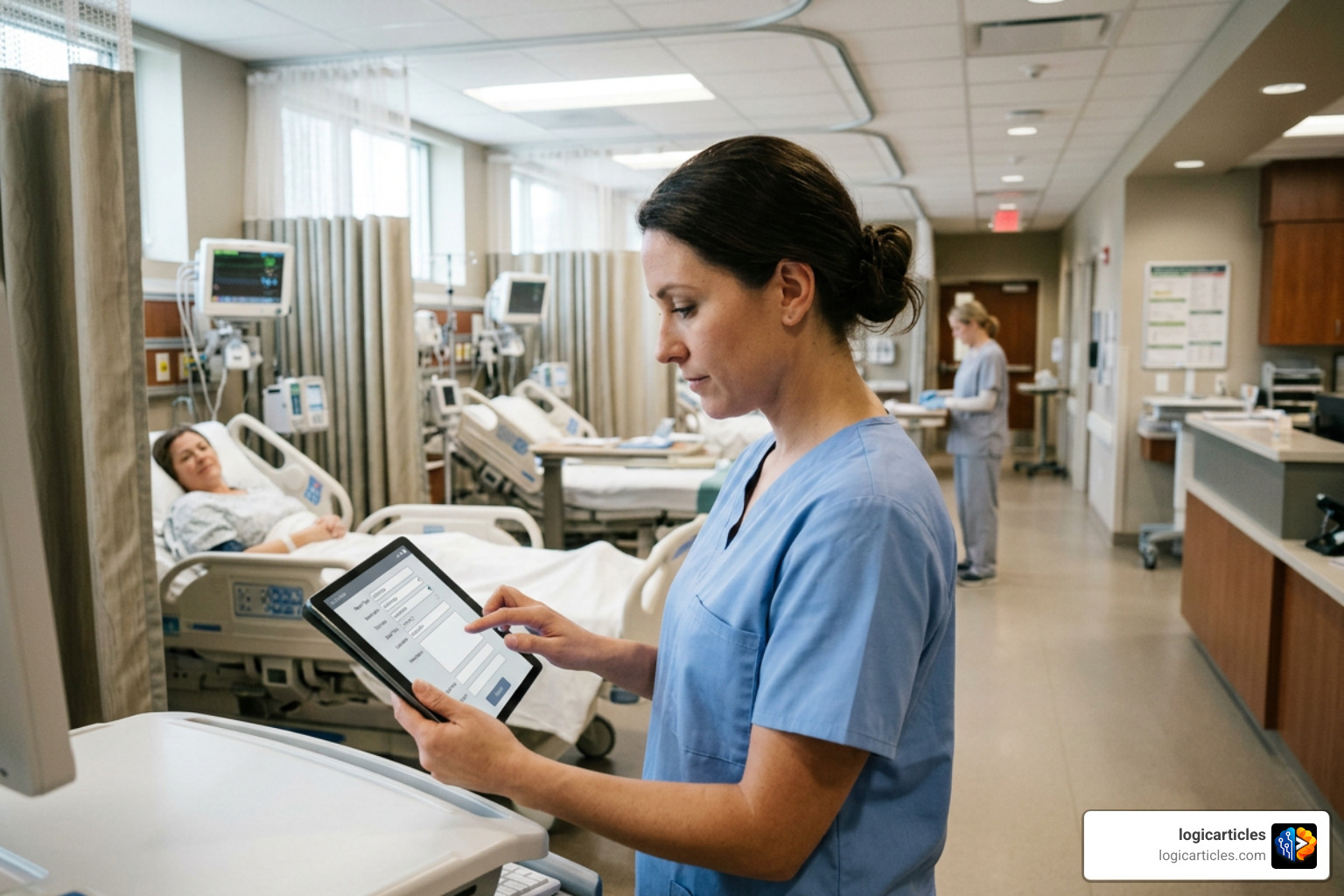
Incident management software for healthcare is one of the most important tools a hospital or care organization can invest in right now. Here’s a quick look at the top options and what each does best:
| Software | Best For | Key Strength |
|---|---|---|
| symplr Safety | Enterprise hospitals | Blame-free reporting + analytics |
| Radar Healthcare | NHS & multi-site providers | PSIRF-aligned workflows |
| MedTrainer | Compliance-focused teams | Integrated training + reporting |
| Vastian Events | Hospital quality teams | Deep compliance (JC, CMS, DNV) |
| TPSC Cloud | Patient safety programs | PRISMA/SIRE/Ishikawa analysis |
| Compliancy Group | Compliance officers | 24/7 hotline + audit readiness |
| LogicManager | Risk management teams | Taxonomy-based trend analysis |
| QUASR+ | AI-forward safety teams | AI triage + semantic search |
| Veoci Vitals EM | Emergency management | Real-time situational awareness |
The numbers are hard to ignore. 50% of patient harm in hospitals is preventable. Medical errors cost the healthcare industry more than $19.5 billion every year. Yet many healthcare organizations are still tracking incidents on paper forms, spreadsheets, or shared Word documents.
That gap — between the scale of the problem and the tools being used to solve it — is exactly why digital incident management has become a priority for safety leaders worldwide.
The good news? Modern platforms do far more than replace paper. They automate workflows, flag risks in real time, support root cause analysis, and connect directly to compliance and training systems. Some teams report saving 40 hours per week after switching from manual processes.
This guide compares the leading healthcare incident management solutions so you can find the right fit for your organization — whether you run a single clinic or a multi-site hospital network.
The Role of Incident Management Software for Healthcare
When we think about healthcare delivery, we often focus on the cutting-edge medical procedures, the latest pharmaceuticals, or state-of-the-art diagnostic imaging. But behind every successful clinical outcome is a web of operational safety protocols.
When those protocols break down, the consequences are measured in human lives. With medical errors accounting for billions of dollars in losses and untold emotional suffering, we must ask ourselves: Why are we still relying on outdated reporting methods?
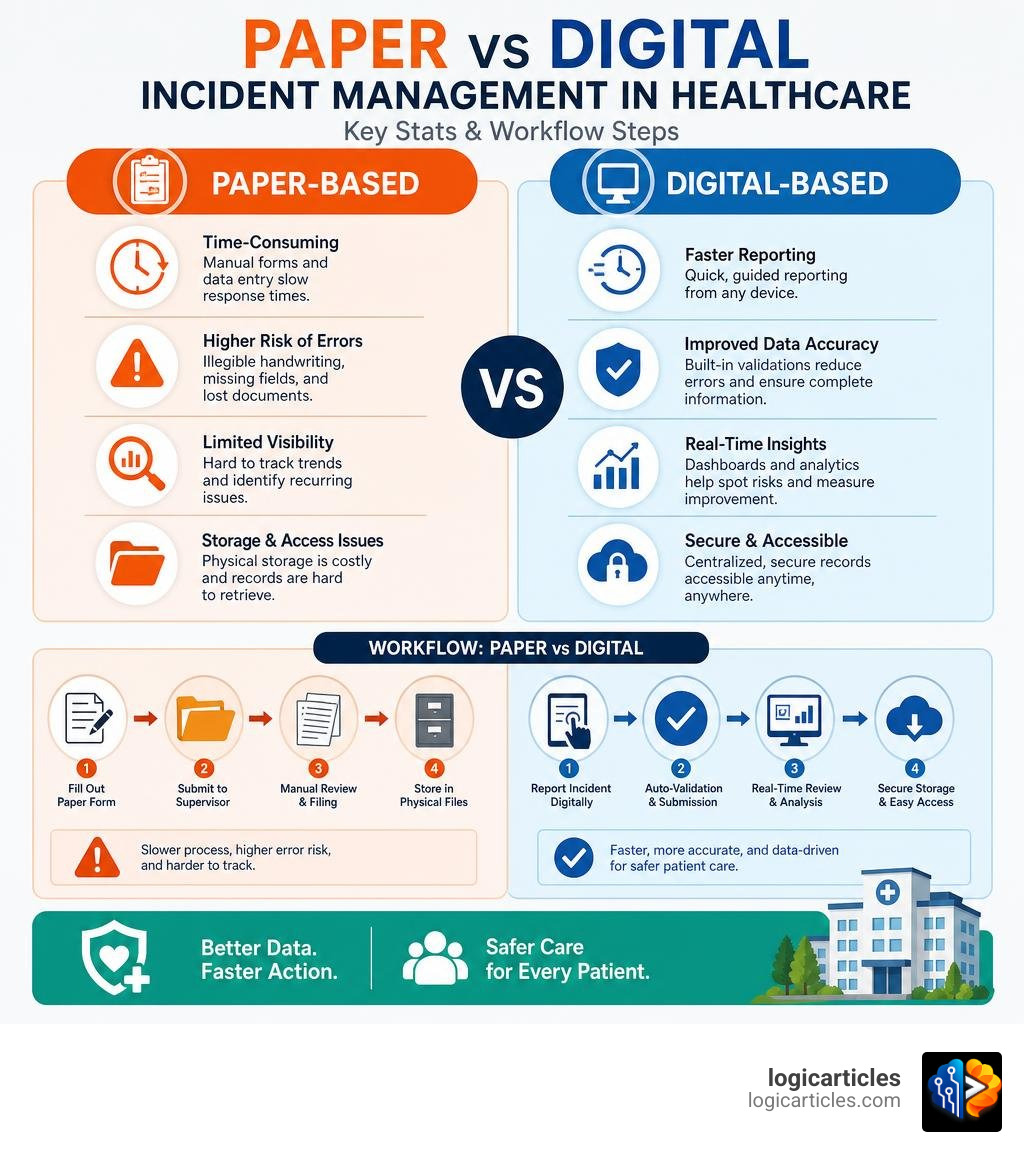
Historically, when an adverse event occurred—such as a medication mix-up or a patient fall—the reporting process was slow and cumbersome. A nurse or physician had to track down a physical form, fill it out by hand, and route it through interoffice mail. By the time the risk management team received the report, days or weeks had passed. The opportunity for immediate intervention was gone, and the risk of the incident repeating remained high.
This is where digital transformation steps in. Implementing incident management software for healthcare bridges the gap between occurrence and resolution. By integrating these safety platforms directly with clinical workflows, hospitals can build a cohesive safety net.
Furthermore, as organizations plan their broader digital roadmaps, modern incident platforms are designed to align with modern clinical systems. For those looking at how clinical databases are structured, exploring Emr Software Development In 2026 provides critical context on how modern safety software interfaces with the core patient record.
Key Differences Between Manual and Digital Incident Management Software for Healthcare
The transition from manual filing cabinets to digital incident management is not just about saving paper; it is about fundamentally changing how we understand organizational risk.
- Reporting Lag: Manual systems rely on physical delivery or batch-processed emails, creating a lag that delays clinical interventions. Digital systems offer real-time submission, alerting safety officers the second a report is filed.
- Data Accuracy: Hand-written forms are notorious for illegible handwriting, incomplete fields, and missing metadata. Digital forms enforce mandatory fields and adapt dynamically to the clinical situation.
- Psychological Safety: Paper forms make it incredibly difficult to submit an anonymous report without a colleague seeing who filled it out. Digital platforms offer secure, non-IP-tracked anonymous reporting portals, encouraging staff to raise concerns without fear of retaliation.
- Audit Trails: Spreadsheets can be edited, deleted, or overwritten without a trace. Modern software maintains a permanent, immutable audit trail, noting exactly who reviewed, escalated, or resolved an event.
These efficiencies add up. For instance, healthcare facilities using specialized compliance and safety software save an average of 40 hours per week on administrative overhead. That is a full work week returned to clinical staff so they can focus on patient care rather than chasing paperwork.
Types of Incidents Managed by Modern Platforms
Modern incident management systems are incredibly versatile. They do not just track clinical mistakes; they act as a universal intake portal for any operational abnormality. Across leading systems, over 15 million events and logs have been recorded, proving just how diverse these platforms are.
- Clinical Events: Medication errors, diagnostic delays, surgical site infections, and patient falls.
- Near Misses: Close calls where an error was caught before reaching the patient (e.g., a pharmacist catching a wrong dose before it was administered).
- Security & Aggression: Physical or verbal aggression toward staff, visitor incidents, and unauthorized access to restricted wards.
- Facilities & Utilities: Power outages, water leaks, medical equipment failures, and environmental safety hazards.
- Compliance & Privacy: Unauthorized access to medical records, HIPAA breaches, and billing discrepancies.
Core Features of Modern Incident Reporting Platforms
To move from simple record-keeping to proactive prevention, healthcare organizations need a robust feature set.
Workflow Automation and Escalation Matrices
One of the biggest issues with manual reporting is that files get buried on desks. A digital platform solves this by using automated routing and escalation matrices.
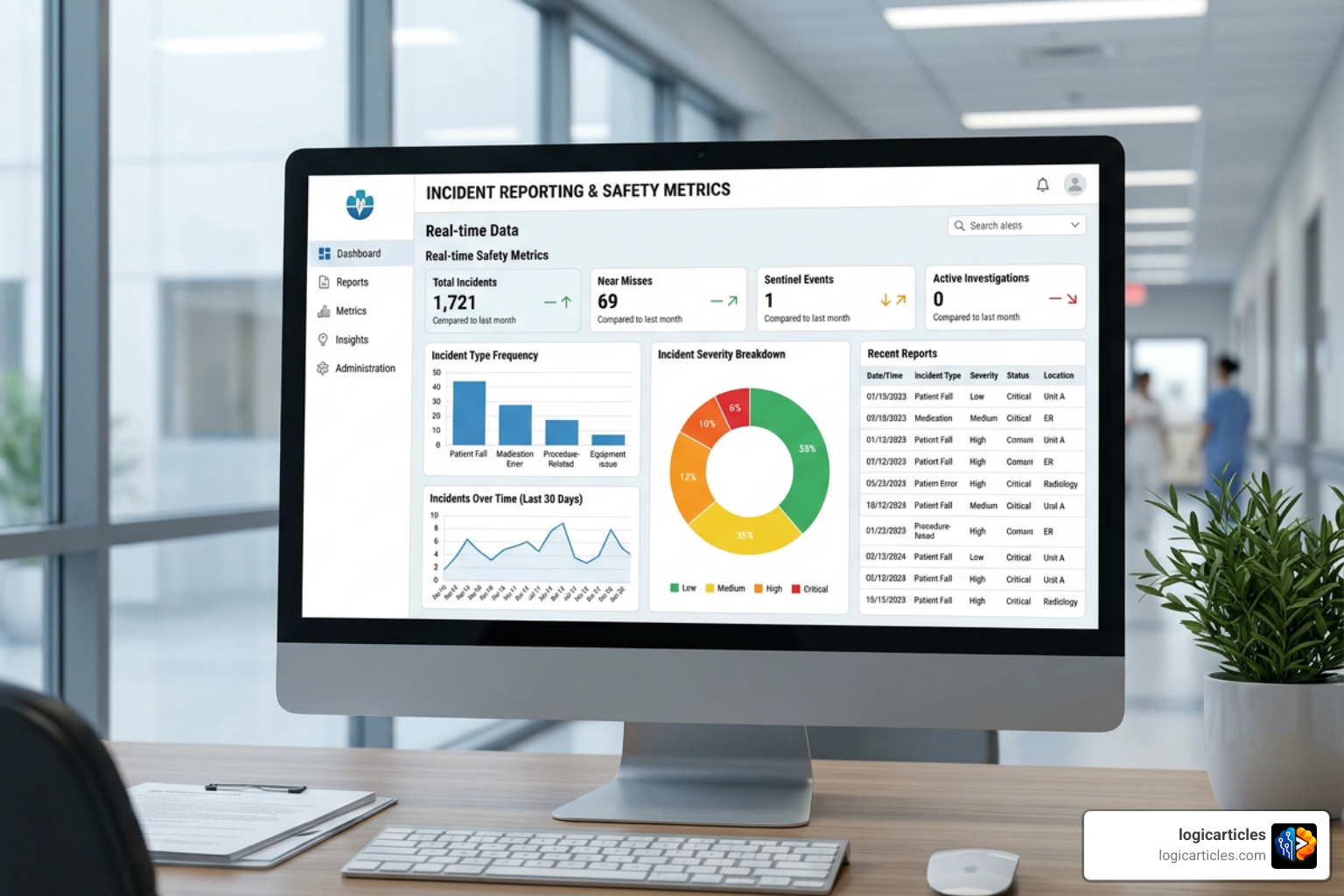
When a report is submitted, the software evaluates its parameters—such as the department, incident type, and severity level—and automatically routes it to the designated investigator. If the incident involves a high-severity event, the system can trigger an immediate alert to executive leadership.
Using structured frameworks like the RACI model (Responsible, Accountable, Consulted, Informed), organizations can pre-define who needs to act on an incident and who simply needs to be kept in the loop. Activity logs track every action taken, ensuring complete accountability from the moment an incident is logged until it is fully resolved.
Root Cause Analysis and Trend Identification
Recording that an incident happened is only half the battle; we must understand why it happened to prevent it from occurring again. Modern platforms integrate internationally recognized root cause analysis (RCA) methodologies directly into the investigation workflow.
- PRISMA: A systematic method used to identify, categorize, and analyze the root causes of events.
- SIRE: A structured approach to clinical incident investigation that focuses on human factors and system vulnerabilities.
- Ishikawa (Fishbone) Diagrams: Interactive visual tools that help investigators map out cause-and-effect relationships.
By utilizing pattern detection and semantic search, safety officers can search thousands of records for common themes. For example, if multiple clinics report minor issues with a specific syringe pump, semantic search can group these seemingly unrelated events together, flagging a potential manufacturing defect.
This level of analytical scrutiny is highly complementary to other technical safety standards, such as Medical Device Software Testing, which ensures the underlying technology in clinical settings operates reliably before it ever reaches a patient’s bedside.
How Digital Systems Improve Patient Safety and Compliance
The ultimate goal of any clinical safety platform is to reduce preventable harm. By streamlining the reporting loop, clinical teams can identify systemic vulnerabilities before they lead to a major sentinel event.
This proactive approach is critical for maintaining regulatory compliance. Healthcare organizations must answer to a variety of oversight bodies, including the Joint Commission, the Centers for Medicare & Medicaid Services (CMS), and DNV.
Failing an audit or survey can lead to severe penalties, loss of accreditation, or even closure. Utilizing dedicated digital tools, such as the Healthcare Emergency Management Software – Veoci platform, helps hospitals stay organized and prepared for any regulatory inspection.
Supporting Regulatory Audits and Accreditation
When surveyors arrive unannounced, they expect to see a clear, organized history of how your facility handles safety events. Digital systems make this easy by keeping all documentation, corrective action plans (CAPAs), and safety committee meetings in a single, secure repository.
Instead of scrambling to find paper files, risk managers can generate comprehensive, audit-ready reports in a few clicks. In fact, 99.8% of healthcare facilities using dedicated digital compliance platforms pass all of their surveys and inspections over the course of the year.
Furthermore, platforms designed to support emergency management often include digitized Hospital Incident Command System (HICS) forms and templates. These features allow teams to conduct rapid after-action reporting following real-world emergencies or safety drills, ensuring that lessons learned are immediately integrated into the organization’s emergency plan.
Integrating Incident Management Software for Healthcare with Existing Systems
An incident management platform should not exist on an isolated island. To maximize its value, it must integrate seamlessly with other core healthcare technologies.
- Electronic Health Records (EHR): Linking incidents directly to patient records ensures that clinicians have a complete picture of a patient’s history, including any adverse events or near misses.
- Risk and Insurance Platforms: Integrating incident data with risk management tools helps hospitals manage liability claims and identify high-risk areas. For organizations evaluating their broader insurance tech stack, reviewing the Best Insurance Claims Software Vendors or investing in custom Insurance Software Development can help bridge the gap between clinical incidents and financial risk mitigation.
- Communication and Messaging: When a critical safety event occurs, immediate communication is vital. Connecting your incident platform with a secure, Hipaa Compliant Messaging App ensures that the right team members are notified instantly without compromising patient privacy.
Comparing Healthcare Incident Solution Architectures
When choosing an incident management platform, healthcare IT leaders must make a fundamental architectural decision: should they opt for a cloud-based SaaS platform, a highly secure on-premise deployment, or a flexible open-source framework?
| Feature | Cloud-Based SaaS (e.g., Radar, MedTrainer) | On-Premise (e.g., Veona ED, custom builds) | Open-Source / On-Premise (e.g., SCRIBE) |
|---|---|---|---|
| Deployment Time | Fast (days to weeks) | Slow (months) | Very Fast (minutes for basic setup) |
| Data Sovereignty | Managed by vendor | Local control | Complete local control |
| Customizability | High (via configuration) | High (via development) | Unlimited (access to source code) |
| Internet Dependency | High (requires connection) | Low (works on local LAN) | Low (fully offline capable) |
| Regulatory Alignment | HIPAA, SOC2, GDPR compliant | Built to facility standards | GDPR & European HDS compliant |
For organizations looking to deploy a highly resilient, European-compliant crisis and incident framework on their own servers, the open-source platform nocomp/scribe offers a powerful, sovereign option that completely avoids cloud dependencies.
Meanwhile, clinical departments requiring tight, real-time integration between emergency triage and incident tracking often look toward solutions like Veona ED – Triage, treat, and track in the casualty department. to manage patient flow and safety in high-pressure environments.
For broader hospital networks, dedicated quality and event tracking systems like Hospital Event Reporting & Incident Workflow Software | Vastian provide the deep lifecycle management needed to scale compliance across multiple facilities.
Similarly, platforms like Healthcare Incident Management Software | Radar Healthcare and the AI-driven QUASR+ AI Healthcare Incident Reporting Software help organizations transition from simple record-keeping to proactive, predictive risk prevention.
Key Considerations When Choosing a Solution
To find the right platform for your organization, keep these five pillars in mind:
- Ease of Use: If the reporting form is too complicated, busy clinicians simply won’t use it. Look for platforms with intuitive, dynamic forms that adjust in real-time based on the user’s input.
- Configurability: Every healthcare facility has unique workflows. Avoid systems that force you into a rigid, pre-built template; instead, look for drag-and-drop form builders and configurable risk-scoring models.
- Multi-Site Support: If you manage a large health system, you need a platform that can centralize data from multiple locations while still allowing individual clinics to manage their own local workflows.
- Data Security: Healthcare data is highly sensitive. Ensure the platform you choose complies with HIPAA, GDPR, or local health data hosting (HDS) standards, and features robust role-based access controls.
- Total Cost of Ownership (TCO): Look beyond the initial license fee. Consider implementation costs, training requirements, and any ongoing maintenance or support fees.
Frequently Asked Questions about Healthcare Incident Management
How does incident management software reduce preventable patient harm?
By centralizing all incident and near-miss data in a single system, safety teams can run advanced trend analysis to spot hidden patterns. For example, if the software flags a spike in minor medication errors on a specific ward during shift changes, clinical leaders can proactively adjust staffing or handoff protocols before a major, harmful error occurs.
Can incident reports be submitted anonymously to protect staff?
Yes. Most modern incident management platforms offer secure, anonymous reporting portals. These systems strip out identifying information—including the reporter’s name, email, and IP address—while still allowing the safety team to communicate with the anonymous reporter to gather additional context. This builds a healthy, blame-free safety culture.
What is the role of AI in modern incident reporting?
Artificial intelligence is transforming how safety teams process incident data. AI engines can instantly summarize long, complex reports, automatically categorize incidents based on natural language descriptions, and run semantic searches to find similar events across historical databases. This drastically reduces the manual administrative burden on clinical safety officers.
Conclusion
Building a proactive culture of patient safety requires more than just good intentions; it requires the right tools. Transitioning away from fragmented spreadsheets, paper forms, and shared documents toward a unified, digital incident platform is one of the most impactful operational decisions a healthcare leader can make.
By automating workflows, integrating with core clinical systems, and utilizing advanced root-cause analysis, we can protect our staff, simplify regulatory compliance, and—most importantly—save patient lives.
Are you ready to modernize your organization’s clinical and compliance operations? Explore the Best Software Categories to compare the leading software solutions across healthcare, compliance, and enterprise risk management.