Why the Droven.io Cloud Computing Guide Matters in 2026

The droven.io cloud computing guide is one of the clearest free resources available for understanding how cloud computing works across AWS, Azure, and Google Cloud — whether you’re a complete beginner or a business owner trying to make smarter infrastructure decisions.
Quick answer for what this guide covers:
- What Droven.io is — a free educational content platform, not a software product or SaaS tool
- Cloud service models — IaaS, PaaS, and SaaS explained in plain language
- Deployment models — public, private, hybrid, and multi-cloud compared
- Key benefits and challenges — scalability, cost management, egress fees, and security
- Cloud security basics — including the shared responsibility model and Zero Trust principles
- Migration guidance — step-by-step process for moving workloads to the cloud
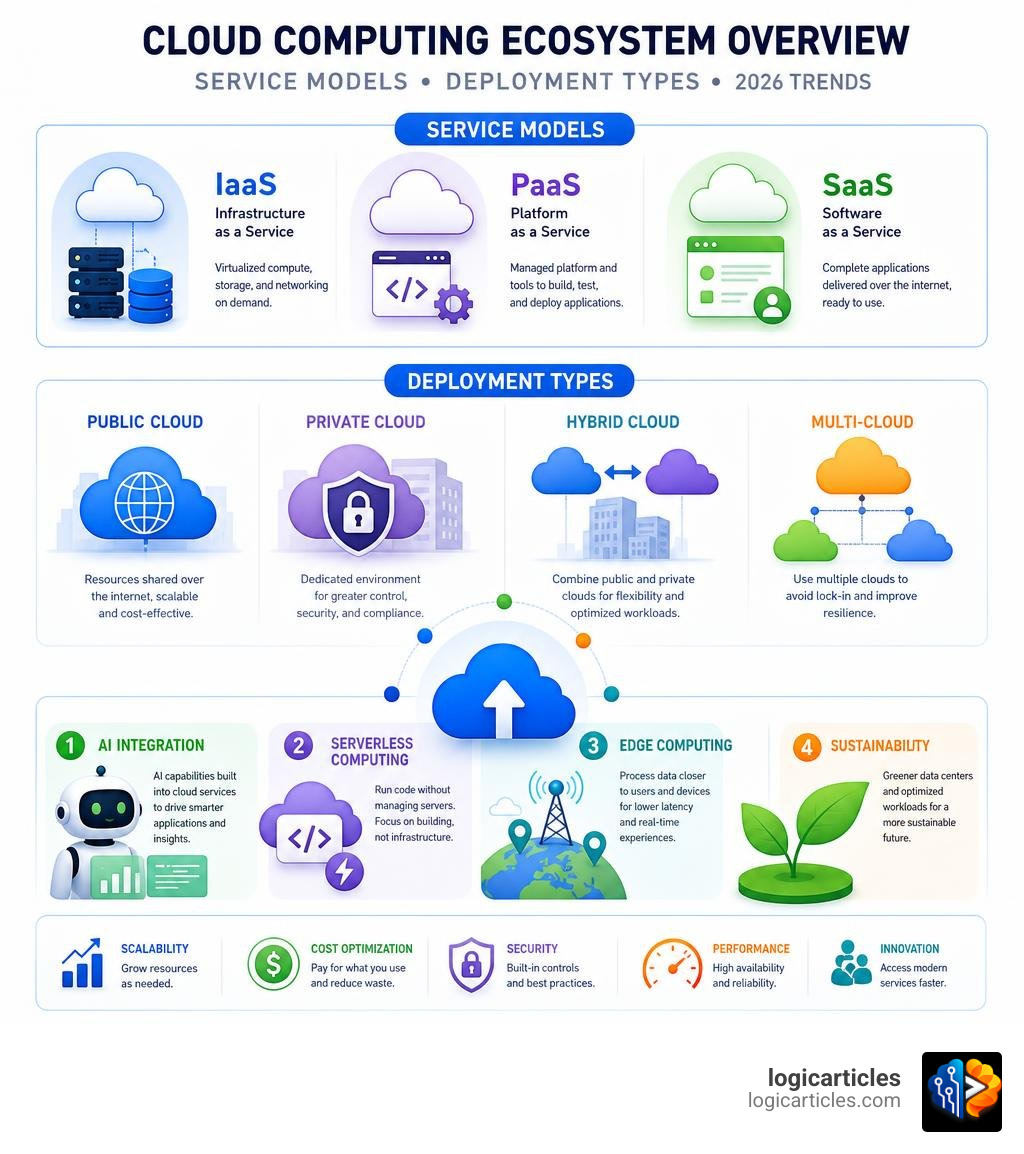
- 2026 trends — AI integration, serverless computing, edge computing, and sustainability
- Common myths debunked — like “cloud is always cheaper” or “cloud is automatically secure”
Cloud computing has quietly become the backbone of almost every modern business. In 2026, it is no longer just a technical decision — it is a strategic one. AI workloads are pushing cloud demand higher, hybrid and multi-cloud setups are now common, and cost optimization has become a serious priority for organizations of every size.
Yet despite how critical cloud knowledge has become, reliable explanations are still harder to find than vendor product demos. That gap is exactly what Droven.io aims to fill — with educational content that translates technical concepts into practical business understanding, without a sales pitch attached.
What is Droven.io and Who is the Droven.io Cloud Computing Guide For?
Before diving into technical architectures, let’s clear up a common point of confusion. What exactly is Droven.io?
Unlike major tech brands that sell hosting space or software licenses, Droven.io is an educational technology and knowledge platform. It does not sell a proprietary SaaS tool or cloud infrastructure. Instead, it functions as an editorial hub that breaks down complex tech trends—such as artificial intelligence, robotics, cybersecurity, and cloud networking—for a global audience.
The platform was created because many teams in 2026 struggle with technology adoption. The issue isn’t a lack of tools; it is a lack of neutral, clear context. When every vendor claims their software will solve all your problems, having an independent educational resource is incredibly valuable.
With this in mind, the Droven.io Cloud Computing Guide for Beginners in 2026 is designed to serve several distinct audiences:
- Beginners and Students: Individuals who want to learn how the cloud works without getting drowned in confusing jargon. The guide uses simple everyday analogies—like comparing cloud computing to renting a fully furnished apartment instead of building a house from scratch—to make concepts highly accessible.
- Developers and IT Professionals: Tech workers looking to understand multi-cloud structures, Infrastructure as Code (IaC), and modern deployment pipelines.
- Small Business Owners and Startups: Entrepreneurs who need to launch digital products quickly but want to avoid making expensive infrastructure mistakes.
- Enterprise Teams: Decision-makers who need to evaluate high-level strategies, cloud migration timelines, and compliance frameworks.
By keeping its content educational and free from vendor bias, Droven.io helps these different groups translate technical terms into real-world business decisions.
Core Cloud Service Models and Deployment Realities
To build a solid cloud strategy, you must first understand the building blocks. The cloud is not a single product; it is an ecosystem of connected services delivered over the internet.
Droven.io breaks these services down into three primary service models:
- Infrastructure as a Service (IaaS): You rent the raw ingredients—like virtual machines, storage, and networks. You are responsible for installing the operating system, database, and applications. (Think of this like renting an empty plot of land).
- Platform as a Service (PaaS): The provider manages the hardware, operating system, and database layers. You simply upload your application code. (This is like renting a fully furnished office space).
- Software as a Service (SaaS): A complete, ready-to-use software application accessed via a web browser. (This is like buying a ticket to a movie—you just show up and enjoy).
Beyond service models, businesses must choose how to deploy these resources. According to the droven.io Cloud Computing Guide | droven.io, choosing the wrong deployment architecture is one of the primary reasons projects run over budget.
Here is how the four main deployment models compare in 2026:
| Deployment Model | What It Is | Best For | Major Advantage | Key Challenge |
|---|---|---|---|---|
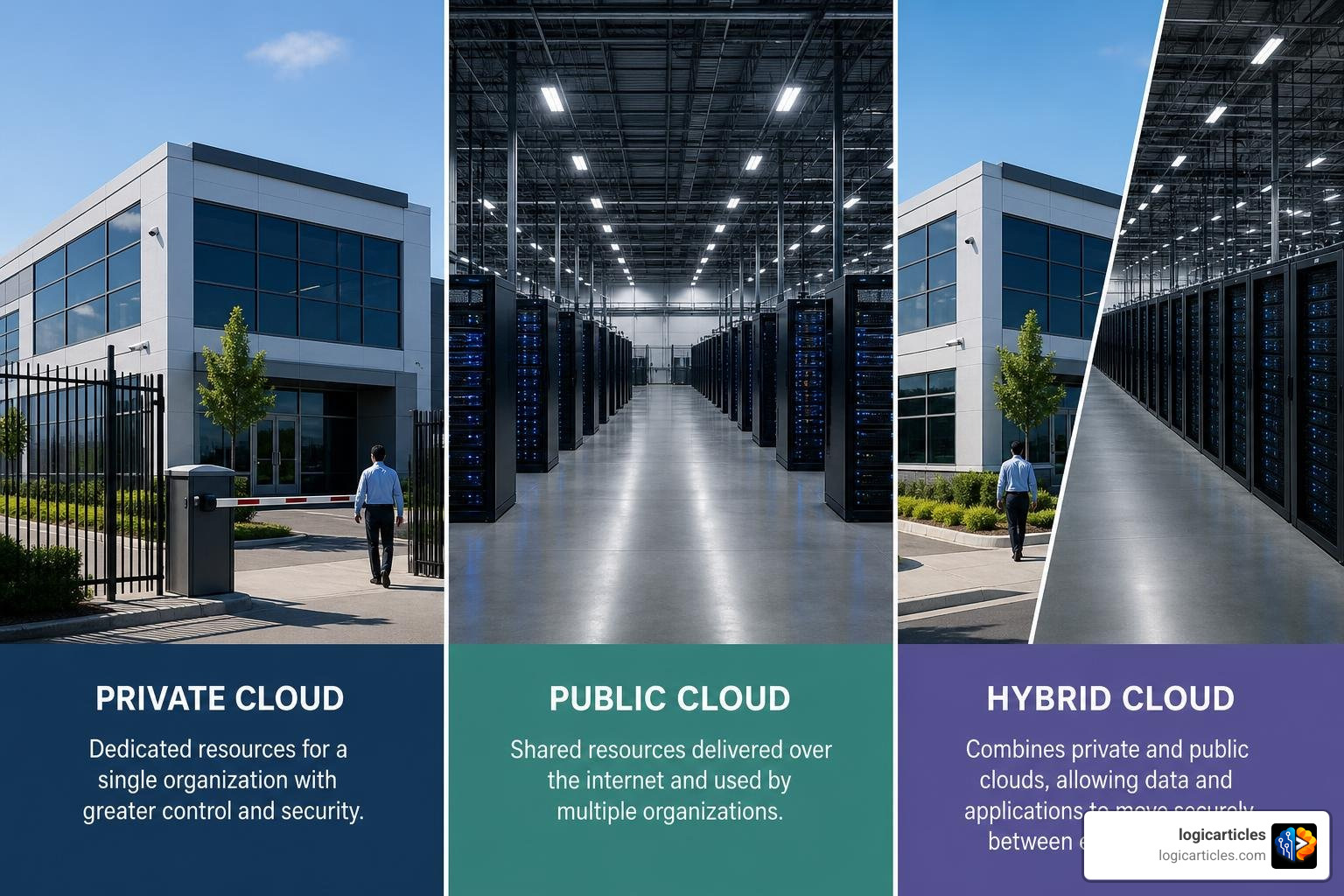
| Public Cloud | Resources owned and operated by a third-party provider (AWS, Azure, GCP) shared with other tenants. | Startups, general web apps, scalable workloads. | No upfront hardware costs; massive scalability. | Egress fees and potential vendor lock-in. |
| Private Cloud | Infrastructure dedicated solely to a single organization, hosted on-premise or by a third party. | Highly regulated industries (finance, healthcare). | Maximum control over security and data residency. | High upfront capital costs and maintenance. |
| Hybrid Cloud | A mix of public and private clouds connected by secure networking layers. | Mid-market and enterprise businesses modernizing legacy systems. | Balances security with the public cloud’s elasticity. | Complex configuration and management. |
| Multi-Cloud | Using services from multiple public cloud providers (e.g., AWS for compute, Google Cloud for AI). | Large enterprises seeking resilience and specialized tools. | Avoids vendor lock-in; optimizes performance. | High operational complexity and “IAM sprawl.” |
Practical Benefits, Challenges, and Cost Optimization in 2026
When done right, cloud computing delivers incredible benefits. It allows startups to launch global applications without buying physical servers. It helps retail operations scale up instantly to handle holiday traffic spikes, and it allows healthcare clinics to securely manage patient data across multiple locations.
However, the transition is not always smooth. In 2026, organizations are realizing that the cloud does not automatically save money. In fact, unoptimized cloud environments run an average of 30% to 50% above estimated budgets during their first 90 days.

One of the biggest financial shocks for businesses is data egress fees. While cloud providers make it completely free to upload your data (ingress), they charge aggressive network transfer fees when you try to move your data out (egress). For data-heavy businesses, egress fees can easily account for 25% to 40% of their monthly cloud invoice.
To keep these costs under control, modern businesses use FinOps—a cultural practice that combines financial accountability with cloud engineering. If you are struggling with rising infrastructure bills, we highly recommend checking out our guide on the Best Cloud Cost Optimization Tools For 2026 Cut Cloud Bills Fast to help monitor and eliminate wasted spending.
Managing your cloud expenses is also crucial when deploying specialized software. Whether you are scaling up custom Emr Software Development In 2026, rolling out a new Manufacturing Erp Software Features Cost Benefits Best Tools, upgrading to the Best Cloud Pos Software In 2026, or running high-performance operations using the Best Big Data Analytics Tools In 2026 Ranked By Performance, a well-monitored cloud environment ensures your software runs smoothly without breaking the bank.
Step-by-Step Cloud Migration and Security Best Practices
Moving your business operations to the cloud is a major journey. You cannot simply copy-paste your local files and expect everything to work. According to the Cloud Migration Guide 2025 – droven.io, a successful migration requires a structured, step-by-step approach.
The 8-Step Cloud Migration Process
- Define Your Migration Goals: Identify exactly why you are moving. Are you trying to reduce physical hardware costs, improve app performance, or enable better remote work?
- Assess Your Existing Infrastructure: Map your current applications, database sizes, and software dependencies.
- Choose the Right Deployment Model: Decide whether a public, private, hybrid, or multi-cloud setup fits your business.
- Select a Cloud Service Model: Determine which parts of your infrastructure will use IaaS, PaaS, or SaaS.
- Create a Detailed Migration Plan: Build a timeline that includes data transfer methods, expected downtime, and a rollback strategy in case something goes wrong.
- Execute the Migration: Move your data and applications. Common strategies include “rehosting” (lifting and shifting as-is) or “refactoring” (rewriting code to run natively in the cloud).
- Test and Validate Everything: Verify that your databases are synchronized, security configurations are active, and applications are performing as expected.
- Optimize and Monitor: Set up automated billing alerts, monitor application speed, and clean up any unused resources.
Cloud Security and the Shared Responsibility Model
A common mistake is assuming that your data is automatically secure just because it is hosted by a giant provider like AWS or Microsoft Azure. This is a dangerous myth.
Cloud security operates under the Shared Responsibility Model:
- The Provider is responsible for the security of the cloud. This includes physical security at their data centers, power supplies, cooling systems, and the virtualization layer.
- The Client (you) is responsible for security in the cloud. This means you are completely liable for configuring access controls, managing passwords, patching your operating systems, securing your application code, and encrypting your sensitive data.
To keep your business safe in 2026, we recommend adopting a Zero Trust Security approach. This framework operates on a simple principle: never trust, always verify. Even if a user is logged into your corporate network, their identity and device must be continuously validated before they are granted access to sensitive cloud databases.
Furthermore, if your business handles financial or healthcare records, you must ensure your cloud setup complies with strict regulatory frameworks like SOC 2 Type II, HIPAA, or GDPR.
Future Trends and Common Myths Addressed in the Droven.io Cloud Computing Guide
The cloud landscape is constantly changing. What worked a few years ago might be outdated today.
Key Future Trends in the Droven.io Cloud Computing Guide
As highlighted in the Cloud Computing Strategy for Businesses: Droven.io Complete Guide for 2026 — Steemit, several key movements are shaping the future of digital infrastructure:
- Native AI Integration: Cloud providers are embedding artificial intelligence directly into their platforms. Instead of managing complex backend machine learning pipelines, businesses can now access advanced AI models via simple API calls to run intelligent workloads.
- Serverless Computing: Despite the name, “serverless” doesn’t mean there are no servers—it just means you don’t have to manage them (as the joke goes, it’s just someone else’s server running faster!). Developers simply upload their code, and the cloud provider automatically provisions, scales, and shuts down resources as needed.
- Edge Computing: To reduce latency for real-time applications, processing power is moving closer to the physical user. Instead of sending data to a centralized server thousands of miles away, edge devices process data locally at the “edge” of the network.
- Green Computing and Sustainability: With data centers consuming massive amounts of electricity, cloud providers are competing on environmental metrics. In 2026, choosing a cloud provider based on their renewable energy commitments and carbon footprint has become standard practice for socially responsible brands.
Debunking Myths with the Droven.io Cloud Computing Guide
To prevent costly mistakes, the Droven.io Cloud Computing Guide: Explained – RocketDigit helps readers look past the marketing hype by debunking several common industry myths:
- Myth 1: The cloud is always cheaper. While the cloud removes the need for expensive upfront hardware purchases, monthly operational costs can quickly spiral out of control if your environment is poorly configured or unmonitored.
- Myth 2: The cloud is automatically secure. As explained by the Shared Responsibility Model, your security is only as strong as your access controls, password hygiene, and data encryption configurations.
- Myth 3: Cloud computing is only for large enterprises. With flexible pay-as-you-go pricing, even a solo developer or local bakery can easily afford to use secure cloud storage and collaborative SaaS tools.
- Myth 4: The cloud removes the need for internal IT planning. Moving to the cloud changes the role of your IT department—from managing physical hardware to managing digital architectures, security policies, and cloud budgets—but it certainly doesn’t replace them.
Frequently Asked Questions about Cloud Computing
Is Droven.io a software vendor or an educational platform?
Droven.io is entirely an educational and editorial content platform. It does not sell software, SaaS products, hosting space, or IT consulting services. Its sole purpose is to provide clear, neutral, and accessible guides on emerging technologies to help readers make informed decisions.
What is the shared responsibility model in cloud security?
The shared responsibility model is a security framework which dictates that the cloud provider is responsible for securing the physical infrastructure (servers, cooling, virtualization layers), while the client is responsible for securing their own data, applications, user passwords, operating system updates, and access permissions.
How do data egress fees impact cloud budgets?
Data egress fees are the network transfer costs charged by cloud providers when you move data out of their cloud network to an external location or another provider. Because these fees are often hard to predict, they can account for a significant portion of unexpected monthly cloud expenses if not carefully managed.
Conclusion
The cloud has evolved from a convenient technical storage option into an absolute necessity for modern business survival. Understanding how to navigate different service models, manage deployment architectures, and protect your data is crucial for any organization looking to scale.
By breaking down these complex concepts without vendor bias, the droven.io cloud computing guide serves as an excellent starting point for your digital transformation journey. However, building a successful digital business involves more than just setting up secure servers; it requires optimizing your entire workflow.
To help your team work smarter and make the most of your digital tools, we invite you to Explore more productivity resources and strategies designed to help your business thrive in 2026 and beyond.