What Are Procure to Pay Software Companies — And Which Ones Lead the Market?

The top procure to pay software companies in 2026 include:
- SAP Ariba — largest network, 190+ countries, trillions in annual commerce
- Coupa — $8 trillion in transactions processed, AI-native platform
- JAGGAER ONE — strong in direct and indirect spend, 85% faster invoice processing
- GEP SMART — unified source-to-pay suite with deep analytics
- Oracle Fusion Cloud Procurement — enterprise-grade, tight ERP integration
- Ivalua — $500 billion in spend managed for 300+ companies
- Zycus — agentic AI with autonomous negotiation capabilities
- Basware — 9,500+ businesses across 70+ countries
- Tradeshift — $500 billion in transactional value, 1.5 million companies
- Medius — $160 billion in annual transactions, 4,000 customers
Every business buys things. Raw materials, software, office supplies, services. But how that buying happens — and how payments get made — is where most companies quietly lose time and money.
That’s the problem procure-to-pay (P2P) software solves.
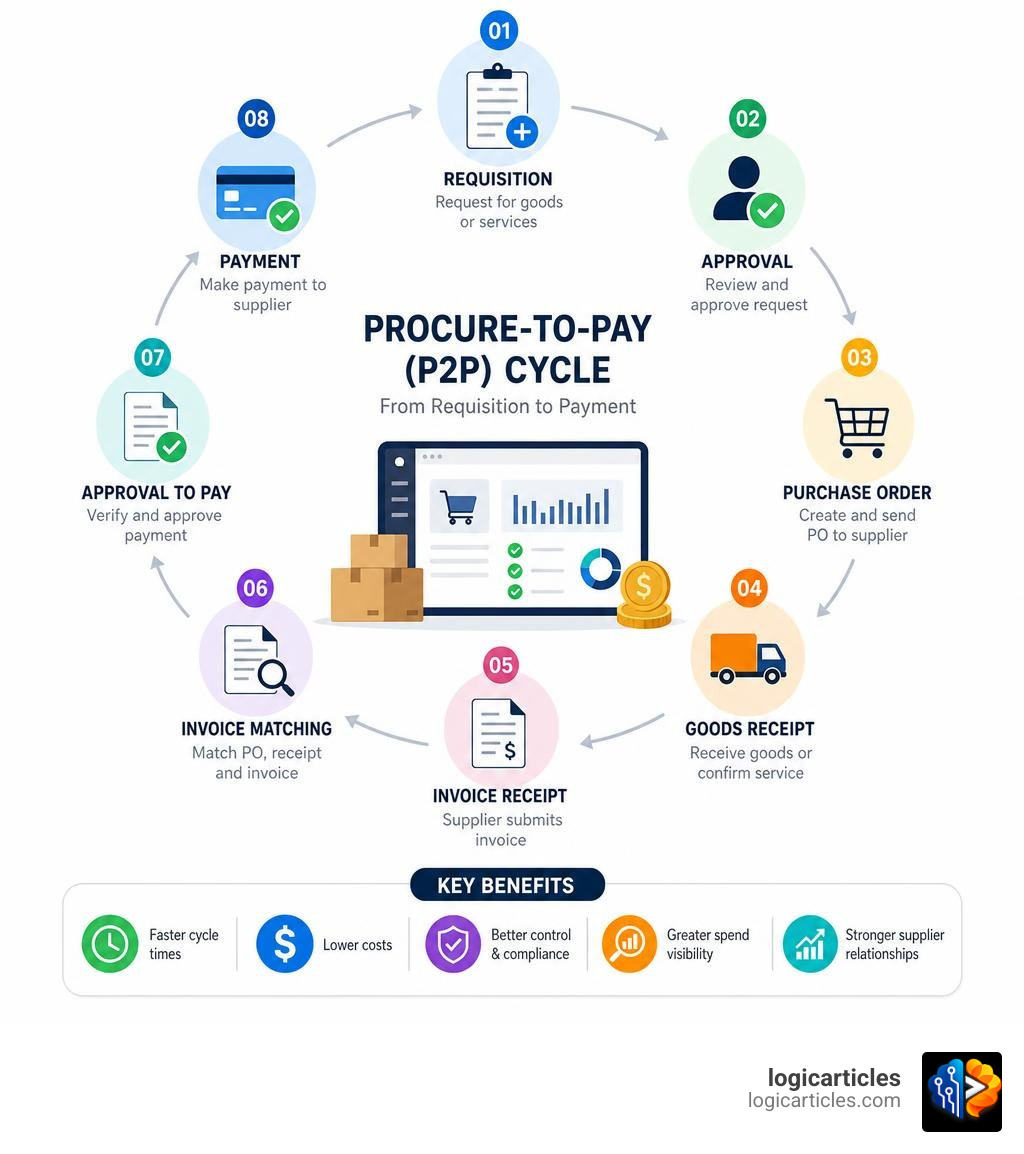
P2P software connects the full buying cycle: from the moment someone requests a purchase, through approvals, supplier orders, goods receipt, invoice matching, and final payment. It replaces slow, error-prone manual processes with automated, auditable workflows.
The global P2P software market is projected to reach $5.38 billion by 2027, driven by growing demand for automation and e-procurement. Yet many finance and procurement teams still rely on spreadsheets, email chains, and disconnected ERP modules — leading to invoice delays, duplicate payments, and poor spend visibility.
This guide walks you through the leading platforms, their key capabilities, pricing considerations, and how to choose the right fit for your organization.
Understanding the Core Capabilities of Procure to Pay Software Companies
To appreciate what the top procure to pay software companies bring to the table, we must first look at the traditional friction points they eliminate. Historically, procurement and accounts payable (AP) operated in silos. A department head would order a service via email, the vendor would send a PDF invoice to a generic inbox, and the finance team would scramble to figure out who authorized the purchase, whether the services were actually rendered, and which general ledger (GL) code to apply.
Modern P2P software solves this by bridging the gap between procurement and AP. It creates a single, digital thread that links every purchase requisition to a purchase order (PO), a goods receipt note (GRN), and eventually, an electronic invoice.
This process is anchored by several core capabilities:
- Digital Requisitions: Standardizing how employees request goods or services, ensuring all necessary data is captured upfront.
- Automated PO Generation: Instantly creating and routing purchase orders to approved vendors once a requisition is cleared.
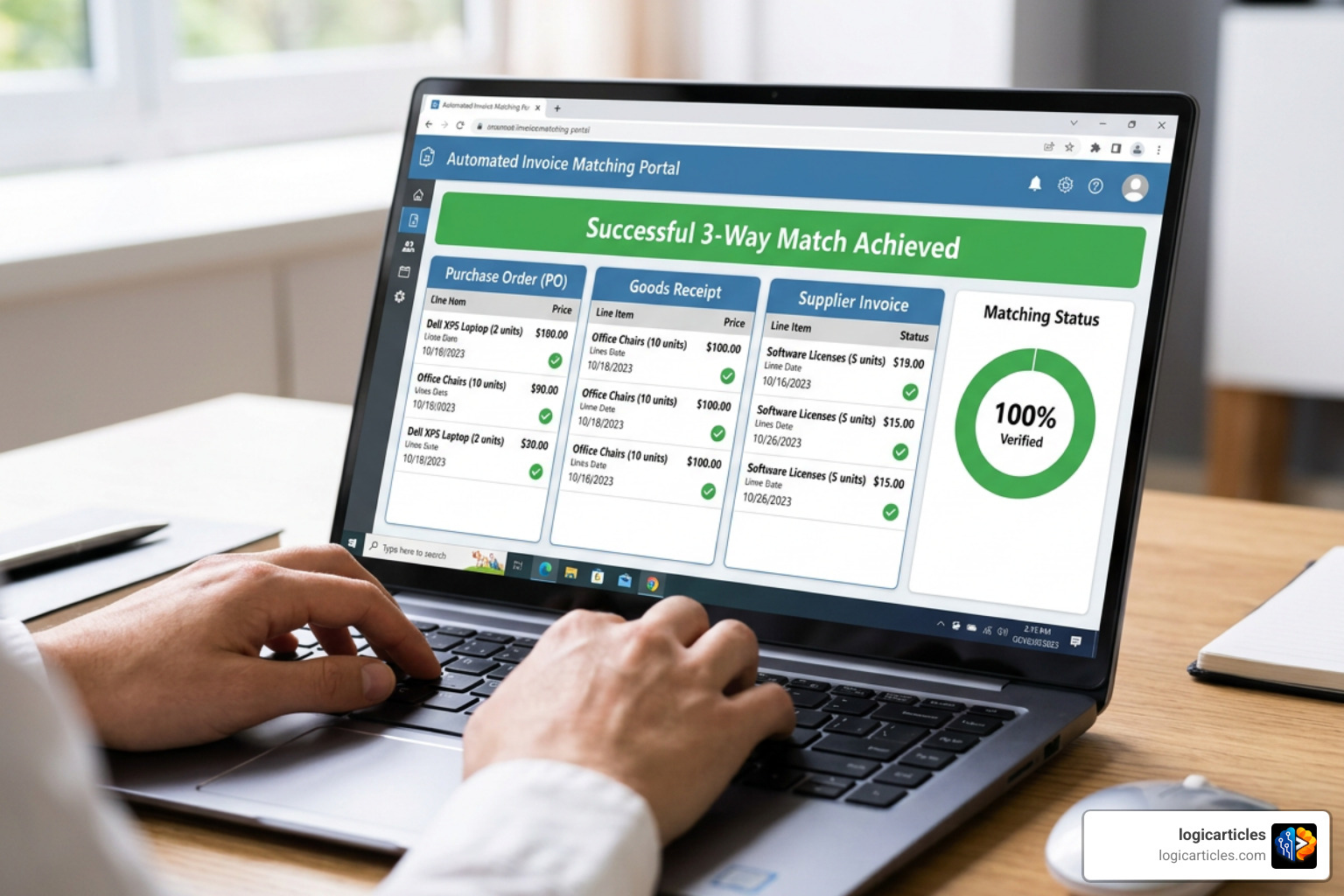
- Three-Way Matching: Automatically comparing the PO, the goods receipt (or service confirmation), and the incoming invoice to ensure the business only pays for what was ordered and received.
- E-Invoicing and AP Automation: Eliminating paper and manual data entry by digitizing invoices via optical character recognition (OCR) or direct supplier portal submission.
By centralizing these functions, P2P platforms give finance leaders real-time visibility into committed spend before the cash actually leaves the building. This is highly complementary to other financial management solutions, such as the Best CFO Software Tools For Small Business, which help organizations analyze high-level cash flow and financial health.
How Modern Procure to Pay Software Companies Streamline Requisitions
The biggest headache in corporate purchasing is “shadow procurement”—when employees bypass company policies to buy software or supplies on their own. Leading P2P companies prevent this by making the compliant path the easiest path.
Through intuitive marketplaces and guided buying interfaces that feel like consumer e-commerce sites, platforms direct employees toward contracted suppliers and pre-negotiated rates. Behind the scenes, dynamic approval routing engines send requests to the right managers based on department, budget limits, or the type of purchase.
For instance, platforms like Procure-to-Pay Software for Smarter Spend Control | Coupa embed corporate purchasing policies directly into the requisition workflow. If an employee requests an item that exceeds their department’s remaining monthly budget, the system alerts them in real time or automatically routes the request to an executive for special approval. This proactive control stops unauthorized spending before it happens.
The Role of Procure to Pay Software Companies in Accounts Payable Automation
Once goods are delivered or services are completed, the focus shifts to accounts payable. This is where manual workflows traditionally slow to a crawl, resulting in missed early-payment discounts and strained supplier relationships.
P2P platforms automate the heavy lifting of AP by handling invoice ingestion, tax validation, and payment reconciliation. When a supplier submits an invoice, the software automatically extracts the line items, matches them against the original PO and goods receipt, and flags any discrepancies—such as price mismatches or quantity errors—for manual review.
By automating these steps, platforms like those discussed in Implement a Powerful Procure-to-Pay (P2P) Solution | JAGGAER can reduce PO handling errors by up to 75% and slash invoice processing times by up to 85%. This allows AP teams to transition from manual data entry clerks to strategic analysts who focus exclusively on handling exceptions and optimizing payment timing.
Key Features to Evaluate in Enterprise P2P Platforms
When evaluating different procure to pay software companies, it is helpful to contrast their specialized capabilities against traditional ERP software. While legacy ERPs are excellent systems of record, they often lack the user-friendly interfaces, supplier collaboration tools, and agility required to manage modern procurement.
| Feature / Capability | Specialized P2P Platforms (e.g., Coupa, Zip, Procurify) | Legacy ERP Systems (Standard Modules) |
|---|---|---|
| User Experience (UX) | Intuitive, consumer-grade; requires minimal training | Complex, grid-based; requires specialized training |
| Supplier Portal | Self-service portal for RFQs, e-invoicing, and payment tracking | Limited or requires expensive third-party add-ons |
| AI Capabilities | Native AI for fraud detection, risk monitoring, and smart coding | Basic automation, often relying on rigid, custom-coded rules |
| Deployment Speed | Rapid implementation (typically 2 to 12 weeks) | Long, complex deployment (often 6 to 18 months) |
| Integrations | Open APIs designed to connect with multiple enterprise tools | Historically siloed; integrations can be costly to maintain |
To get the most out of a specialized P2P tool, seamless integration with your primary ERP (such as NetSuite, SAP, or Workday) is essential. A well-integrated P2P platform imports vendor masters, chart of accounts, and budget limits from the ERP, while exporting fully matched, approved invoices back to the ERP for the final payment run. This ensures your core ledger remains the single source of truth without requiring manual double-entry.
This level of integration is particularly critical when coordinating with other specialized financial tools, such as the Best Revenue Management Software In 2026, to maintain a unified and accurate picture of overall business cash flow.
AI and Automation in Modern P2P Workflows
We are living in an era where AI is shifting from a buzzword to an active operational partner. In the P2P landscape, this evolution is represented by the transition from basic automation to “agentic AI.”
While traditional automation follows simple “if-this-then-that” rules, agentic AI platforms use domain-specific models to execute complex, multi-step tasks autonomously. For example, platforms like the Agentic AI Procurement Platform | Zycus Intake to Outcomes utilize specialized AI agents to turn messy, unstructured intake requests (like a casual Slack message or email from a department head) into fully structured, policy-compliant purchase requisitions.
Furthermore, these autonomous agents can analyze historical pricing data to run real-time contract negotiations with tail-spend vendors, identify duplicate billing anomalies, and screen invoices for subtle fraud patterns—such as mismatched vendor bank details or altered email addresses—before payments are approved.
Regional Compliance and Tax Integration
For mid-sized and enterprise companies operating internationally, navigating local tax laws and vendor payment regulations is a major challenge. This is especially true in regions with strict regulatory frameworks, such as India, where businesses must comply with complex Goods and Services Tax (GST) structures, Tax Deducted at Source (TDS) calculations, and government-mandated e-invoicing portals.
To address these challenges, platforms like Procurement Management Software | Purchase Order & Invoice Automation | ProcurePulse build local compliance modules directly into their core code rather than treating them as third-party bolt-ons. This ensures that GST reconciliations are automated, TDS rates are calculated dynamically during the payment run, and payments to MSME (Micro, Small, and Medium Enterprise) vendors are automatically flagged to comply with the 45-day payment enforcement laws under the MSMED Act.
Similarly, modern agile platforms like Procure-to-pay software and solutions | Zip provide global compliance frameworks, instant bank account verification across dozens of countries, and automated audit trails. This makes it easier for companies to remain compliant with regulations like SOX, GDPR, and ISO27001 while scaling their operations.
For companies looking for a highly visual, user-friendly approach to global spend control, Procure-to-Pay Software. Everything in One Procure to Pay Platform | Procurify offers physical and virtual purchasing cards, mobile receiving, and direct integrations with popular accounting tools to keep global teams aligned.
Business Benefits and Total Cost of Ownership (TCO)
Investing in a modern P2P platform yields significant, measurable returns across multiple areas of the business.
Key benefits include:
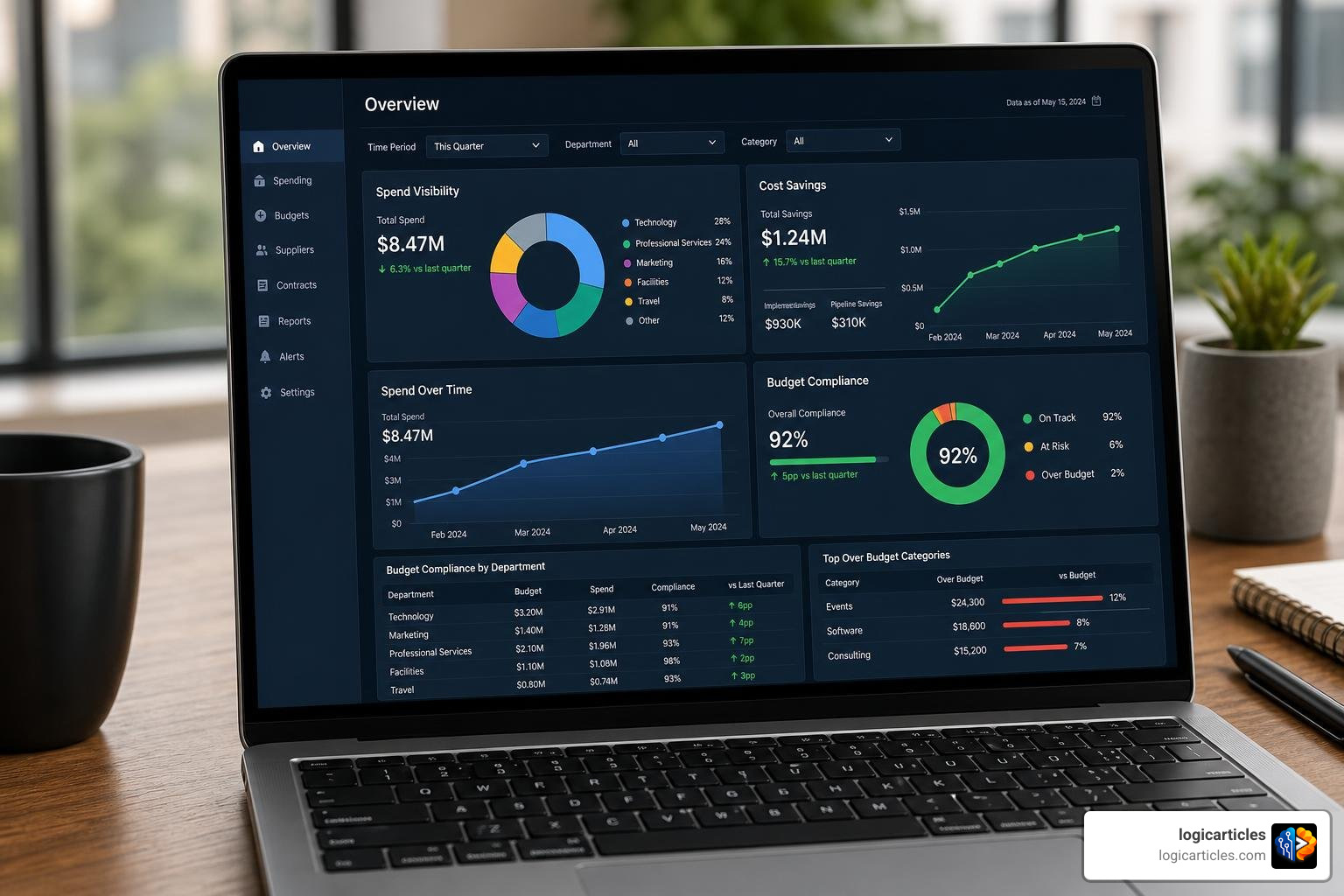
- Unprecedented Spend Visibility: Real-time dashboards allow finance leaders to see exactly where money is being committed before it is spent, helping to eliminate “maverick spend” and identify consolidation opportunities.
- Hard Cost Savings: By guiding employees to contracted suppliers and utilizing automated reverse auctions, businesses can achieve direct procurement savings of 10% to 22% annually.
- Operational Efficiency: Reducing manual invoice matching and routing tasks saves finance teams hundreds of hours during the month-end close.
When evaluating the Total Cost of Ownership (TCO), it is important to look beyond the software subscription fee. A complete TCO analysis should account for:
- Implementation and Integration Costs: The time and engineering resources required to connect the P2P platform with your existing ERPs and databases.
- Supplier Onboarding: The effort required to train your vendors to use the new supplier portal.
- Pricing Models: P2P pricing typically scales based on the number of users, the volume of transactions (or spend managed), or the specific modules activated.
Understanding these costs and aligning them with your overall financial strategy is key. For organizations looking to optimize their pricing strategies alongside their procurement savings, leveraging tools like the Best Price Optimization Software can help maximize overall profit margins on both sides of the ledger.
Frequently Asked Questions about Procure-to-Pay Software
What is the difference between P2P and S2P software?
While they sound similar, their scope is different. Procure-to-Pay (P2P) focuses on the transactional buying lifecycle: requisitioning, purchase orders, receiving, invoicing, and payment. It is highly focused on operational efficiency and compliance.
Source-to-Pay (S2P) is a broader suite that includes all P2P capabilities plus upstream strategic activities, such as supplier discovery, qualification, strategic sourcing (RFQs/auctions), contract lifecycle management (CLM), and supplier performance tracking.
How long does it take to implement a P2P platform?
Implementation timelines vary widely depending on the complexity of your organization. Agile, cloud-native platforms can often go live in 2 to 8 weeks for core procurement modules. On the other hand, complex, multi-entity global deployments involving legacy ERP integrations, custom approval matrices, and thousands of suppliers can take 6 to 12 months to fully roll out.
How does AI improve invoice matching accuracy?
Traditional invoice matching relies on rigid, text-based rules that fail if a supplier formats their invoice layout slightly differently. AI improves this by using machine learning and natural language processing to understand the context of the invoice.
It can recognize line items regardless of formatting, automatically map them to the correct PO lines, resolve minor rounding or currency discrepancies, and learn from human corrections over time to continuously increase the “no-touch” automated matching rate.
Conclusion
Choosing the right partner among the leading procure to pay software companies is a critical step in your organization’s digital transformation journey. By automating manual workflows, embedding compliance controls directly into the buying process, and leveraging the power of agentic AI, modern P2P platforms turn procurement from a administrative bottleneck into a strategic advantage.
Whether you are a growing mid-market business looking to curb shadow IT spending or a global enterprise seeking to streamline complex tax compliance and cross-border vendor payments, there is a P2P solution designed for your needs.
Ready to explore other software categories that can help optimize your business operations, finance, and human resources? Explore the Best Software Categories to find more industry-leading tools and expert guides tailored to your business goals.