Why Bug Tracking Breaks Down — and How Endbugflow Fixes It
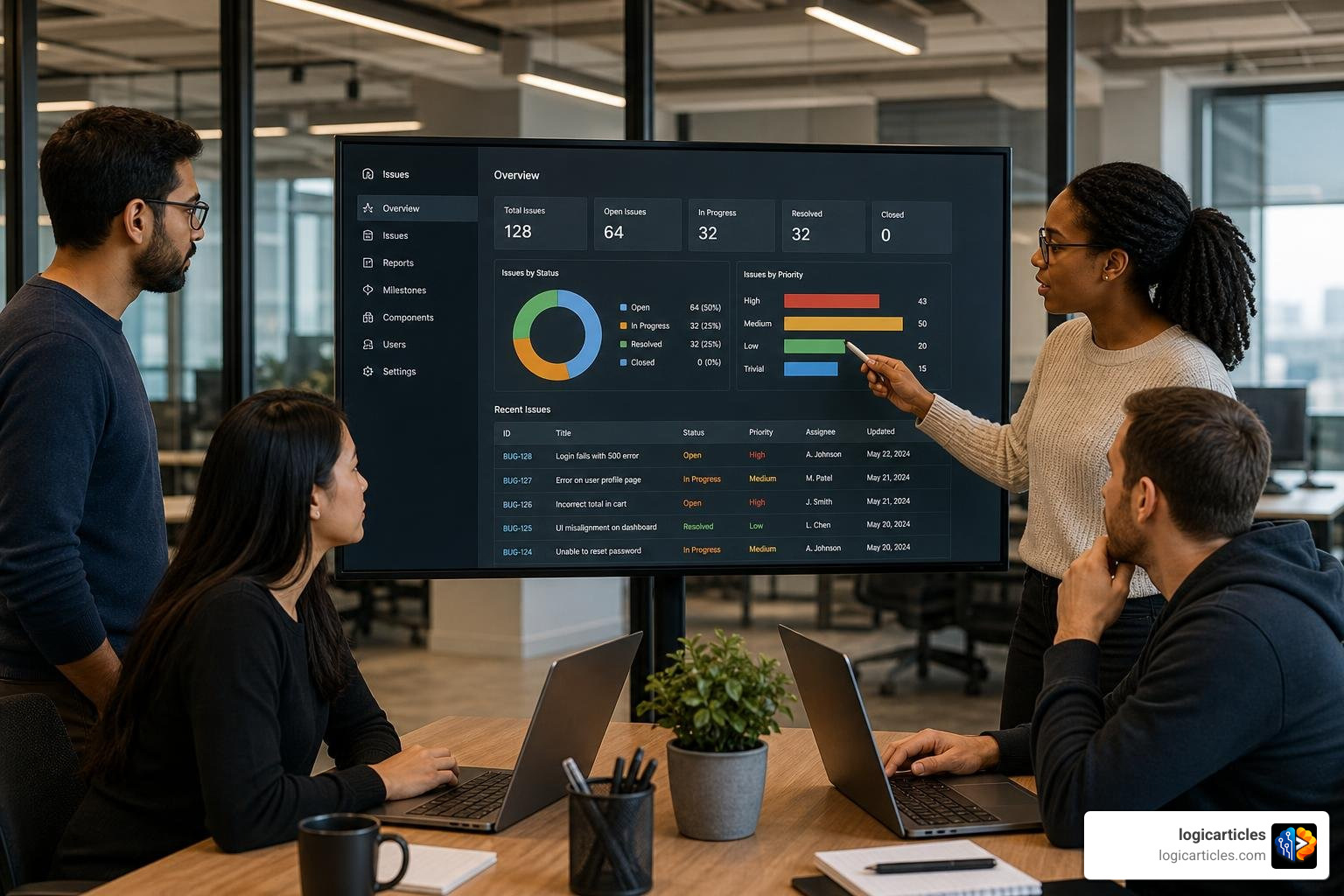
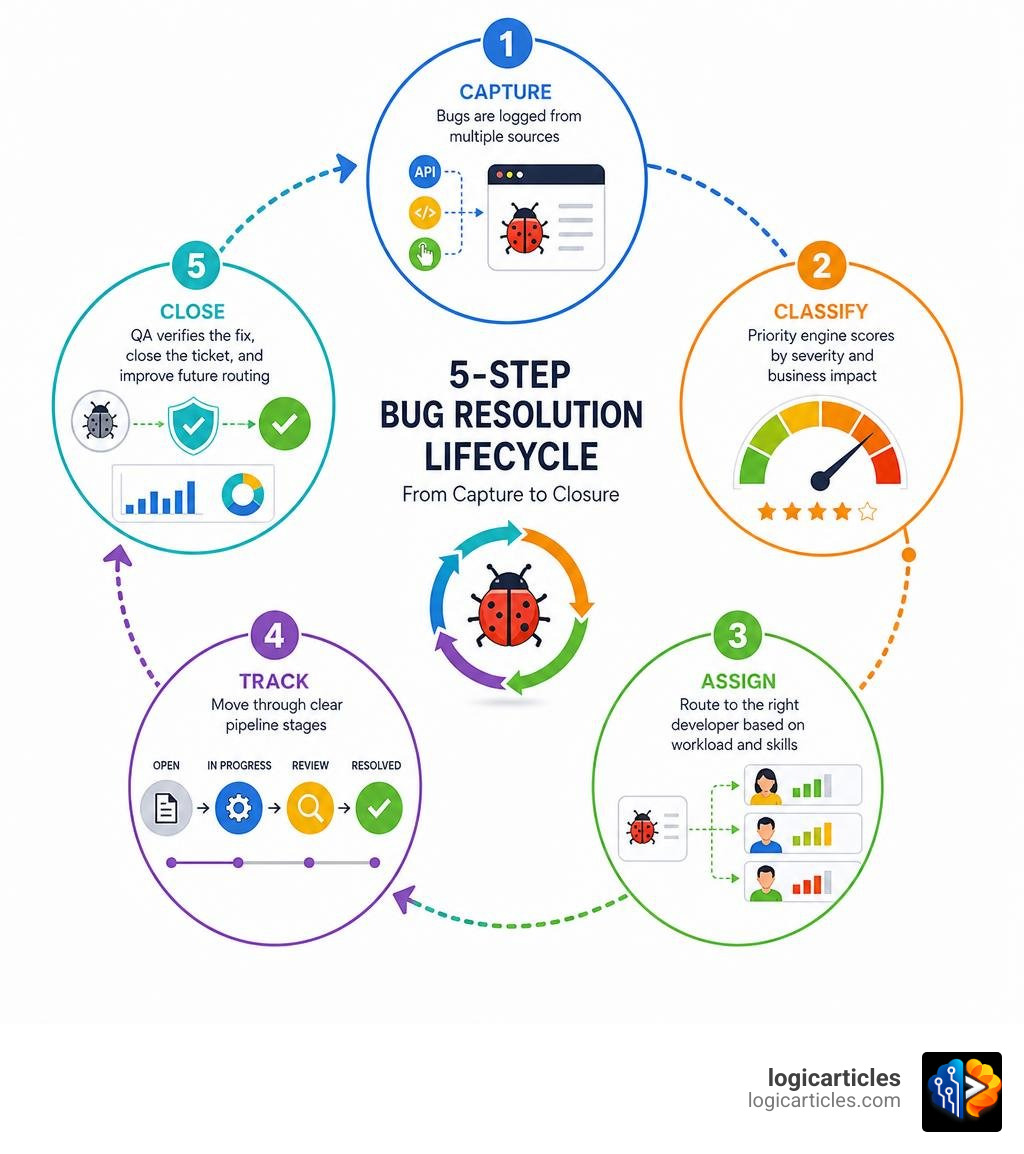
How does Endbugflow software work in a nutshell? Here’s the quick answer:
- Capture — Bugs are logged automatically via APIs, error handlers, or manual entry
- Classify — A priority engine scores each issue by severity and business impact
- Assign — The system routes each bug to the right developer based on workload and skills
- Track — Issues move through clear pipeline stages (Open → In Progress → Review → Resolved)
- Close — QA verifies the fix before the ticket is closed, and data feeds back into future routing
That’s the core loop. Keep reading for the full breakdown.
Most development teams don’t lose time writing bad code. They lose it finding bad code, figuring out who should fix it, following up three days later — and discovering it was already resolved by someone who forgot to update the ticket.
Sound familiar?
Software bugs cost the US economy an estimated $59 billion annually. And in 2025, teams that adopted structured bug tracking platforms reported resolving issues 47% faster than those still relying on spreadsheets and email chains.
Endbugflow is a bug tracking and workflow management platform built to eliminate that friction. It automates the routine parts of bug management — capture, triage, assignment — so developers can focus on actually fixing problems instead of chasing them.
What is Endbugflow and How Does Endbugflow Software Work?
At its core, Endbugflow is a specialized, cloud-based bug tracking and workflow management platform designed to centralize, automate, and streamline how development teams handle software defects. Instead of treating bugs as isolated, static tickets that sit in a backlog to die, Endbugflow treats them as part of an active, continuous “flow.”
By integrating project tracking, resource allocation, real-time collaboration, and historical analytics into a single interface, the platform serves as a decision-reduction tool. It minimizes the mental energy managers and engineers spend on triaging, allowing them to focus on code quality.
To understand how it fits into the broader software landscape, it is helpful to look at What is Productivity Software? and how modern teams leverage digital workspaces to optimize output. Endbugflow acts as a highly specialized subset of productivity software, engineered specifically to manage the complex lifecycle of code errors. For a broader overview of how this tool transforms business processes, you can read more about Endbugflow Software: Transforming Workflow Management for Modern Businesses.
The Core Architecture of Modern Bug Tracking
The architecture of Endbugflow is built around a zero-touch, automated intake loop. Unlike legacy systems that require manual form submission for every single glitch, Endbugflow relies on continuous error detection and context preservation.
The software operates through a lightweight, multi-layered architecture:
- The Intake Layer: Connects directly to your application’s frontend, backend, databases, and APIs. It listens for unhandled exceptions, crash reports, and performance anomalies.
- The Processing Engine: Standardizes the raw error data, extracts the metadata, and runs it through priority algorithms to evaluate severity.
- The Collaboration Hub: A centralized dashboard where developers, QA testers, and product managers can communicate directly inside the bug thread, eliminating scattered Slack messages or email threads.
By preserving the exact technical context—such as the user’s environment, state, and recent actions—the system ensures that developers do not have to waste time trying to reproduce “heisenbugs” from vague descriptions.
Why Traditional Spreadsheets Fail in 2026
If you are still tracking software defects in a shared spreadsheet, you are operating at a massive disadvantage. As release cycles compress and applications grow more complex, manual tracking methods inevitably break down.
Here is why static sheets fail in modern development environments:
- Context Loss: A spreadsheet cell cannot automatically attach a console log, a stack trace, or a video recording of a failure. Developers lose hours trying to figure out what actually broke.
- Human Error: Busy team members forget to update ticket statuses, leading to duplicate work or ignored critical errors.
- Static Labels: Static priority labels become completely meaningless at scale. When a team has over 200 active issues across three products, marking everything as “High” or “Urgent” makes it impossible to identify the real bottlenecks.
- No Integration: Spreadsheets do not connect to your code repository or your deployment pipeline. They cannot automatically close when a developer merges a fix.
To see how modern tools compare to outdated manual tracking, check out our evaluation of the Best Task Management Software in 2026 Tested.
The 5-Step Workflow of Endbugflow Software
So, how does Endbugflow software work when put into practice? The entire platform is structured around a highly efficient, five-stage pipeline that takes a bug from initial discovery to validated resolution.
Step 1: Automated Issue Capture and Logging
The first step in the lifecycle is capturing the defect with absolute technical precision. While manual submissions are fully supported, Endbugflow shines through its Automated Logging capabilities—a feature utilized by 94% of active teams.
When an error occurs, the software instantly captures a comprehensive package of metadata. This automated package includes:
- Exact Timestamps & Frequency: When the bug occurred and how many times it has impacted users.
- Environment Details: Operating system, browser version, screen resolution, and device type.
- Technical Logs: Deep stack traces, console errors, API request/response payloads, and database query states.
- User Session State: The sequence of actions the user took immediately prior to the crash.
This immediate capture ensures that developers have all the diagnostic details they need right from millisecond zero, preventing the tedious back-and-forth communication that typically stalls bug resolution.
Step 2: Intelligent Priority Classification
Once a bug is logged, it enters the Priority Engine (utilized by 87% of teams). Instead of relying on subjective human opinions, Endbugflow uses multi-signal weighing algorithms to assess severity and business impact.
The platform automatically classifies issues into standardized priority buckets, each maintaining a distinct target resolution time:
- Critical (Avg. Resolution: 4 Hours): Complete system outages, payment gateway failures, or major security vulnerabilities.
- High (Avg. Resolution: 1.2 Days): Key feature failures that affect a large percentage of users but do not break the entire app.
- Medium (Avg. Resolution: 3.5 Days): Minor functional bugs, layout breakages, or edge-case script errors.
- Low (Avg. Resolution: 7.8 Days): Minor cosmetic issues, typos, or non-blocking UI adjustments.
By analyzing the business impact—such as whether the bug blocks a checkout flow or impacts a high-value customer segment—the system ensures the team always focuses on the most critical tasks first.
Step 3: Smart Assignment and Routing
With the bug captured and prioritized, Endbugflow’s intelligent routing system takes over. Rather than leaving tickets unassigned in a massive backlog, the platform automatically suggests or assigns the ideal developer for the job.
The software makes these routing decisions by analyzing:
- Developer Workload: Who has the bandwidth to take on a new task without burning out?
- Historical Expertise: Who wrote the original code file where the error occurred? Who has successfully resolved similar bugs in the past?
- Current Sprint Context: Is the developer currently working on the specific feature area impacted by the bug?
This automated assignment reduces administrative overhead for project managers and ensures that critical issues are routed directly to the engineer best equipped to fix them.
Step 4: Real-Time Progress Tracking
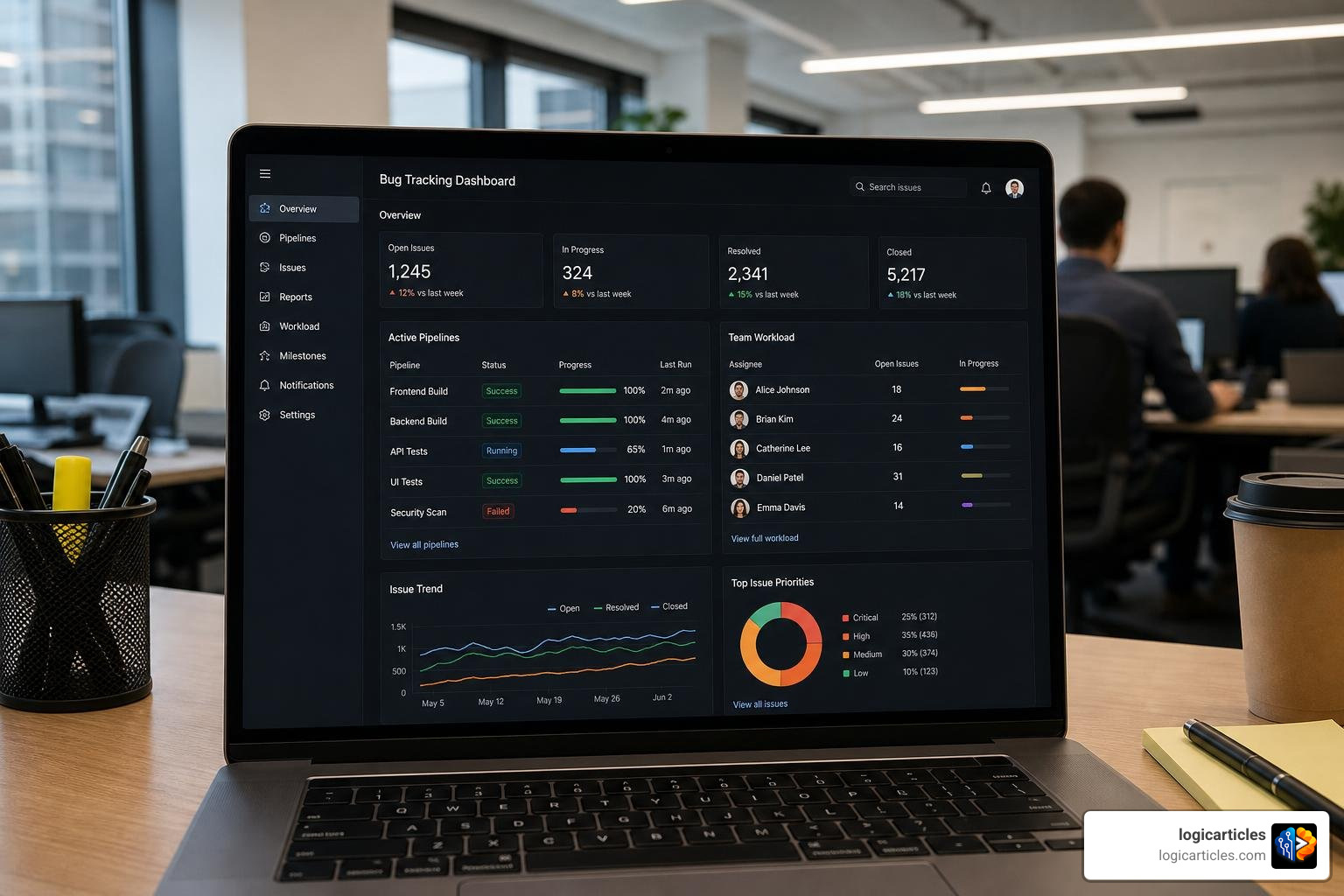
As the developer begins working on the fix, the bug moves through the visual tracking pipeline: Open → In Progress → Review → Resolved.
Endbugflow’s Status Tracking feature (used by 89% of teams) keeps the entire organization aligned in real time. Developers can link their local git branches directly to the ticket. When a developer creates a pull request, the status automatically shifts to “Review.”
Furthermore, Team Collaboration features (used by 91% of teams) allow QA testers, product managers, and developers to converse directly inside the ticket. They can share code snippets, add screenshots, and discuss reproduction steps without cluttering external chat applications.
Step 5: Quality Verification and Closure
A bug is never truly “done” just because a developer wrote a fix. The final step of the Endbugflow process is quality verification.
Once a fix is deployed to a staging environment, the platform alerts the QA team to verify the resolution. The bug cannot be closed until it meets the team’s predefined “Definition of Done.”
After QA verifies the fix and the ticket is officially closed, Endbugflow performs a post-resolution analysis. It logs the root cause, links the resolving code commit to the ticket, and updates its internal analytics. This feedback loop helps the platform make smarter routing and priority decisions for future bugs.
Key Features and Integrations of Endbugflow

To truly understand how this system fits into modern engineering setups, we have to look at its extensive integration capabilities. Endbugflow is designed to sit at the center of your existing toolchain, acting as a single source of truth without forcing you to abandon the software you already use. For a practical look at how this integration tames development chaos, see Endbugflow Software: A Practical Look at a Tool That Tries to Tame the Chaos.
How Does Endbugflow Software Work with Existing Developer Tools?
Endbugflow does not operate in a vacuum. It uses robust APIs and webhook systems to synchronize data across your entire development stack:
- Version Control (GitHub, GitLab, Bitbucket): Automatically links bug tickets to specific code commits, branches, and pull requests. When a pull request is merged, the associated Endbugflow ticket can automatically transition to “Resolved.”
- Project Management (Jira, Linear, Trello, Asana): If your company uses separate high-level tracking tools, Endbugflow can bi-directionally sync with them. This allows QA to work in Endbugflow while product managers stay inside Jira.
- Collaboration & Messaging (Slack, Microsoft Teams): Sends automated, highly targeted alerts to specific channels when critical bugs are detected, complete with direct links to the diagnostic logs.
- CI/CD Pipelines: Integrates with deployment tools to track exactly which build or release introduced a specific error, allowing for rapid rollbacks and immediate hotfixes.
Security, Access Controls, and Data Protection
When dealing with application logs and user session data, security is paramount. Endbugflow includes enterprise-grade security features to protect your proprietary code and user data:
- Role-Based Access Control (RBAC): Define granular permission levels for administrators, developers, QA testers, external contractors, and read-only stakeholders.
- Data Encryption: All data captured by Endbugflow is encrypted both in transit (using TLS 1.3) and at rest (using AES-256 encryption).
- Comprehensive Audit Trails: Every single action—from logging a bug to changing a priority level or closing a ticket—is recorded in an immutable audit log for compliance and security reviews.
- Approval Chains: Prevent accidental or unauthorized status changes on critical production workflows by requiring secondary sign-offs before closing high-severity issues.
Scaling Endbugflow Across Different Team Sizes
One of the greatest strengths of Endbugflow is its scalability. Whether you are a solo developer launching a passion project or a massive enterprise managing dozens of distributed engineering teams, the platform adapts to your scale.
To understand how teams scale rapidly in the modern market, look at our guide on Startup Tools to Scale Fast in 2026.
The platform’s performance metrics demonstrate a clear pattern: as teams grow, Endbugflow helps maintain control over rising issue volumes while keeping resolution times remarkably low.
| Team Size (Developers) | Active Issues Managed | Average Resolution Time |
|---|---|---|
| 5–10 Developers | 15–30 Active Issues | 2.3 Days |
| 11–25 Developers | 45–80 Active Issues | 3.1 Days |
| 26–50 Developers | 95–150 Active Issues | 3.8 Days |
| 51+ Developers | 180–300 Active Issues | 4.2 Days |
How Does Endbugflow Software Work for Startups vs Enterprises?
For small startups, Endbugflow functions as an extra team member. It automates the administrative work of triaging and assigning tasks, allowing small teams of 1 to 10 people to resolve issues in just over two days. This speed is crucial for early-stage survival. Startups can learn more about optimizing their setup in our review of the Best Startup Growth Tools for 2026.
For large enterprises, the software scales to handle hundreds of active issues across multiple product lines. It provides advanced workspace customization, enabling different departments to define their own custom workflows, custom metadata fields, and role-based permissions. Enterprise dashboards aggregate high-level performance metrics, giving executives a clear view of overall code quality, regression trends, and team efficiency without getting bogged down in individual ticket details.
Frequently Asked Questions About Endbugflow
What makes Endbugflow different from traditional manual tracking methods?
Traditional manual tracking methods, like spreadsheets or basic to-do lists, require constant human intervention to log, update, and route bugs. They lack context, do not integrate with development tools, and quickly become chaotic as issue volume grows.
Endbugflow automates the entire lifecycle. It captures bugs automatically with complete technical context, uses an intelligent priority engine to categorize them, routes them to the correct developer, and tracks progress through an integrated pipeline. This automation reduces human error, eliminates context switching, and speeds up resolution times by 47%. For a deeper look at eliminating end-of-process failures, see EndBugFlow Software: Eliminating End-of-Process Bugs and Improving Workflow Efficiency.
Can teams customize how Endbugflow software works?
Yes. Endbugflow is highly customizable. Teams can:
- Define custom workflow stages to match their specific development methodology (e.g., adding a “Security Review” or “Staging Verification” stage).
- Adjust the priority engine’s algorithms to weigh specific system components or business metrics more heavily.
- Configure personalized notification preferences to ensure team members only receive alerts relevant to their roles.
- Create custom metadata fields to capture unique project-specific information during bug logging.
How do you update Endbugflow software on a PC?
Updating Endbugflow on a PC is straightforward:
- Check Current Version: Open the platform, navigate to Settings, and select About.
- Manual Update: Click the Check for Updates button. If a new version is available, the system will download and install it.
- Enable Auto-Updates: For seamless continuity, toggle the Enable Auto-Updates option in your Preferences.
- Configuration Backup: For major version updates, it is always a best practice to back up your active project configurations before running the installer.
Conclusion
Managing software defects does not have to be a source of developer burnout and project delays. By replacing outdated, manual tracking spreadsheets with a structured, automated, and highly collaborative platform, engineering teams can dramatically accelerate their release cycles while maintaining exceptional code quality.
Endbugflow’s intelligent, five-step workflow—from automated capture to verified closure—empowers teams to resolve issues up to 47% faster. It eliminates administrative friction, preserves vital technical context, and scales seamlessly from early-stage startups to massive enterprises.
As you look to optimize your development stack, staying informed on the latest technologies is essential. Explore the AI Tools You Should Know in 2026 to see how automated intelligence is reshaping the software landscape. Ready to explore more ways to boost your team’s operational efficiency? Browse our comprehensive Productivity Software Category for expert guides, software reviews, and actionable strategies designed to help your business scale fast.