Why Is the Uhoebeans Software Update So Slow?
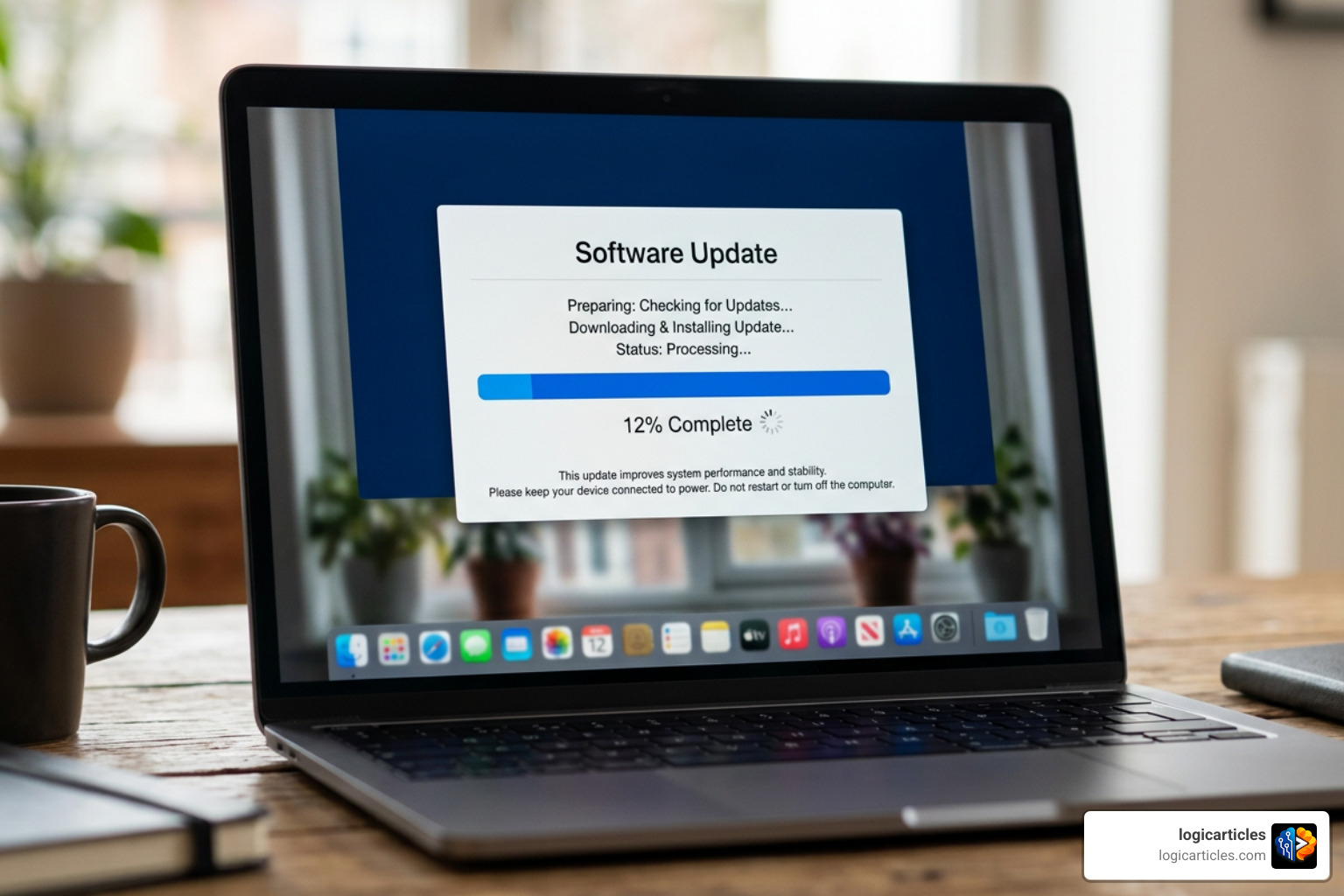
If you’ve ever wondered why is uhoebeans software update so slow, you’re not alone — and there are several well-documented reasons it happens.
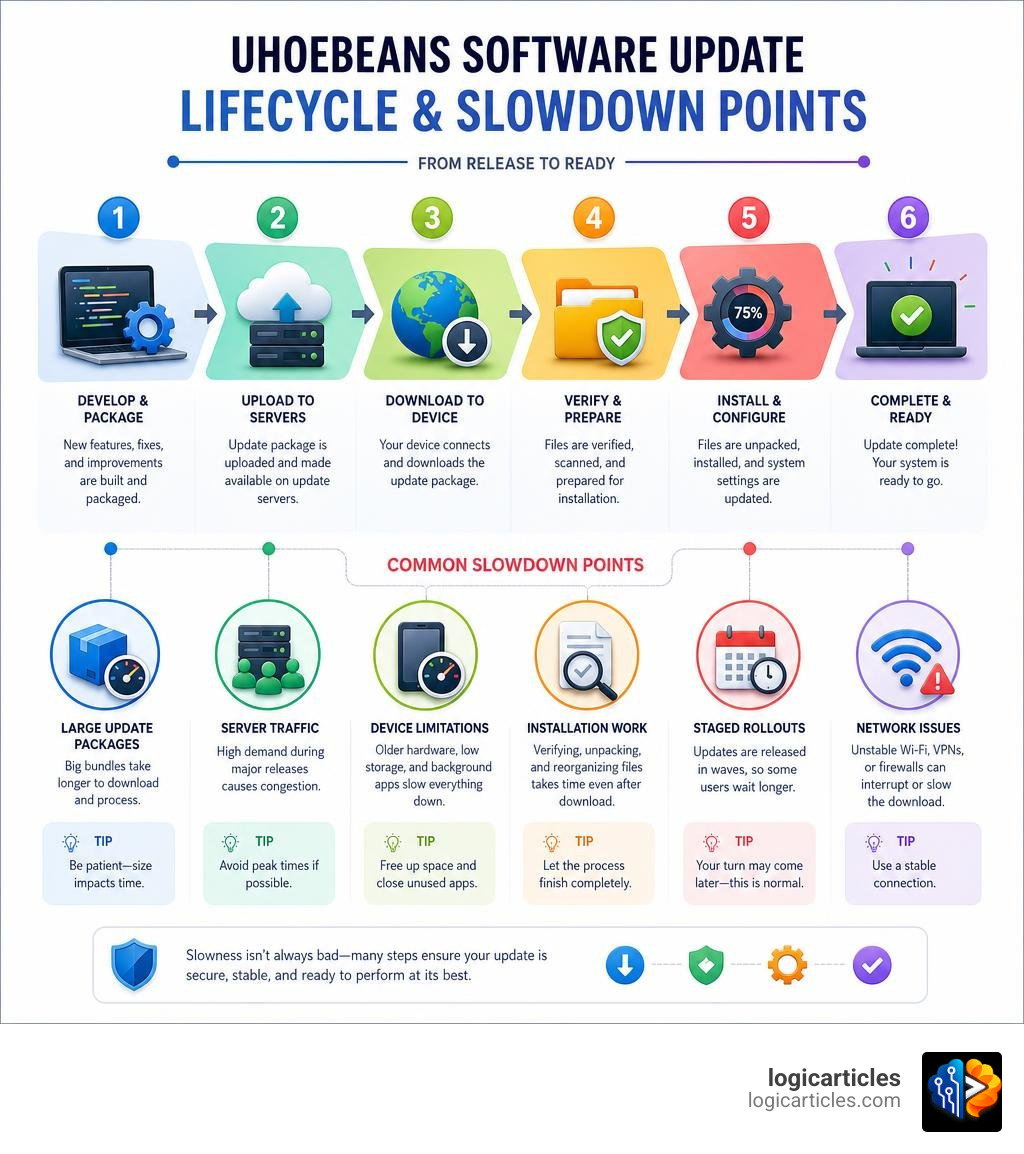
Quick answer: Uhoebeans updates are slow because of:
- Large update packages — Uhoebeans bundles many changes at once rather than shipping small patches
- Server traffic — High demand during major releases causes bottlenecks and timeouts
- Device limitations — Older hardware, low storage, and background apps all slow things down
- Installation work after download — Verifying, unpacking, and reorganizing files takes time even after the download bar hits 100%
- Staged rollouts — Not everyone gets the update at once, so some users wait longer than others
- Network issues — Unstable Wi-Fi, VPNs, or firewalls can interrupt or slow the download
The frustrating part? Most of these delays look the same from the outside — a progress bar that barely moves.
Uhoebeans is a complex, all-in-one platform. That means its updates are doing a lot more work behind the scenes than a simple app update would. Developers also deliberately prioritize stability over speed, especially for business-critical software. So some slowness is by design — but not all of it is unavoidable.
This guide breaks down every cause and gives you clear, actionable fixes.
What Is Uhoebeans Software and Why Is It Important to Keep It Updated?
Before we dive into the technical bottlenecks, let’s establish what we are dealing with. Uhoebeans is an application management and deployment utility framework. In plain English, it is a specialized tool used by system architects and IT teams to track, package, and automate software updates across local endpoints and hybrid system architectures. It acts as an all-in-one platform combining multiple business tools, which means it handles massive sets of data simultaneously.
Because Uhoebeans is built to manage complex environments, keeping it updated is absolutely critical. Think of software as having a “best before” date. Over time, security landscapes shift, and new vulnerabilities emerge. Even the largest development teams spend millions patching security holes. When we skip updates, we leave our systems exposed to data theft, online fraud, and ransomware.
Additionally, outdated deployment utilities can cause performance issues across your entire operating system. If you have been asking is your laptop running slow lately, an outdated or struggling Uhoebeans installation could be silently hogging your background system resources. Keeping the software updated ensures that security patches, bug fixes, and performance optimizations are applied correctly. For a deeper look at what actually changes when you click “update,” you can read about Analyzing the Software in Uhoebeans Updates.
Why Is Uhoebeans Software Update So Slow?
When you trigger a Uhoebeans update, you might expect a quick, seamless patch. Instead, you are often met with a long, agonizing wait. Why is this?
The primary culprit is update size and architecture. Unlike lightweight apps that download tiny, incremental patches, Uhoebeans often relies on a monolithic architecture. This means its core functions are tightly coupled. Even a minor two-line configuration change can require a massive regression test and a large payload delivery. When updates bundle multiple major features, security filters, and database schema changes together, the package size balloons.
Furthermore, “data gravity” plays a major role. Because Uhoebeans manages large centralized datasets, moving these payloads across fluctuating hybrid environments causes massive bandwidth contention. Once the download finally finishes, your device still has to do the heavy lifting: unpacking the files, verifying security certificates, and scanning for corruption.
To help visualize why these updates take so much longer than your average app, let’s compare standard software patches with monolithic Uhoebeans updates:
| Feature/Process | Standard Software Patch | Monolithic Uhoebeans Update |
|---|---|---|
| Average Payload Size | Small (10 MB – 100 MB) | Large (1.2 GB+ due to bundled tools) |
| Architecture Style | Microservices / Modular | Monolithic / Tightly coupled |
| Verification Method | Quick checksum check | Deep SHA-256 & IAM credential alignment |
| Database Impact | None or minimal | SQLite WAL-mode reorganization & cache rebuilds |
| System Resource Usage | Low background activity | High CPU, disk write, and temporary storage needs |
To learn more about the structural factors that drag down these speeds, you can check out Why Is Uhoebeans Software Update So Slow? Causes + Fixes.
Server Bottlenecks and Why Is Uhoebeans Software Update So Slow During Peak Hours
Sometimes, the slowness has absolutely nothing to do with your computer. It is a classic case of “it’s not you, it’s them.”
When Uhoebeans releases a major patch, hundreds of thousands of endpoints attempt to perform handshakes with the centralized update servers at the exact same time. This sudden surge in traffic creates massive server-side resource allocation issues. The consequences include:
- DNS Resolution Failures: Your local updater struggles to find the server address amidst the crowd.
- TLS Handshake Timeouts: The server is too busy to establish secure cryptographic connections quickly.
- Hardcoded Client Timeouts: The Uhoebeans client has a hardcoded 15-second timeout. If the overloaded server doesn’t respond within this narrow window, the client drops the connection and starts the request process all over again.
To mitigate this, developers use staged rollouts, gradually pushing updates to different regions or user groups. While this keeps the servers from crashing entirely, it means you might find yourself waiting in a digital queue. For a detailed breakdown of server-side limitations, read Why Is Uhoebeans Software Update So Slow – techhubprohacks.com.
Device Performance and Why Is Uhoebeans Software Update So Slow on Older Hardware
Once the files are successfully downloaded, your local hardware must finish the job. This is where older or unoptimized systems hit a wall.
During the installation phase, Uhoebeans performs extensive background tasks:
- File Extraction: Unpacking compressed payloads requires significant CPU processing power.
- Cache Rebuilding: The software reorganizes its internal cache to integrate the new modules.
- Database Reorganization: Uhoebeans often restructures local SQLite databases (using WAL-mode), which involves heavy read/write cycles on your drive.
If your device is running low on storage, this process slows down dramatically. A 1.2 GB Uhoebeans update actually requires 3 to 4 GB of temporary free space to download, unpack, verify, and install simultaneously. If your drive is full, the updater will drag its feet or fail silently.
If your computer is struggling under the weight of these background processes, it might be time for a system tune-up. You can learn how to optimize your system’s performance by reading our guides on how to fix slow startup on windows and how to fix a slow mac.
How to Troubleshoot and Speed Up Your Uhoebeans Updates
Now that we know why the slowdowns happen, let’s look at how we can bypass these digital traffic jams.

The easiest way to avoid slow updates is to control when they happen. Instead of launching updates during peak business hours when your network is busy and background apps are running, we recommend scheduling updates for off-peak hours (such as 2:00 AM).
Additionally, ensuring your system boots cleanly can prevent resource conflicts during installation. For Mac users, optimizing your startup sequence is highly beneficial; learn more in our walkthrough on how to fix slow boot on mac.
Optimizing Your Network and Device Settings
To give your updater the best possible environment, work through this quick optimization checklist:
- Switch to a Wired Connection: Wi-Fi is convenient, but it is prone to packet loss. A wired Ethernet cable ensures a stable, consistent data stream.
- Disable Your VPN Temporarily: VPNs route your traffic through distant servers, which increases latency and can trigger security blocks on the Uhoebeans update CDN.
- Close Background Applications: Free up CPU cycles and RAM by closing heavy programs before initiating the update.
- Clear the Update Cache: Corrupted temporary files from previous attempts can block new updates. Navigate to your local app data folder (e.g.,
%LOCALAPPDATA%\Uhoebeans\cache\updateson Windows) and clear out the old files. - Add Antivirus Exclusions: Sometimes security software sandboxes the updater process (via hooks like
uhoeupdater_hook.dll), mistaking the rapid file changes for malware. Temporarily whitelisting the Uhoebeans install folder can resolve this.
Just as database optimization can dramatically improve application response times (as detailed in our guide on how to fix slow mysql queries in 2026 fast), keeping your local network and device settings streamlined will significantly accelerate your software updates.
Advanced Fixes for Stuck or Failing Updates
Is your update just running slowly, or is it completely broken?
A slow update will eventually finish if left alone. A stuck or failed update, however, is often caused by cryptographic mismatches, permission conflicts, or corrupted delta patches. Uhoebeans uses an “atomic update” process—it builds the new version in a temporary directory and then swaps it with the active directory. If this swap is interrupted, the update fails.
If you are stuck in an update loop, try these advanced workarounds:
- Use the Command Line Interface (CLI): Bypass the resource-heavy graphical user interface (GUI) by running the update directly through your terminal. Open your command line and run:
uhoebeans update --checkOr check your deep module status using:uhoe-cli --version --deep - Manual Installation: Go directly to the official portal, download the latest standalone installer package, and run it manually. This completely bypasses the automatic updater’s network checks.
- Perform a Clean Reinstall: If files are deeply corrupted, uninstall Uhoebeans entirely, delete any remaining cache folders, restart your device, and install the newest version fresh.
For step-by-step diagnostic checklists on handling broken installations, check out these excellent external troubleshooting guides:
- Why Is Uhoebeans Software Update Failing – techhubprohacks.com
- Why Is Uhoebeans Software Update Failing – wbsoftwarement.com
- why is uhoebeans software update failing :: kickstartplayhard.com
Frequently Asked Questions About Uhoebeans Updates
How long should a Uhoebeans update normally take?
For standard, minor patches, the process should take between 10 to 20 minutes. For major, monolithic releases, it is not uncommon for the process to take 45 minutes to over an hour. The total time depends heavily on your internet connection speed and your local drive’s write speeds.
Why does the update progress bar freeze at a certain percentage?
This usually happens because the progress bar only tracks the download phase, not the installation phase. When the bar freezes (often around 80% to 99%), the software is likely verifying file integrity, unpacking large archives, or reorganizing local databases in the background. Give it at least 30 minutes before assuming it is stuck.
Can I safely stop or cancel a Uhoebeans update in progress?
We highly advise against stopping an update once the installation phase has begun. Because Uhoebeans modifies core files and database structures, forcing a shutdown mid-update can result in corrupted database tables, missing system modules, and a completely broken application. Only interrupt the process if you are certain it has been frozen for over an hour with zero disk activity.
Conclusion
When dealing with complex enterprise-level deployment tools, experiencing a slow update is incredibly common. As we have explored, the answer to why is uhoebeans software update so slow is a combination of large monolithic package sizes, high server traffic during peak release hours, and the heavy background processing required to install these secure updates safely on your local hardware.
By implementing smart habits—such as scheduling your updates for late-night off-peak hours, clearing out your temporary cache files, and occasionally using command-line tools to bypass the GUI—you can significantly cut down on your wait times.
As of June 2026, keeping our systems safe requires a proactive approach to software maintenance. Don’t let update slowness discourage you from keeping your systems secure. For more helpful tips on keeping your digital workspace running at peak performance, explore our comprehensive productivity software guides.